Staring at the cracked concrete ceiling, I listened to a key scratch around the outline of the lock for what seemed like minutes. Frustration and a lack of sleep was causing my heart rate to increase. Once unlocked, the swollen timber door required a gentle hip and shoulder to budge from its frame, screeching like the tires of an erratic Ecuadorian taxi. Slowly, it was pushed open. The antiquated hinges groaned to life like a cow on its way to morning milking. I knew the arc of the door was complete when it crashed into the end of my bunk.
‘Sorry, man. Sorry. Sorry’.
The voice belonged to one of the two Belgian guys I’d been chatting to over a cup of tea the previous night. I had made my way to bed when conversation began to edge towards the idea of heading out to celebrate their final night together in Ecuador. Given the difficulty of getting the key in the lock, I assumed their night on the town had come to fruition. Despite thinking he was whispering, his apologetic, yet slightly slurred, words stirred the other eight sleeping travellers. Gradually, the sound of restless bodies transgressed to voices as the dorm came to life. I felt like I was back on school camp.
It was 5.30am.
I had be needing the toilet for a while but the prospect of navigating the ad-hoc ladder from the top bunk was enough to keep me holding on. I was under-slept and my body was begging for a rest day. It was becoming increasingly evident that cycle touring and hostel dorms are hardly a match made in heaven.
David and I sat bleary-eyed and in silence eating the hostel’s included breakfast of two crumbly bread rolls with jam. What the breakfast lacked in sustenance, we definitely made up for with the bottomless urn of black coffee on the counter. We knew the day ahead was about 80km, ‘mostly’ downhill, and that a definite rest day was awaiting us in the town of Baños. We also knew that the road ahead was a diversion from both of our respective plans prior to meeting each other. With little idea of what to expect from the next few days together, we cycled out of Latacunga only to stop five minutes down the road to put on our waterproof jackets. It was the first rain either of us had experienced since arriving in Ecuador. Unsure of which one of us was carrying the bad luck, we rode on.
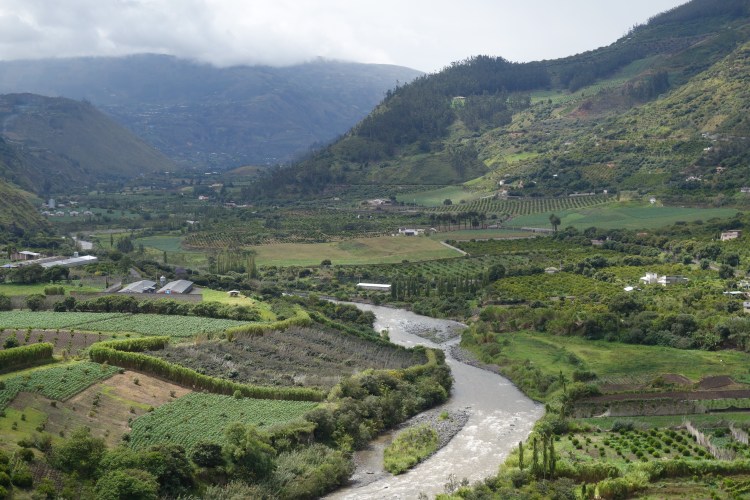
Despite more rain over the following days, the detour from the conifer-clad cordilleras and snow-capped volcanoes, to the humid, palm-lined roads of the Amazon Basin exceeded both of our imaginations. The riding took in some of the most spectacular vistas, as well as roads more physically and mentally gruelling than either of us thought were possible.
After six days, 525km and over 6000m of elevation change, we arrived in Ecuador’s third largest, and arguably most alluring, city, Cuenca. We had been burnt by the sun and scarred by the road. But, most importantly, the diverse and enchanting beauty of this country, combined with a love of bikes, helped to solidify a new friendship.
Tourist traps and charitable expats
I’ve now met several travellers who have seemed bewildered by my lack of mobile phone. I was having a conversation with a Polish guy over breakfast a few days ago, casually sharing details of our respective journeys over scrambled eggs and sweet breads. He had been relatively reserved until I mentioned that I don’t have a mobile phone. He put his coffee down.
‘That’s so brave. It’s actually crazy that you’ve made it this far.’
I am carrying an iPad and a folding Bluetooth keyboard so that I can write. On here, I have an offline map application if I do need to stop and double check any directions. But generally, I spend a few minutes each morning scanning a map and making some handwritten notes on scrap paper, which I stuff into my handlebar bag. This has been sufficient for keeping me on the right track. When I met David, I noticed that he had a Garmin GPS attached to his handlebars. However, it wasn’t until the ride from Latacunga to Baños, the day after we met, that I realised how different forms of navigation can alter an experience
When discussing the route for the day’s ride, we had noticed a number of roads that offered an alternative the the Pan-American Highway. David plotted the course on his GPS and away we rode. Within 8km from Latacunga, David slowed down and pointed towards a dirt road leaving the highway. This was the route according to the GPS. It was also a road that I wouldn’t have even noticed given my ‘primitive’ form of navigation. I stopped to double check his directions with my sextant before turning off the highway and embarking up the corrugated track.
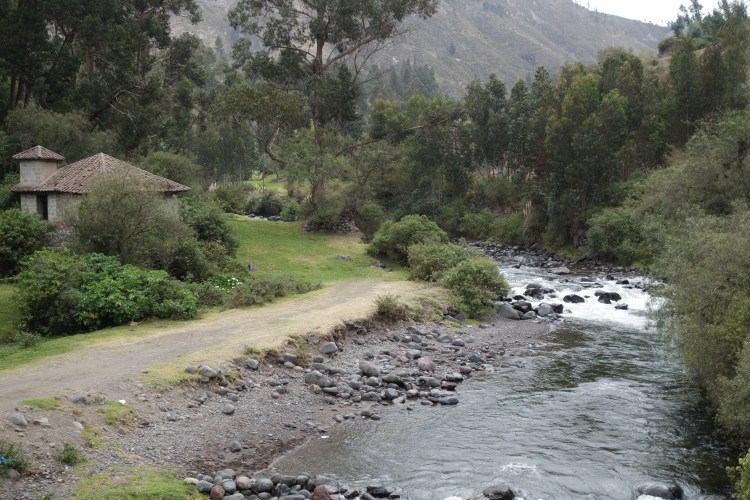
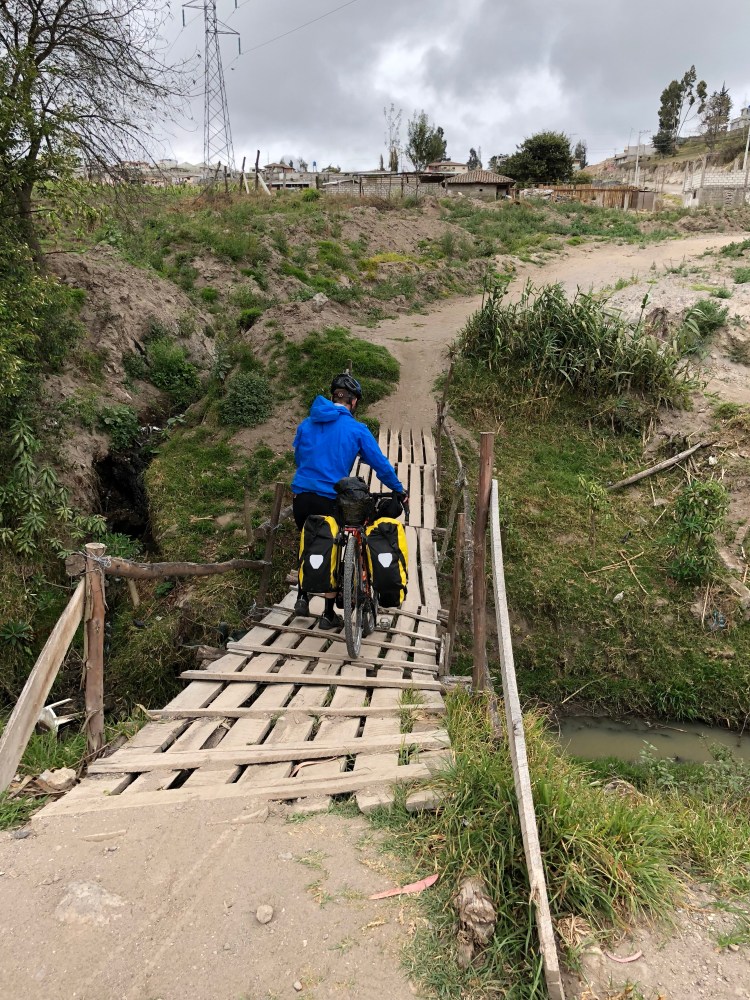
Within minutes, the nature of the riding had changed entirely. The backroads followed the undulating landscape, taking in an assortment of cobblestones, sand, sporadic patched of smooth asphalt, and incomplete bridges, which required the navigation of some ad-hoc river crossings. The sound of the Pan-American Highway was audible on the wind as we descended a steep, rough path which wound its way down to the bottom of a valley, passing through a quaint, sleepy town. The experience reminded me of my guiding days on the Overland Track. I would often get asked whether walking the same six-day track ever became mundane and repetitive. As if the seasonal changes and mind boggling adaptations of the flora and fauna are not enough a good enough answer this question, I would often explain that the area requires more than a lifetime to fully explore and understand. The track itself accounts for less that one percent of the national park of which it dissects. Simply stepping off the track (with minimal impact) to go to the toilet would reveal a new perspective on a mountain or a species of plant that I hadn’t noticed before. This is how it felt following a new route. I am painting such a minuscule line on this continent. Simply riding within a few hundred metres of the main road afforded such an enthralling day in the saddle.
At the bottom of the valley, we stopped to marvel at a crystal clear stream, tumbling over rocks and slowing in large pools. It was one of the many clear rivers that I had noticed since arriving in Ecuador – a stark contrast to the chocolate rivers of Colombia. Acknowledging that the river also marked the lowest point of the valley, we straddled our steeds and kicked our spurs in, beginning the ascent. If only it was that easy. Forty-five minutes of switchbacks lifted us above the valley floor with every pedal stroke reminding me of what my legs had been doing over the last few days. Upon reaching the plateau, a light rain began falling, providing the perfect conditions to plant the seed of a bakery stop at the next town.
With the cravings of a 25 cent donut increasing with every meter, my sugar dusted dreams were continuously crushed. Every shop front in the few small towns we passed had the roller door pulled down. Only when we passed through a larger town square was there any evidence of humanity, with music flowing out of the central church’s open arched doorway.
It was Sunday. A day of rest. My legs were couldn’t have agreed more.
Unfortunately, David was hit with a sudden bout of nausea. It prompted him to suggest stopping for the night, fearful that it was the beginning of something a little more sinister. Despite rendering him silent and clearly a resident of Struggle Town, he pushed through and we continued to Baños. Almost immediately, the road began to fall away as we embarked on a descent that lasted the remainder of the day.
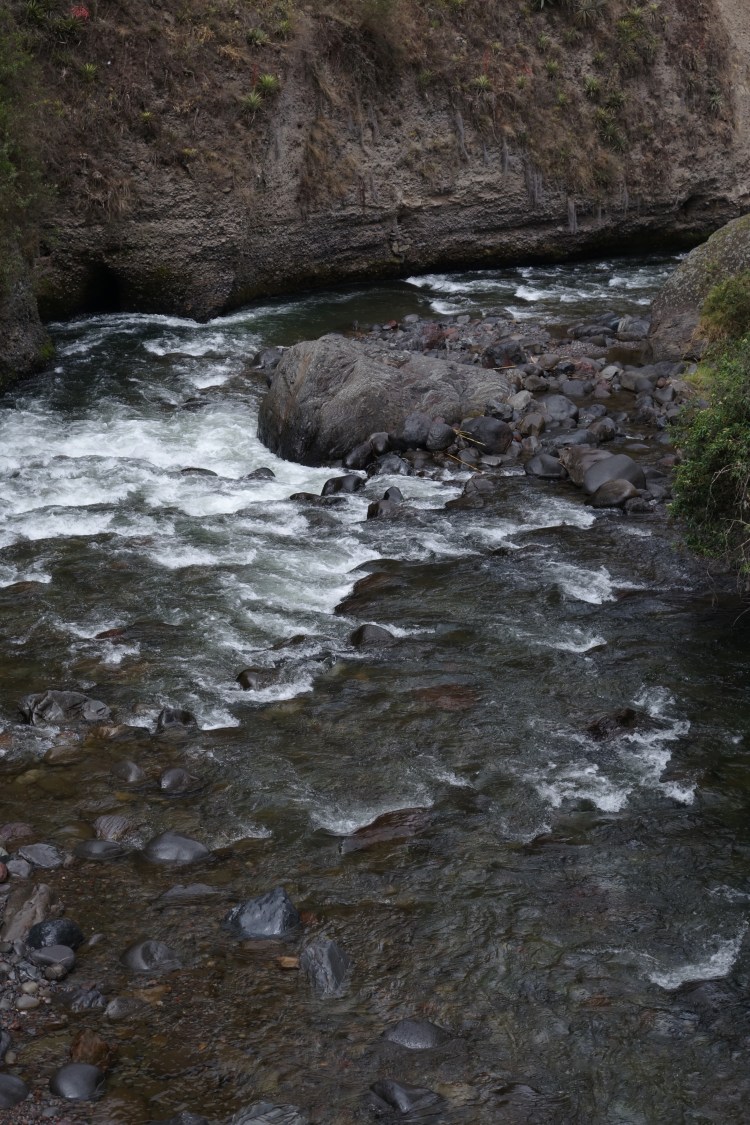
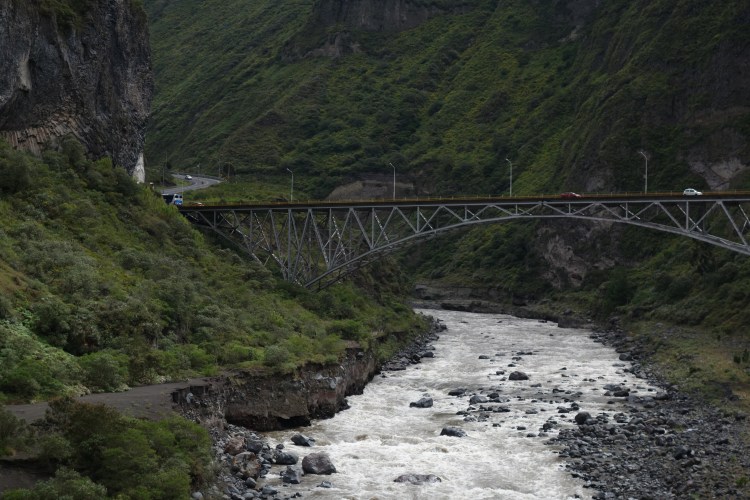
Over the course of the afternoon, we dropped over 2000m in elevation. The roadside vegetation increased in density and greenness. New crops began to appear, as did strange fruits hanging from the trees above the road. At times the two way road was no more than three metres across – passing traffic clearly relied on for pruning roadside flora. As we got to the bottom of the steep-sided valley, we were thrust into the presence of the Patate River; the shaping force of the landscape. It was difficult not to be distracted by the raging torrent below the road, as large standing waves and aggressive rapids created a spectacular texture. Within site of Baños, the Chambo River joined the Patate, doubling the volume and ferocity of the water which was then squeezed through a narrow gorge below the town. It was a dramatic and alluring welcome to the town we would spend the next day. But, the immediate focus was finding somewhere to stay as David was fading.
Within minutes of finding a hostel, David quarantined himself, leaving me in reception with another man of the same name. This David, from New Zealand, was 70 years old and had been travelling on his pension for the last eight years. Having spent his life at sea, he was a wealth of knowledge. I ran into him a number of times during our stay. On my last morning in the hostel, I was wearing my glasses when I said goodbye to him. He looked at me, with a questioning expression on his face, then stuck out his hand and said, ‘hi, I’m David’. I can’t imagine how exciting travel must be when you continuously forget yesterday.
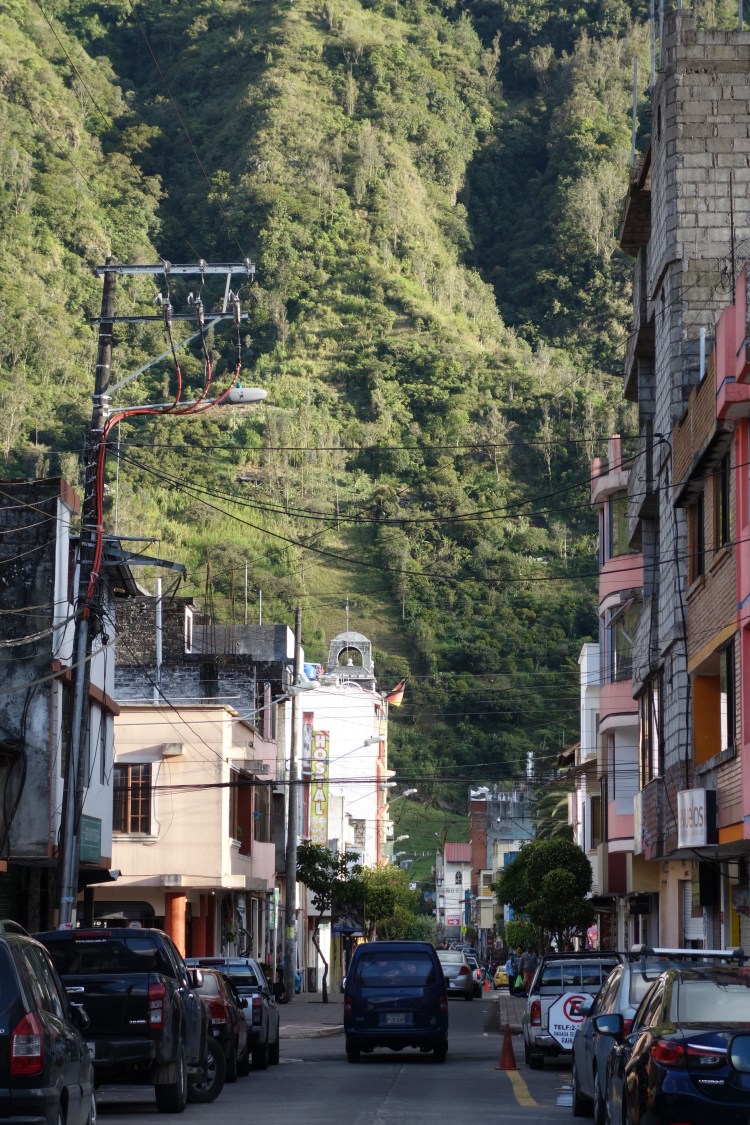
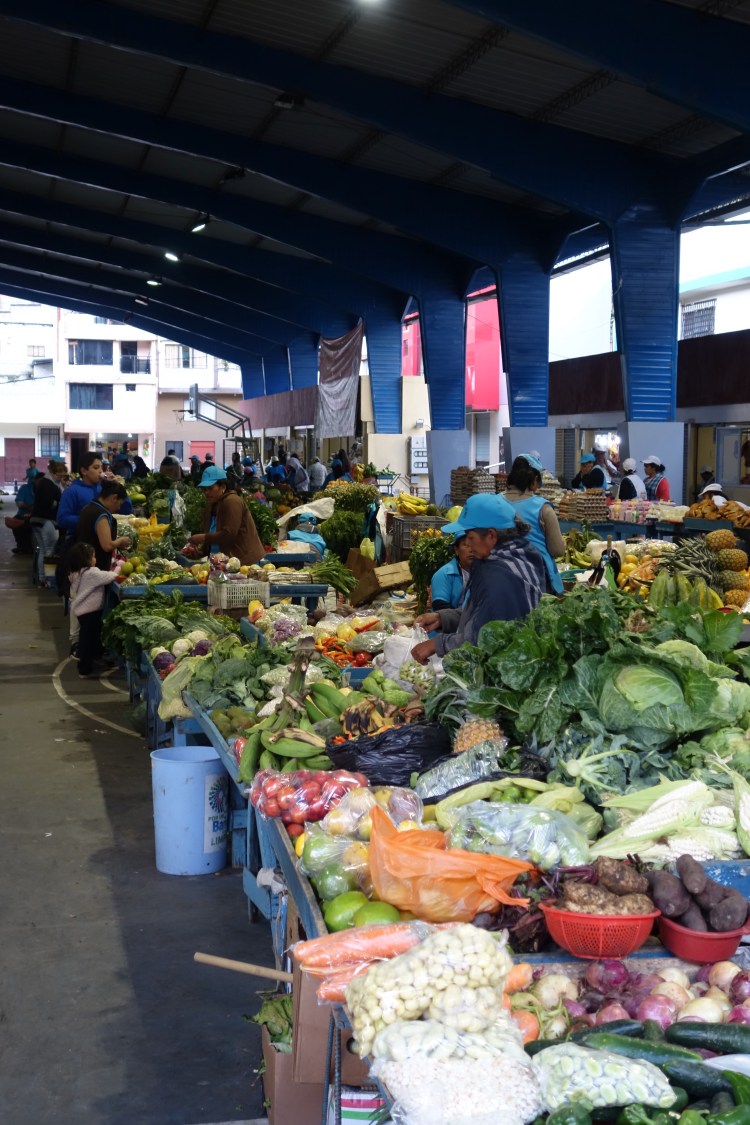
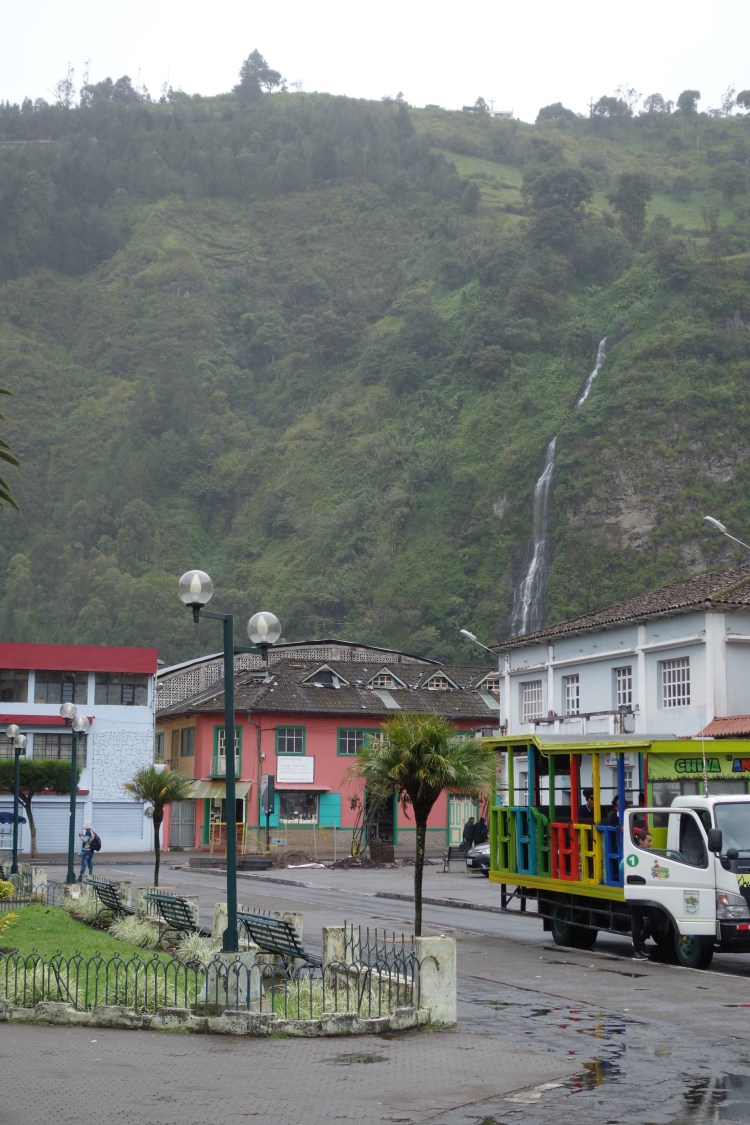
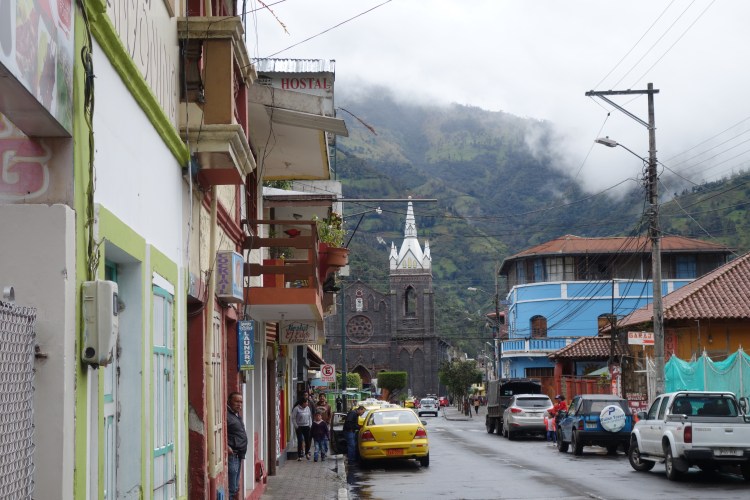
The much needed rest day was spent wandering, eating, doing laundry, eating, bike cleaning and, yep, eating. Arriving on a Sunday meant I was able to explore the evening farmers’ market, picking up some fresh greens and a kilo of strawberries. The kitchen in the hostel was on the top floor, with French doors opening out onto the rooftop which afforded views over the illuminated cathedral and town square. During the daylight hours, the view from the rooftop was dominated by the large waterfall that fell from the foothills of the Tungurahua Volcano.
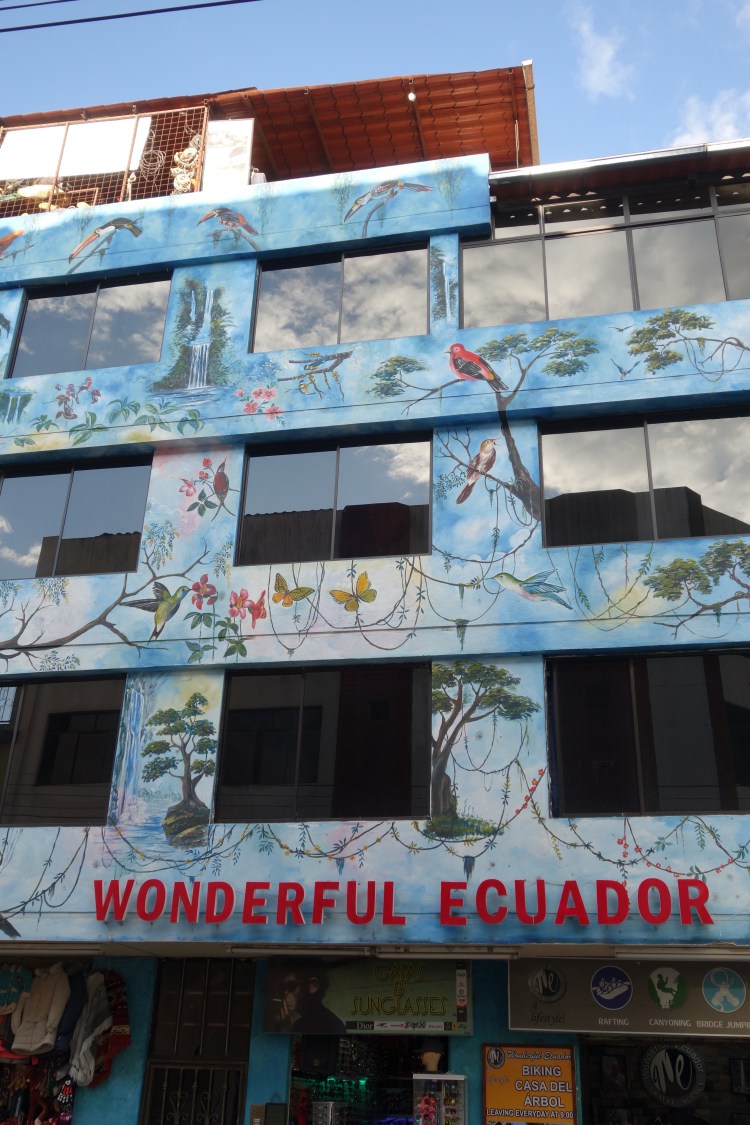
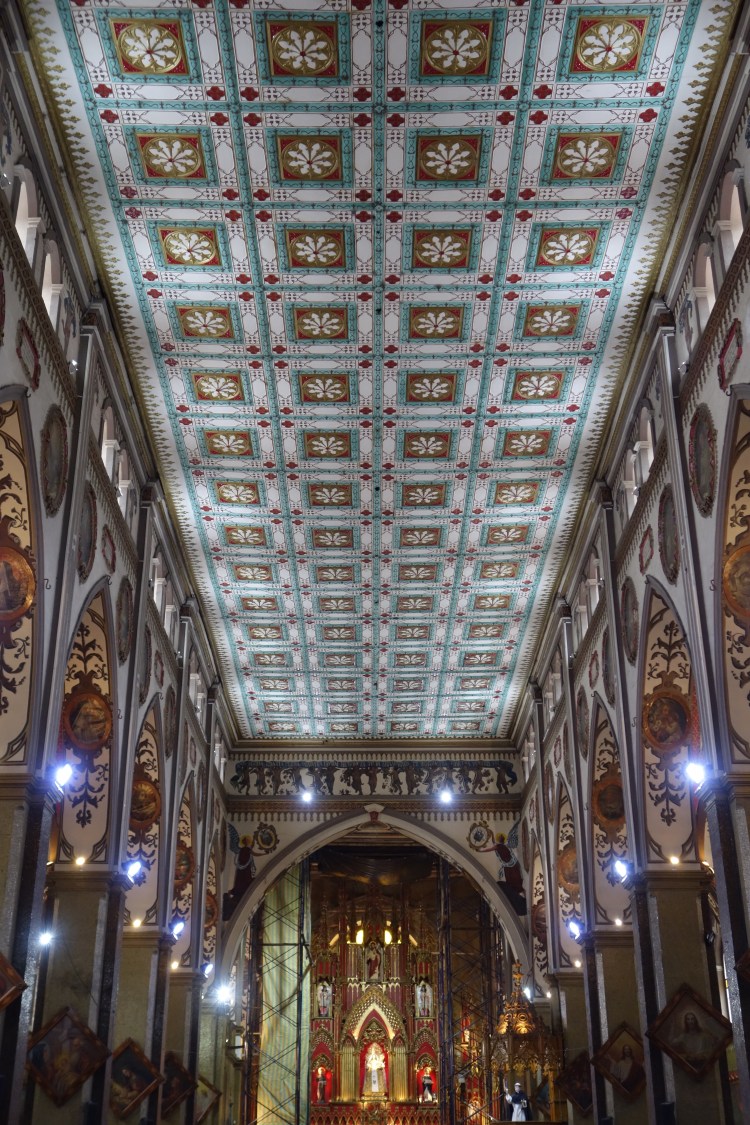
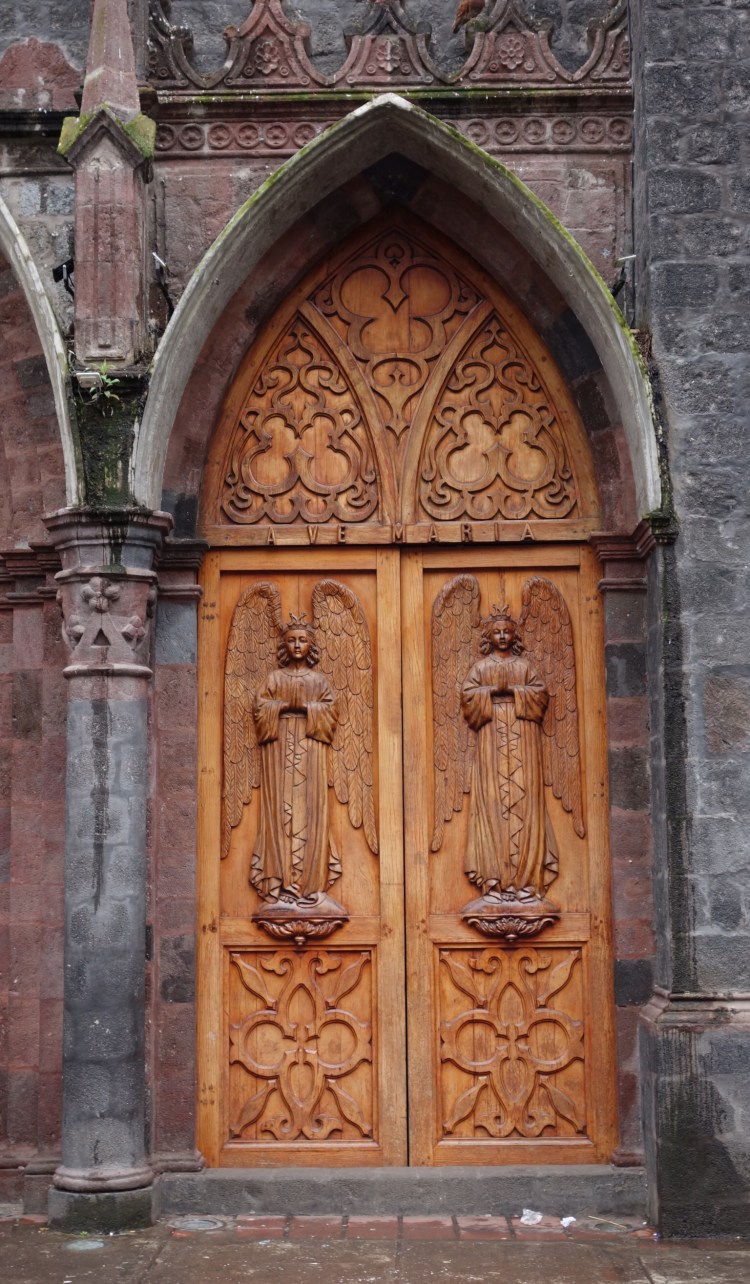
Over the course of a single day, it was difficult to gain a coherent interpretation of Baños. It was a mixed bag. Travellers swarmed around a plethora of tour agencies offering adventure-based activities such as rafting, canyoning, downhill mountain biking, etc. Weaving their way between the tourist crowds, were a constant stream of churchgoers. Baños is considered a Roman Catholic religious centre, and the cathedral in the middle of town possesses a demanding presence. Many Catholic believers say the the Virgin Mary appeared beside the waterfall that can be seen from all over town. In honour of this event, there is a commanding statue of the Virgin Mary inside the cathedral.
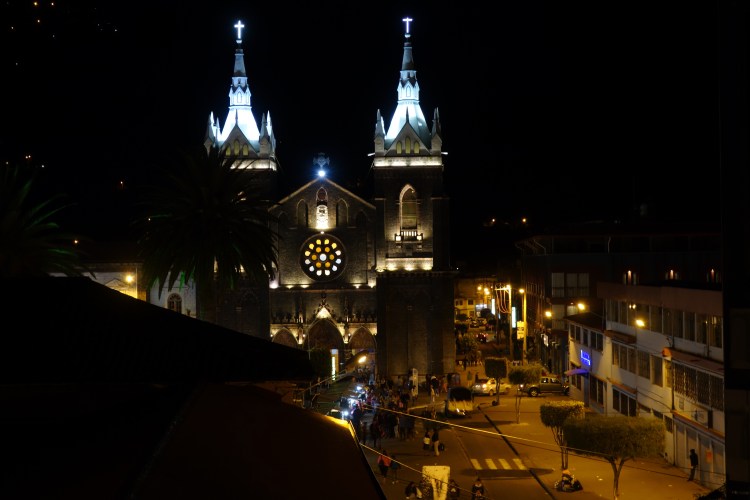
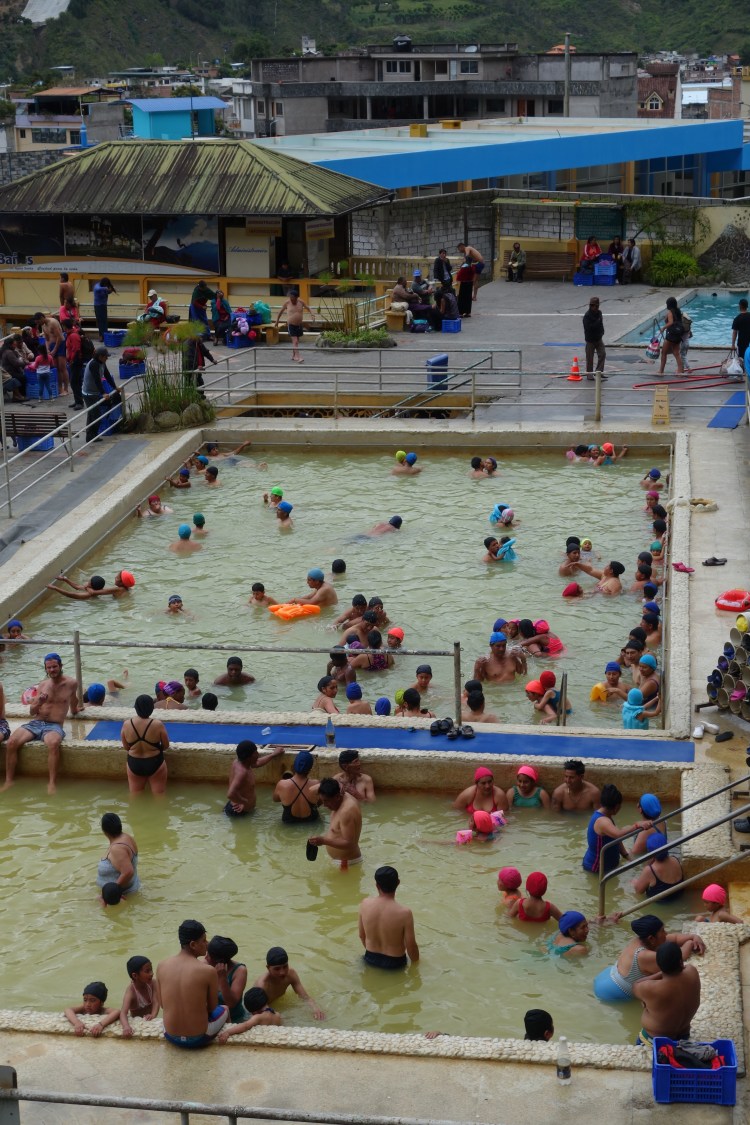
In addition to those making the pilgrimage to Baños for faith or extreme sports, another major draw card of the town is the thermal springs. In fact, Baños’ entire name is actually Baños de Agua Santa, meaning ‘baths of holy water’ in Spanish. Prior to arriving in town, I had read that the springs have a reputation of having healing properties due to their content of various minerals. It sounded like the quintessential rest day activity. Unfortunately, the reality wasn’t as appealing as the written description. The springs were in fact a concrete pool, full to the brim with milky-yellow water and hoards of bathers sporting the mandatory, loose-fitted lycra swimming caps. Fortunately, by this stage of the day, David was back on deck, having slept for 16 hours. With no desire to join the crowds for a soak, we resorted to another liquid we knew held healing properties; beer.
We positioned ourselves at the bar of The Stray Dog – a venue serving a range of locally brewed beers, each with a canine-themed title, such as the ‘On Heat Belgian Wheat’. It didn’t take long to realise that we were in the presence of a couple of hardened expats. The owner of the bar, Jason, was originally from Chicago and had opened the bar seven years ago. He was relatively reserved, looking out from under the brim of his truckers hat with a look of wariness on his face whenever something was said. It was only when the older guy beside us began chatting that we began to understand Jason’s constant skepticism.
Jeffrey had moved from California 37 years ago to start an organic farm in central Ecuador. His face was drawn and the veins in his hands were as thick as the earthworms you’d expect to uncover on a fertile organic farm. He continuously ran his fingers through his straight silver hair to keep it from covering his eyes as he lent forward on his barstool to talk to us. His eyes were piercing and his nature seemed a little erratic. However, he spoke with such enthusiasm about the region, especially the rivers and forests of the Amazon Basin which we were heading into the next day. He pulled out a bottle of vodka, made by Russians living on the Ecuadorian coast, and proceeded to tell us about the palm grubs that we should try to get our hands on whilst in the lowlands. Apparently, they taste the way bacon tasted forty years ago.
Just as we were about to leave, the door swung open and another expat entered. His face was predominantly a smile, his eyes were almost entirely pupils, and in his hands was a jug of un-carbonated homebrew . It was Seth, the man responsible for all the beers on top at the bar. The beer he had just brought in was a fresh IPA, of which he was clearly proud. He had moved from the states a few years earlier to set up a microbrewery on the outskirts of town. Perhaps it was the inebriation (although I imagine sober-Seth is quite similar), but he was pretty unreasonable and argumentative. We started to angle for an exit when he began talking about his love of working in ‘grey areas’. This came up when David was telling him about his new job in the bike industry. Seth moved in close and pitched the idea of buying cheap bikes from David to sell in Ecuador, where he was sure they could split the profits and make a sweet packet. Jeffrey then piped up, reminiscing about the day the airlines changed their baggage policies. Apparently he used to be able to take up to seven backpacks between Ecuador and the US. Once this changed he needed to look for a new job. The lack of details in this conversation were filled in by my imagination. Seth continued to tell us about the money he made selling medicinal marijuana in California. We made our way for the door after he argued that what he did was ‘exactly the same as The Red Cross – people gave me a donation and I gave them help’.
After a day spent amongst tourists, waterfalls, bathers, and those seeking divinity, an evening with these expats certainly added to the eclectic mix of people in Baños. While sitting at the bar, listening to their eccentric and outspoken opinions, it was difficult not to wonder how their lives had lead them to this part of the world. Despite their harmless nature, it was clear that the was an undercurrent of bitterness towards life and governments that flowed as strongly as the river below the town. I am sure their true stories are much more wild than the barstool yarns we heard while drinking at The Stray Dog.
Our story is all of a sudden seemed much simpler. We rode into Baños and the next day we were going to ride out again, making our way to yet another biome on offer in Ecuador; the rainforest
Welcome to the jungle
With a day of descending ahead of us, we were in no rush to leave Baños. This allowed time for a few extra coffees, as well as letting the heat of the day lift the clouds out of the valley, exposing the grand scale of the surrounding landscape.
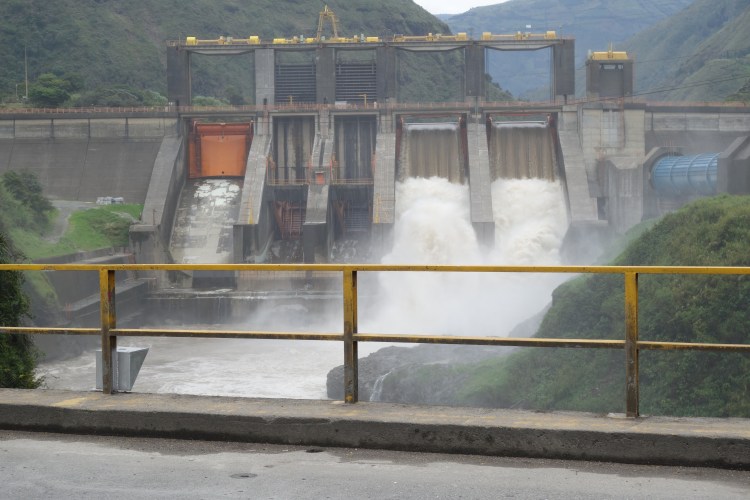
The road was dry and the air was warm as we sped away from the town that is considered to be the gateway to the Amazon. The 60km from Baños to Puyo is thought to be one of the best road rides in the entire country. It wasn’t difficult to see how this stretch of asphalt, known as the Ruta De Las Cascades, had earned this title. The road follows the Pastaza River, which grows in volume and ferocity with with each tributary. Not far below Baños, we passed a hydroelectric dam, which was discharging an enormous amount of water and arguably generating more watts than we were on our bikes. With over 60 waterfalls surrounding the town of Baños alone, hydroelectricity is an obvious and exploited source of electricity in the region.
Given the legendary status of this road, there were a number of cyclists making the descent. However, they would be catching one of the many busses designated for bike riders, back up to Baños where they could enjoy a beer in the evening. For us, on the other hand, each meter of elevation lost, would have to be gained again in a few days. Despite the exhilaration of the descent, this thought was constantly in the back of the mind.
Like everywhere in the world, economies are generally built on opportunity. The towns lining the Ruta De Las Cascades epitomised this phenomenon. The entire way down the valley, zip line operators were harnessing tourists and sending them across the river below. In such a wild landscape, it was bewildering to watch people flying above the valley with selfie sticks outstretched to capture their expressions whilst taking in the unique perspective of the river below. Unbeknown to us, our opportunity for a cable assisted river crossing would come the next day.
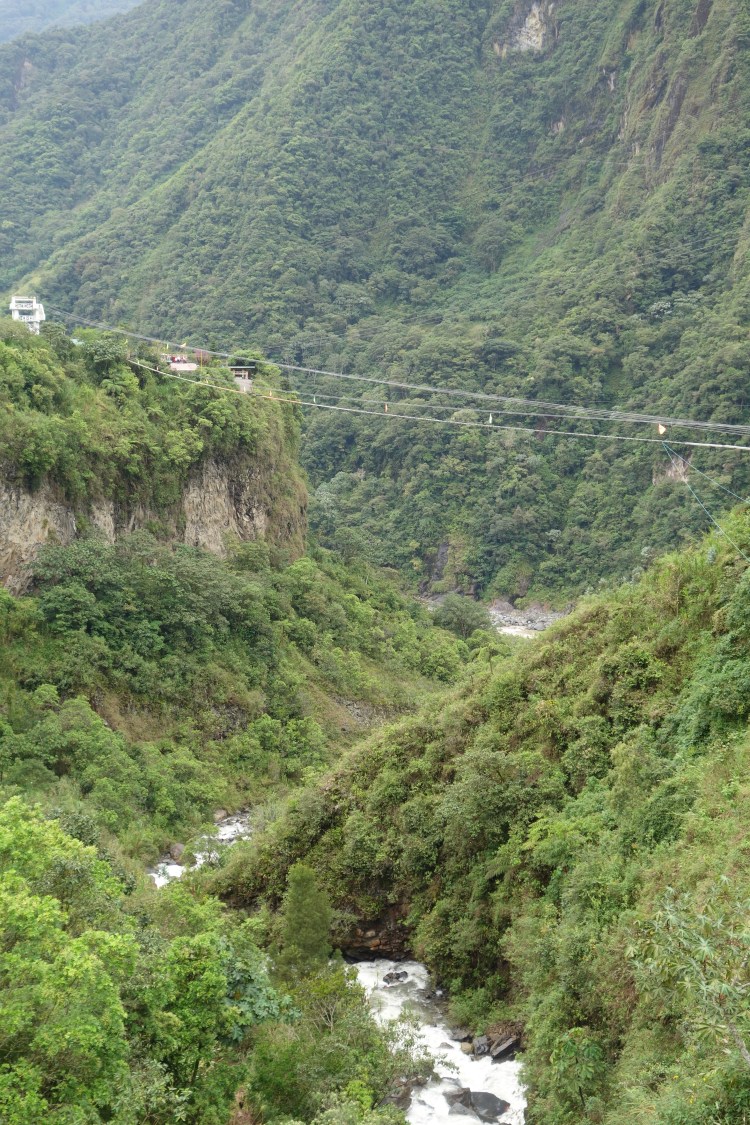
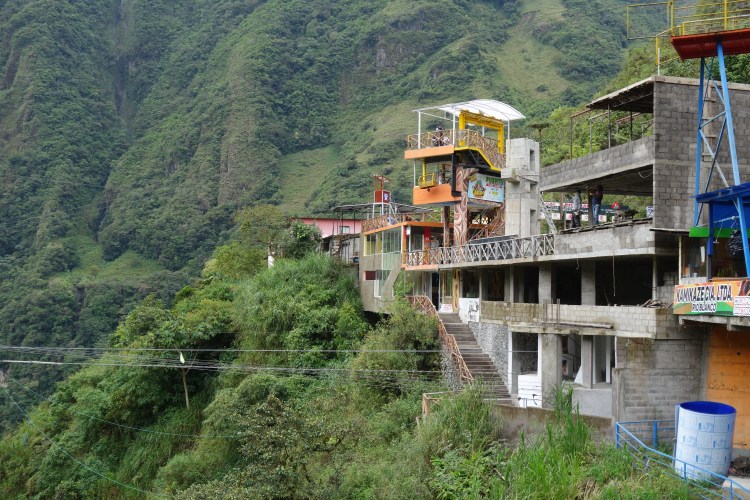
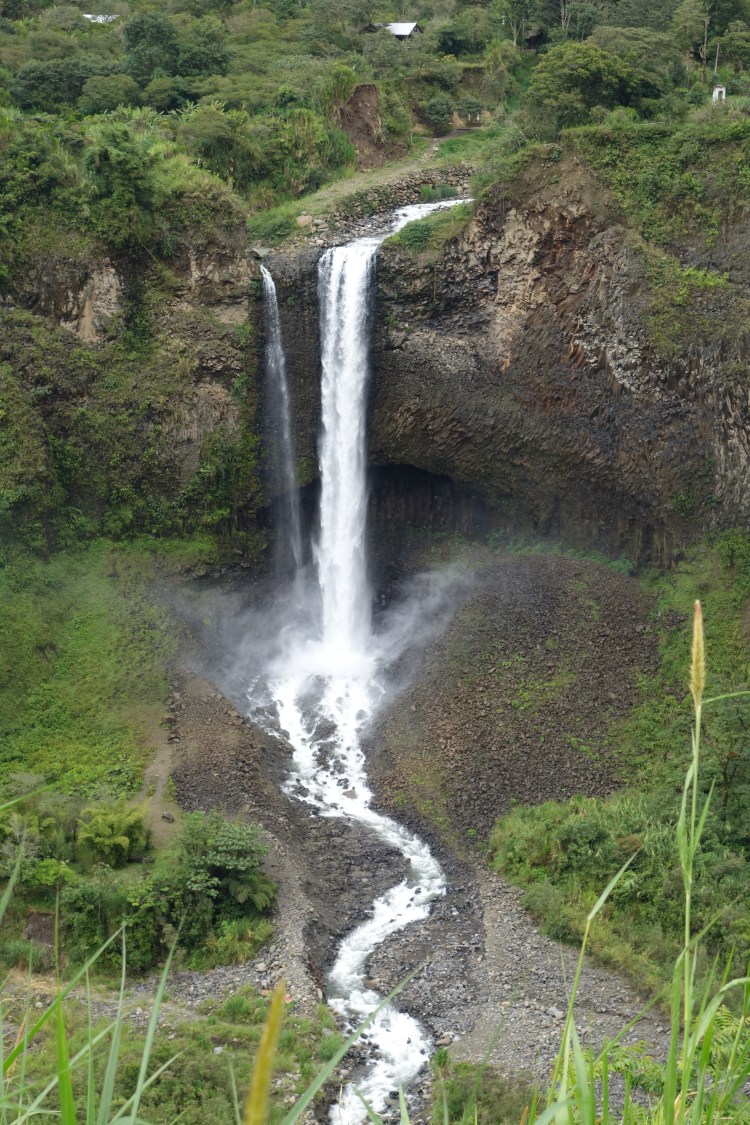
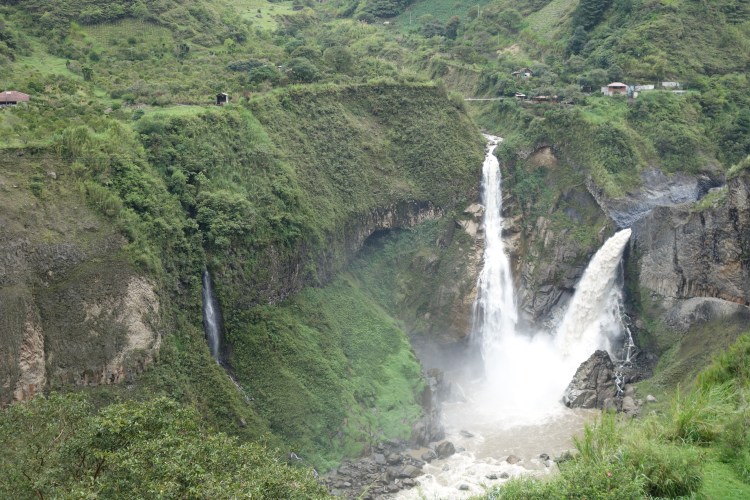
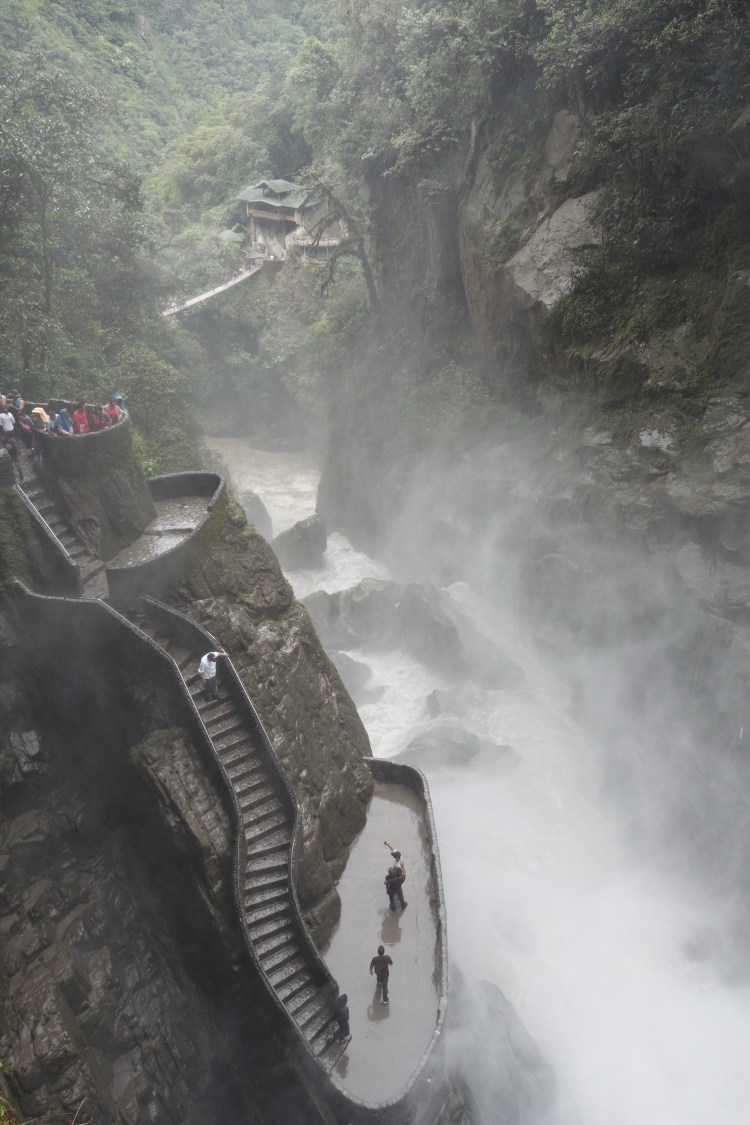
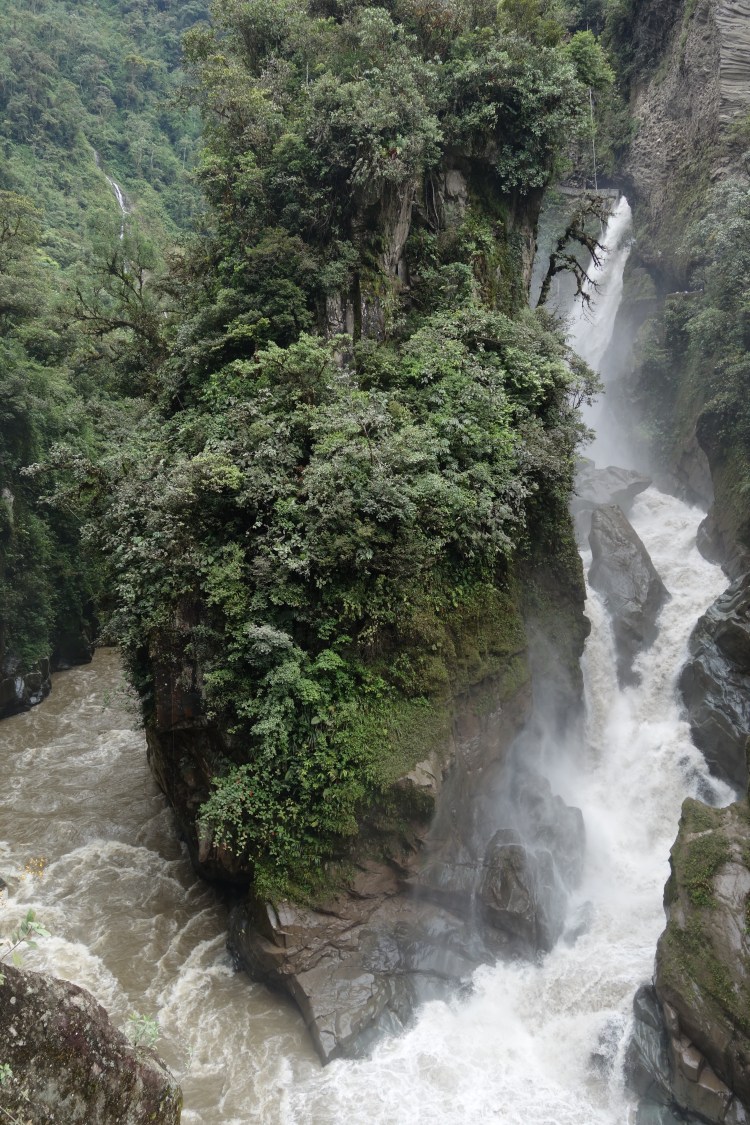
One of the main attractions on the road to the rainforest was Pailon Del Diablo – the Devil’s Cauldron. This hydrologically-overwhelming feature is positioned deep within the gorge below the small town of Rio Verde. We parked our bikes behind the stall of a friendly girl selling macrame necklaces and other trinkets, before making the short walk down to the river. The closer we got the louder the falls sounded, and the wetter people returning back up the trail appeared. Joining the crowds at the bottom, we were awestruck by the volume of water passing through the viciously narrow passages of rock. Equally as captivating was the infrastructure at the site. A swing bridge provided the crowds with a great vantage point from which to view the cauldron. However, it was the stone staircase leading to the back of the falls that was the most enthralling aspect of the walk. It remains a mystery to me how such an intricate and seemingly perilous construction even exists. We followed the stairs and tunnels to the highest point, where a soaking mist provided a operatic vista of the forested landscape below. It was an enticing scene, inspiring an eagerness to get back on the bikes and deeper into the rainforest.
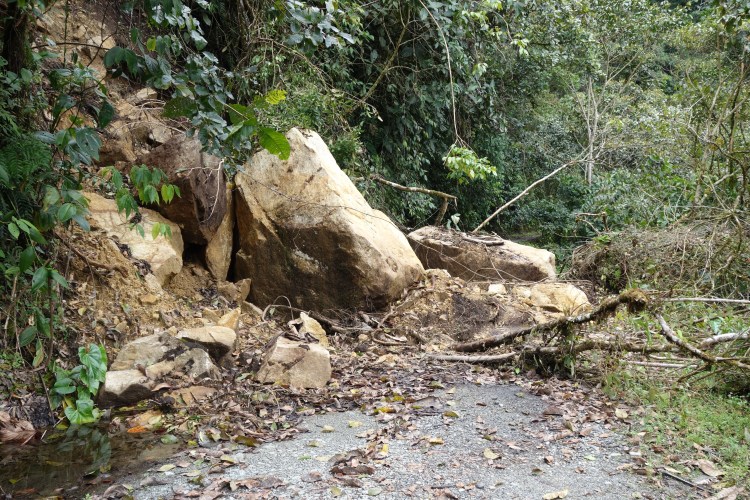
Over the remainder of the afternoon, we followed the contours of the Pastaza River valley. At times the road disappeared into dark tunnels through the hillsides. However, narrow, cobblestoned detours allowed us to take a more scenic route, and clearly a much less travelled path as a number of land slips and fallen trees made for some hike-a-bike sections.
As we closed in on Puyo, the afternoon rain began to fall. Given the heat of the day and the close proximity to our destination, we decided to continue through the drenching precipitation. Within minutes, we had both fallen off our bikes and the energy of the day changed in an instant. Despite being fine, I was certainly a bit shaken as I picked my panniers up off the road and wiped the claret from my left knee.
Welcome to the jungle!
We stopped briefly at a roadside stall to take cover. Whilst picking some gravel out from beneath my skin, we both agreed that we should probably give the forces of nature in the rainforest a little more respect. Stopping to let the afternoon rains past would also be a good opportunity for a siesta over the next few days.
The rain eased and we commenced our race into Puyo. The road flattened out and David’s road racing background began to show as he jumped into the slipstream of a passing truck and left me in his wake, struggling under the weight of my steel-framed ride and fully loaded panniers. When I did catch up, he was beaming.
‘I just couldn’t help myself!’
The birds had increased in vibrancy and it was evident that the roadside vegetation would swallow the asphalt in days if not kept in check by passing traffic. The air was think and the smell of rain was prominent. As we walked the streets after a dinner of rice and fried plantain, I could hear the constant hiss of insects coming from the trees on the edge of town. We had clearly made it to the rainforest.
High gears for low roads
Looking east from Puyo, the rainforest stretched to the horizon. It was somewhat disorientating. Every other time I’ve descended from a mountain range and seen the landscape flatten out before me, it has been on the approach to a coastline. Regardless, the featureless horizon line in front of us meant one thing; flat roads.
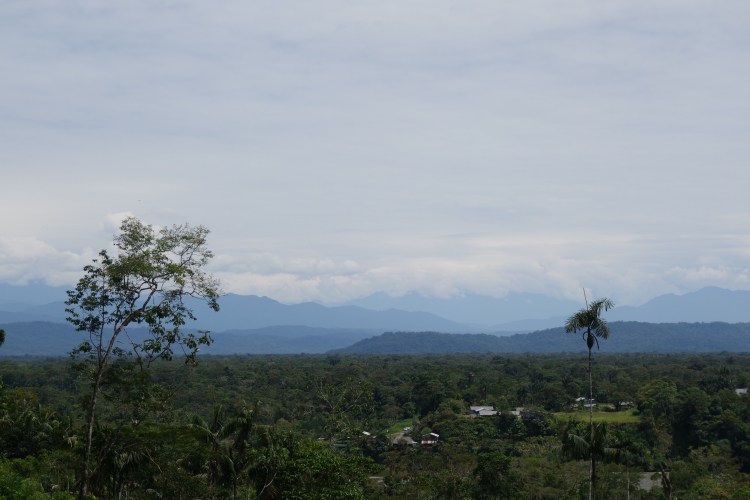
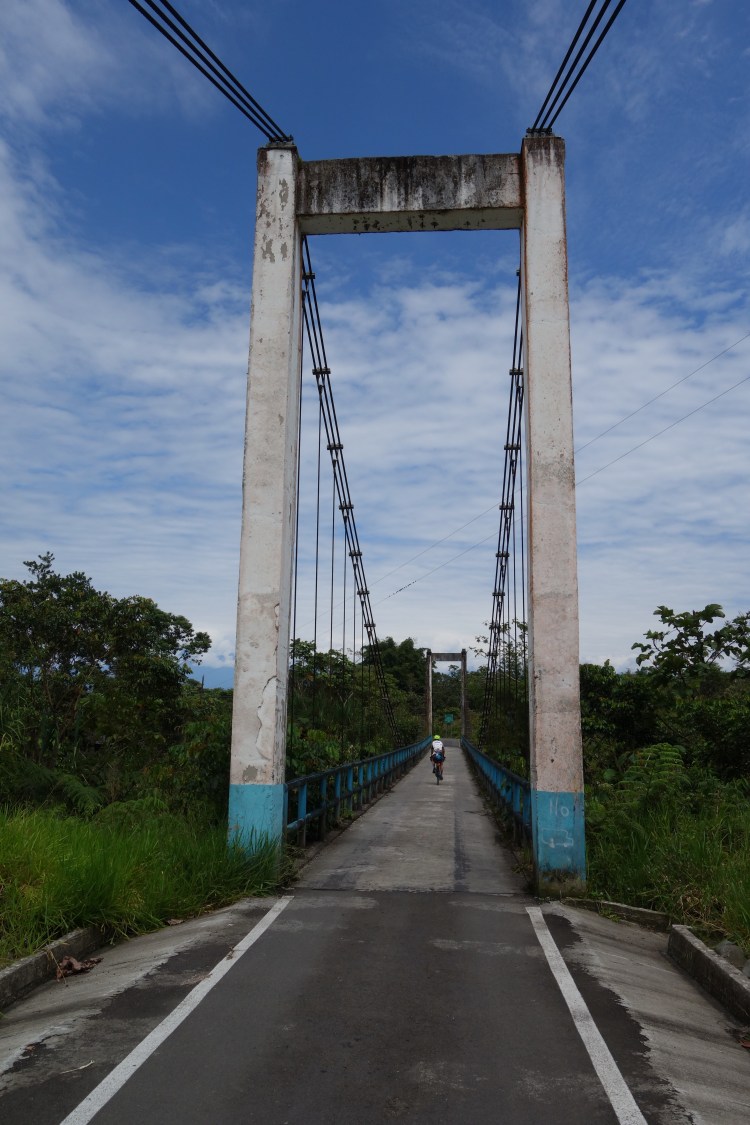
We left town and crossed a bridge over the Rio Pindo Grande, our shadows causing small fish to dart back under the protection of the overhanging riverbank vegetation. Having weaved between potholes and tracts of soft sand whilst riding out of town, we were stoked to find 20km of fresh, smooth asphalt on the other side of the river. Jeffrey, from The Stray Dog, had mentioned that a lot of the roads in the region had been resealed. I’m not sure when exactly, but the new, black surfaces were clearly a novelty for man and beast. Dogs were sprawled out during the early hours of the morning absorbing the retained heat from the day before. I also saw people using the hot surface to dry maize and cacao, as well as utilising the abrasiveness of the pavement to sharpen their machetes. Adaptation is rife in the Amazon. As the morning wore on, the birds and butterflies increased in quantity and diversity. At one point were were even treated to monkeys chasing each other between the trees on the side of the road. It was a far cry from the wind blown hillsides where we had met only days before. Despite being in the lowlands, the Andes had an overbearing presence on the western horizon, standing tall over the rainforest with the higher peaks marred by cloud.
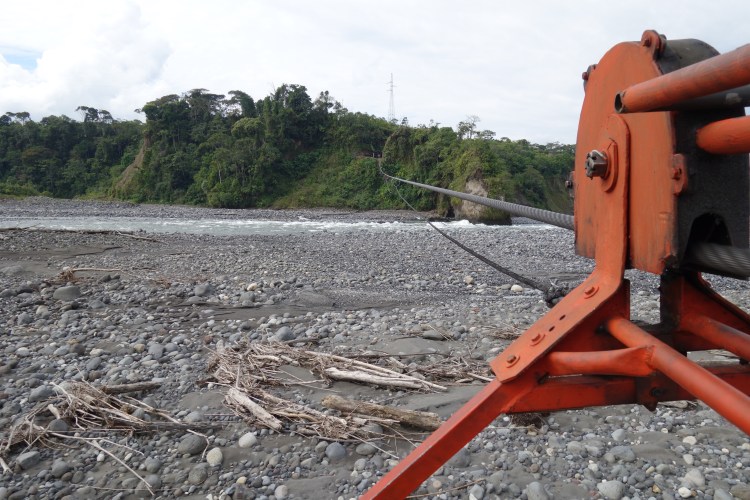
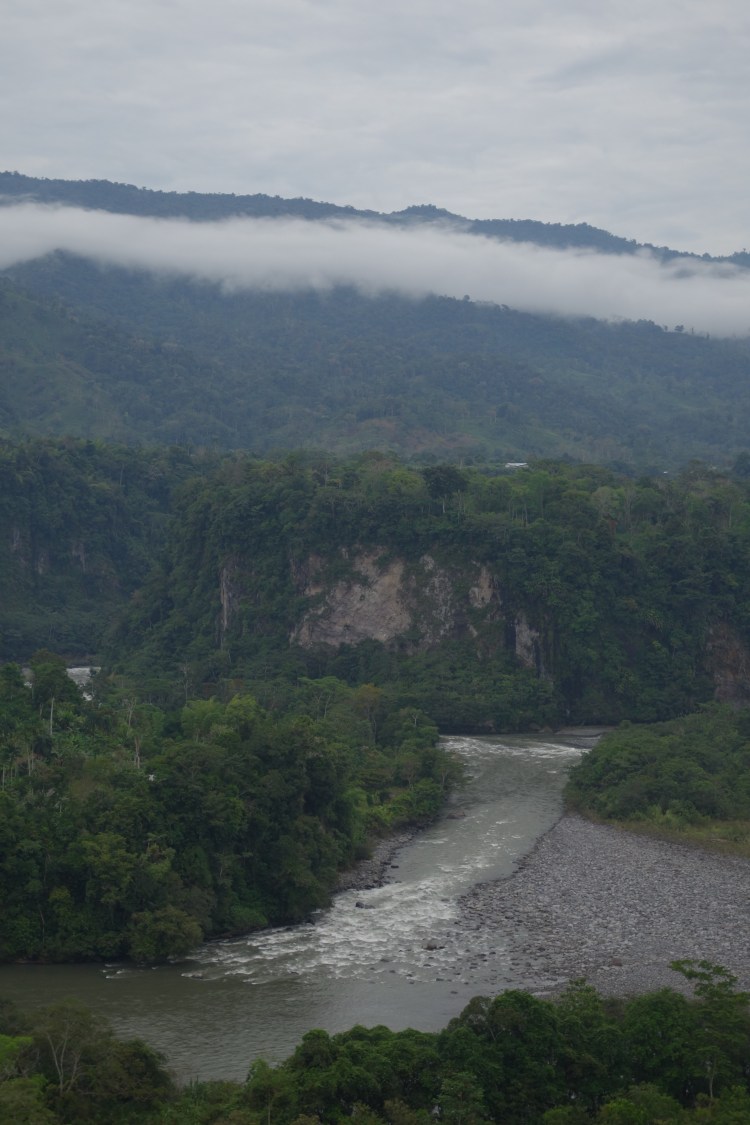
Again, we were following David’s GPS to avoid the main highway. We’d also heard that since becoming sealed, locals had a tendency to test the speed of their cars, so any detours were welcome. The route looked ok on paper. There were two river crossings but the road seemed to begin immediately on the other side, so we threw caution to the warm breeze and trusted there would be a boat to aid our crossing. Arriving at the Rio Pastaza, the same river that cut through the valley below Baños, we were overwhelmed by both its size and the lack of visible means of crossing. Upon exiting the gorges upstream, the river had widened into a series of braided channels and was at least 200m across. We continued down the steep dirt track leading to the edge of the water. That’s where we discovered how we were getting across.
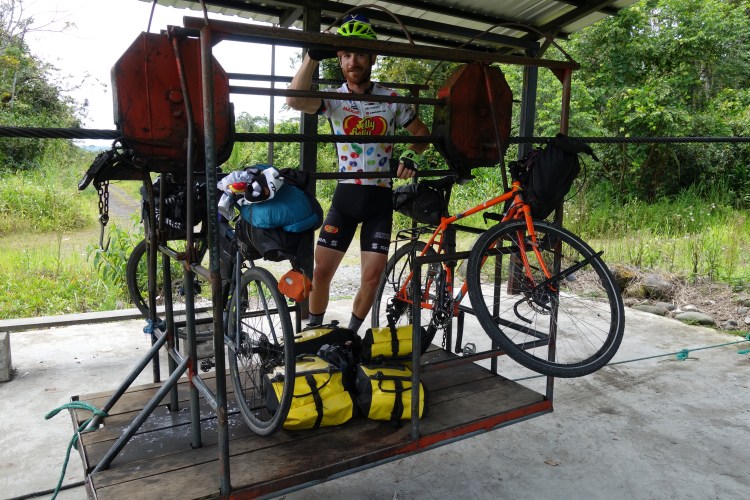
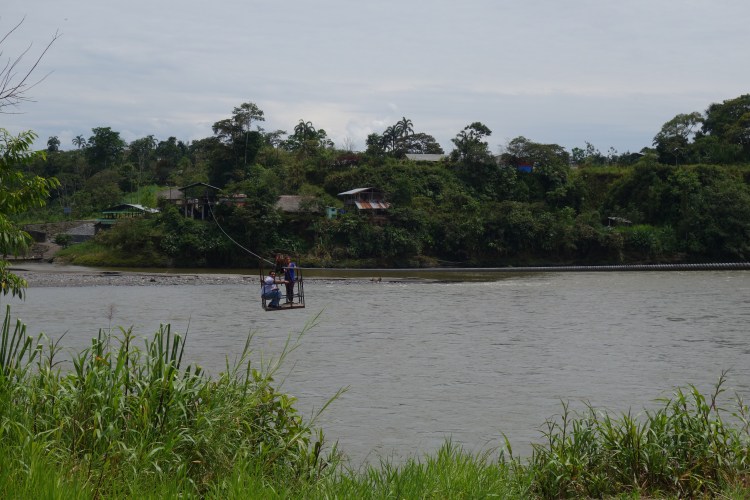
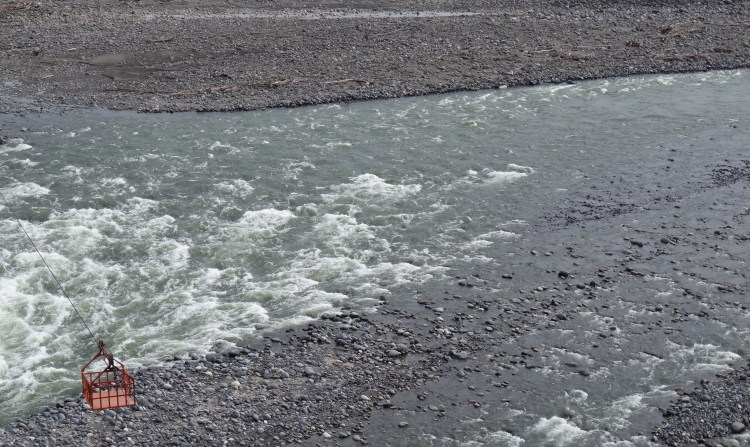
Tucked in behind a small knoll on the edge of the river, was a corrugated iron shed, connected to the far side of the river by a thick steel cable. Standing there to greet us was a young girl with a warm smile and her outstretched arm holding onto our passage across the river; a cable car just big enough for us and our bikes. We loaded up, still a little bewildered by what we were doing, and held on as she gave us a push and jumped on the back. With gravity as our only propulsion, the young girl rocked her body back and forwards to generate just enough momentum so that when we reached the other side, the cable car gently kissed the suspended car tyre, which I assume was there to stop a fast moving ride. With three of us, and two bikes, I’m not sure what you would have to do to generate more speed, but nonetheless, it was reassuring to see a safety measure. We unloaded the bikes, thanked the girl who then worked the cable car back out to the middle of the river to meet another which had been sent halfway, attached to a rope. She joined her car to the retrieval cage and was hoisted back to the other side. All in a day’s work!
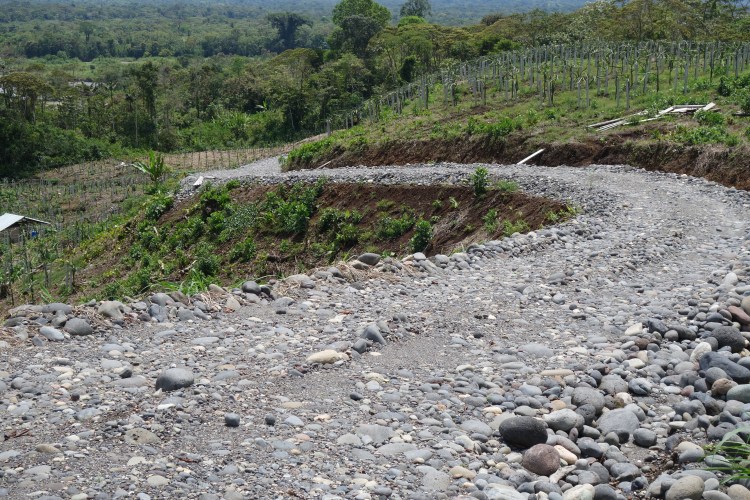
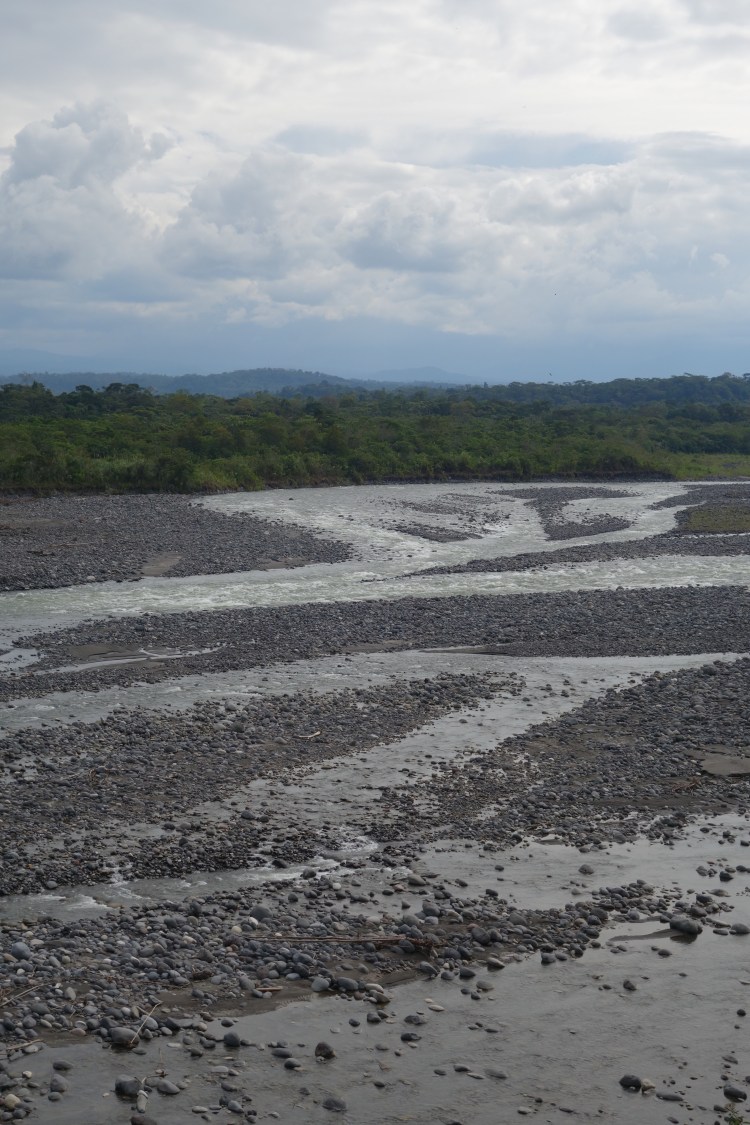
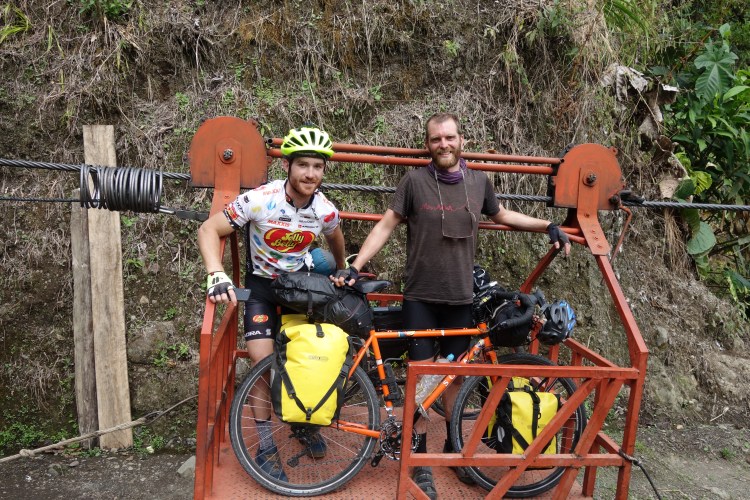
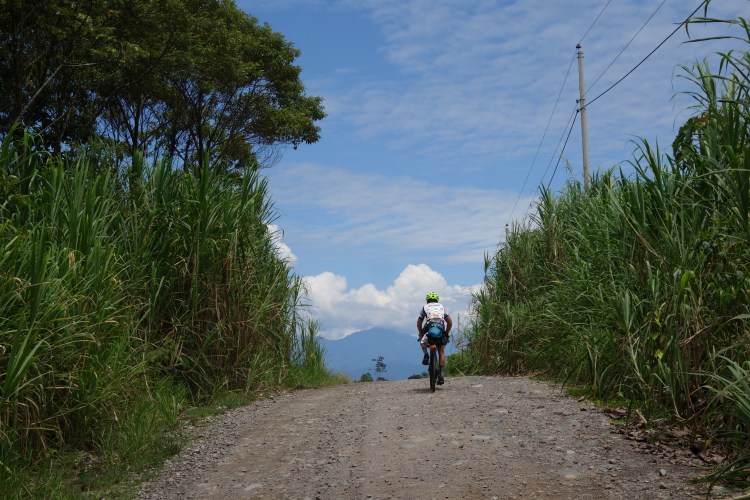
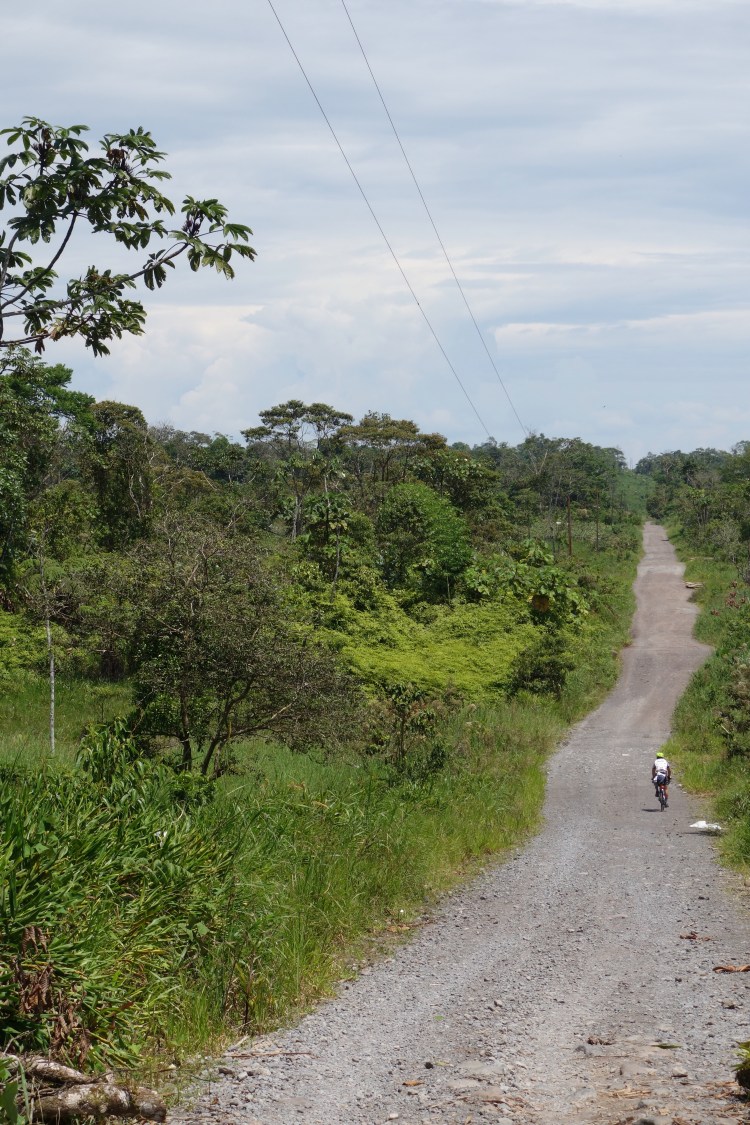
Reinvigorated by the novelty of an aerial journey, we saddled up and continued along the road. For the remainder of the day the route was unsealed and, whilst rough in places, made for a beautiful way to pass through the countryside. We rode between banana and sugarcane plantations, and were encouraged on by friendly locals in the fields. Late in the afternoon, we came to another cable car crossing. This time, our passage was fuelled by a diesel engine. Again, the river below – the Rio Palara – was braided into a tangled mess of small, fast flowing streams. The attendant operating the cable car let us load our bikes whilst he took pictures in silence. I assume cyclists weren’t his usual clientele. On the far side, a local told us that during the wet season, the river is full from bank to bank; an almost incomprehensible thought.
That night we made it to the town of Huamboya – a small congregation of buildings that makes up for its size with unnecessarily loud traffic throughout the entire night. The next two days involved undulating, yet smooth, roads as we skirted the base of the Andes, constantly in anticipation of the climbing ahead. We stayed in the towns of Macas and Santiago De Mendez, which was also the turning point for the hills. The next major destination was Cuenca – 165km away with a mere 3000m of climbing. When you live on an island where the highest point in 1617m, numbers like this don’t really sink in until you’re on the road. It only took several kilometres to realise that we were in for a memorable few days in the saddle.
‘This life is only once’
Every time we mentioned to a local that we were riding from Santiago De Mendez to Cuenca, it was met with the same reaction; raised eyebrows and an unreassuring laugh, as if to question our sincerity and/or sanity. Over the last few weeks, both of us had become conditioned to Ecuadorian estimations of cycling times and route descriptions. When asking how far it is to the next town, a common answer would be something along the lines of: ‘In car, one hour. On bike, two hours’. Obviously, this sort of logic is flattering but taken with a grain of salt. However, when asking for a description of the road ahead, it is common to hear ‘plano’, Spanish for ‘flat’. Unfortunately, the only way to test the accuracy of this description is to just keep pedalling. Through experience, I’ve come to realise that ‘Ecuadorian flat’ is very different to my understanding of the term.
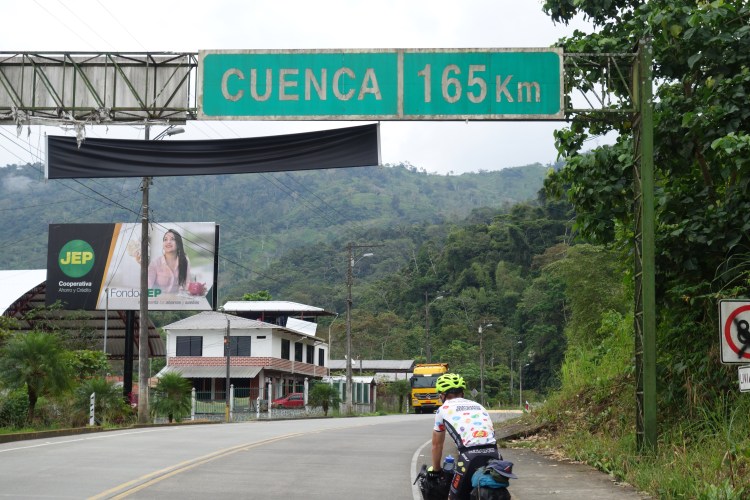
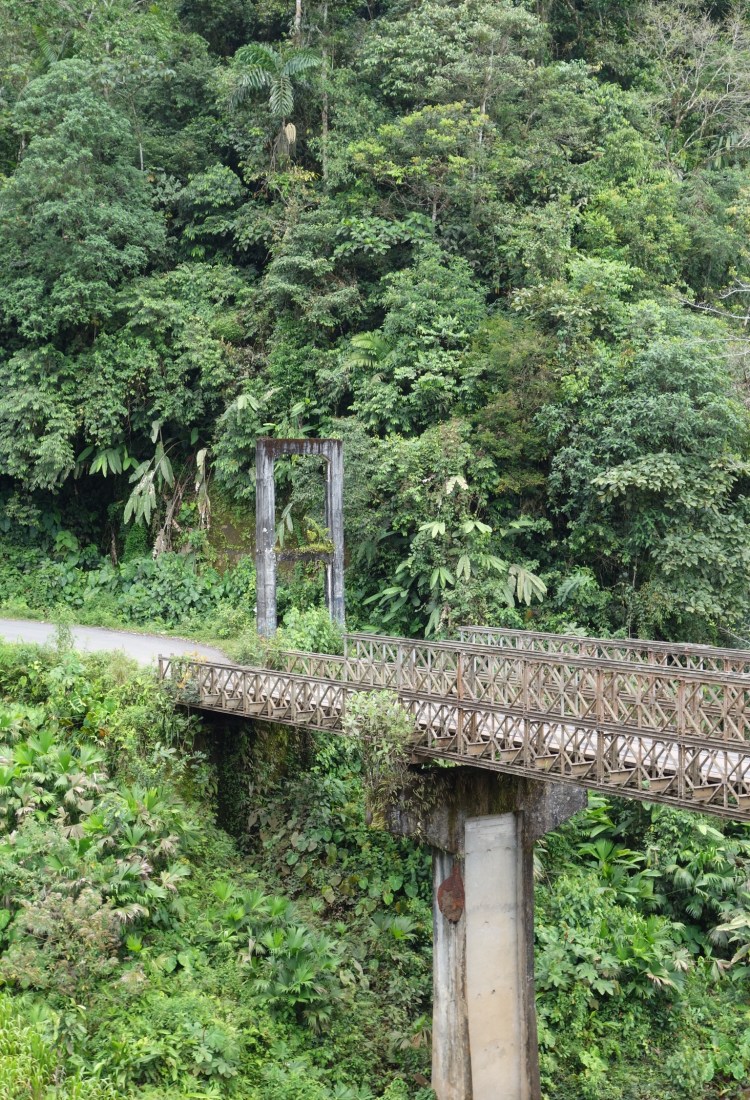
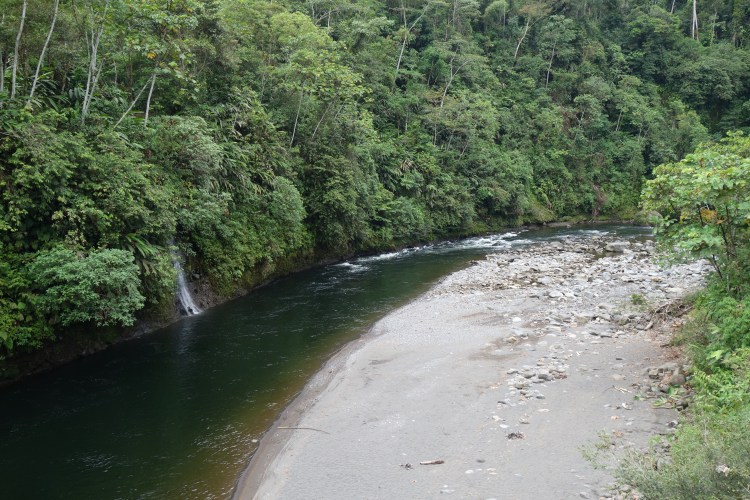
This time, we knew the next two days would be devoted to climbing so there was no point asking for local input. We rose early, filled our stomachs with rice, eggs and black coffee, and hit the road. Despite putting a dent in the kilometre count, the first 15 minutes of the ride were worryingly spent descending to a bridge over the Rio Paute. Adding a few extra meters to the climb ahead, this river crossing marked the beginning of the ascent.
It didn’t take long to get into a rhythm, which both of us were apprehensive to interrupt. As a result, we took very few breaks over the course of the day, only stopping for photos and to dip Oreos in a jar of peanut butter. The energy from the confectionary was matched by the motivation we gained from the views.
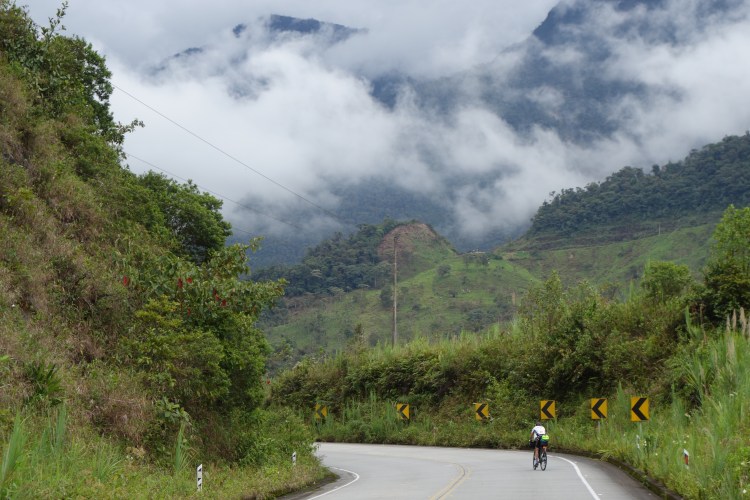
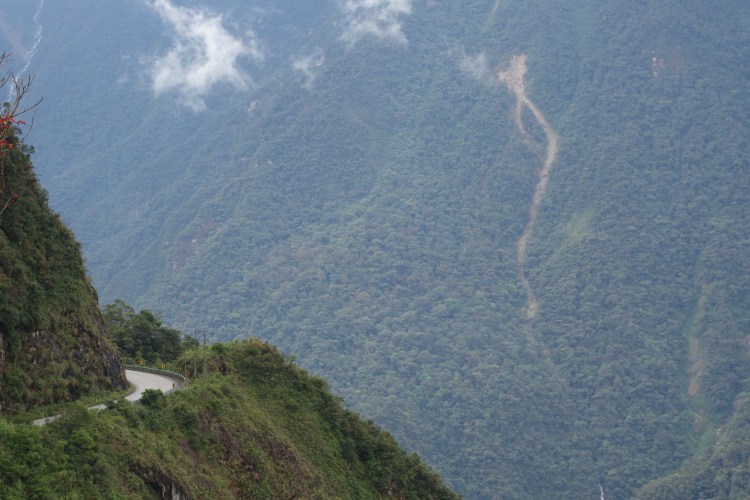
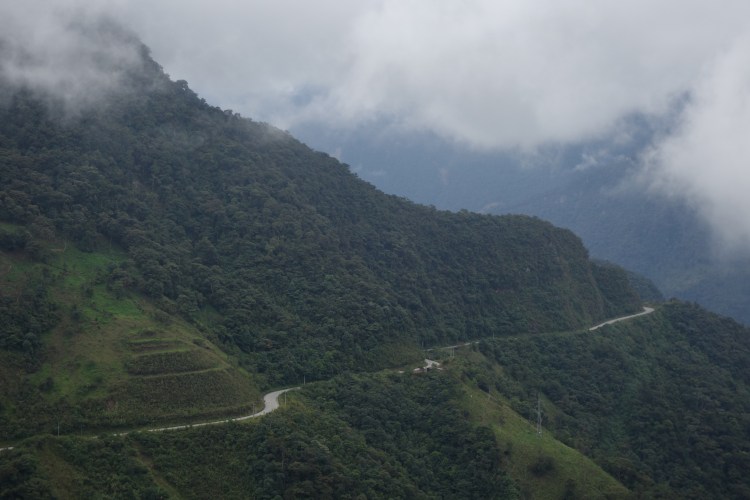
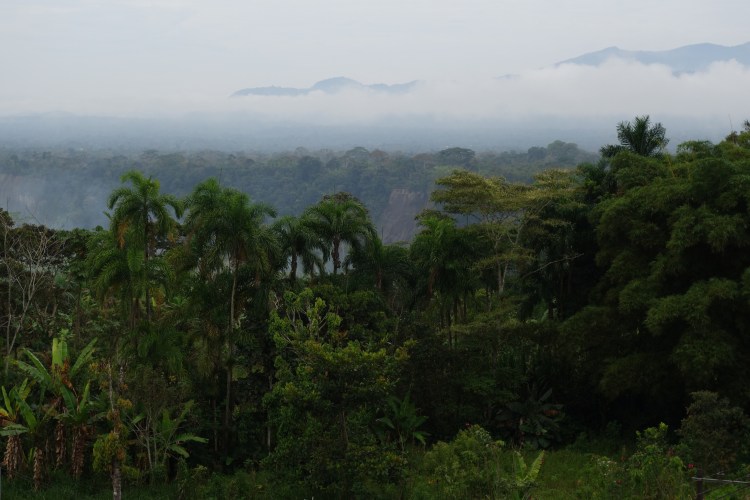
As we climbed, the valleys fell away below us and roadside waterfalls became a common occurrence. Most impressive were the waterfalls on the opposite side of the valley. The pencil-thin, white lines appeared to be falling from the clouds as they mapped their way down the steep relief of the green hillsides. Due to the tight contours of the landscape, there was very little evidence of humanity over the course of the day. But when we did come across people, it was always unexpected and entertaining. Late in the afternoon, just when we had begun to lose energy, we rounded a corner to discover a heated game of volleyball. The rivalry appeared fierce, and the fear of losing the ball over the edge of the cliff was equally as tense. We sat and watched whilst the canteen lady prepared us some fried potato.
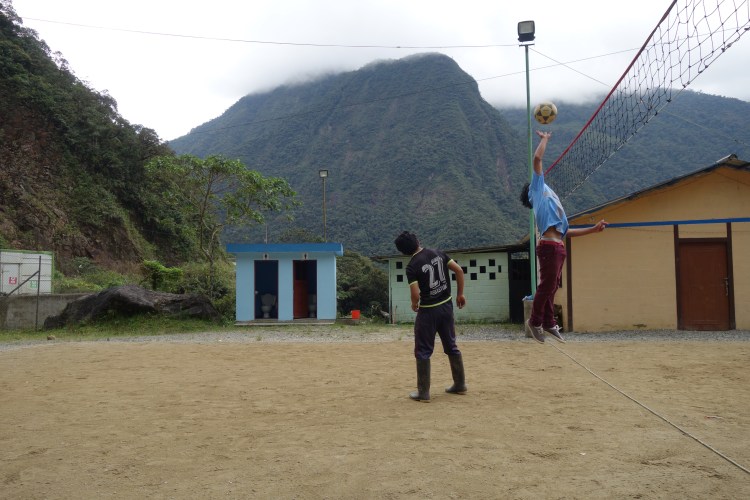
We pushed on for another our or so before beginning to search for camp. A light rain had begun to fall and clouds were beginning to descend into the valley, also in search of a resting place for the evening. The first place we checked out was a little soggy underfoot so we kept riding.
Surprising both us, and the GPS, was the fact that around the next corner lay a small town tucked into the hillside. We asked the first people we saw if there was somewhere we could camp, to which they pointed up the road, saying ‘football’. Under the impression we’d find another mountain side sporting ground, much like the volleyball court earlier in the day, we pushed on. What we discovered was a large, undercover, indoor sporting complex. We rode in, only to be accosted by a large dog, who’s relentless barking at the end of a long day on the bike really tested my tolerance. A lone shop owner told us the dog’s name was Max, but this element of familiarity made no difference to his persistent yapping. We asked the owner of the shop if we could sleep in the open shed beside the courts, to which he gave us permission. Just as we were about to set up for the night, a Ute pulled in and two guys jumped out with some empty crates. They proceeded to hand the shopkeeper some money in exchange for what appeared to be all the beer in his shop. The larger of the two men, then turned and asked us where we were from, in perfect English. His name was Olger (‘not Ogre, I’m know I’m ugly but come on!’). Denim clad and proudly sporting a cowboy hat, he was a confident man. His friend, Wilson, was dressed head to toe in a matching tracksuit, which cast him as the perfect sidekick.
Within seconds, Olger had bought a bottle of scotch and pushed a glass into our hands. It turned out that he had spent 20 years living in Connecticut, just a few miles from where David had grown up. That was worth another drink. After three shots on an empty stomach and with over 2000m climbing in the legs, we were sufficiently buzzed. He invited us to a party he was having up the road.
‘It’s only a few kilometres. Just ride up later and there’ll be a barbecued pig and beer’.
We clearly looked better than we felt.
As the men got back in the Ute, Olger said they’d be back down later when the games begin, pointing at the court behind us. With no idea what he was talking about, we set up our stoves and cooked a pasta dinner, anticipating bed in our spacious new room.
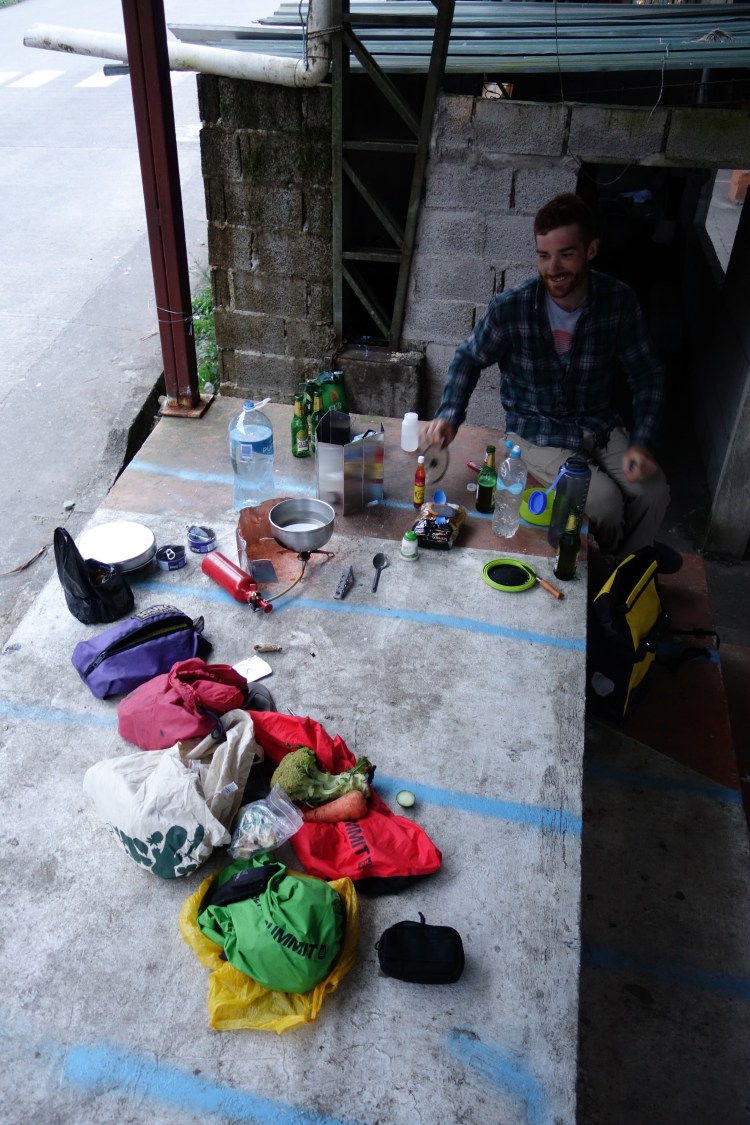
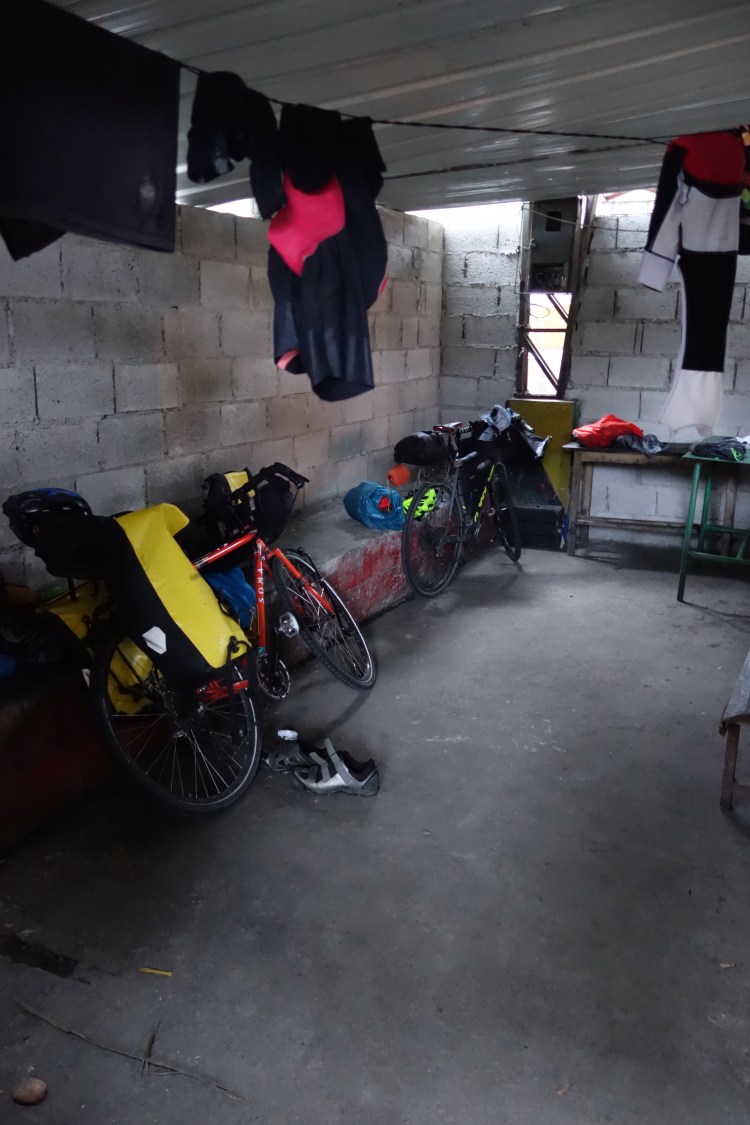
Alas, as we were doing the last of the dishes, a young guy appeared from nowhere and walked through our ‘bedroom’, hitting a switch which caused the enormous lights above us to flicker to life, illuminating the court. Over the course of the next half hour, the arena filled up with a mix of lively local supporters, food vendors, and numerous players decked out in brightly coloured kits. Only hours before, we had arrived in what appeared to a sleepy highland village. Now, we found ourselves in the midst of an Andean version of The World Cup.
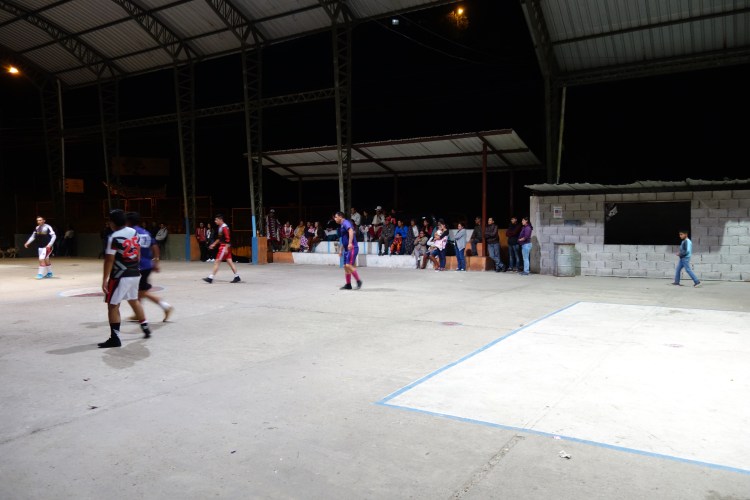
As the first whistle blew, Olger and Wilson pulled up right on cue. We made our way over to them, where once again we had glasses thrust in our direction as the top came off another bottle of scotch. The boys clearly had bellies full of pig and beer, as they were in very joyous and charitable moods. As the game wore on, the drinks flowed, and we tried to come to terms with the situation we’d found ourselves in. Olger told us this was a monthly event which simply confounded our awe. After the second game, and several drinks, we were beginning to fade. Unfortunately, our bedroom was surrounded by spectators who were only increasing in volume as the evening wore on. Adding to the predicament was Olger, who after countless drinks, was becoming quite the provider of drunk wisdom.
Over and over, we learnt that ‘this life is only once’. He told us that Ecuadorians are poor, but they are happy. Within the same breath he told us that money doesn’t bring happiness, but that he has $3.5 million, three cars, and several houses from working in the US. Rocking from side to side, he told me that we all know when we were born, but no one knows when life ends because the world is round. At this point, I was tempted to raise the flat earth theory, but a dispute would only prolong my bedtime.
Just when I thought the evening was wrapping up, two new teams walked on to the court. Another game was beginning. Ignoring the looks from the spectators, I walked into the shed, stripped off to my underwear and got into my sleeping bag. I have no recollection of the games ending or the young guy coming into our room to turn the stadium lights off. All I recall is waking up to steady rain and a chicken at the end of my sleeping bag.
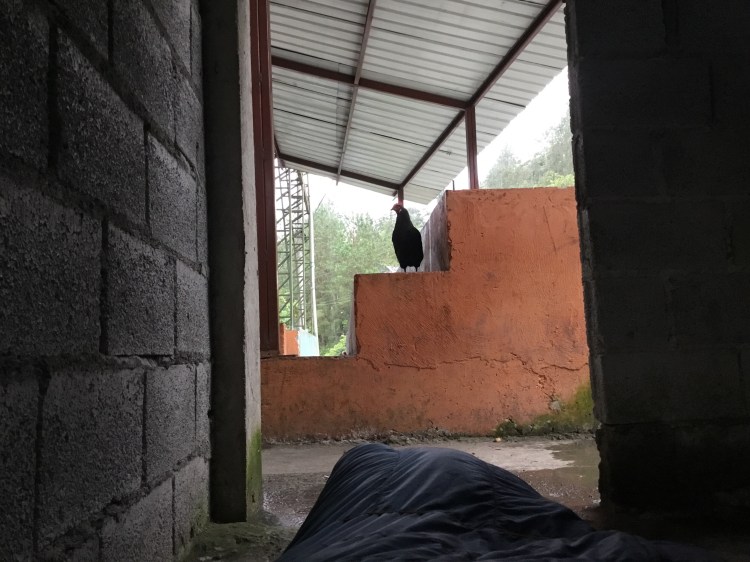
Oh, Ecuador.
Slightly dusty, and wandering around on fatigued legs, we had a slow breakfast of porridge while we waited for the rain to ease. As the sun breathed some heat into the valley, the clouds began to thin and we clipped into our pedals.
Cuenca was still 120km away, and there were still a lot of metres to climb. The first two hours were by far the toughest. Struggling to maintain an average of 10km/h, the road continued snaking its way to the top of the valley. Brief respite was provided by the spectacular view of clouds rising from the tree canopy on the adjacent hillside, allowing the sunlight to paint the wet leaves silver.
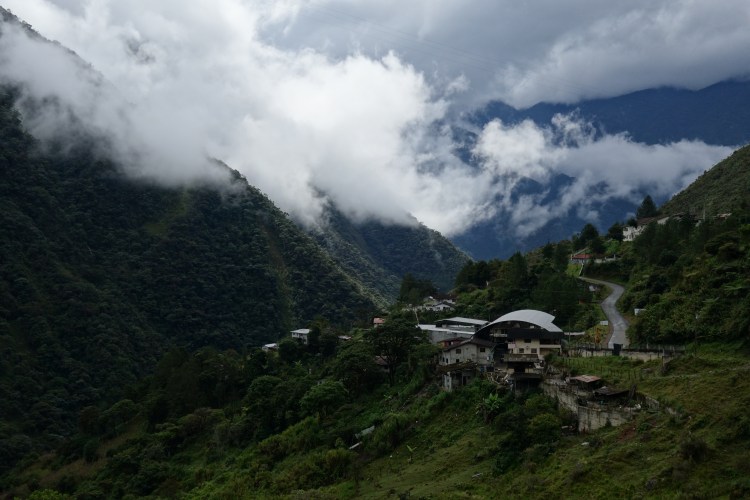
Fittingly, we rode past another enormous hydroelectric dam, much like the one that had welcomed us into the Amazon Basin a few days earlier. Although the gradient of the road was decreasing, the undulating hills were still testing the legs. We knew it had been a week together on the road as, once again, everything was closed reminding us that it was Sunday. We did come across one family who were having a Sunday session, sinking beers and cooking a pig. They waved us over to what I thought was going to be an invitation to lunch. Instead they offered us a longneck, which we politely, yet adamantly, declined after the night we’d had and the kilometres that lay ahead. We sat outside their house having a break. Upon leaving, one of the younger men told us to wait as he ran back inside. He appeared seconds later with a gift for us; two lemons. We tried to replicate his excitement, but lemons weren’t exactly on the top of my cravings list. Conscious of weight, we donated to them to the roadside a few hundred meters later.
There wasn’t much conversation over the course of the afternoon, but it was clear we were thinking the same thing. The kilometres were ticking by slowly, but making it to Cuenca was seeming increasingly unlikely. Every time we descended there was a glimmer of hope, but this was always matched by another climb which slowed our progress. At 4pm, I stopped for a water refill in the town of Paute, 40km from Cuenca. Somehow, we conjured the motivation and decided to give it a crack. Fortunately, the gradient gods were watching over us, as the road weaved its way alongside the Rio Paute, which cut a ‘plano’ route through the surrounding hillsides.
Right on dusk, we rolled into the historical centre of Cuenca. Another 2000m of climbing, 120km, and six and a half hours in the saddle, had rendered us both royally knackered. It wouldn’t be until the next day that we would come to appreciate the cobblestone streets of this stunning city. In that moment, the only things on our mind were basic human needs; food, water, shelter and more food.
The climb out of the Amazon epitomised the diversity of Ecuador. Again, the road carried us between biomes, across temperature and elevation gradients, and past some of the most spectacular scenery I’ve ever seen from the saddle of a bike. The decision to make this detour to the rainforest provided me with what I am sure will remain a highlight of this entire journey. The company was ok too.
Thanks for reading.
 Faults and Folds