If Peru went to a massage therapist, it would be deemed incurable of the knots and tension that riddle its rocky spine. Fortunately, Peru is not an aching body, and instead these features make for some of the most spectacular mountainous vistas imaginable.
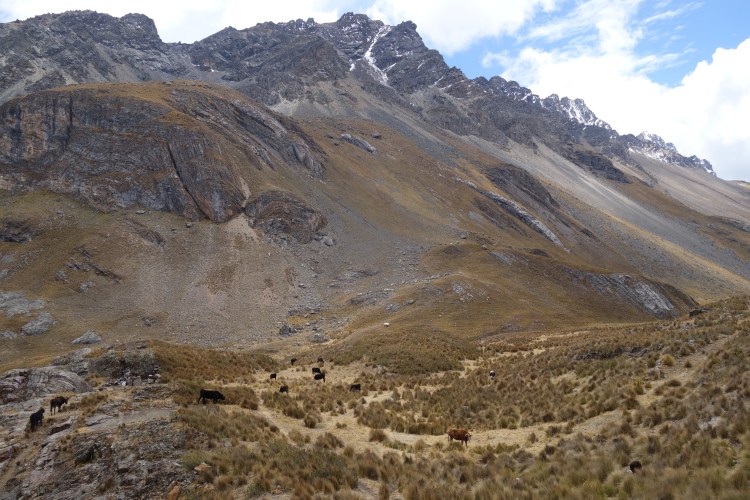
With the wet season rapidly encroaching on the high sierra, and the need to be in Chile by November, I knew a few bus trips would be in order through central Peru. However, the motorised transport would have to wait a few days, as there was a road to the south of Huaraz which had caught my eye when studying a map. Whilst the main highway cuts a large U-shape around the southern end of Parque Nacional Huascarán, the Pastoruri Highway takes a direct route through the park. The road, which is entirely unsealed, climbs to over 4800m, passes the Pastoruri Glacier which many consider will be gone within five years, and is lined with endangered species of flora. Worryingly, yet crucially important, the 70km road through the park is considered to be one of the best thoroughfares for examining the effects of climate change.
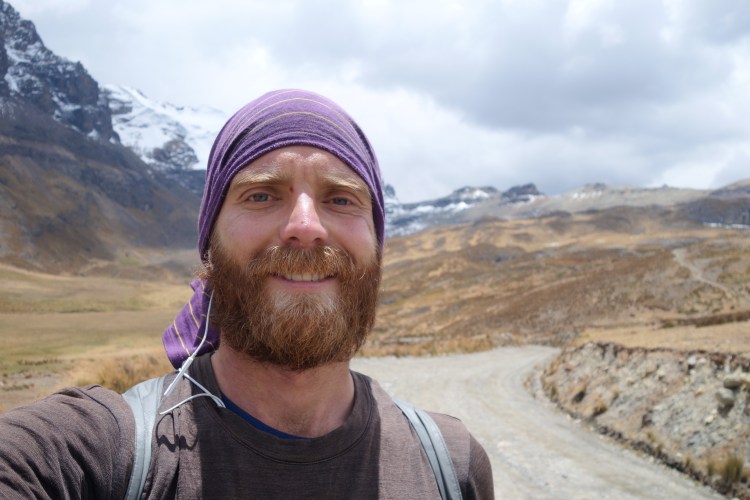
Two days after leaving Huaraz, I had reached a new highest point on a bike, ridden through a snow storm, slept under the stars with stray dogs for company, and taken a wrong turn which took me to the heart of an explosive party. Needless to say, the Pastoruri ‘Highway’ had it all.
Fuelled up
For the last two months, every meal I’ve made on my stove has been complimented by the subtle aroma of unleaded petrol. My stove, an MSR Whisperlite Internationale, is compatible with various white fuels and, if need be, petrol. Since Colombia, I have been met with the same strange looks each time I have enquired about where to buy shellite, kerosene, or simply ‘white fuel’. Whilst these are relatively clean, efficient fuels for cooking up a post-cycle feed, they are also used in the production of drugs. As a result, Colombia, Ecuador and Peru, have various forms of restrictions on such products. Short story is that there has been no way get my hands on anything but unleaded.
On my last day in Huaraz, whilst walking along the narrow, cobblestoned alleys that run adjacent to the main roads, I passed a camping shop. Sitting in the window, clean, shiny and free of black unleaded soot, was the same model stove as mine. I noticed that they were also offering the stoves for rent. Out of interest, I entered the store and enquired as to what fuel they use. Nonchalantly, the guy behind the desk pointed to a row of bottles on the shelf to his right containing a clear liquid and, without looking up from YouTube on his phone, said ‘one litre, 10 soles’.
Perplexed by my excitement, he eventually raised his eyes to look at me. He went on to say that I need to look for ‘bencina’, the name of the fuel he had just sold me. As it is a paint solvent, he reassured me that I should be able to get my heads on it relatively easily from here on south, whether in camping shops or hardwares stores.
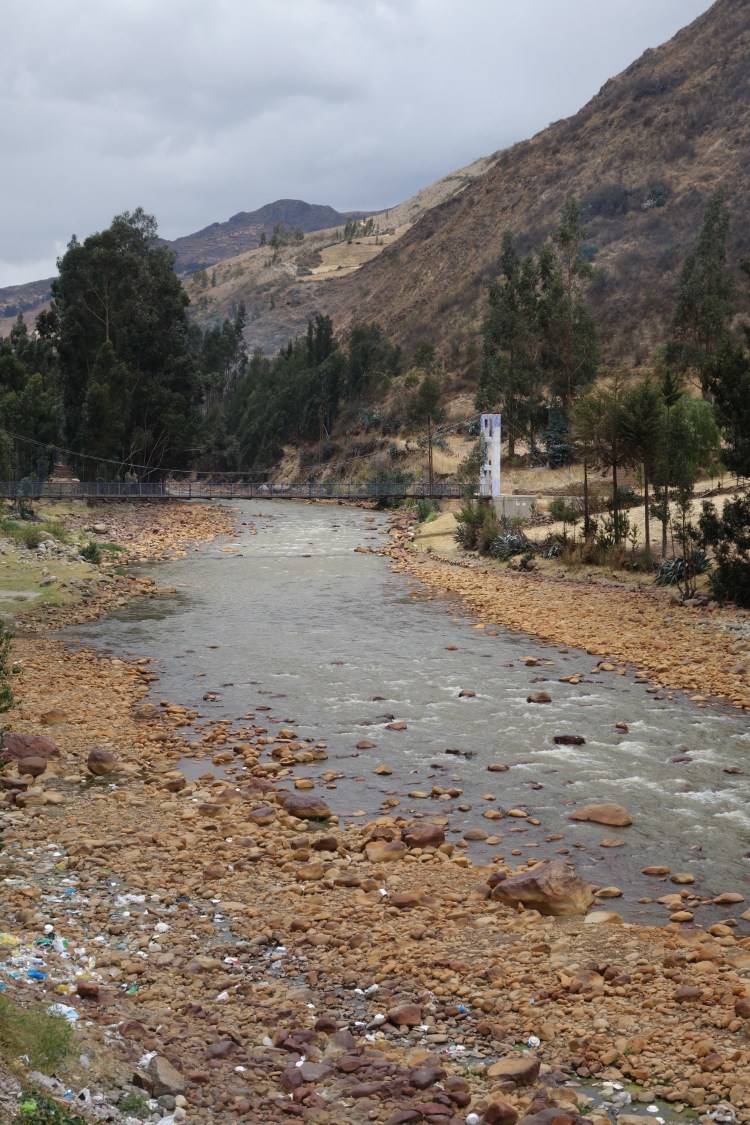
Aware of the afternoon rains that are becoming more frequent as the days go on in Peru, I tried to get an early start from Huaraz. The road followed the Rio Santa south, gradually gaining elevation as various small towns rolled past. Almost at the stroke of midday, and much early than expected, I was forced to take shelter from the weather. Whilst sitting on the concrete step of a primary school, I was joined by two young boys, also sheltering from the rain as they waited for their lift home for lunch. The youngest of the two, Jesus, was transfixed by the orange colour of my bike. Once he had runs his hands over the frame countless times, he lost interest and took to showing me how far he could jump from the top of the stairs. After the boys had been collected, their teacher emerged from the classroom, locking the door behind her and asking me to shut the front gate of the school when I leave.
As the rains began to ease, I checked the map and noted a larger town a few kilometres down the road which seemed like a feasible destination between showers. Fortunately, the threatening clouds atop the distant ridges stayed where they were and I remained dry for the entire afternoon. After 40km of riding from Huaraz, I reached the tiny hamlet of Pachacoto which marked the turnoff to Parque Nacional Huascarán, and the Pastoruri Highway.
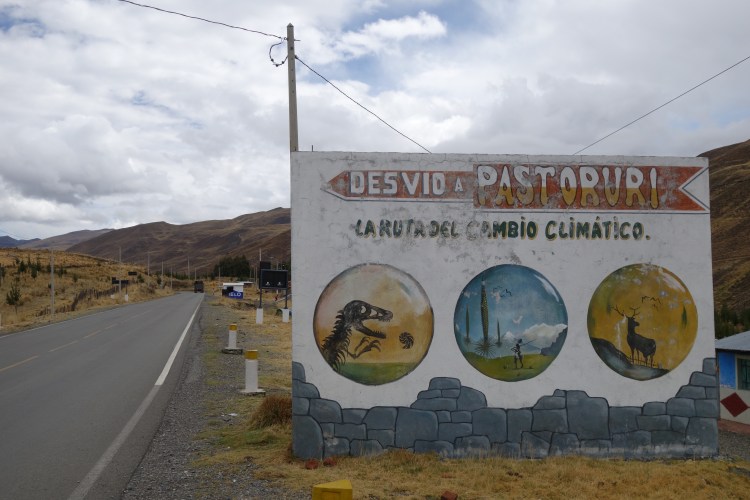
Despite arresting views of cumulonimbus clouds swelling over the alpine pastures, and rousing peaks that punctuated the horizon, it was a bloody tough afternoon on the bike. The 15km from Pachacoto to the park entrance took over two hours. Whether it was the altitude or the relentless corrugations, I was reduced to speeds of 7-8km/h and the occasional stint of pushing.
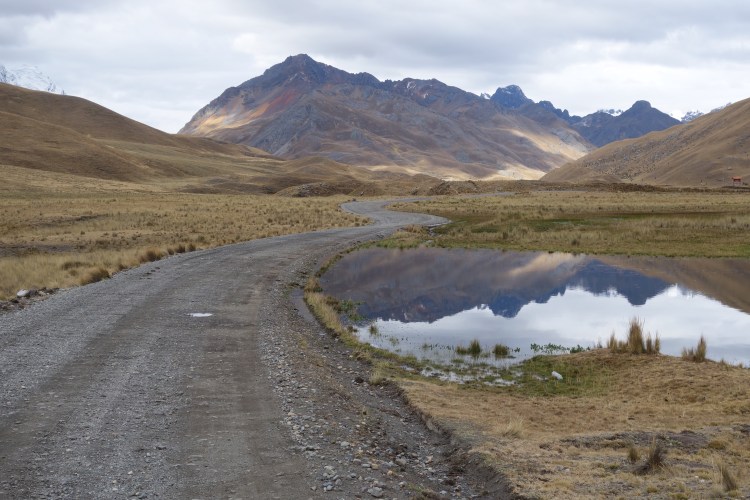
Just as I was beginning to question my choice of route, I crested a small rise from where a stunning, shallow lake stretched out before me. The clear water and submerged reed beds of Laguna Patacocha created the perfect location to watch wild ducks and Andean Geese going about their twilight rituals. The reflections of the terracotta hillsides distracted me from the bone jarring surface of the road, and within minutes of having rounded the lake I found myself at the park entrance.
The fading light and completely abandoned visitors centre made for the perfect place to spend the night. The grand entrance of the interpretation centre provided enough shelter so that I didn’t have to set up my tent. It even had tables for me to prepare dinner – luxury! After several cups of sweet, black tea prepared on a stove that was burning hot and clear, I cooked up a quick pasta and sat to watch the sun disappear with the several stray dogs that had gathered around my camp.
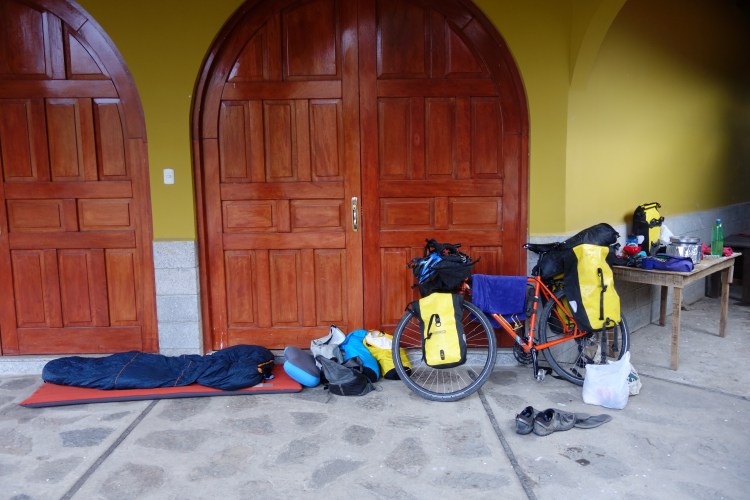
Apart from the dogs, a bright full moon and a few passing cattle herders hurling stones at their beasts to keep them on track, I had an uninterrupted sleep. With my body warm within my sleeping bag and my face cooled by the alpine air, I slept wonderfully.
Big pineapples
The steam rising from my coffee marred the view of the morning light hitting the peaks and plains. As I scraped the last of the porridge from my bowl, a collectivo pulled up and an elderly lady in traditional dress stepped out onto the gravel. Without noticing me, she went about setting up her stall of hand knitted scarves and gloves, water and chocolate for the day’s passing busses headed for the Pastoruri Glacier. Not long after she was in position, a motorbike arrived, ridden by a ranger who unlocked the visitor centre and happily accepted my money in exchange for entrance to the park.
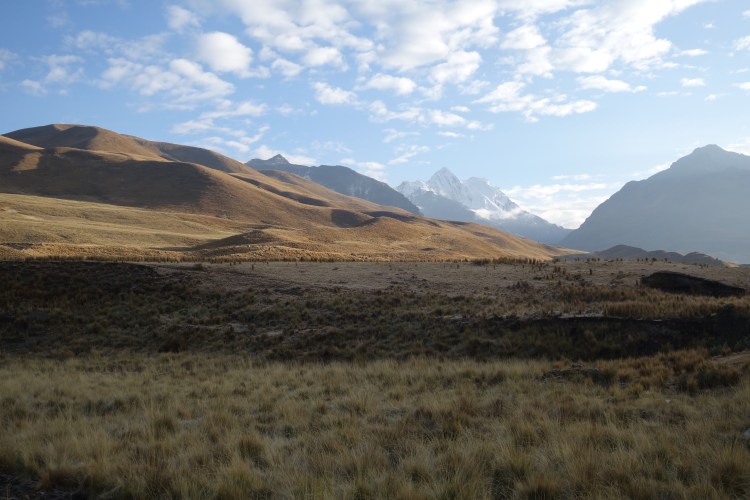
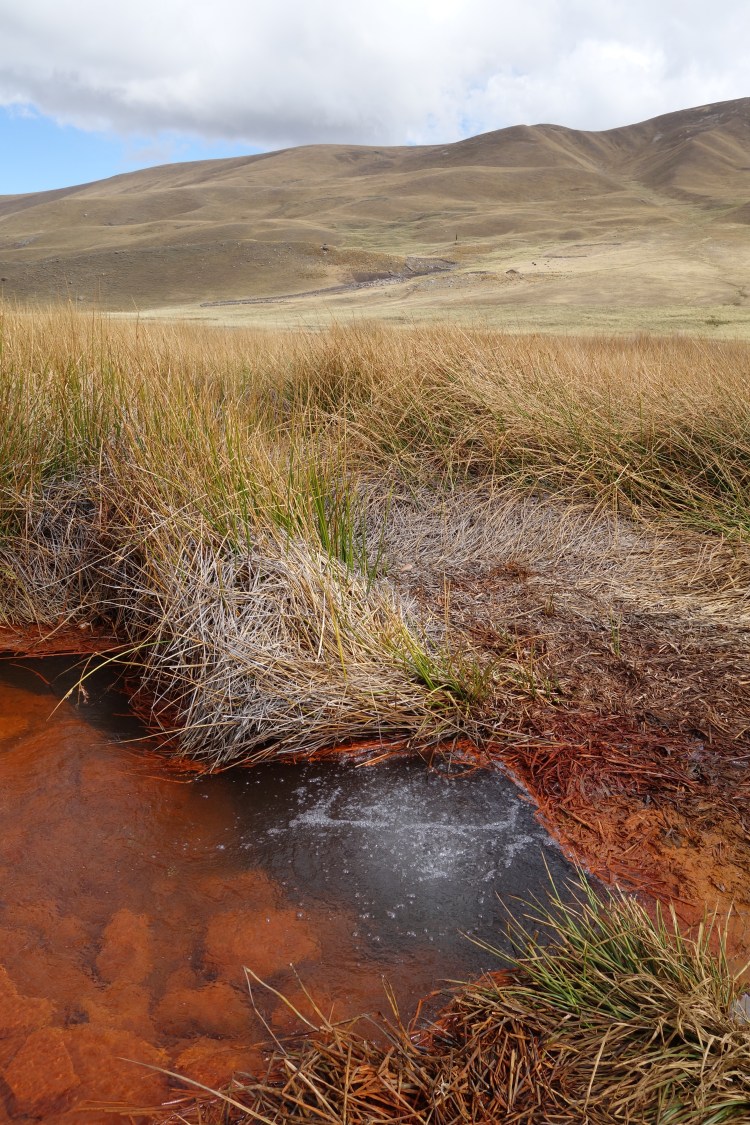
I’m sure the road surface was exactly the same as the day before, but a night under the stars had reenergised me, as I spent the morning floating over the corrugations. For the first hour, the gradient was kind, with the road skirting the expansive valley floor as the adjacent mountains continued to increase in grandeur. Cattle farmers could be spotted amongst their herds within the tussocks that covered the flood plains. At one point, the road passed a bubbling spring which marked the outflow for gasified water that had made its way to the surface from its origins deep beneath the surface.
Whilst looming peaks never fail to inspire, the most alluring and intriguing features along this road were the tall, black figures that were dotted across the hillsides. Standing up to 15 metres in height with an almost ghoulish presence, Puya raimondii, or the ‘Queen of the Andes’, is the largest member of the bromeliad family (the same as the pineapple). The species is native to the rocky slopes of the Peruvian and Bolivian Andes, between the elevations of 3000 and 4800 metres. Despite the fact that each plant can produce between 8000-20000 flowers during an annual three month period, and that their reproduction cycle is known to last for up to 80 years, Puya raimondii is classified as an endangered species. This status is due to the immense threats to its survival posed by human causes fires, decreasing genetic variation, and climate change.
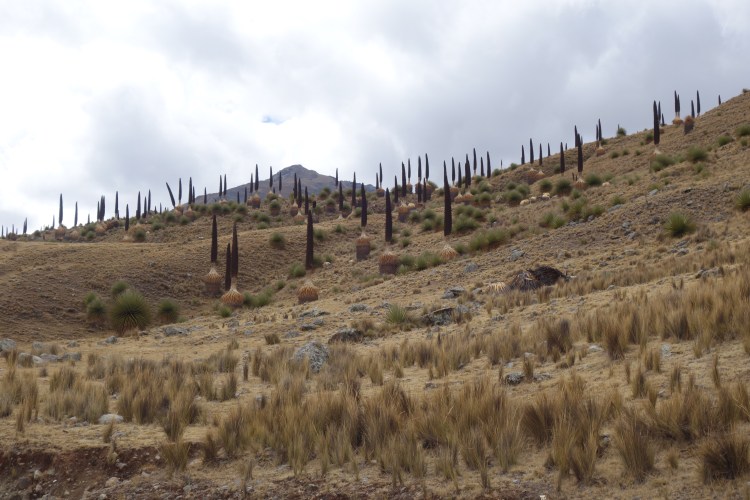
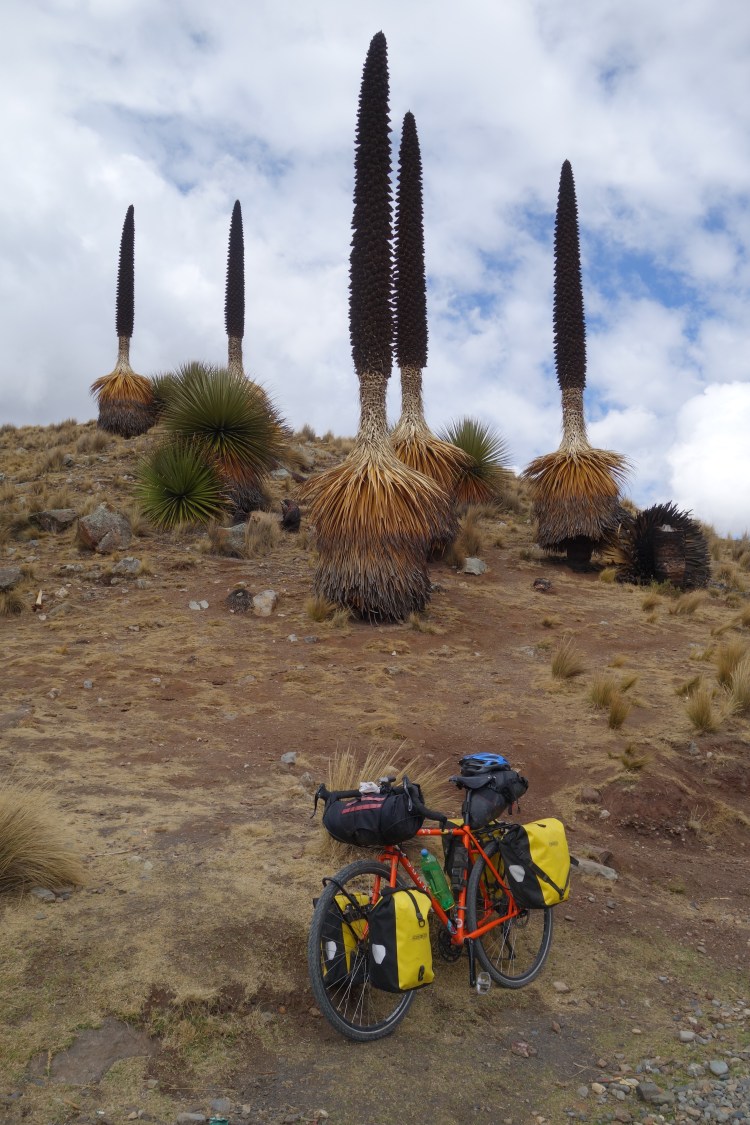
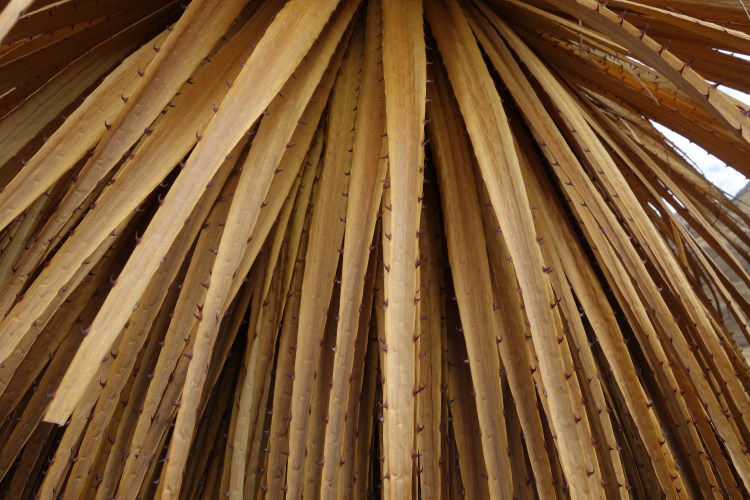
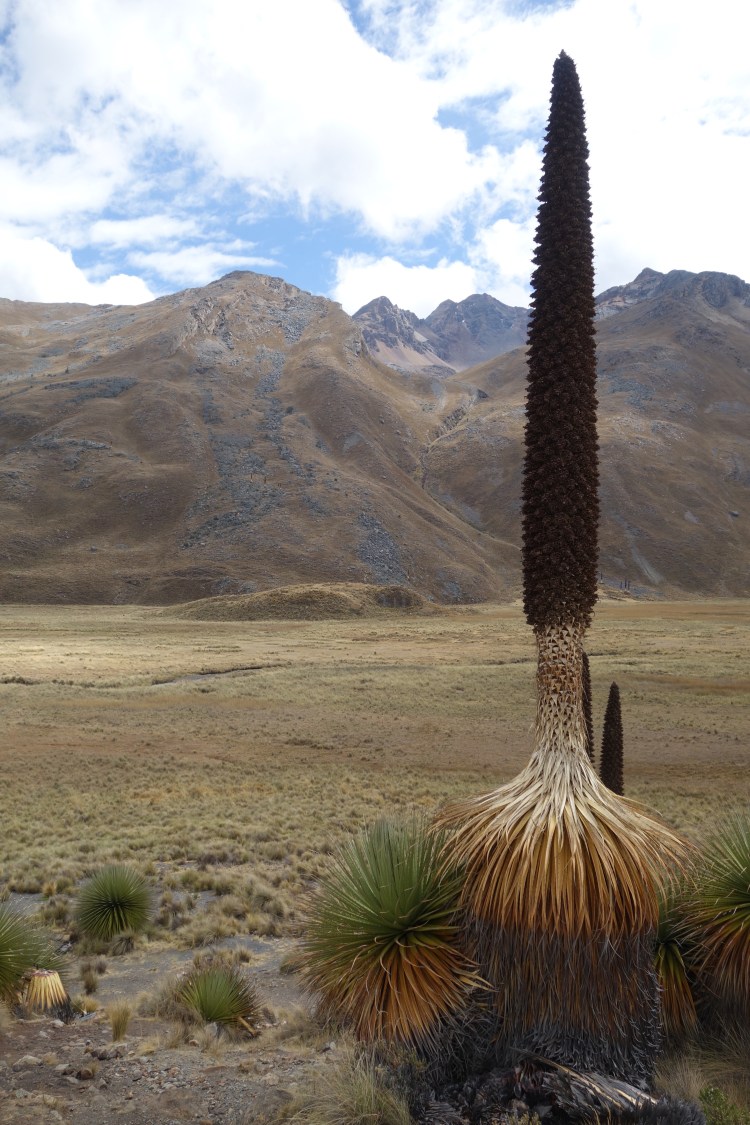
The hardy giants had finished blooming a few weeks before my visit, leaving the towering inflorescences adorned with blackened seeds. Their darkened appearance produced a humbling contrast with the green hillsides from which they rose. Given their limited niche, I was only in the presence of these astounding plants for an hour or so, before the road began climbing, and the rocky hillsides gave way to greener pastures.
As I pedalled further into the park, the more imposing, snow covered peaks began to reveal themselves above the earthen coloured hills that lined the valley. The summits of Challwa, Nevado Tuco and Nevado Pastoruri provided a constant reminder of my place in this world. To distract myself from the increasing breathlessness, I spent the morning listening to the final chapters of an audiobook, appropriately titled, ‘The Push’. In this autobiography, Tommy Caldwell, one of my favourite climbers, articulates the changing nature of his relationships with the mountains and the people in his life, as he matures and is exposed to some transformative experiences. It was a fitting soundtrack for the ride and, in turn, the landscape and solitude provided an equally suitable situation for workshopping some of the questions that the book prompted me to consider about my own life.
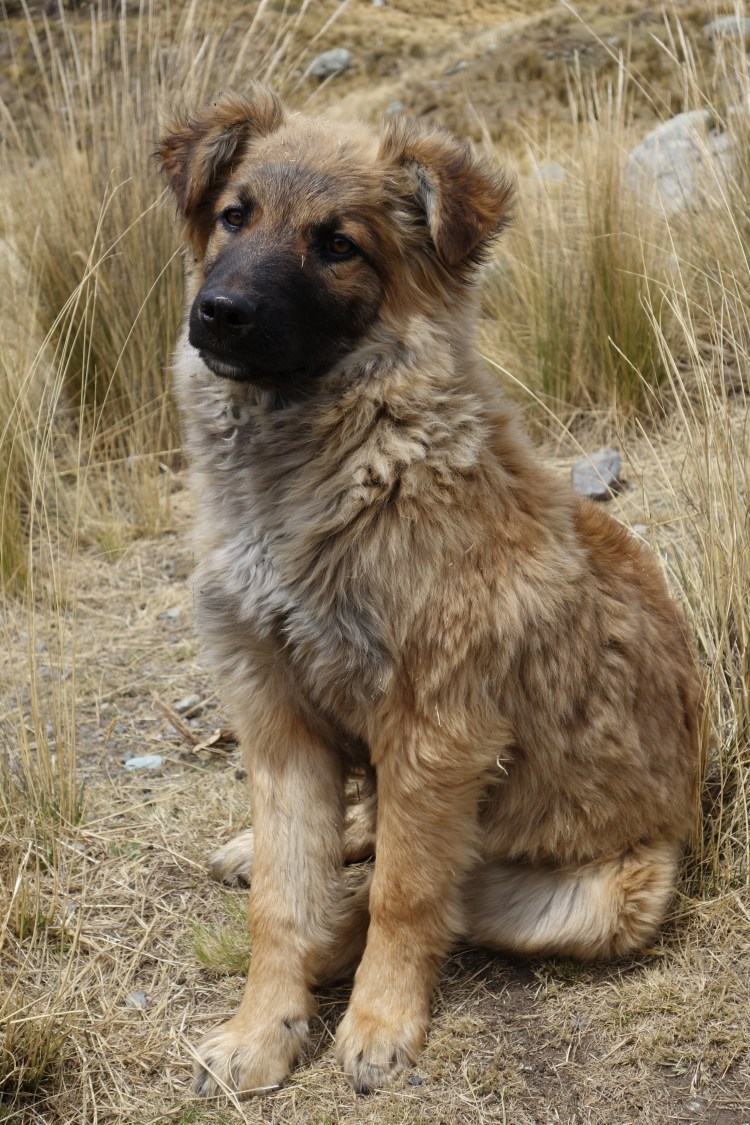
Aware of the approaching cloud system that was gaining momentum around the peaks, I pushed on. On one particular water break, I was joined by what quickly became my favourite dog of the ride. From the warmth and softness of his coat, I’m convinced he was half dog, half sheep. Somewhat hopeful he’d taken an equal liking to me and would trail my back wheel, I slowly rode on up the highway. Sadly, he stayed put, lying on his back with limbs sprawled to absorb the last of the sun before the weather changed.
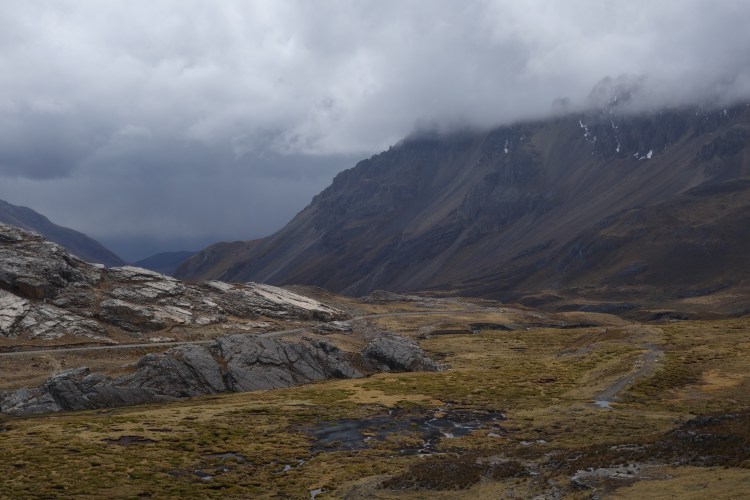
I reached the turnoff to the glacier as the first flakes of snow began to fall. Turning up the pace, I managed to arrive at the shelter which marked the trailhead to the glacier, just as the snow storm intensified. Sitting in the lee of the building, I watched as the snow raced by horizontally and hypnotically, only centimetres from my sheltered face.
Conscious of the remaining distance to the top of the pass, I decided to press on and forgo the snowy stroll to the terminus of the dwindling glacier. After more than two months on the road, I finally can say that I’ve used everything I’m carrying. Riding away from the shelter, I was cloaked in a layer of thermals, a fleece, waterproof jacket and pants, thermal booties over my riding shoes, and a scarf pulled up over my mouth and nose. With my eyes squinted, snow pelted the little skin that remained exposed, as I rolled back to the junction with the main highway and continued climbing.
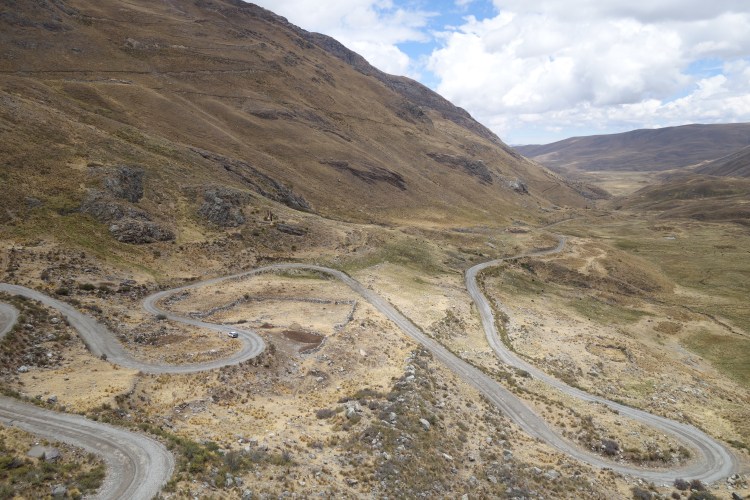
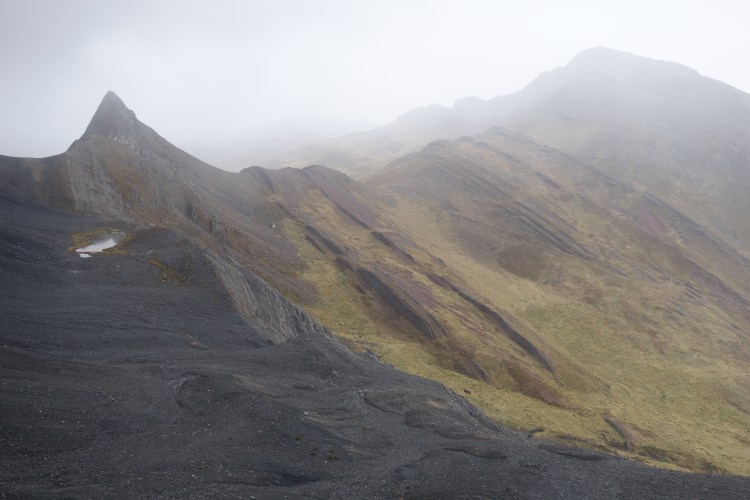
The persistent snowfall was soon reduced to occasional flurries. Not long after that, the sun was out again. Over the course of the morning, I had been passed by several minivans and tourist busses on their way from Huaraz to the glacier. However, once I rejoined the main highway and continued heading east, I found myself entirely alone on the road. Furthermore, this stretch of afternoon riding turned out to be the most spectacular of the entire highway. The narrow, derelict road wound its way up hillsides, underneath hanging glaciers, between countless alpine tarns and over streams that ranged in colour from turquoise to terracotta.
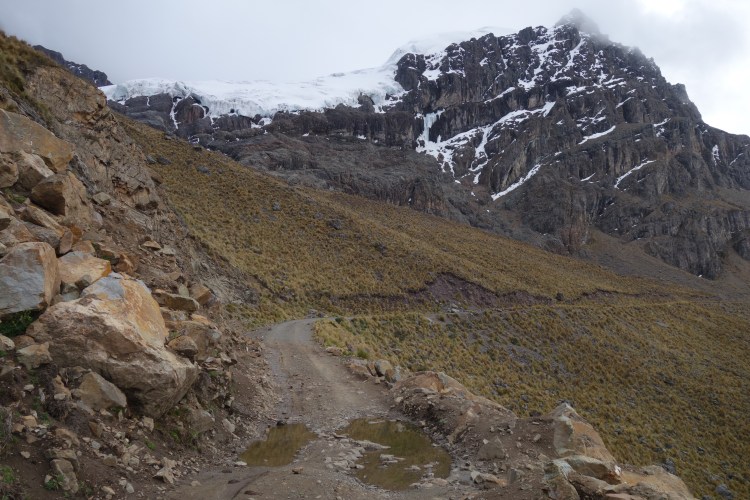
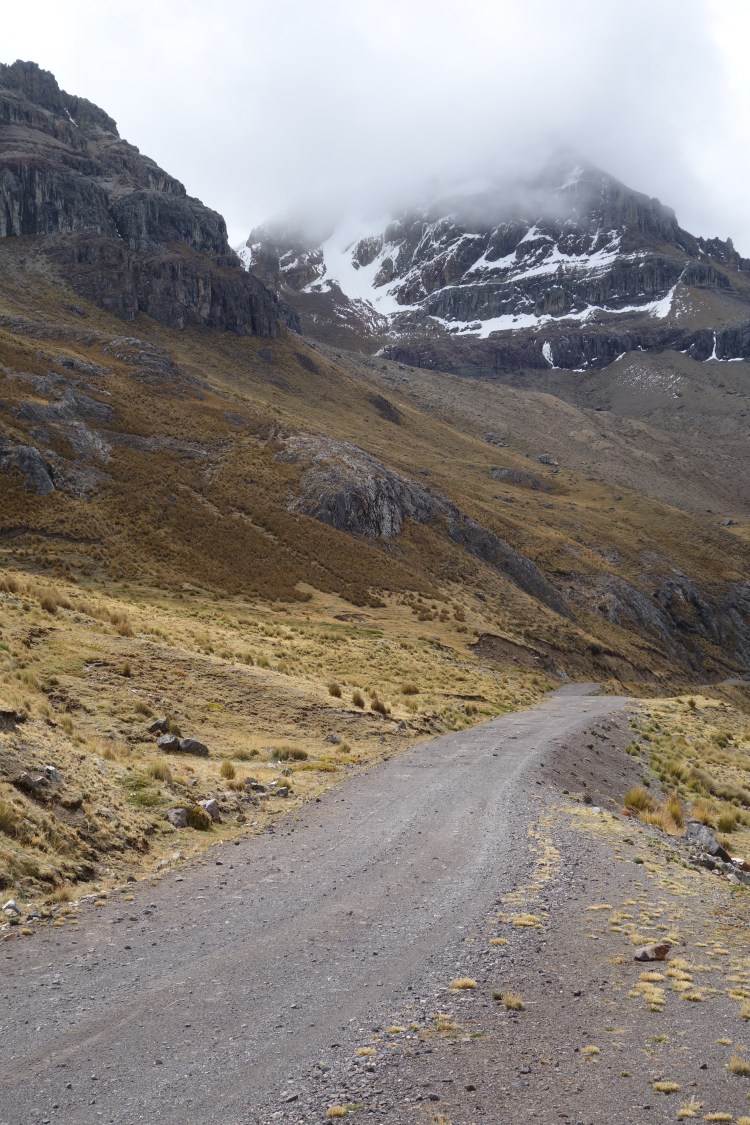
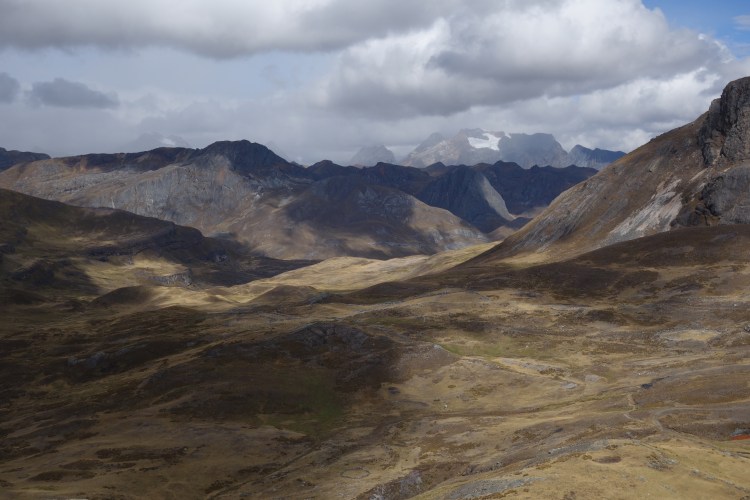
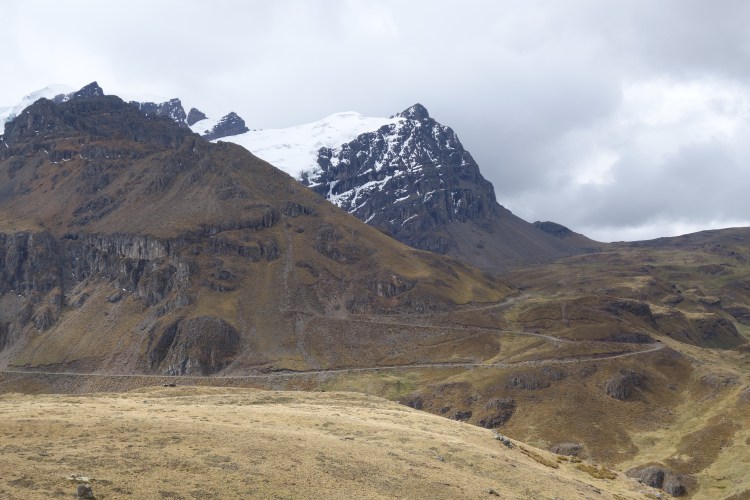
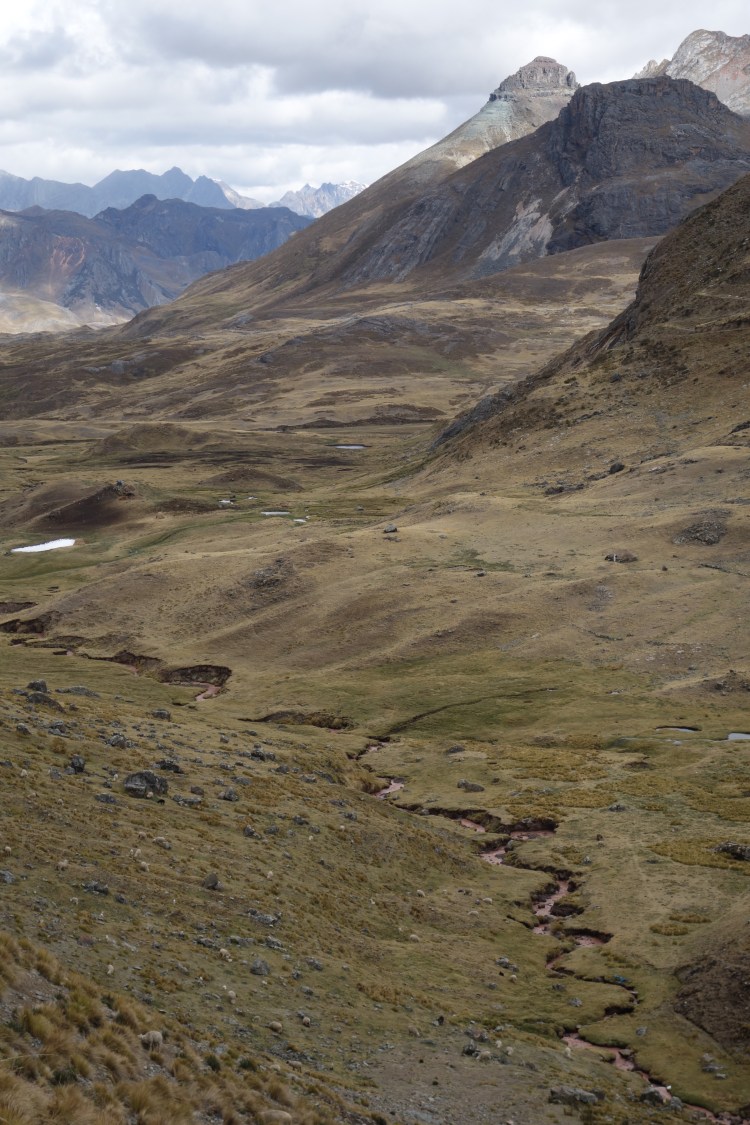
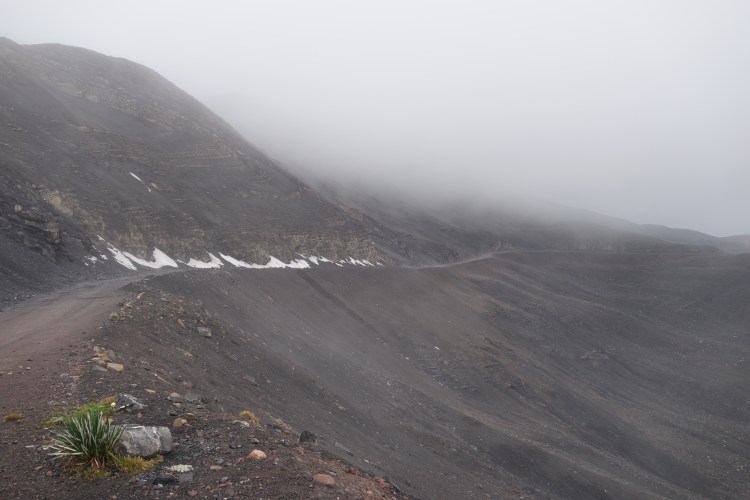
As the afternoon grew older, I rounded each blind corner with increasing optimism only to discover the road continuing to rise into the sky. Eventually, roadside vegetation was reduced to only the hardiest shrubs, growing out of the shale that coated the now lunar landscape. Another snow cloud rolled over the top of the pass, rendering the view from the top of the 4900m highpoint, more or less nonexistent. Riding within a cold, wet cloud I commenced the descent to where the Pastoruri Highway rejoins central Peru’s major sealed thoroughfare. As I relinquished the elevation I’d worked so hard to gain over the last two days, the snow turned to rain. Breaks in the sheeting precipitation afforded views of hanging alpine lakes, as well as glimpses of the shimmering asphalt in the valley below. Despite the immediate appeal of the smooth surface, free of corrugations and loose stones, I was somewhat hesitant to leave the ruggedness of the Pastoruri Highway. Not only was the landscape one of the more diverse alpine regions I have ever passed through, but the evident and continual alterations as a result of a changing climate serve as a subtle reminder to tread lightly.
A wrong turn to a ‘banging’ party
The completion of the Pastoruri Highway carried a sense of accomplishment. When my wheels eventually felt the transition from gravel to asphalt, enthusiasm and adrenaline was flowing through my body. Ahead of me lay a 20km, switchbacking descent to the town I was going to spend the night. Without stopping, I took a right turn onto the ‘real’ highway, and commenced the plunge into the Pativilca River valley below.
I couldn’t have been more certain about what was the completely wrong decision. I could blame the snow, the altitude, or the fact I hadn’t checked a map since the day before, but where I went right, I should have gone left. Unfortunately, I didn’t realise my error until I was 20km down the road, and 1500m lower than the point of error. Yes, I am a Geography teacher. Who said trial and error isn’t a trusted form of pedagogy?
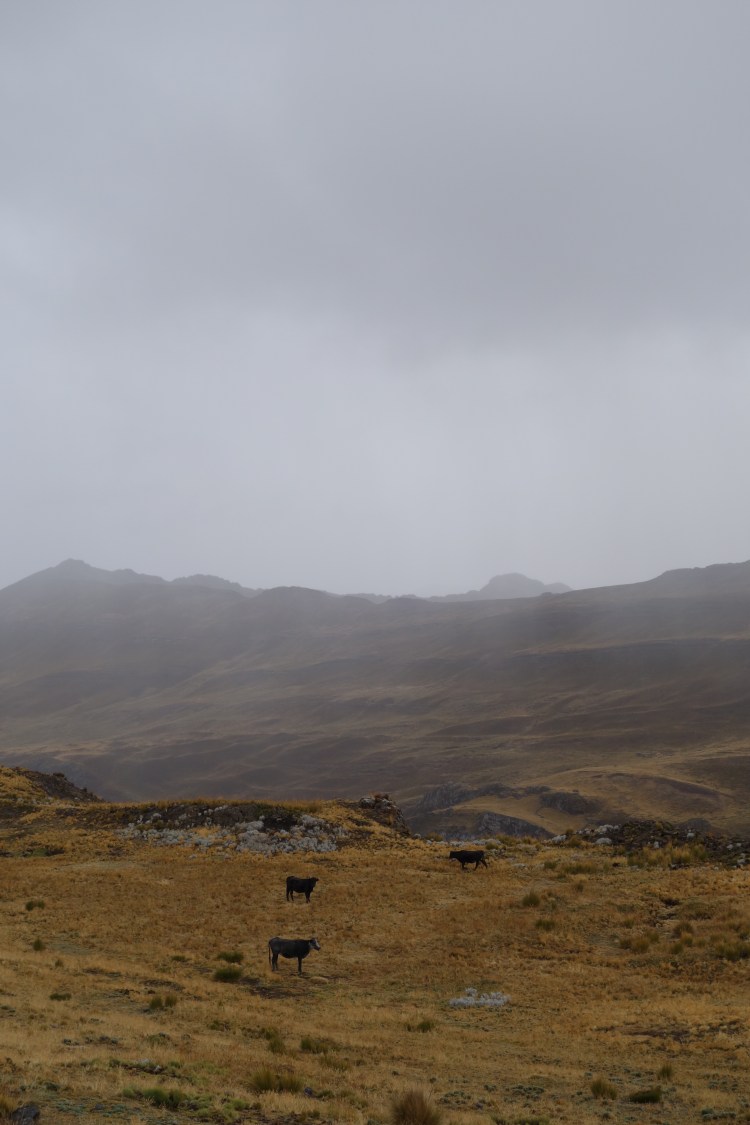
Regardless, the interim between turning right and recognising my mistake provided some sensational riding. The rain had intensified and my hands were numb, yet the mountains that separated the valley from its neighbours were of a scale beyond comprehension. I raced past thatched-roof homes with smoke from evening fires rising from the open windows. Sodden cattle raised their heads as I whirred by, whilst miners walking home from a day underground kept their eyes to the ground beneath their hard hats.
When I eventually reached the bottom of the valley, the light had faded and the rain had eased. The distant sky was glowing pink in the aftermath of the downpour. 20km had well and truly passed beneath my tyres when I arrived at a fork in the road. I pulled up beside a lone man on the corner who’s poncho was pulled well over his eyes and his jeans tucked into his gumboots. I asked him which direction it was to Huallanca; my desired location for the evening. He looked up from under his woollen shelter and simply pointed back up from where I’d come.
Shit.
I sat on the step of the closest house and checked my map, only to ascertain that it was in fact a left turn that I should have taken way back up there in the clouds. After watching me from a distance, the man wandered back over and said that there was a small town another town kilometres down the smaller of the two roads. He assured me it was in fact downhill and that it wouldn’t take long as all. Still wary of the discrepancy between road descriptions from locals, and the reality, I jumped back on the bike to make the most of the last hour of daylight.
Fortunately, this guy knew the roads. With the Pativilca River flowing between pines to my left, the quaint country lane delivered me into the heart of a small town called Aquia. For a town that felt as though it as in the middle of nowhere, there seemed to be a lot of people milling around the town square where I pulled up next to a stall selling chicha; a fermented beverage common in these parts.
Within seconds of asking for directions to a hostel, I was surrounded by about 15 people. Leading the charge of this hospitable army was a proud gentleman who, with a longneck in hand, had plenty of beer and a little English under his belt. He assured me that if I followed the five young girls that were standing next to him, they would lead me to somewhere I could stay for the evening. Two of the girls were still dressed in their school uniforms and ensured me that whilst the building we had just entered was their house, it was also a hostel. They lead me to a room, where they asked that I stand in the corner, before the five of them went about an epic remodelling. A Mickey Mouse bed spread was produced and thrown over the mattress on the floor. One of girls appeared from the room next door carrying a table, chair and bedside lamp. However, the pièce de résistance was by far the shower curtain which the five of them managed to hang over the window with twine and safety pins within the space of 60 seconds. Standing back to admire their work, one of the girls, still standing on the bed, turned to me and simply said, ‘privacy’. Upon leaving the room, they informed me that there was a fiesta in town tonight and that following a shower, I should walk back to the plaza with them.
After 100km in the saddle and a climb to almost 5000m, Mickey was looking like a very attractive option for the night. Alas, I had a brief, cold shower, and rejoined the girls at the front of their house. As we walked towards the town centre, I learnt that tonight was the first night of a seven day, annual festival that takes place in Aquia. I later worked out that the fiesta was in honour of Aquia’s archangel, San Miguel. The two girls who’s home I was staying were overexcited about the evening’s festivities, whilst the other three, who were their cousins visiting from Lima for the fiesta, were a little more reserved.
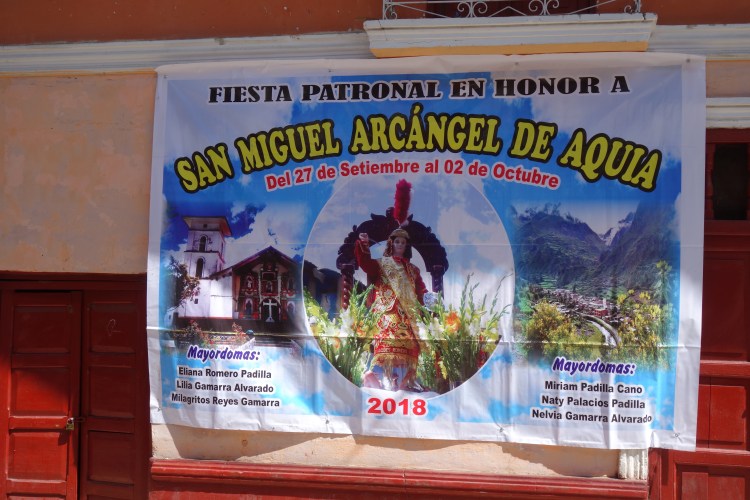
For the duration of the evening, I was chaperoned throughout the town between various sites and attractions. While indebted to their hospitality, the most enjoyable times for my weary body were when we would return to the park benches in the central plaza. As soon as I sat down, I would be approached by the man who had greeted me when I arrived earlier in the evening, and have a beer thrust into my hands. My exhausted appearance clearly communicated a universally understood desire.
Around 10pm, the crowd had swelled, filling the streets of the town. As I absorbed the goings on, my heart rate was continually jolted by the deafening sound of a crackers exploding overhead. Drunk men with plump bellies roamed amongst the crowd with a beer in one hand and a cluster of bamboo stakes topped with fire crackers in the other. With no rhyme or reason, the men would stop walking, place the beer on the ground, and light the wick with the cigarette that was hanging from their lips. No matter how inebriated, they always managed to look away just as the rocket whistled skyward before producing a tiny cluster of sparks, and a gargantuan BANG! The girls, utterly unfazed, were highly amused by my jumpy nature.
Whilst the crackers continued all evening, they were drowned out by the performances from various big bands. Each marching band would lead a procession of townsfolk through the main square before they arrived at the church, where the remainder of the town seemed to be gathered. Over the course of the night, each performance would begin by the band facing the church doors and performing a song. The crowd wold stand behind them in silence. Following this, they would turn, reposition, and begin belting out bass drum, brass and symbol heavy dance numbers for the street party now occurring at the base of the church steps. One of my new friends explained that the purpose of this pre-dance ritual was to first ask for the church’s permission to party. I’m glad the Saints were feelings festive, as the dancing that ensued was quite the sight! The girls told me that these people would continue dancing until dawn, every day of the weeklong fiesta. I assured them that I would not be one of those people, before dragging myself off to bed. They asked if I would come back out for the firework display at 5am. I think the darkened bags beneath my eyes were a worthy response to their question.
In hindsight, I may as well have stayed up, as the party only intensified as the night wore on. And, the 5am firework show I was warned about was one for the ages. Whilst I didn’t get up to view the spectacular, I felt every explosion of the hour long display as it resonated through Mickey and deep into my bones. With daylight streaming through the shower curtain above my bed, I can only imagine the fireworks were as underwhelming for the drunkards still dancing, as they were for my fatigued body.
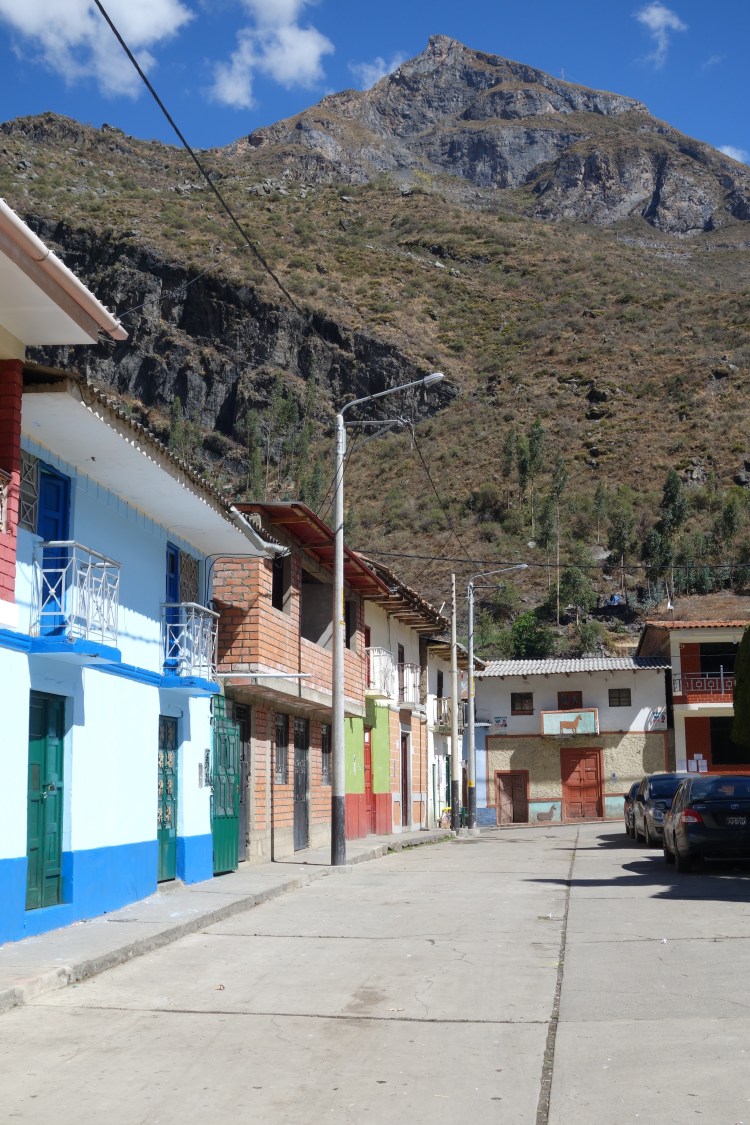
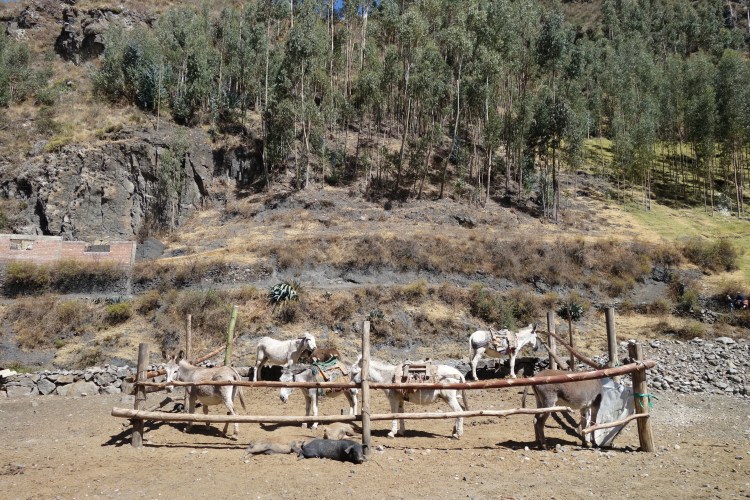
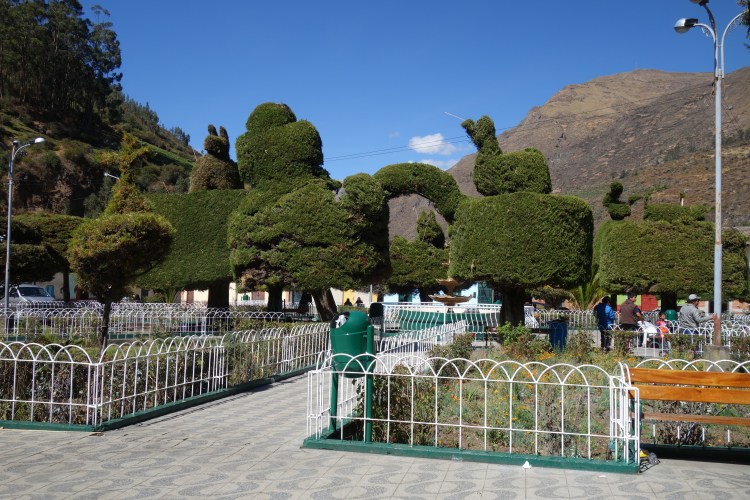
A morning stroll through the hungover plaza revealed revellers asleep on park benches, whilst the old folk of the town quietly went about picking up empty bottles. The town’s strange topiary and other bushes were littered with the bamboo stakes that had fallen from the sky after carrying their rockets to the heavens the night before. It was as though we had come under attack by a band of archers atop the hillsides towering over the plaza. As I thanked the girls for their hospitality, and pulled the door of my newly decorated room closed behind me, I felt immensely fortunate to have turned right instead of left.
My initial plan, which included a left turn, had been to spend a few days catching public transport following my time on the Pastoruri Highway. My wrong turn simply provided the impetus to get this ball rolling. I didn’t fancy the ride back up the hill from the night before, so I sat outside the hostel in Aquia with my thumb to the road, in the hope of a friendly, sober driver with enough space for my bike to help me on my way. While I waited, the girls sat either side questioning why on earth I’d leave the fiesta when there were still six days to go?
Thanks for reading.
 Faults and Folds