“No paintings? No worries. I have coke, weed, LSD, mushrooms. You want?”
Within minutes of arriving in Cusco’s central Plaza De Armas, I had become well acquainted with the city’s artists who lined the curbs clutching their leather binders. Contained in these folders were a host of watercolour and charcoal depictions of the cityscape. Interestingly, they all contained similar pieces with the only difference being the signature in the bottom right hand corner. I guess they must have all studied at the same art school.
It didn’t take long to discover that the art was a façade for a more lucrative side business. As soon as they realised a potential art customer was slipping from their grip, their voices would lower as they revealed the contents of their backpacks. Ironically, their pitches were as similar as their paintings. Each ‘artist’ concluded with the reassurance that theirs was ‘good stuff’ and that ‘everyone else here sells bullshit’.
I was yet to have breakfast so figured a cocktail of hallucinogens on an empty stomach was not the best idea. Regardless, I thanked each of them for their interest in my business and continued on my way.
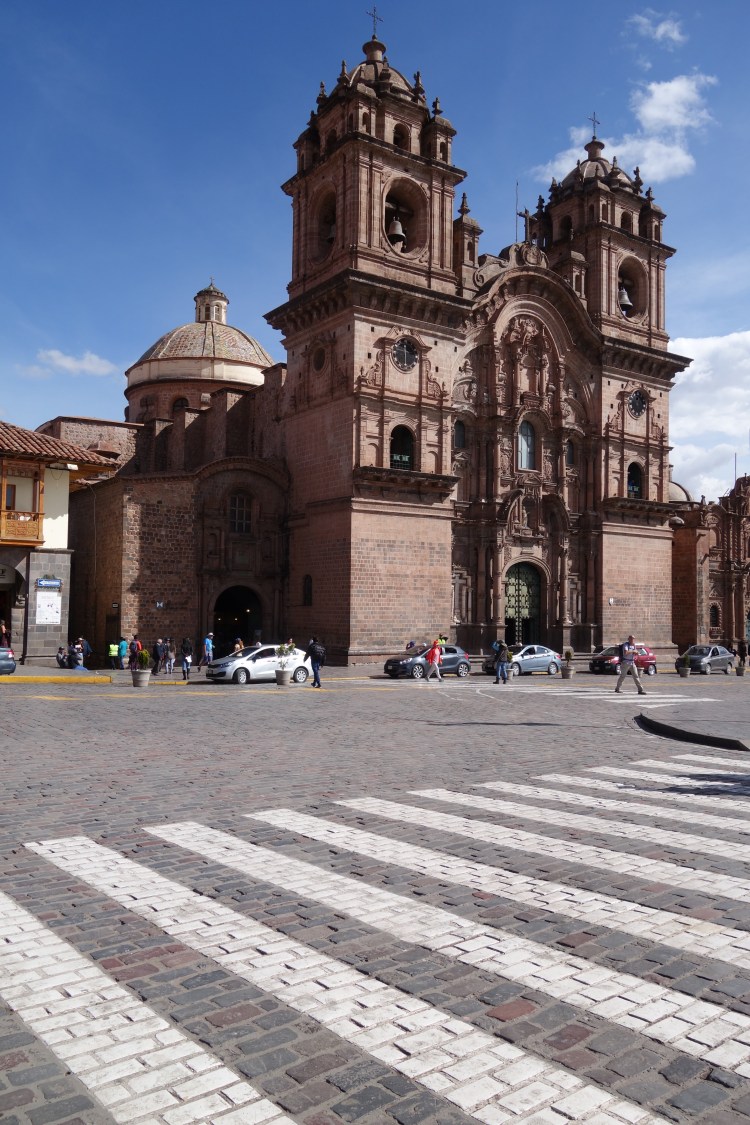
With a fully loaded touring bike, the streets of Cusco provided some of the toughest riding (pushing) conditions to date. A maze of cobblestone streets cling to the steep hillside that lies to the east of the city centre. The cobblestones have been polished smooth by centuries of use, making for a difficult stint of pushing as I made my way to the hostel which was conveniently perched at the top of the hill. It took me a few days to adapt to the fact that in more recent times cars have found their way into this historic network of cobbled corridors. At times, there were mere centimetres between their side mirrors and the mud brick walls of buildings that lined the streets. I regularly found myself caught between a car, the thought of having to relinquish my uphill progress, and the eyes of fellow travellers who were battling with both the altitude and the reasons why someone would be pushing a bike up these hills. I felt an overwhelming sense of relief when I finally located Sunset Hostel in the inspiringly quaint San Blas district.
Within minutes of arriving at the hostel I felt a sense of calm. The receptionist and house tattooist, Martin, was a major contributing factor to the laid back atmosphere. Upon entering, I was greeted by the sweet tunes of Ben Howard’s Every Kingdom’ album which provided the catalyst for some conversation with the like-minded Martin. Having had limited sleep during the previous evening’s bus ride, I settled in at the hostel for the afternoon, relishing in Martin’s playlist. The major benefit of the hostel’s position high on the hill was undoubtably the view over the city. Morning sun reflected off the worn tiled roofs of the colonial centre, whilst in the evening, dusk sparked the illumination of streetlights, draping a blanket of stars over the city. I was overjoyed by the prospect of spending a week in the city developing a routine while also attempting to develop my Spanish.


However, there were still several days before my course began. Having caught up on some lost sleep, I awoke after my first night in Cusco and began stripping my possessions back to the bare minimum. Given Cusco’s close proximity to one of the wonders of the world, plus other unworldly locations, I left the majority of my bags at the hostel and set off for a four day, lightweight cycling trip. The days that followed took me into the heart of the Sacred Valley, including a visit to the utterly incomprehensible Machu Picchu. It may have been the fact that my bike weighed half its usual weight, or perhaps it was the rich spiritual presence in the Valle Sagrado? Regardless of the source, I was flooded with a new found energy as I explored the deep ravine that leads to one of the most mysterious places I have ever experienced.
A man, a crystal and a staircase
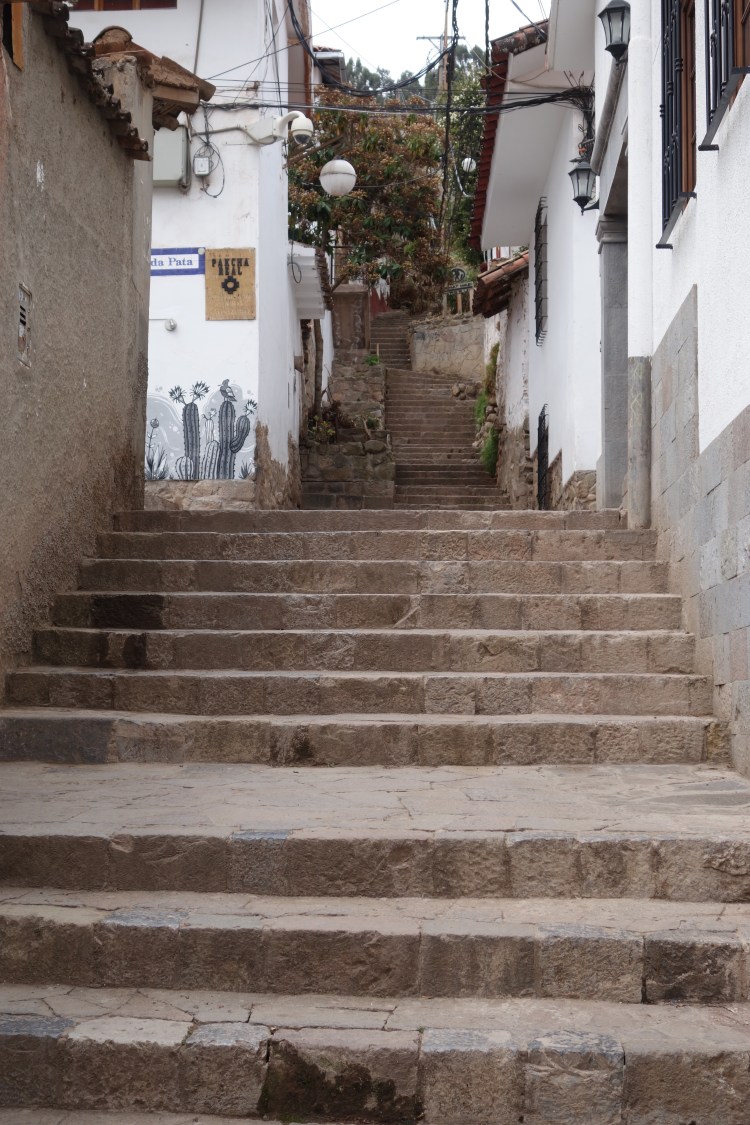
The historical centre of Cusco is bordered by the modernism of a smooth, asphalt loop road. From the cobblestone streets within, the map showed a simple straight line from the door of the hostel to the sealed thoroughfare out of the city. The reality, however, was a different story. The straight line was a seemingly never ending staircase to the crest of the hill above the hostel. Given Cusco sits at at elevation of 3800m, carrying my bike up these stairs proved as challenging as buying a painting without the offer of drugs.
Standing at the bottom of the staircase with my bike over my shoulder, I was approached by a elderly man in a matching tracksuit. Standing no taller than five feet, with his hood pulled over his eyes to deflect the drizzle that had now engulfed the city, he had a compact yet commanding presence. He then introduced himself as ‘Polly’.
Polly walked beside me as I began climbing the stairs. Despite breathing ten times as fast, hard and loud as he was, he continued asking me questions. After a few minutes I got the impression that Polly fancied himself as a shaman, simply masquerading as a prize fighter out for a jog to cut weight. He chatted softly and slowly about the spiritual presence within the Sacred Valley, as well as the importance of balancing mind, body and soul. After a breathless ten minutes on my behalf, I stopped to rest. Polly gestured that he was going to leave me at this point. As I tried to suck in oxygen that appeared to be elsewhere, Polly took my right hand. He slipped an opaque crystal into my palm and rolled my fingers back over it to form a fist. Taking my hand between both of his, he ensured me that the stone would bring strength to my heart, lungs and, most importantly, my mind. My head was spinning, most likely from the lack of oxygen but perhaps from the enlightenment? I thanked Polly for his kindness, a little taken aback by what had just occurred. In response, he took my other hand and, looking up from beneath his hood, gently advised me that I now needed to pay him. I admired his entrepreneurial shamanic approach, taking advantage of a hypoxic gringo, and slipped him a few soles. As he turned to leave, he ensured me that the Sacred Valley has some of the purest weed in all of Peru.
Merely a few hundred meters from the hostel, I arrived at the top of the staircase in the grips of exhaustion. I walked my bike for a few minutes along the side of the sealed road, joining a large crowd at one of The area’s primary attractions. Adorning the highest ridge top above Cusco, Christo Blanco (‘White Christ’) is visible from every corner of the city. In turn, the climb to the statue provides an uninhibited view across the entire historical centre. As I sat to regain my breath and energy, my eyes were drawn not to the moody grey sky hanging over the city, but to the dozens of travellers capturing the view. There were as many selfie sticks as there were limbs. With backs to the view and sticks extended, people took endless photos whilst almost taking out each others’ eyes. It was a sensational spectacle.

From the watchful eye of the White Christ, the road continued up into the clouds. Sufficiently wet and out of breath, I stopped to seek shelter beneath the overhanging thatched roof of a building at the top of the hill. Within minutes I was joined by a fellow cyclist with the same idea albeit a very different bike. The rider, Daniel, had arrived in Cusco the day before and was out on an acclimatisation pedal before his 10-day mountain bike tour began in the coming days. With a month off work from his job in Canada, he was on a whirlwind tour of the world’s great mountain ranges. Following his tour in Peru, Daniel was boarding flight to Nepal to embark on a high altitude mountain bike ride in the Himalayas. His itinerary made me feel a little bit better about the carbon emissions of my trip. But, as we all know, as soon as you board a plane or eat a chicken, there’s no way you can remount your high horse. As the rain began to ease, I wished Daniel well for his holidays. Despite calling Canada home, he was sporting a pretty thick Scottish accent. In questioning this, it turned out that he was from the same county that my mum was born.
Having crested the hill, the road began its descent into the belly of the Sacred Valley. The number of roadside Incan ruins was overwhelming, which is no wonder given that Cusco is considered the capital of the Incan Empire. The most notable and easily remembered site in the immediate Cusco area is called Sacsayhuamán (pronounced ‘sexy woman’).
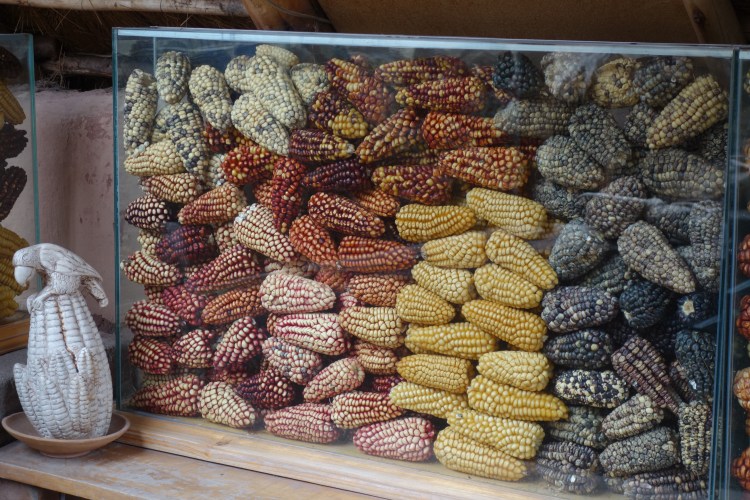
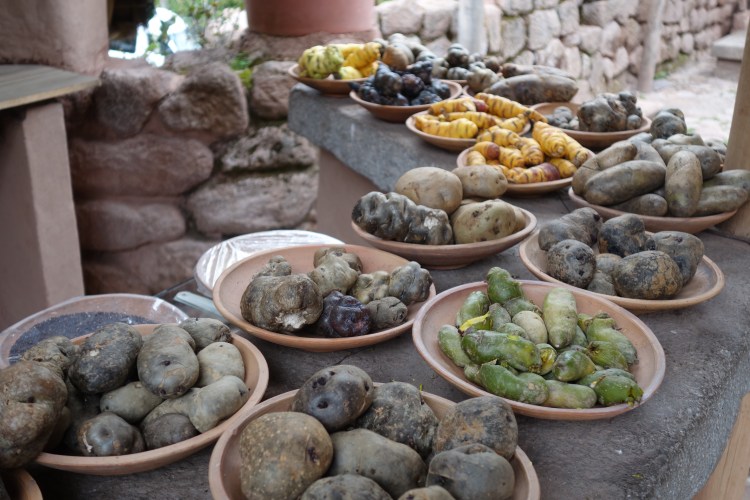
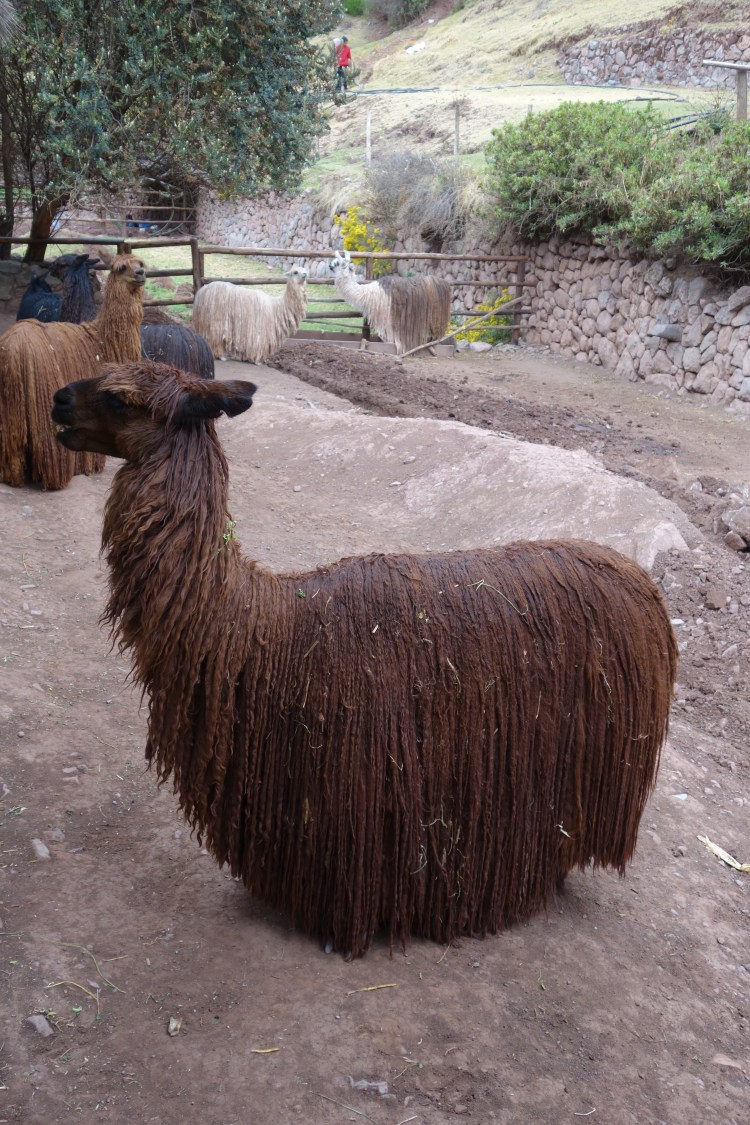
The temperature dropped along with the elevation as I enjoyed the novelty of leaning a lightweight bike into sweeping corners. I stopped to put on some extra layers and spent some time exploring what looked like a relatively new tourist attraction. With the intention of educating passing tourists on the the versatility of various natural resources in Peru, a kilometre long interpretative walkway had been set up beside the road. In hindsight, it was simply an elaborate way of directing people to an incredible expensive gift shop. However, I did learn that within the soils of Peru there are over 5000 species of potato. I also caught myself laughing out loud at the facial expressions and haircuts of some of the alpacas and llamas on display. Hopefully their skin is as thick as their coats.
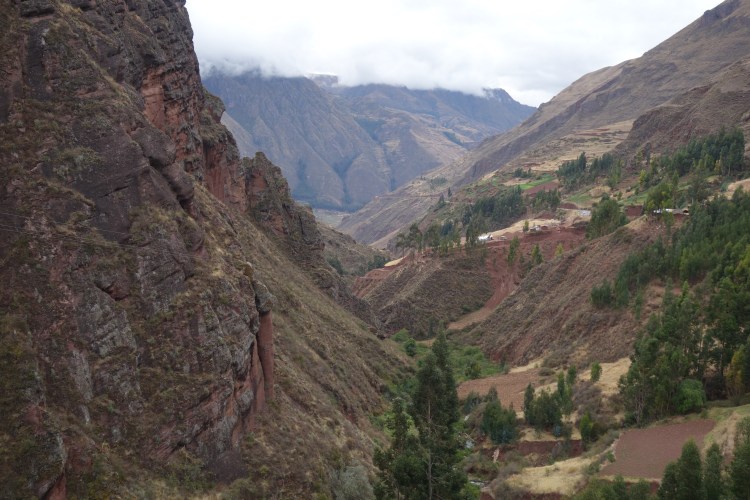
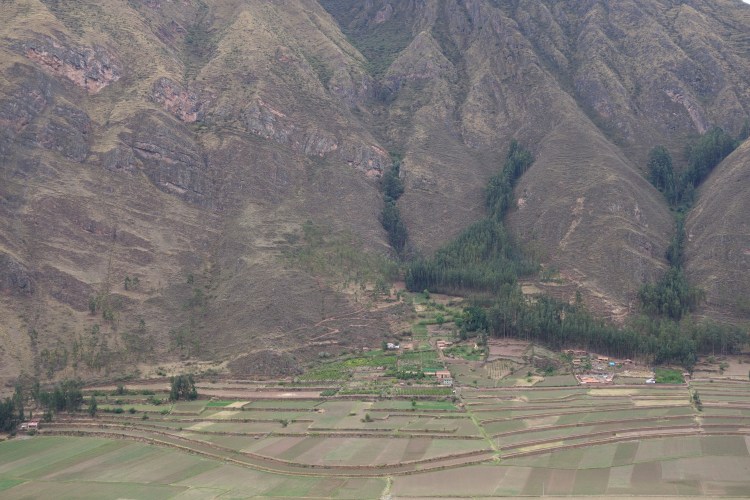
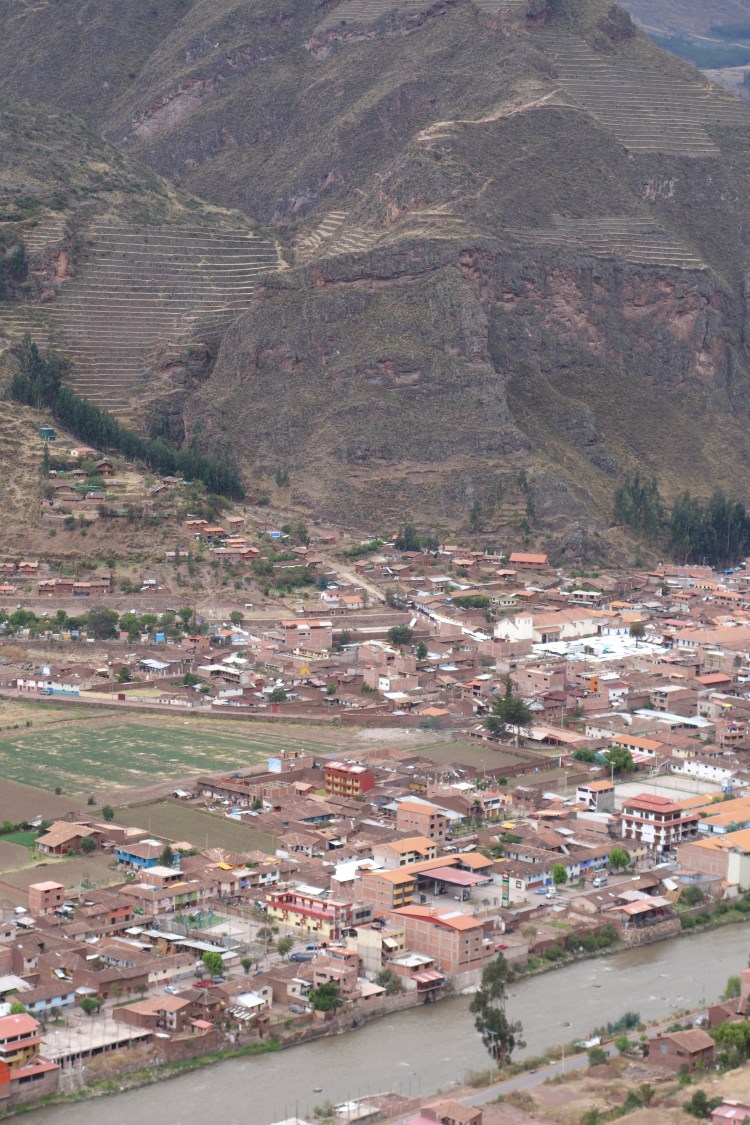
The final few kilometres of the day were broken up by a series of lookouts, each affording increasingly impressive views of the valley below. The foreground of these vistas was dominated by the town of Pisac and the terraced ruins of the same name that rise up into the hills above the streets. Perched on the northern bank of the Rio Vilcanota, Pisac’s relatively close proximity to Cusco makes it a popular daily destination for tour busses. Drawn to the central market and the ruins, which many argue to rival Machu Picchu, the street are filled with tourists during daylight hours. Once the busses depart, the town’s disproportionate amount of expats come out to play. I heard Pisac described as Peru’s Shangri-La, due to the hoards of visitors that have discovered their piece of paradise in the Sacred Valley and have never left. Sitting on a step in the town’s fresh food market, I listened as a tall blonde man with piercing, aqua marine eyes discussed his first corn harvest with one of the local vendors. As he hung off the words of advice from the man who had lived in the valley his entire life, the blonde man’s three children of similar Germanic appearance chased each other between fruit stalls. Their hyperactivity received stern words from a number of the vendors, who all clearly knew these children.
As the last of the busses left Pisac, I wandered through the artisanal market which was being packed down now the clientele had returned to Cusco with tired legs, empty wallets, and an abundance of alpaca garments to hang in their cupboards. I sat with an instrument maker called Francis, who had lured me to his stall with a haunting lilt that emanated from the pipes held to his lips. Completely caught in his pied piper spell, I listened attentively as Francis showed off various chromatic and pentatonic creations, fashioned from bone and bamboo.
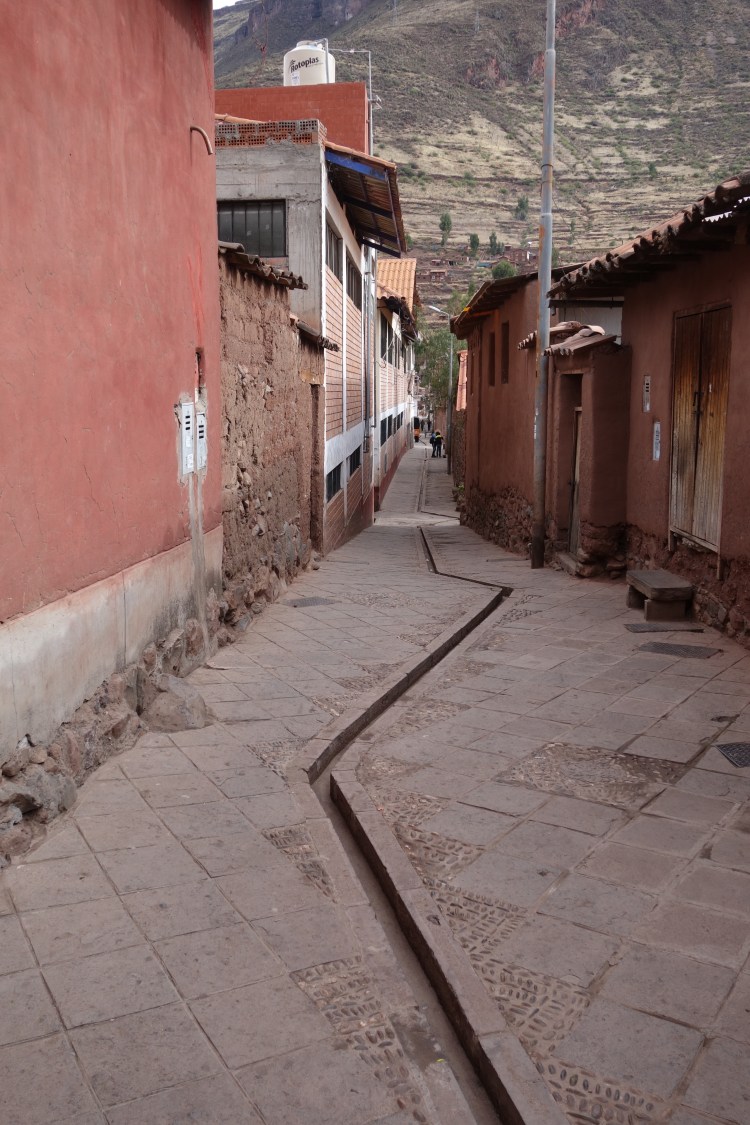
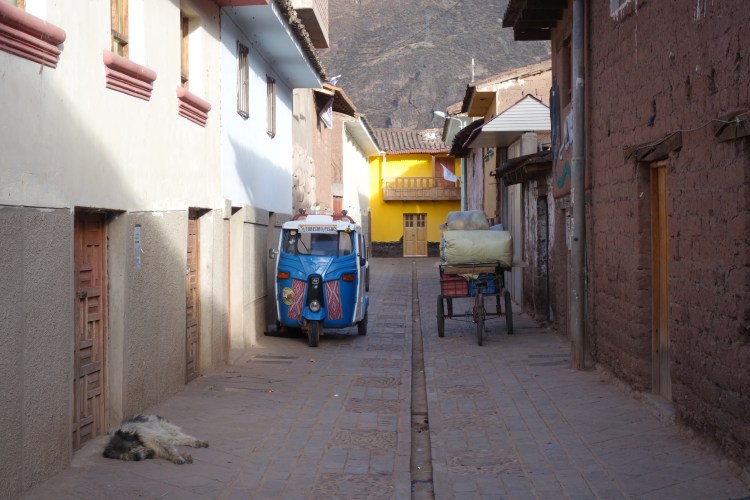
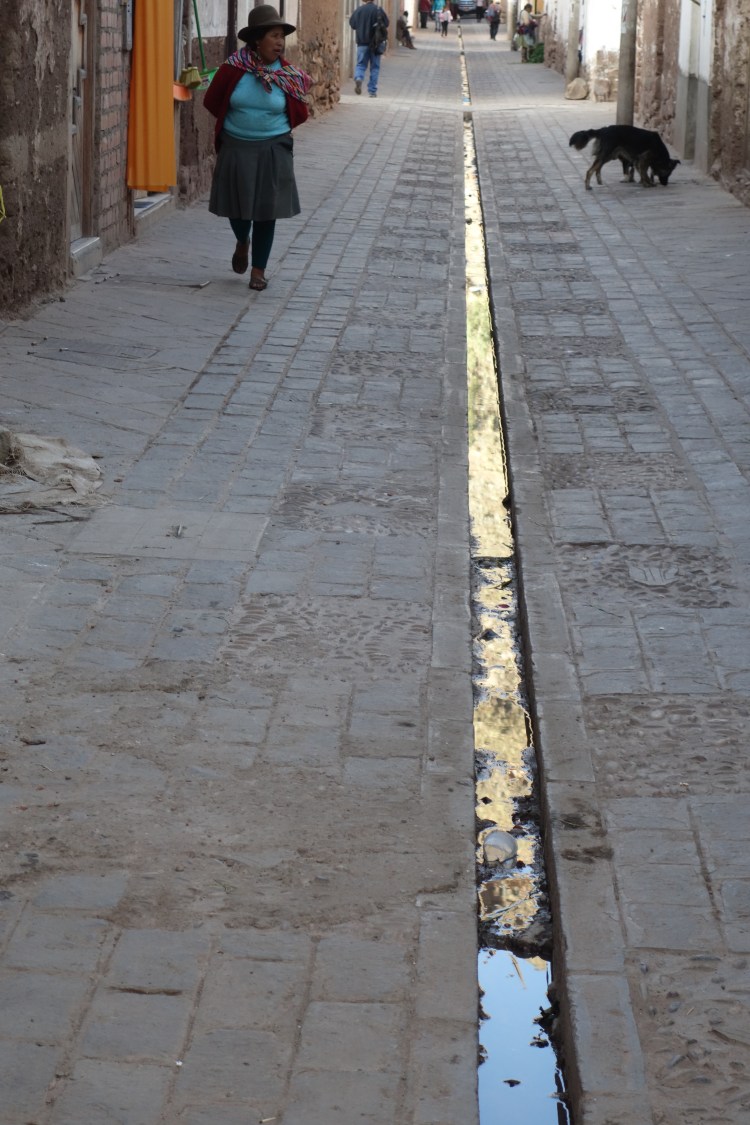
As the light faded, I strolled through the narrow streets of Pisac enthralled by the zigzagging stormwater channels and the way the sun danced off any of the morning’s rain that still remained on the ground. The peace I discovered in the quiet back roads was soon shattered by yet another obnoxiously loud election motorcade. It must be a tried and tested method, but if I was enrolled here, my vote would certainly go to the party with the fewest loud speakers, fireworks, and late night demonstrations.

The Incan who rode a fat bike
In the lead up to visiting the Sacred Valley, I had been extensively researching the area and suggested methods of travel. Arriving in Cusco, it quickly becomes evident how much of a money trap it can be to visit the valley and it’s crown jewel; Machu Picchu. The town at the foothills of the famous site, Aguas Calientes, is somewhat of an island, disconnected from any roads and accessible only by train or foot. Although, I have been told of two kayakers who tackled the persistent whitewater of the Rio Vilcanota, arriving in Aguas Calientes carrying their kayaks. Unfortunately, this was not an option this time.
However, I had been notified that it was possible to walk along the train track from the last town reachable by road; Ollantaytambo. Further reading about this 30km stroll, and enticing budget option, had me excited. However, in confirming the language course in Cusco, I had all of a sudden found myself with a time restriction on my sojourn into the Sacred Valley. If I was to make my way into Aguas Calientes by foot, it would mean having to catch a collectivo from Cusco to Ollantaytambo to give myself enough time. After much deliberation, and the fact I’d been missing my bike, I decided to venture into the Sacred Valley on two wheels, meaning that I would have to take the train for the final stretch of the trip into Aguas Calientes.
From Pisac, it was a swift 60km ride along the valley floor to Ollantaytambo. Light rain and low hanging clouds marred the view of the cliffs that grew closer together and reached higher into the sky the deeper I rode into the valley. The turbid Rio Vilcanota lolled along beside the road with a relentless energy and continual forward momentum. Close to Ollantaytambo, I passed beneath the famed Skylodge Hotel; a series of silver capsules suspended from the cliffs above the road, accessible only by Via Feratta and a series of zip lines. Following the exposed approach, the suspended bullet-like pods still carry a hefty price tag of around $500 per night.

In addition to being the launch pad for journeys into Machu Picchu, Ollantaytambo itself is home to one of the most highly regarded archeological sites in Peru. On the approach to the town, colourful, ant-like humans can been spotted scurrying amongst the stone terraces of the Incan ruins that rise up from the town below. Despite the grandeur of the ancient architecture, my attention was quickly drawn to the surface beneath my tires. From the edge of town, the sealed road terminates and the original cobblestones commence. Each stone was unique in size and its attitude towards cyclists. The kilometre long passage into the central plaza was bone-jarring and impossible to gain any momentum. The roads certainly weren’t built with cyclists in mind. I like this. Whenever the riding is difficult it is a simple reminder to consider why things are the way they are, rather than be frustrated that this privileged, chosen form of transport isn’t as easy as one would like. Alternatively, in the case of the rocky roads of Ollantaytambo, I began to wonder if the head road engineer of the Incan settlement had in fact been centuries ahead of his time, riding around town on a fat bike. I can imagine him trying to convince sceptical onlookers that the cobbles are cost effective, and that they feel like pillows beneath 5-inch wide tires. If only everyone would also buy one of his fat bikes…
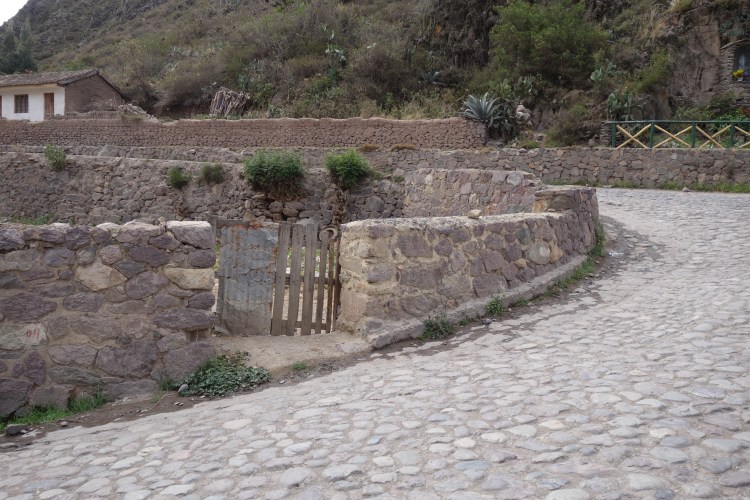


My hands continued to shake for several minutes after dismounting the bike. The road surfaces of South America have granted me with the most immense respect for the elite cyclists that compete in the famed Paris-Roubaix and other races that include cobbled surfaces. I managed to find a small hostel a few streets back from the main plaza where they were happy to store my bike overnight, while I ventured in to Aguas Calientes and Machu Picchu. I ensured my bike was secure, and donned my tourist hat, joining the queue to board the train into the mysterious heart of the Sacred Valley.
A great wonder
Fortunate enough to be given a window seat overlooking the Rio Vilcanota, I settled into the economy carriage of the Incan Rail train. I think the company must have named themselves after the famous empire of the region. Although, perhaps the train once belonged to the Incans, used during the construction of Machu Picchu?
Departing at 4.36pm, sharp, the journey was spectacular. As the light disappeared from the valley, the endless rapids of the river that created our path through the mountains stayed white whilst everything either side faded to darkness. The mountains that lined our route caused me to strain my neck in trying to catch a glimpse of their summits. By the time it was dark, clouds had settled into their resting places, blanketing the river and dense riparian vegetation in mist.
The train arrived at the station in Aguas Calientes in the pouring rain. The change in conditions from when we boarded caused everyone to scramble in a panicked search for shelter. I used the unfavourable weather to my advantage, managing to get a hostel spruiker to drop his price for the night by half. It turned into a game of wet chicken; who was willing to take more of a soaking in order to stick to their price? Fittingly, once in the room I settled for a bland dinner of water crackers.
The ticketing system for Machu Picchu is incredibly regimented. Receiving up to 2000 visitors per day, they offer morning (6am-noon) or afternoon (noon-6pm) tickets. I had opted for a morning space which meant an early departure. From Aguas Calientes, it is still around 8km to the entrance of the site itself. Of course, this means another opportunity to spend money, with a shuttle bus to the site costing $USD20. Fortunately, it is also possible to walk to the site, via a stone-stepped trail through the forest, which takes a direct route dissecting the switchbacks that the busses travel along.
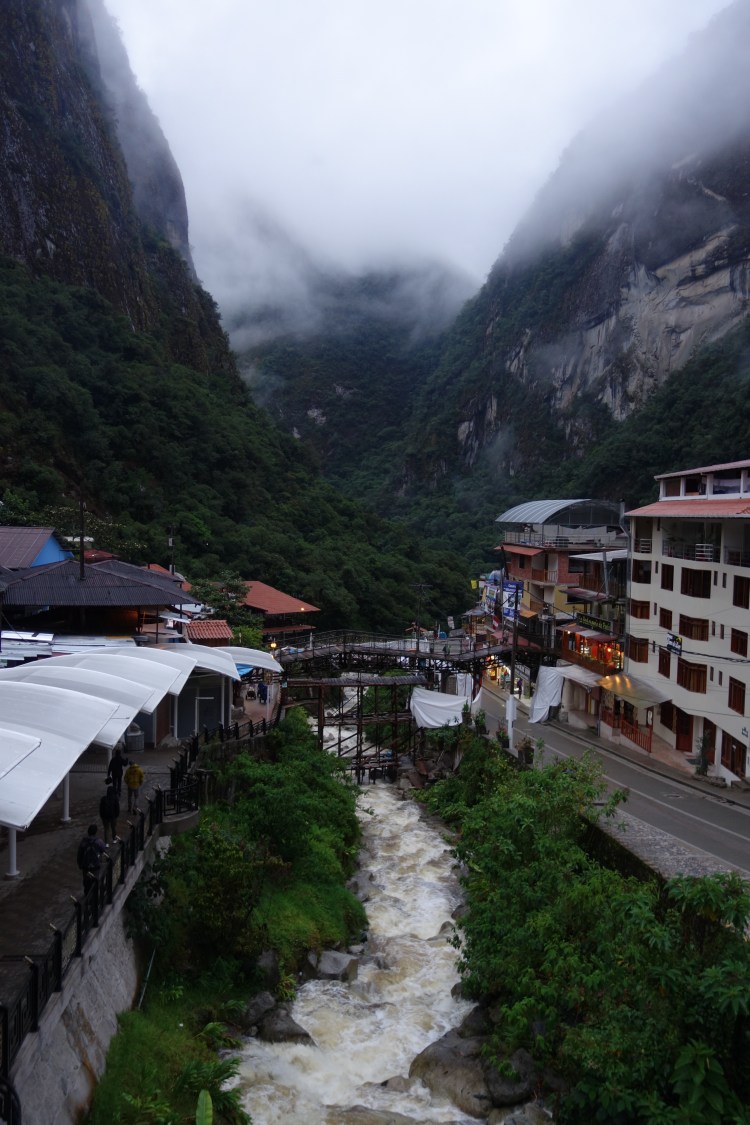
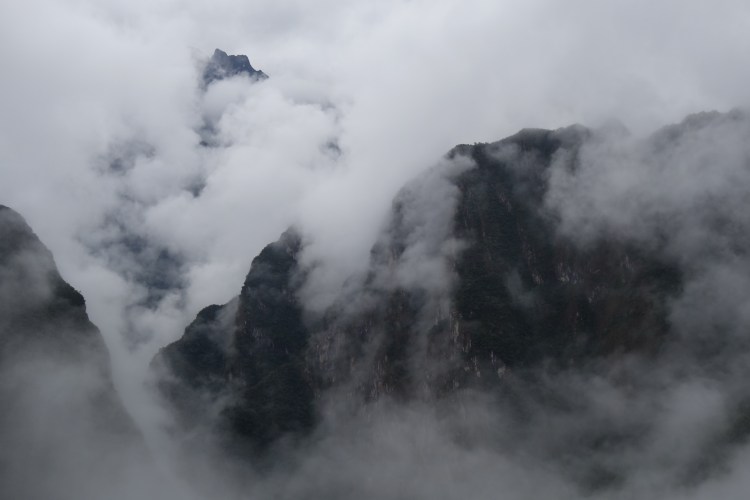
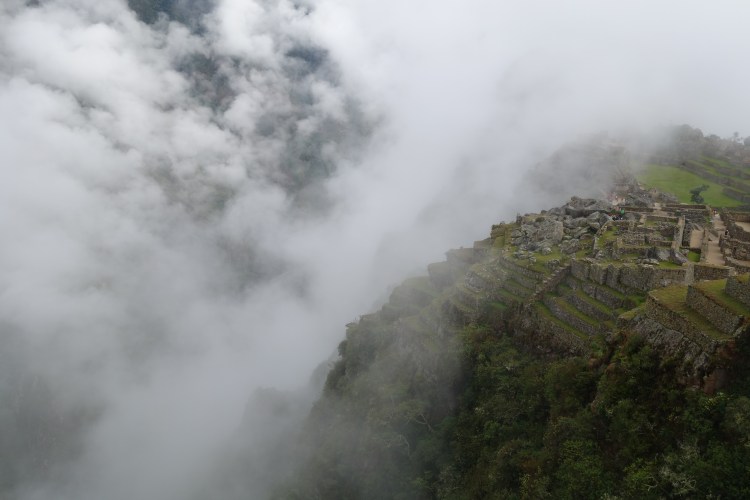
I left the hostel around 5am. As the clouds rose from the valley they squeezed out the last of their precipitation. The cold mist on my face quickly snapped me out of my drowsy meandering. Within minutes of crossing the river and commencing the climb to the entrance, I was breathing heavily and drenched in sweat. After an hour of perspiring my way through heavy cloud and equally thick vegetation, I arrived at the entrance to Machu Picchu. Expectedly swarming with people, the English language was the most prolific I’ve experienced throughout the entire trip thus far. I took shelter to wait for the sun which was doing its best to obliterate the lingering cloud cover, before entering the citadel.
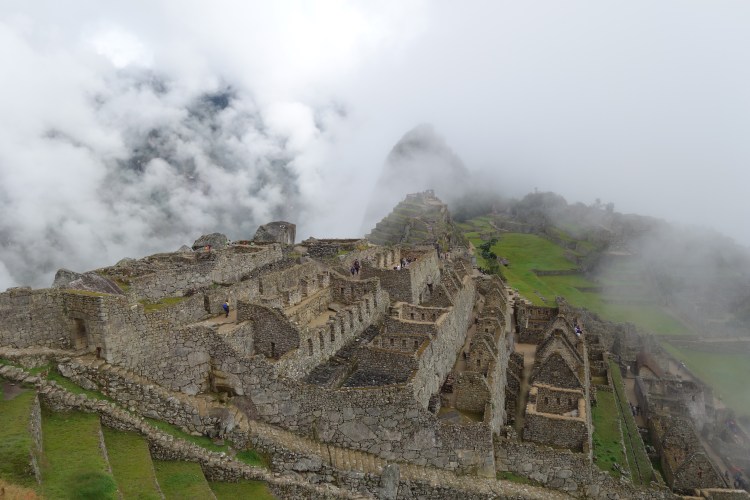
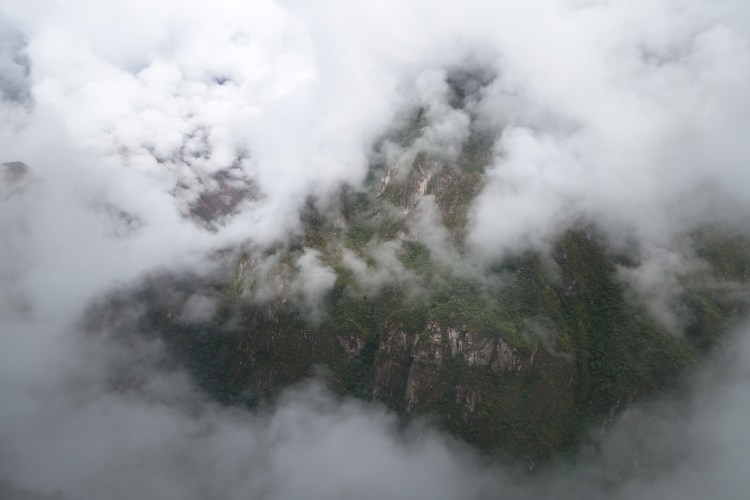
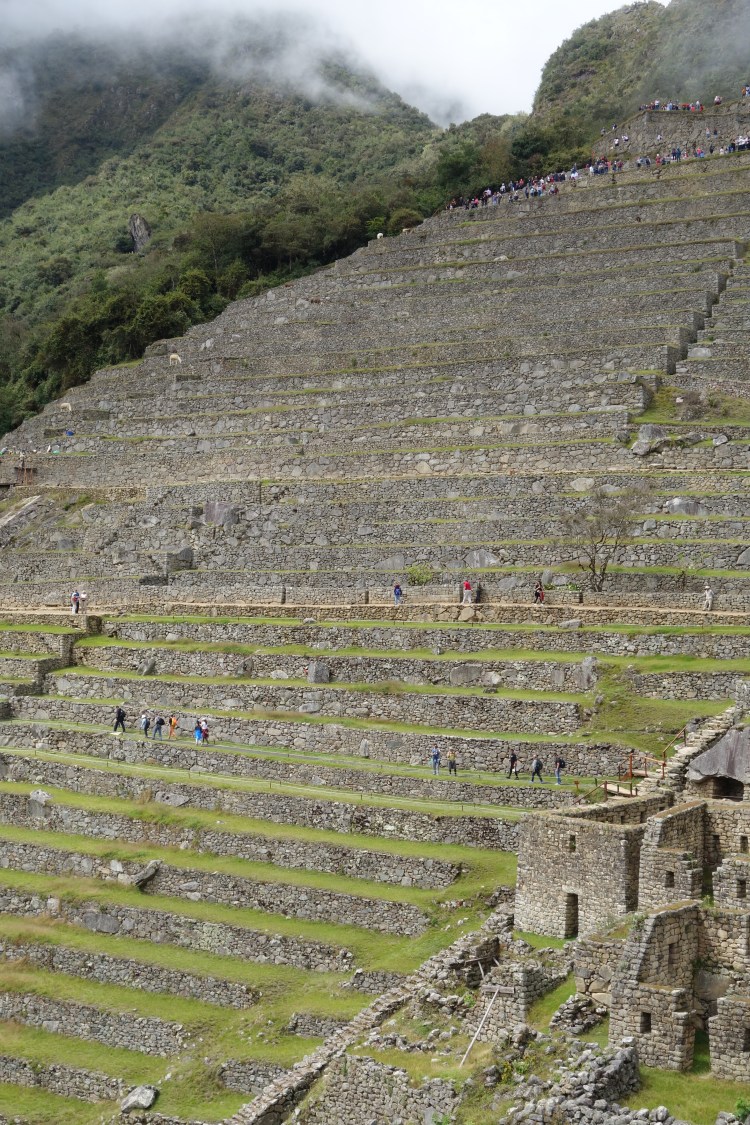
There’s a reason so many people are drawn to a Machu Picchu. Upon gaining my first view of the site, the crowds paled into insignificance. The majority of what is known about the Incan empire comes from the written records of Spanish conquistadors. However, throughout their colonial rule, the Spanish never laid eyes on Machu Picchu. Considering the relief of the landscape and the intimidating climate, it isn’t exactly the most obvious site to consider looking for what is an incredibly intricate arrangement of hand carved stones. Due to the lack of recorded history in the area, the site remains more or less a mystery. Theories exist regarding the purpose and significance of the site, however, these remain merely hypothetical. This air of mystery adds to the experience of visiting Machu Picchu. After an hour of marvelling over the classic postcard view, I made my way down into the stone blueprint of perfectly preserved walls and found a quiet space overlooking the river valley below. Cloud fronts floated in and out, bringing the overwhelming landscape in and out of focus.
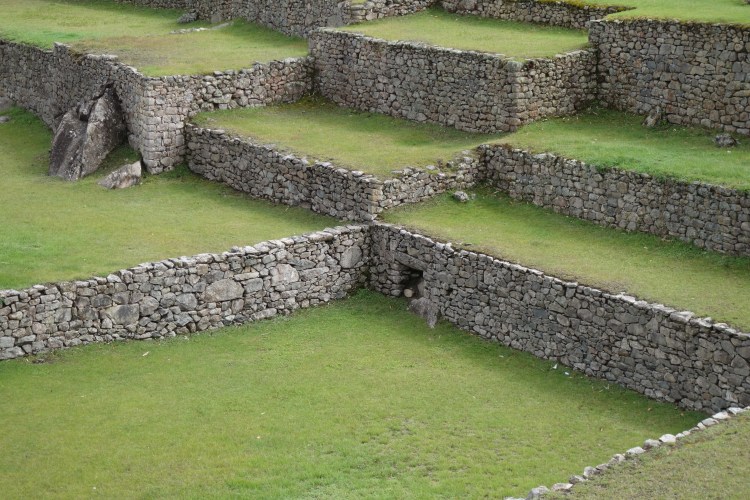
In preparing to leave Tasmania back in July, one of the items on my list of things to complete was some landscaping in the front garden. I envisioned a three-tiered row of dolarite stones, arcing around the front edge of the deck, where I would plant some native grasses and ground cover species that would hopefully cascade down over the rocks. A simply undertaking in theory. The reality? Three trailer loads of stones and a handful of weekends preparing the site before positioning the rocks and ensuring their solid footings. The result was satisfying and certainly warranted a few beers.
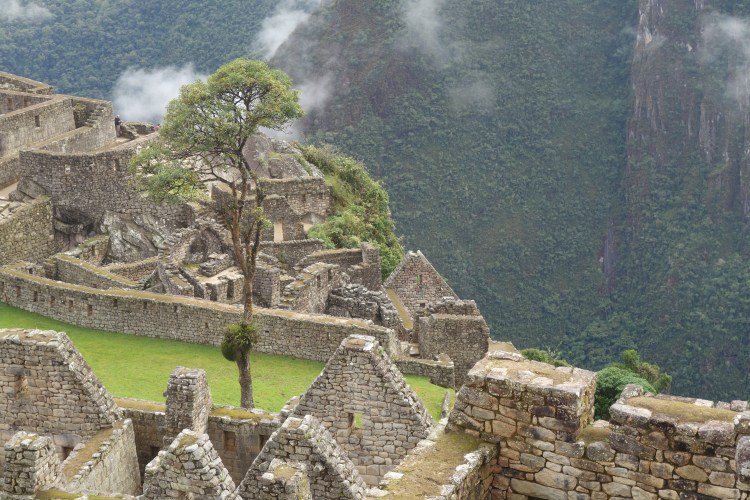
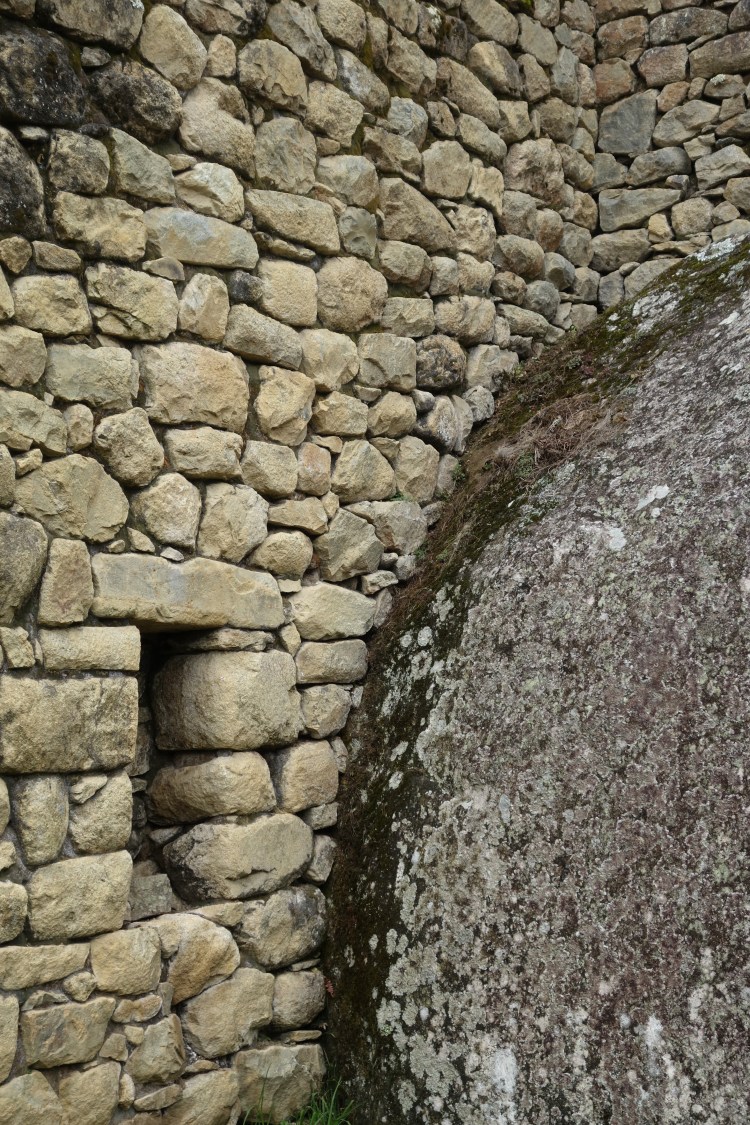
As I strolled through the Sacred Plaza, past the House of the High Priest, between the Three Doorways, the Residential Sector, the Industrial Sector, and amongst the vast terraces, I was left void of understanding. I experienced a similar sensation when peering over the southern rim of the Grand Canyon. Both sites may be some of the most photographed locations in the world, yet the grandeur and humbling composition of both areas is impossible to sense in any means other than the naked eye. The difference between the Grand Canyon and Machu Picchu, is the once incomprehensible human presence within the stone walls of the later. The labour required to construct the site is unfathomable. Aside from the thatched roofs that sheltered the residents, the site is perfectly preserved. This is testament to the craftsmanship of the Incans. Every stone appears to be in its rightful position. Even stones too large to manoeuvre have been incorporated seamlessly into the construction. A pitiful comparison, but the effort required to landscape my front yard provided me with the slightest relativity with which to marvel at the ruins of Machu Picchu.

I managed to find some quiet spaces within the ruins, allowing me to sit and utilise the full time allowance of my ticket. As the afternoon crowd descended on the site, I began my own descent back down the trail to Aguas Calientes. I arrived back in the town as rain began to fall, causing people to tackle their thin plastic ponchos or seek shelter in the nearest restaurant. The remoteness of the town only adds to the enormously inflated prices of everything linked to Machu Picchu. With a few hours to spare before the evening train departed for Ollantaytambo, I bought a packet of Oreos and found shelter on the steps of a vacant shop where I spent some time reading.
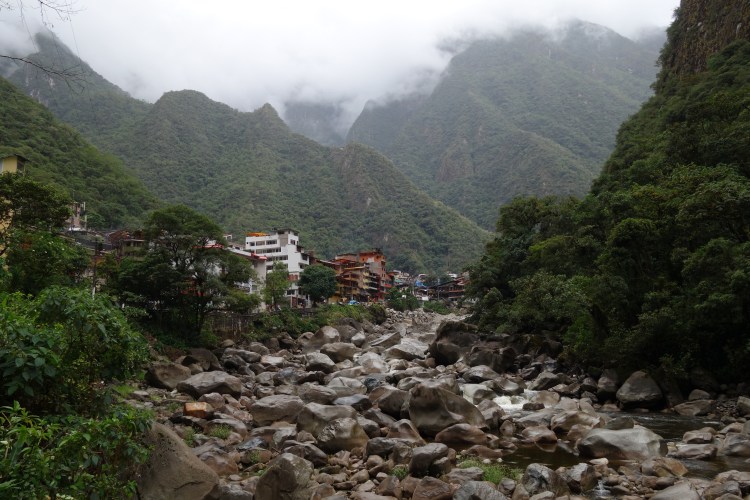
As both darkness and thick cloud once again cascaded to the valley floor, I boarded the train, arriving back to where my bike in Ollantaytambo around 11pm.
Rising out of the valley
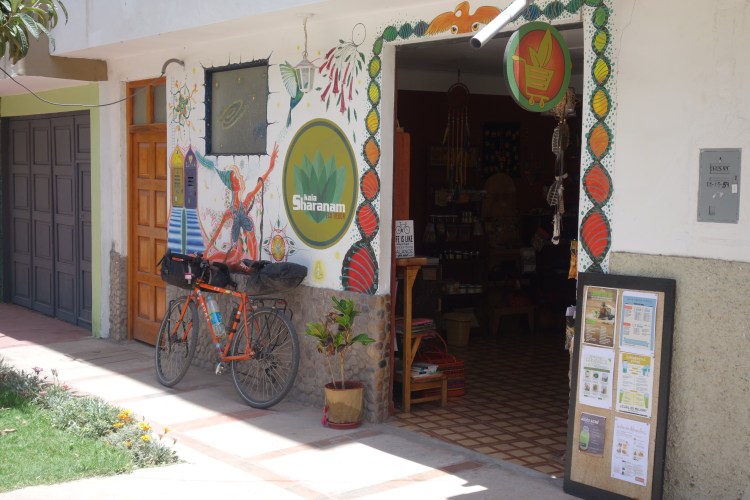
Following a fulfilling breakfast of fried eggs, plantain and rice, I retraced the bumpy route out of town and began the return ride to Cusco. With strength in my legs and a stiff tail wind to boot, the first hour of the ride was pleasant. Rather than take the same road back to Cusco, I turned south at a small town called Urubamba which also marked the beginning of my climb out of the Sacred Valley. Before commencing the uphill stint, I pulled in to a small eco-store and bought a kombucha. The owner, a slight lady with captivating hazel eyes and a tightlipped yet warming smile, was left in the shadow of her delightful three-year old son, Miguel. Without encouragement from his mother, who looked on proudly, Miguel entertained me with his impressive English vocabulary. He managed to tell me that they were from Venezuela, and then used charades effectively communicate how big the hill was that I had to climb to get back to Cusco. As a parting gift, they sent me on my way with some chocolate-coated coffee beans.
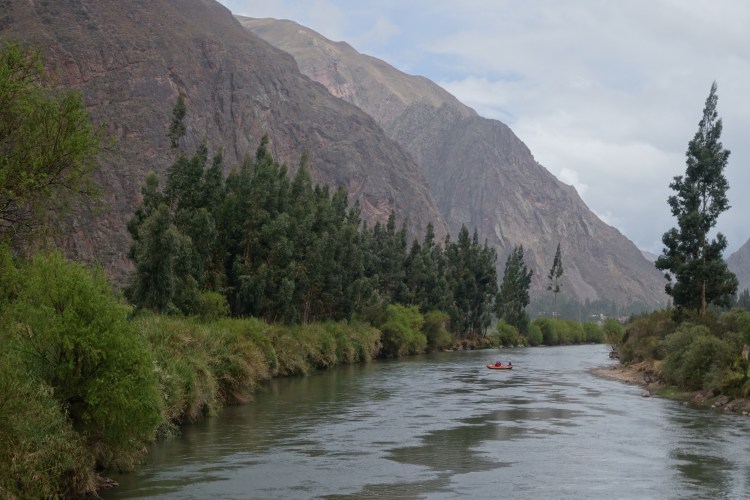
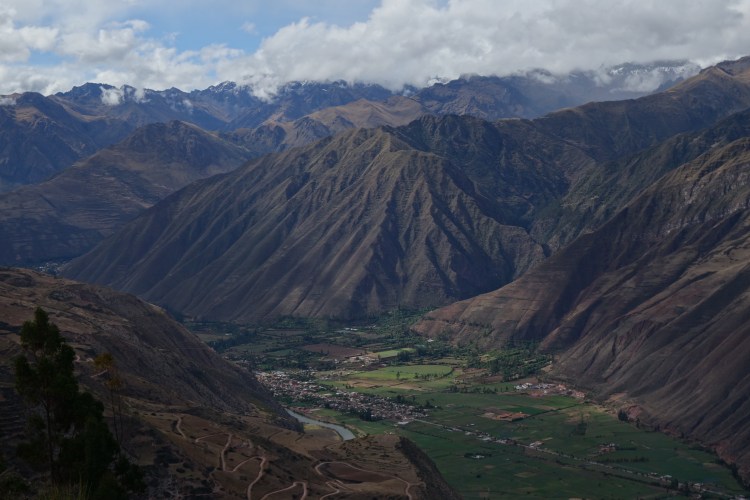
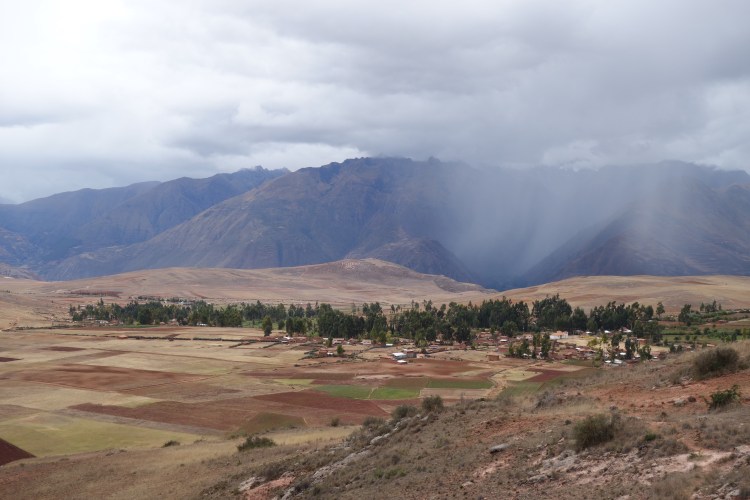
The 30 kilometre climb out of the valley was complimented by views of sweeping rain showers engulfing the small towns below. Stopping for a roadside lunch, I was presented with a clear drink in a shot glass at the completion of my meal. When questioning whether is was alcohol, gesturing that it’s not always the best combination with cycling, I was assured that it was ok, as it was ‘not alcohol, it’s natural’. Politely, I downed the drink which left my throat burning and my head spinning, and rode away.

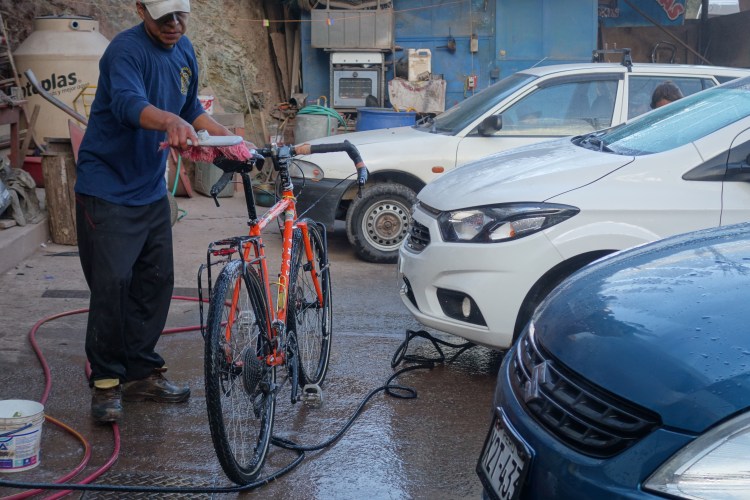
Later in the day I cycled through the town of Chinchero, known to the Incans as the birthplace of the rainbow. Despite the now clear afternoon skies, a colourful array of stalls filled the central plaza which was overflowing with people. Whether it was a usual Sunday market, or an Election Day celebration, the atmosphere was positively festive. Given the fading light, I pulled myself away from the joyous town and commenced an exhilarating, flowing descent back down to Cusco. On the outskirts of town, I pulled into a roadside lavado (car wash), hoping to use their hose to give my bike a much needed clean. What followed was quintessential Peruvian hospitality. Malefica was taken from my hands and given the most invigorating, foamy scrub of her life. Voyeuristically, I was given no option but to stand back and watch. Four days after leaving Cusco, we were back again, myself more sacred, and my bike more sparkly. I tried to buy a beer but it turns out alcohol is forbidden on Election Day to avoid undesirable results. Perhaps Australia should adopt a similar regulation?

Thanks for reading.
 Faults and Folds