At some stage in our lives, we will all suffer from the common affliction of having a song stuck in our head. Depending on the situation, the phenomenon of having a particular tune latched to your neurones may be either debilitating or motivating. It may prompt nostalgia which in turn could raise a plethora of emotions. In most cases, the cerebral rotation of a particular melody ensues during times when our mind drifts to places beyond our immediate surrounds. If we are lucky, sudden and poignant stimuli will often press pause on the track that is spiralling into the depths of our minds, allowing us to break the cycle and reengage with the world.
I have always been prone to the condition of getting a song stuck in my head. However, the repetitive motion of cycling combined with countless hours spent alone has taken this susceptibility to dangerous new levels. In addition, the long and often featureless road makes it especially difficult to break the cycle. Hours can pass and kilometres can roll beneath my wheels, while the only action between my ears is the repetition of a single line of lyrics.
Over the last few months, my subconscious has become conditioned to blast particular tunes in response to certain daily occurrences. For example, when overtaken by a vehicle (which, predictably, is a frequent event), the proceeding kilometres will be completed to the soundtrack of Peking Duk’s ‘Take Me Over’. Whilst in the grips of a long climb, Kings of Leon’s anthem ‘Sex On Fire’ emanates within my psyche. However, sex is interchanged with the word quads (a suboptimal exchange), resulting in a breathless yet singing cyclist…’Woah, my quads are on fire’.
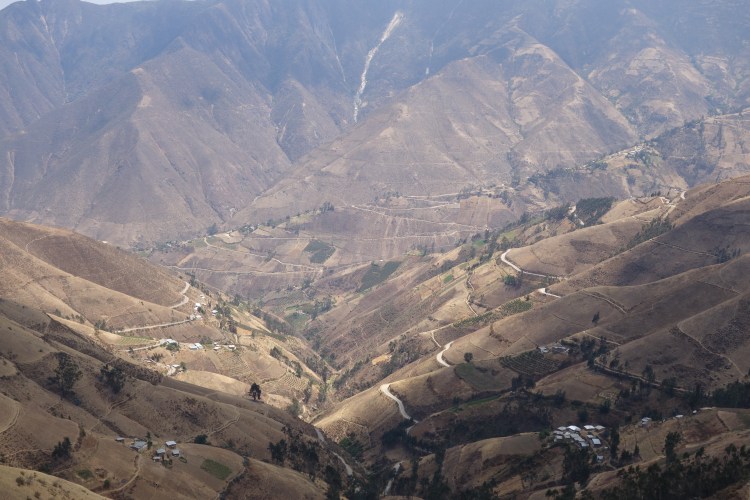
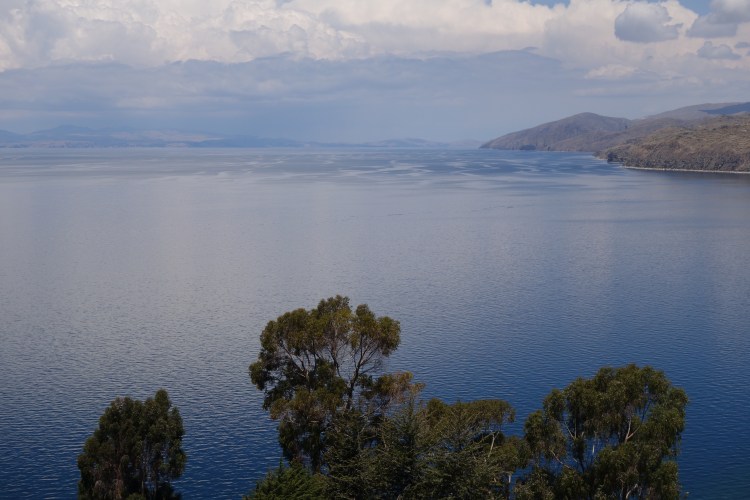
After the most relaxed border crossing of my journey, I spent the first few days in Bolivia exploring Isla Del Sol on Lake Titicaca. As I traipsed from shore to shore over the course of a weekend, I was yet again caught in the relentless cycle of a one song playlist in my mind. My brain was quick in discerning that the translation of Isla Del Sol is frustratingly similar to the title of Weezer’s early 2000s classic, ‘Island In The Sun’. In spite of this psychological burden during my visit, the island and the surrounding lake injected me with a sense of tranquillity. In the late afternoons, the deep, olive green water appeared woven with gold thread before being turned into a blanket of purple velvet as the sun signed off for the day.
Prior to crossing the border, the ride around the Peruvian shore of the lake afforded views dominated by trout (trucha) farms, roadside rubbish and encroaching storm fronts. The evenings offered the most relaxed camping of the journey. Within days of leaving the lake’s edge, the South American contrasts I’ve come to expect continued, as I found myself descending into La Paz; the capital of one of the continent’s poorest nation. In a city where Austrian-built cable cars fly above ramshackle and derelict dwellings, I spent a few nights in the famed, yet relatively secretive, Casa de Ciclitas; a private home opened exclusively for those travelling by bike.
High Water
The idea of cycling along the edge of Lake Titicaca had held great appeal and intrigue ever since I’d first noticed it on a map. Geographically, the lake is considered to be the highest navigable body of water in the world, with a surface elevation of 3812 metres above sea level. Historically and culturally, the area surrounding the cold, deep water is said to be the birthplace of the Incans, with countless ruins found along the edge of the lake. Socially, the water source supports numerous communities through agriculture, aquaculture and more recently, tourism. And finally for the cyclist, I figured that the 190km ride around the lake must be flat as it is, well, a lake.
With a few hundred kilometres of altiplano between Cusco and Lake Titicaca, I decided to catch a bus to the town of Puno to make up for the few days spent at school. Prior to this leg of the journey, taking my bike on busses has been relatively easy. Unfortunately, this was not the case when I arrived at the station in Cusco early in the morning. The man responsible for checking bags on to the bus glanced briefly at my bike and simply shook his head, reaching past me for the next passenger’s backpack. After considerable negotiations, he told me that it ‘might’ be possible if I remove the wheels, saddle, pedals, and rotate the handlebars to sit parallel with the frame. This all occurred as other passengers looked on from their seats on the bus waiting for the rapidly approaching departure time. As I got to work with my multitool, an American man got back off the bus to see if I needed a hand. John, travelling with his wife Dory (a fishy couple) and their young daughter Monique, was also a Geography teacher who was currently on a year-long sabbatical from his job in San Francisco. Last summer, the family had cycled around Europe together so John was was empathetic towards the logistical challenges of travelling with a bicycle. He quickly assisted me in removing the various parts of the bike, including the now vulnerable rear-derailleur. Handing the frame over, I watched the nihilist in charge of luggage as he slid my bike, with ease, into a space large enough for five bikes.
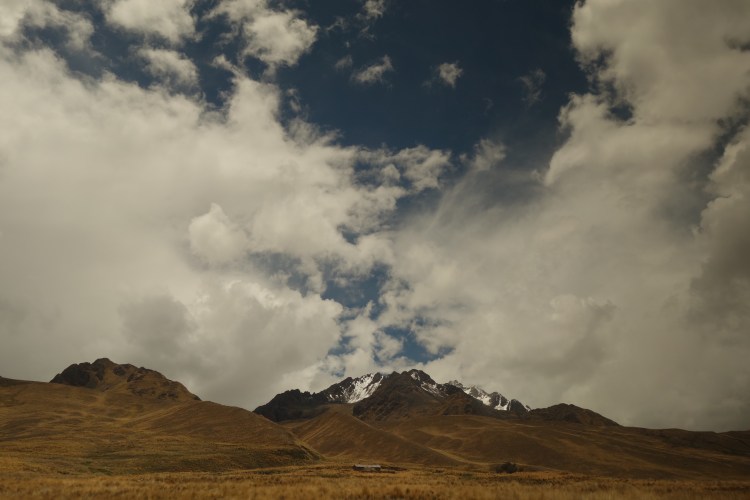
The bus journey to Puno, Peru’s ‘folkloric’ capital on the north-west edge of Lake Titicaca, was fast and relatively featureless albeit an occasional glimpse of distant snowy peaks. The bus pulled into the terminal on the shore of the lake around 3.30pm, where I ensured I was first out to oversee the handling of the various bits of bike. John and Dory stayed with me as I reassembled my steed, as the energetic Monique performed a combination of star jumps and cartwheels in the parking lot. John told me that it had taken them a few days to acclimatise in Cusco, with the altitude of the city catching them off guard. Monique overheard this and piped up, telling us all that she had been fine, despite a sore heart every time she ran up stairs. We bid each other farewell, briefly sharing our plans for the ongoing journey. The family were in the midst of discussions as to whether they had enough time to visit Cochabamba in Bolivia before their return flight to the States. Interestingly, this is where Dory had been born when her parents were living there as missionaries in the 70s. She had never been back.
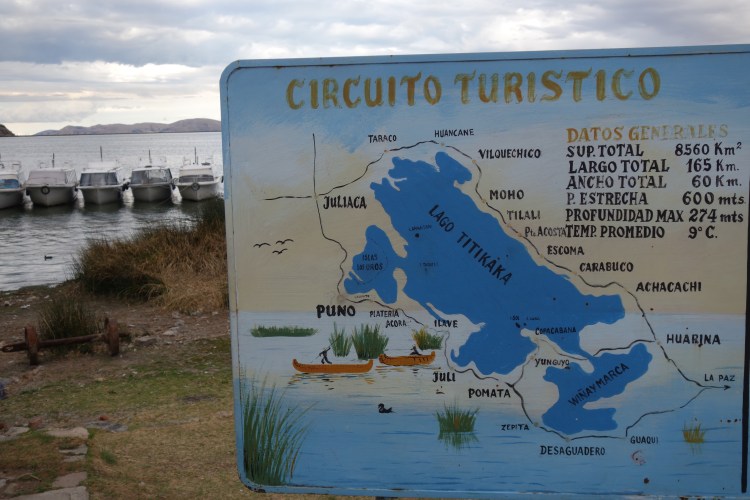
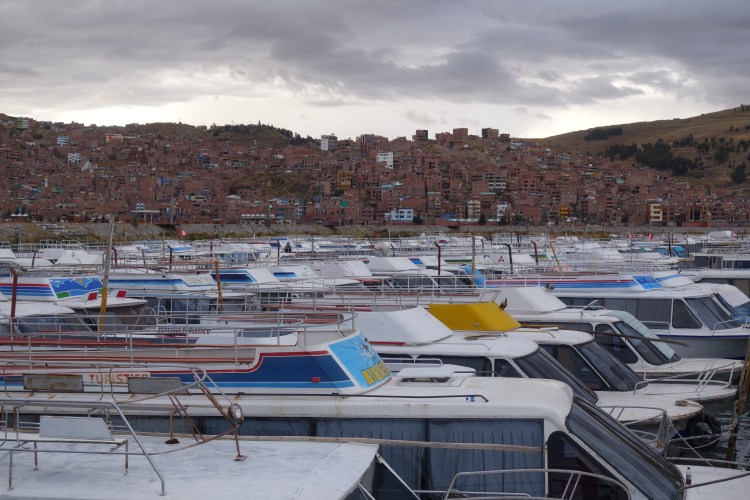
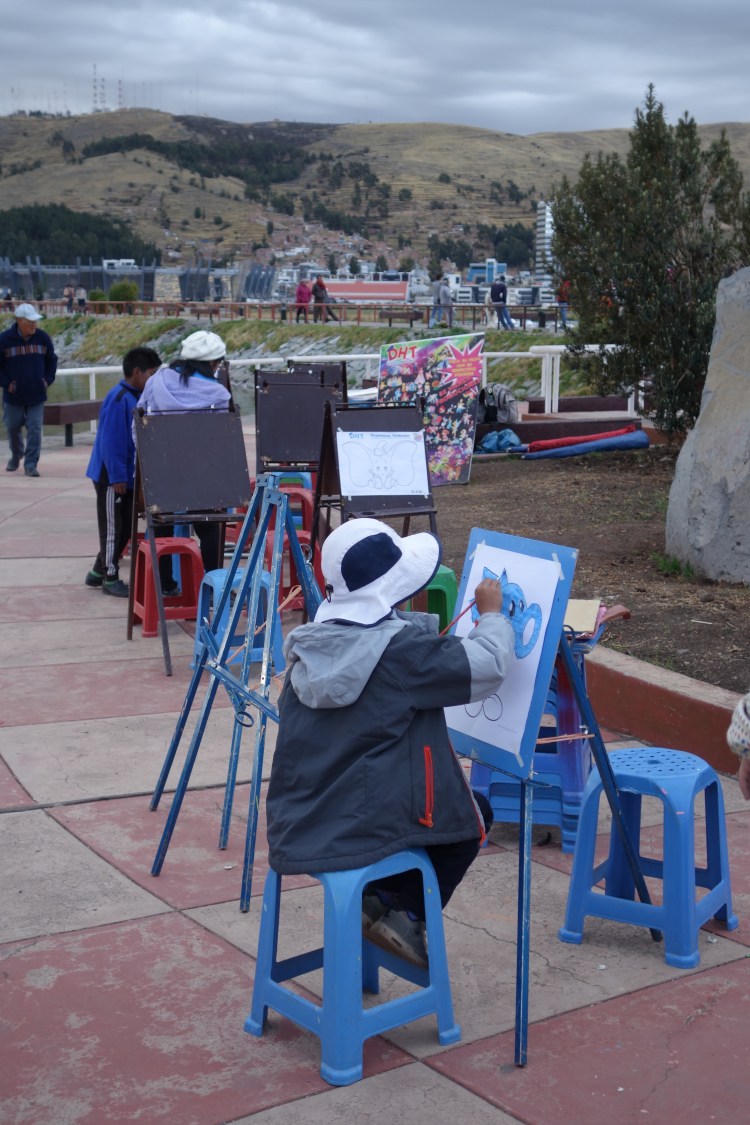
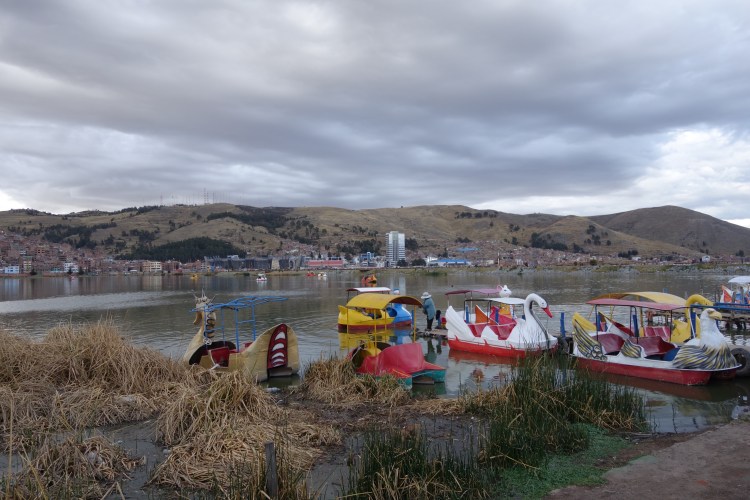
I spent the twilight hours wandering around Puno. The floating island communities of Lake Titicaca are a significant drawcard for tourists visiting this region. (Floating islands to avoid taxes). Subsequently, the lakeside settlement of Puno reflects this popularity, with countless boat operators offering passages to and from the ‘traditional’ communities. As the sunlight drained away over the watery horizon, I ambled along the foreshore where tour operators were fighting for space to tie up their boats for the evening, and pedal powered, fibreglass swans glided around a lagoon. Despite what appears to be a thriving tourism industry, the town itself remains relatively meagre, albeit one street where foreigners flock to gorge themselves on pizza or to taste trout pulled from the lake. I spent an hour sitting on a bench amidst the endless stream of travellers cruising from window to window to compare the seemingly identical menus of the restaurants, before making a choice. As I watched on, the streetlights flickered to life and people began zipping up their jackets and pulling at their beanies to try and stretch them over their ears.
My daze was broken by the sharp shrill of a woman’s voice. Subconsciously, I had been drifting away on the ethereal sounds of a handpan being played by a busker at the feet of the hungry tourists. The scream which had brought me back to earth had come from a beautiful Japanese woman who had also been producing the music. Out of no where, and for an inconceivable reason, a stray dog had run between the knees of the crowd and launched itself at her. Lying on her stomach, she scrambled to pack away her precious instrument, keeping the incessant dog at bay with her legs. She eventually made it to her feet, caught in between tears and laughter, and dusted off her linen trousers. The dog had vanished as quickly as it appeared. I approached her to see if she was ok. She had recovered quickly from the shock and explained that over the six hours she had been playing that day, regardless of where in the town she was, the same dog had appeared without warning, bowling her over each time. Perhaps it was in response to a particular tune? Or maybe she possessed a pied-piper allure? Despite the frequent attacks, I think I would prefer to appeal to dogs than rats. She said goodbye and wandered to the other end of the street where again, she sat and unpacked her handpan. As she nervously began to play again, her eyes darted from side to side; the rapid, staccato rhythm contrasting the smooth, celestial tones floating from the instrument.
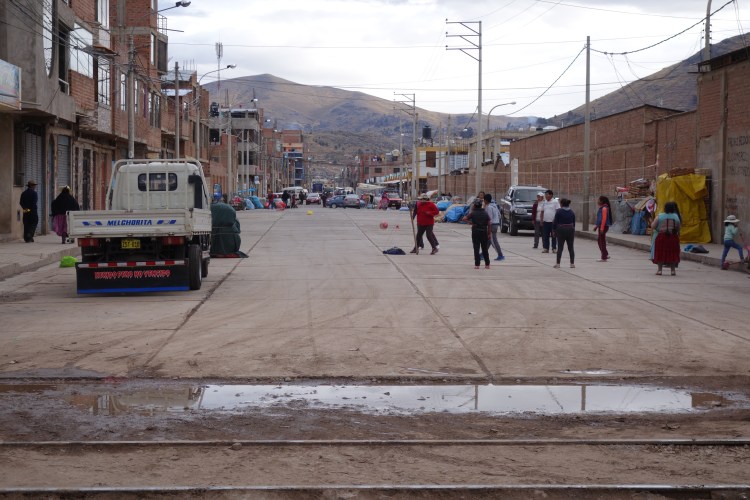
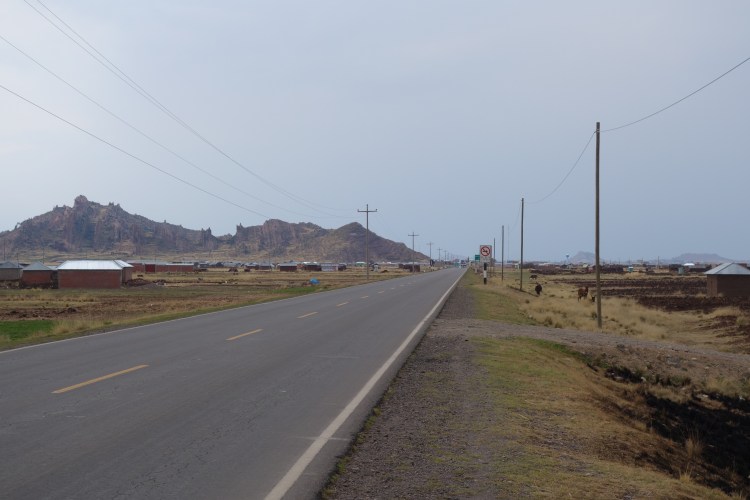
The following morning involved a few laps of the local market to fill my panniers with fresh vegetables, pasta, rice and a few other staples for the coming days. A headwind whipped up the valley from the southern end of Lake Titicaca making me work for the first few kilometres after leaving Puno. However, as would become the theme of the day, the weather changed within minutes providing the most sensational conditions. With the wind on my back and a lake the size of an ocean to the east, I raced south. Despite sun warming my back, for the duration of the morning I was chased by a swollen purple storm front. Rumbling thunder followed forked lightening that connected sky and water with an electric ferocity that struck fear into a cyclist atop a steel-framed bicycle. Alas, the approaching front pushed a stiff breeze which continued carrying me southward.
A brief lunch in the central square of a small junction town was cut short after I was surrounded by a group of local men. I always feel uncomfortable when I get asked about the price of my bike. Whilst I’m sure the questioning is grounded in curiosity, I am overcome by a wave of insecurity. Understanding that my belongings would most likely come to a value that equals a large proportion of the average annual wage, I always play it down and attempt to divert the conversation away from the stark inequality. I have written about it before, but one of the most challenging aspects of the previous months on the road has been in attempting to come to terms with the privilege that oozes from this journey.
Albeit uncomfortable, I often succeed to changing the subject when confronted with questions regarding money. I think the unkempt, red beard helps. However, this particular situation escalated a little when conversation became much more one directional. Spurred on by each other, the five men circled around me and rebutted my every response with, ‘yes, but you do have a lot more money than us’, or ‘you are really rich’. As I packed up my lunch, they began researching wages in Australia on their mobiles, converting the figures to currencies they understood. This seemed to anger them rather than quell their curiosity. Given our central position in the crowded town, I was able to ride away without being pursued. Physically, I never felt threatened, but the deeply rooted awareness of economic disadvantage certainly takes its toll.
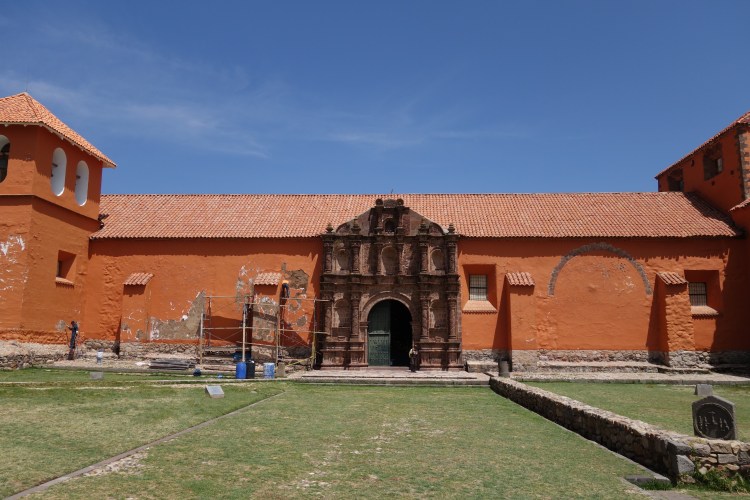
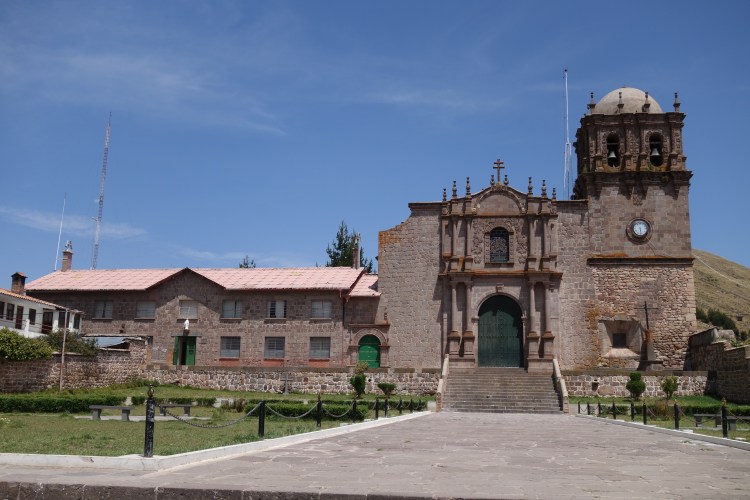
During my brief stop, the foreboding storm front had grown closer. I continued south with pace and trepidation, arriving late in the afternoon in the cobbled plaza of Juli. A sleepy town, perched on a hill above the lake, Juli is often referred to as Peru’s pequeña Roma, meaning ‘little Rome’. I had been baffled by this description given the dominant Incan influence through the region. However, arriving in the central square I laid eyes on a couple of the four colonial museum-like churches from the 16th and 17th centuries. I rolled down the steep street leading to to the foreshore and pushed my bike along the beach to a stretch of grass, sheltered by overhanging eucalypts. The rumbling thunder from the belly of the storm shook the ground as I hammered in the final tent peg. The silky surface of the lake darkened as a gust of wind raced across the water, indicating the arrival of the storm. I crawled into my tent as the rain began to fall, descending into a welcome afternoon siesta.
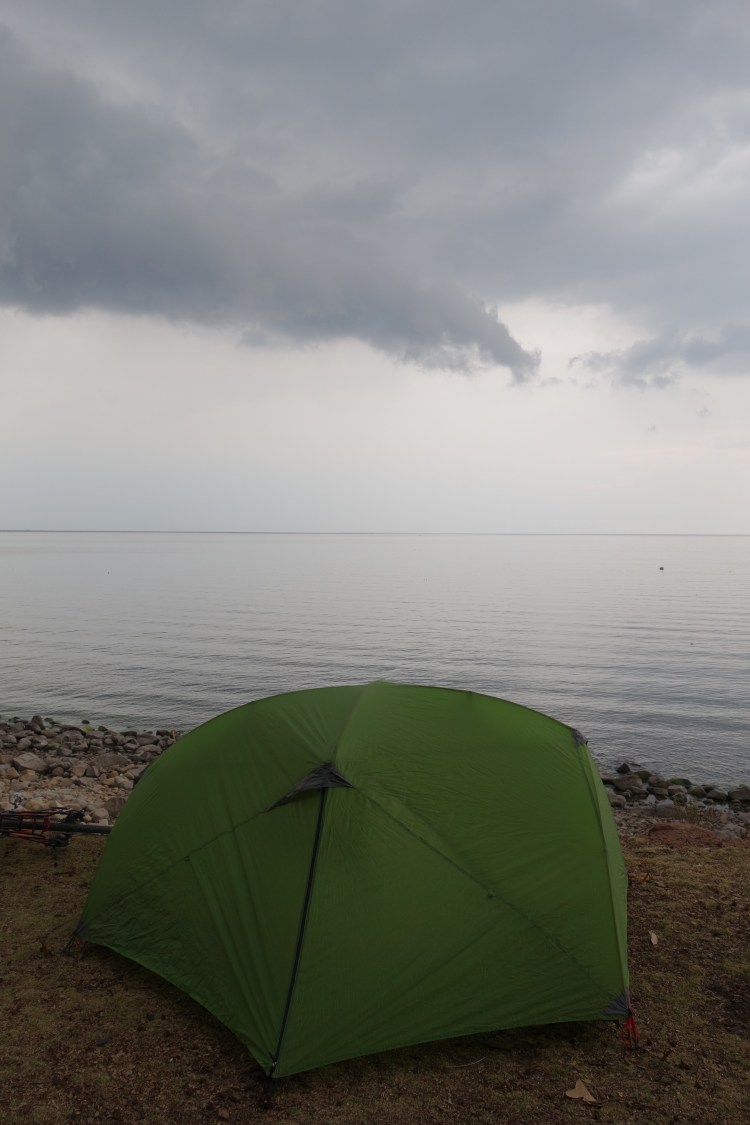
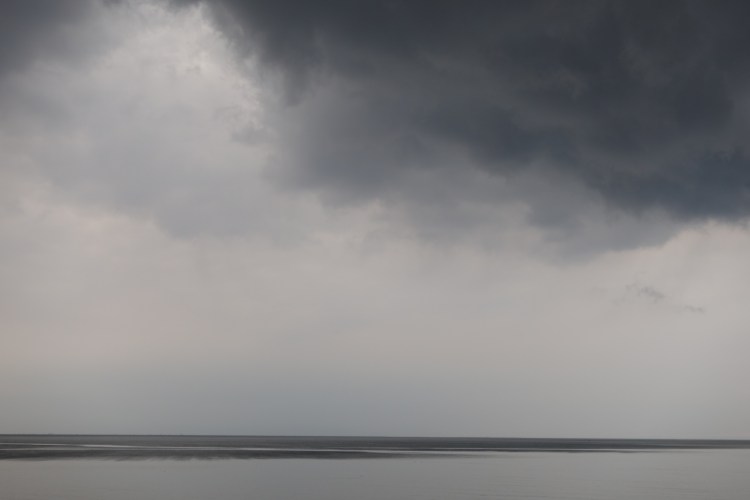
The vigorous flapping of nylon had subdued to a gentle flutter and the sound of rain had vanished. I emerged from the tent to the most tranquil scene. The calm lake mirrored the grey storm clouds which continued south, creating what appeared to be an endless horizon. A gentle swell lapped at the rocks which were covered in stringy green algae which swirled in the clear water. The smell of fresh rain on the eucalyptus leaves above me competed strongly with the quick pasta meal that I cooked as the light faded.
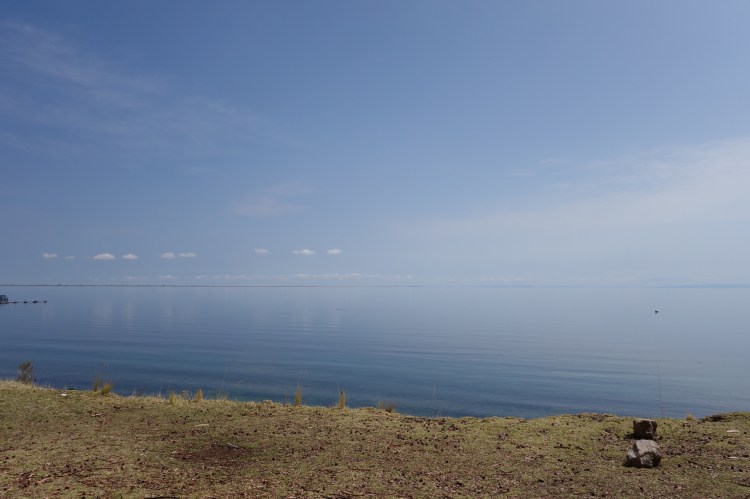
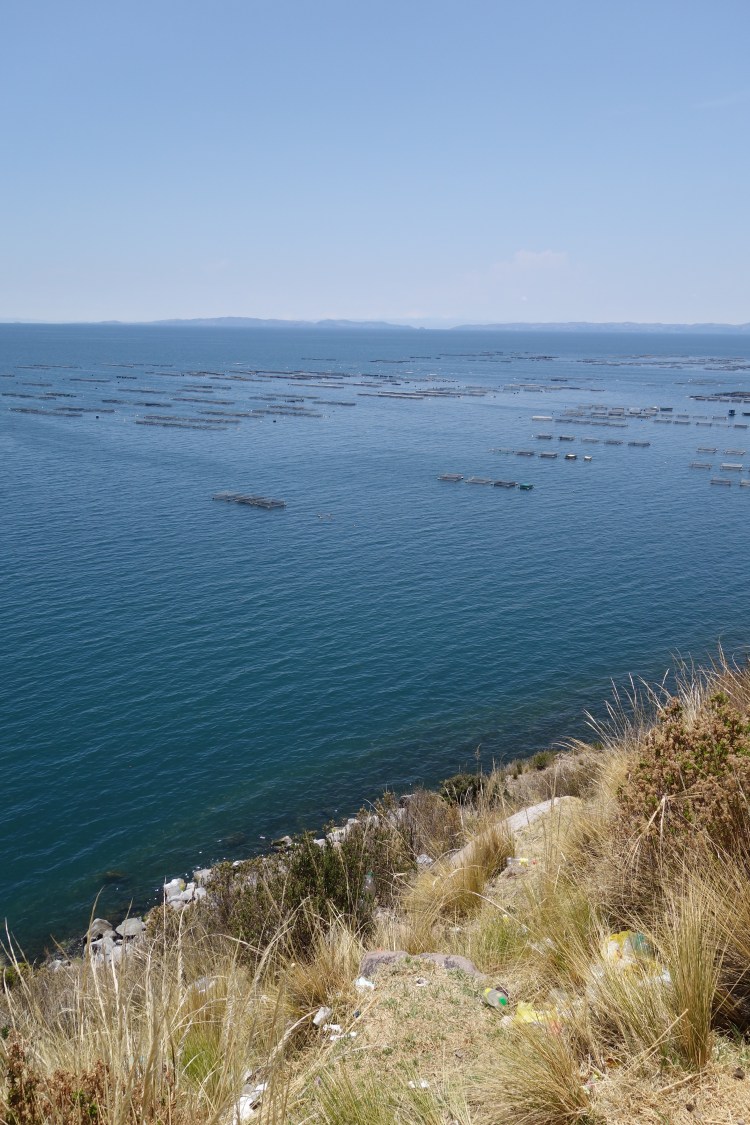
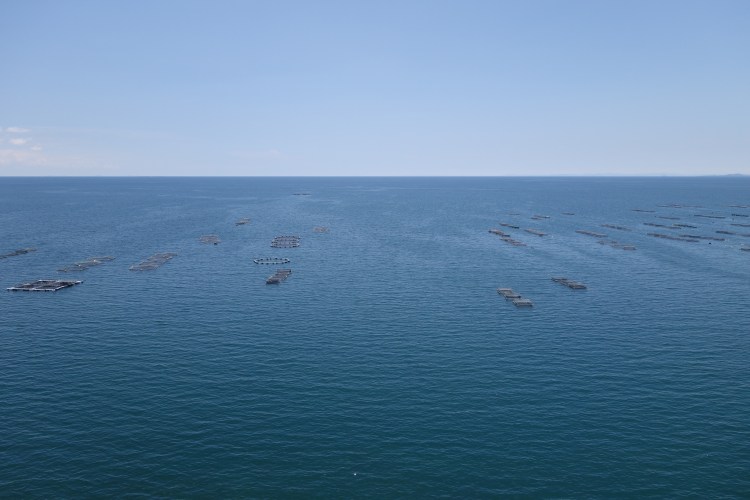
My final day in Peru began shirtless on the shore of the lake, consuming dangerous levels of caffeine and sunshine. The wake from the occasionally passing fishing boat disturbed the otherwise velvet surface of the water. The floating rings of trout farms were the only other disturbance in the view across the lake. A few hours passed before the first breath of wind arrived, bringing me back to the present. Despite the cloudless sky and abundant sunshine, a breeze at this altitude is still enough to warrant a layer or two of clothing. I broke camp, climbed back up into the town and began the final stage of riding to the border of Bolivia.
A few ‘bob’
The final kilometres of riding in Peru were comprised of fields full of farmers, glowing with anticipation. In preparation for the approaching wet season, soil was being turned and crops were being sown. Mattocks were the tool of choice for those not fortunate enough to own a bullock and plow to till their parcel of land. Trout farms increased in frequency, as did the quantity of roadside rubbish.
After six weeks in Peru, the sudden appearance of the immigration buildings was somewhat surreal. Since leaving Colombia, the two border crossings I’d experienced had involved long lines and relatively convoluted processes. The border crossing between Peru and Bolivia also involved waiting to receive my exit and entrance stamps. This time, however, it was while the immigration officers finished watching a YouTube video on their phones. As the only person trying to cross the border, the process was the most relaxed affair, leaving me a little anxious that I was missing something important. My remaining Peruvian money, the Nuevo Sol, was exchanged at the border for Bolivian Bolivianos. The international code for Bolivian currency is ‘BOB’ and, given the weak state of the nation’s economy, I quickly came to realise that nothing really cost more than a few bob.
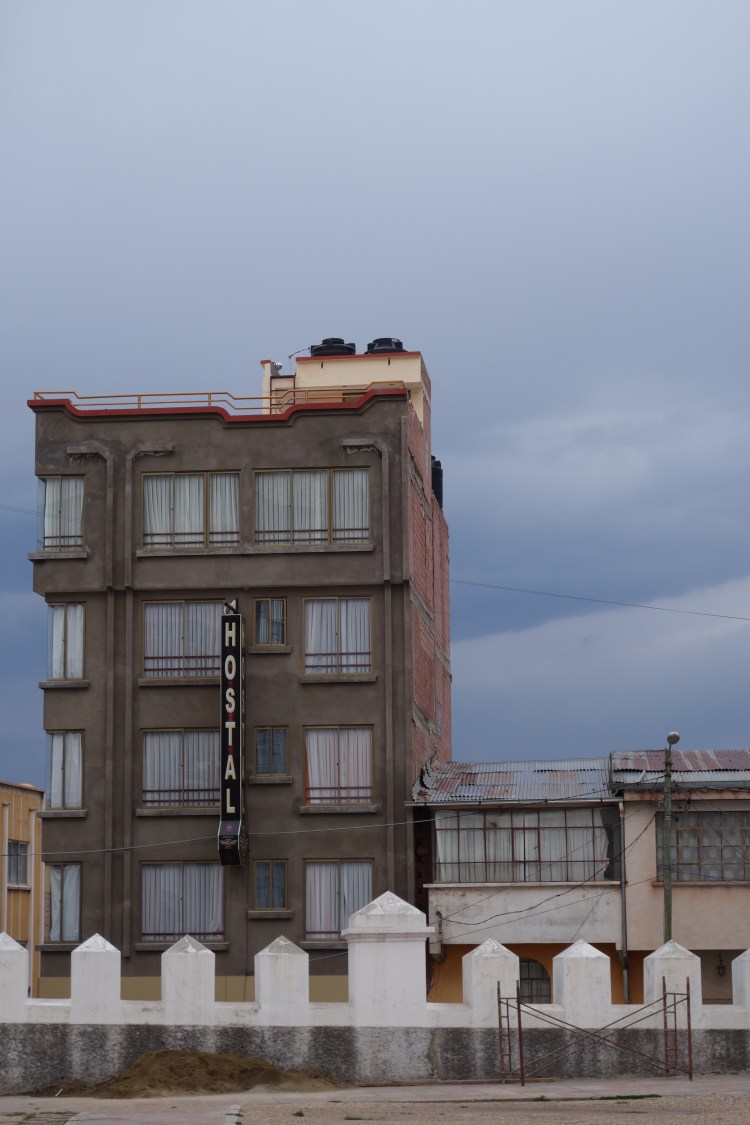
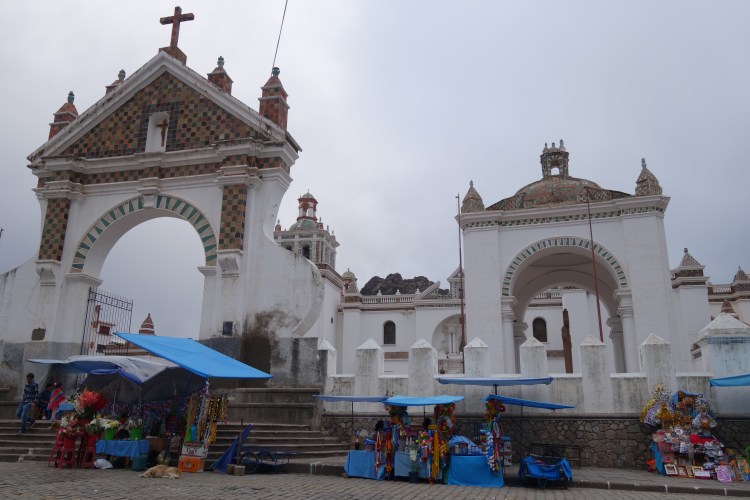
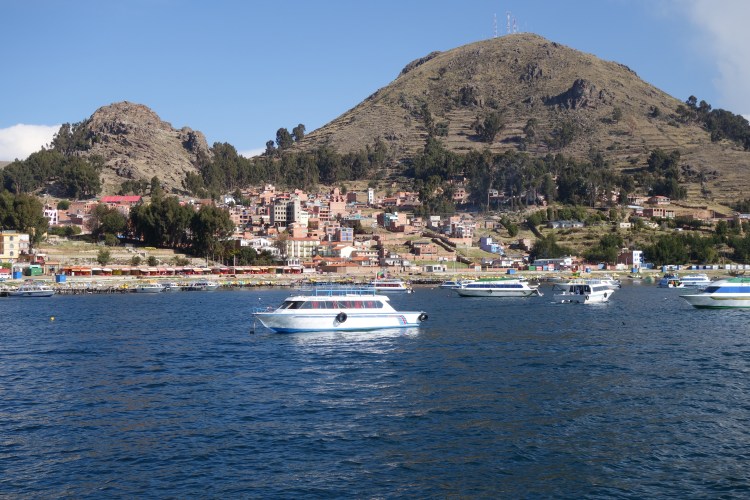
Despite being in a new country, my journey along the edge of Lake Titicaca continued, as the large body of water is shared between Peru and Bolivia. Only a handful of kilometres south of the border, the town of Copacabana lies nestled between two hills, tucked into a small cove full of boats. Whilst on the road, I am sure that I’m constantly being overtaken by other tourists, yet being alone on a bike provides a sense of solitude. This is most evident when arriving in a town like Copacabana, which teems with hostels, restaurants and tour operators all vying for your attention and finances. The daily autonomy gifted by cycling seems to vanish when entering tourist centres. More than ever, experiences appear strikingly as human constructs and all basic needs seem to cost money, even using public toilets. I am wary of sounding as though I am distancing myself from the concept of a tourist. This is something I am constantly confused, confronted and frustrated by when talking to other people travelling by bicycle.
In an age of increasingly affordable travel and general connectivity, more people than ever are crossing borders and sharing their experiences. This has resulted in the desire to replicate experiences that have been beautified and spread throughout the inter webs. Interestingly, as people strive to have their own version of the same experiences, people are increasingly trying to differentiate themselves from the image of a ‘tourist’. I commonly hear the term ‘traveller’ being bandied around in hostels in place of ‘tourist’, carrying the connotation of an identity as opposed to a pause in an otherwise contrasting existence. I, as much as anyone else, understands the magnetism of experiencing parts of the world which are ‘off the beaten track’. I’m sure its rooted in my colonist genes. But this possibility is generally only available to those in positions of socio-economic stability and power, as was the case in the times of colonisation. As this trip goes on, and I meet more people trying to avoid ‘touristy’ places, I can’t help but become increasingly frustrated by this contradiction. It is so important that we (those fortunate enough to even be having this conversation) recognise and respect the responsibility we have when we travel. When we leave home to simply see somewhere else and return with the photos, stories and new perspectives we too are tourists.
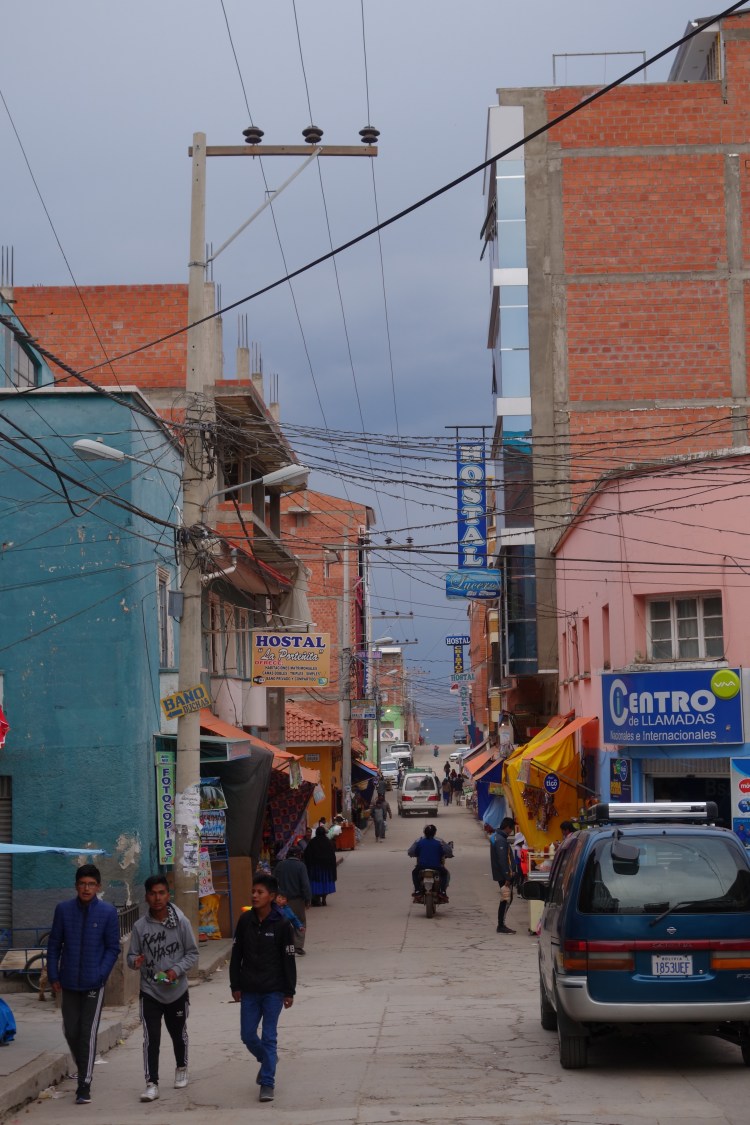
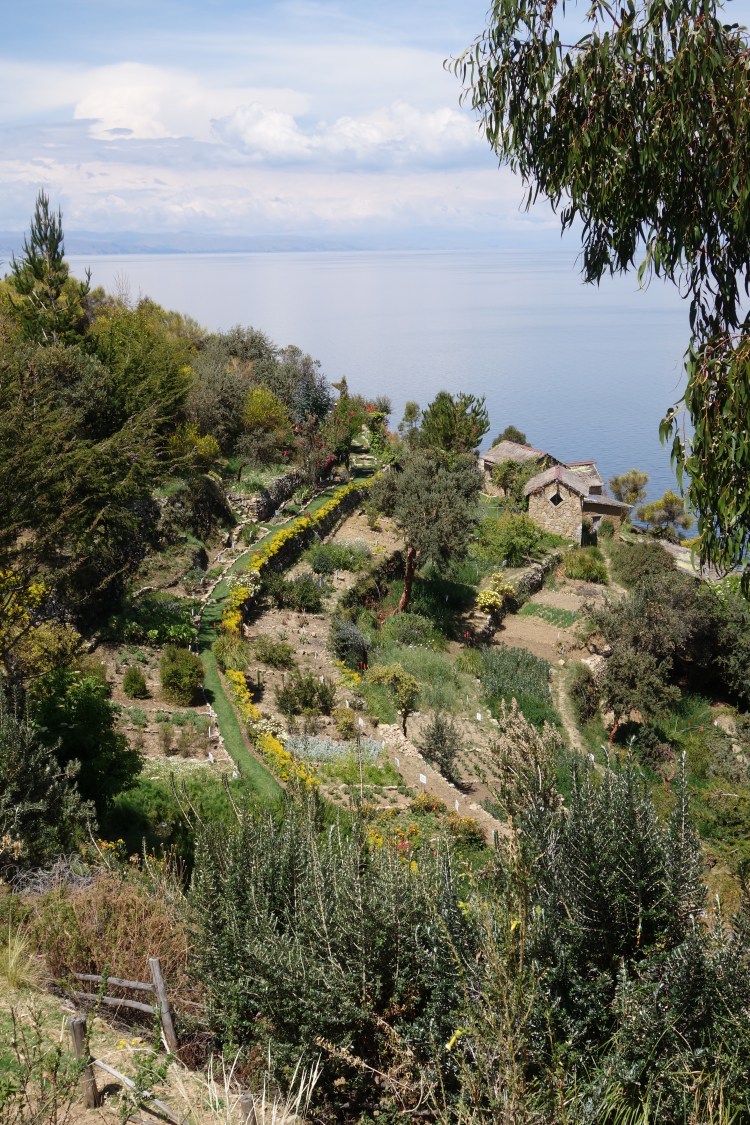
Despite the abundance of tourists in Copacabana, the primary attraction sits several kilometres off shore. Continually occupied since 2200BC, Isla Del Sol (Island in the Sun) juts out of the deep waters of the Bolivian section of Lake Titicaca. For generations, the residents of the island have survived through farming which has left its mark on the landscape in the form of countless stone terraces which divide the bare hillsides into randomly shaped parcels of earth. More recently, this subsistence economy has become supplemented by trout fishing and rapidly increasing tourism in the region. In addition to the supreme natural beauty on and around Isla Del Sol, the island is also home to over 80 significant ruins from the Incan period. Having developed quite an affinity with the region during my ride along the length of the lake, I figured a trip to visit Isla Del Sol would be a fitting culmination to the Titicaca section of my journey.
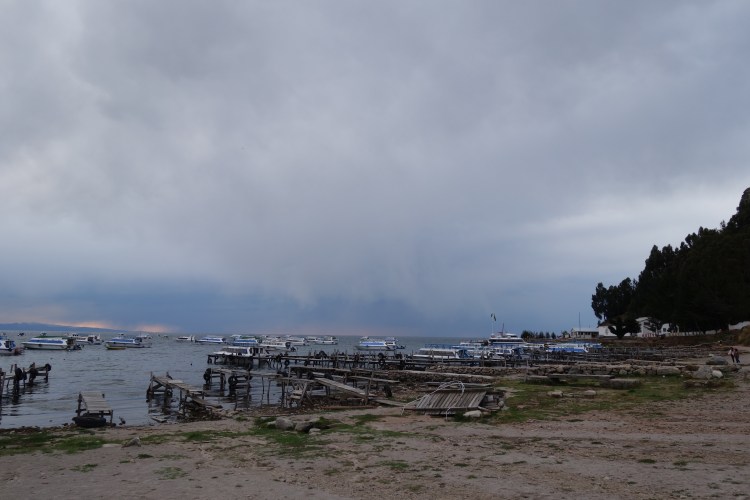
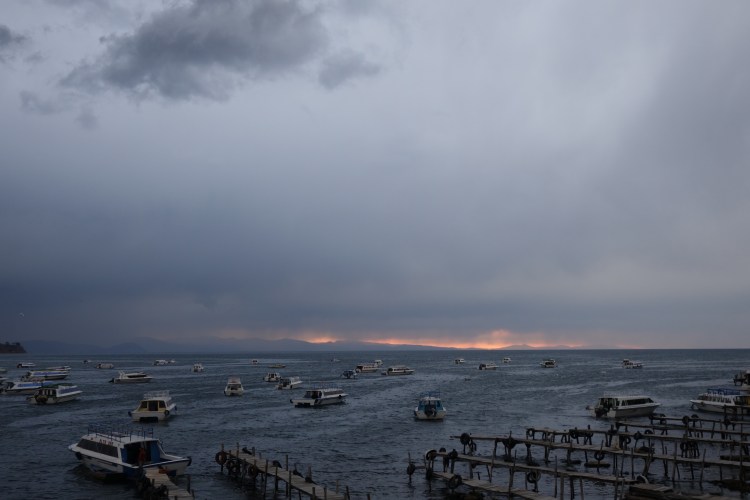
After purchasing a ticket for the following morning, I spent the evening wandering the narrow, restaurant lined streets of Copacabana. Becoming quickly fatigued with the hustle, I bought a can of beer and found a quite spot on the edge of the water. Enjoying the company of a large black dog, I watched the final tourist boats of the day as they unloaded their passengers and returned to their moorings for the evening. On dark, I slowly made my way back to the hospedaje where I was staying. Meters from the door, my drifting mind was whipped back into line when I heard my name being called out from behind. I turned to see the English guy, Ali, that I had met a few weeks back at the hostel in Cusco. I think we were as surprised as each other with the rendezvous. Without hesitation, I took Ali up on his offer of grabbing a drink in town. Drawn to the sound of live acoustic music, we took a seat in the back of a small bar where an Argentinian man was performing Latino influenced covers of popular western tunes. As luck would have it, the bar was in the midst of a prolonged happy hour, consisting of two cocktails for the price of one. After placing my order of two Pisco Sours, I slid the menu towards Ali who closed it and asked the waitress for an orange juice.
“Sorry man” he said. “I’d love to have a beer with you, but I’m not meant be drinking for a few weeks following the ceremony”.
I was a little surprised, given that he’d asked me for a drink and now I was double parked with two cocktails whilst he sipped a fruit juice. Regardless the company and conversation was great. In addition to the temporary sobriety, there were marked changes in Ali’s demeanour following his Ayahuasca ceremony in the Sacred Valley. He was much more reserved than our first meeting in Cusco, pensively considering his responses and listening intently throughout our conversation. I was conscious of being overly inquisitive about his experiences. However, Ali did respond with conviction when I asked whether or not he found the experience confronting. He explained that the visions he incurred were of experiences he had already been through in life, therefore the surprise factor wasn’t overwhelming. But, it was the sequence that he relived them, presenting him with clear reasoning for a lot of the events throughout his life. Without going as far as saying that the ceremony answered questions he had about himself, his past and his relationships, he did believe that it was he catalyst for positive changes in various areas of his character. He had already called home to discuss various elements of his relationships with close family members and was still in the process of recording thoughts that he had experienced throughout his time with the shaman. Most fascinating to me was his explanation of the effect of the ‘medicine’, as it is called. Throughout the retreat, Ali participated in two ceremonies of which both times he responded strongly to the ayahuasca. During the same two ceremonies, Ali observed another guy, in his late teens, who didn’t have a single reaction. The shaman slowly gave him more and more to drink, eventually stopping and explaining that his body wasn’t prepared for, or accepting of, the ayahuasca. In speaking to this guy, Ali had listened to him explain his rationale for the retreat, which was basically the pursuit of another recreational drug high. Apparently, nothing will occur within the mind or the body during a ceremony if you are not open to facing your fears and relinquishing your apprehensions. Listening with an open mind, I found Ali’s recollections intriguing. As I slurped the last of my Pisco, weariness had well and truly set in for the night. Ali’s energy was also waning as he continued processing his recent revelations. After swapping details, we went our separate ways.
An island in the sun (and rain)
I woke the next morning to torrential rain and rivers where the streets had been the previous evening. The owner of the hospedaje was happy for me to leave my bike with him for the night while I was on the island. Dashing between overhanging roofs to avoid a proper soaking, I took a convoluted route to the waterfront where I managed to locate the correct boat in a flotilla of seemingly identical hulls with relative ease. On board, a mix of tourists and locals returning to their island home sat in pensive silence looking out the window. Small splashes leapt from the water’s surface where each raindrop fell. I usually pride myself on being observant and aware of my surroundings. This particular morning, I surprised myself when I woke up halfway across the lake, having been lulled to sleep by the perpetual tapping of the two stroke motor and a poorly ventilated cabin. For the remainder of the ride, I stared groggily out the window as we followed the rocky shoreline of the mainland which diminished into a narrow point. As the boat rounded this feature, Isla Del Sol came into view, rising from the turquoise depths of the lake.
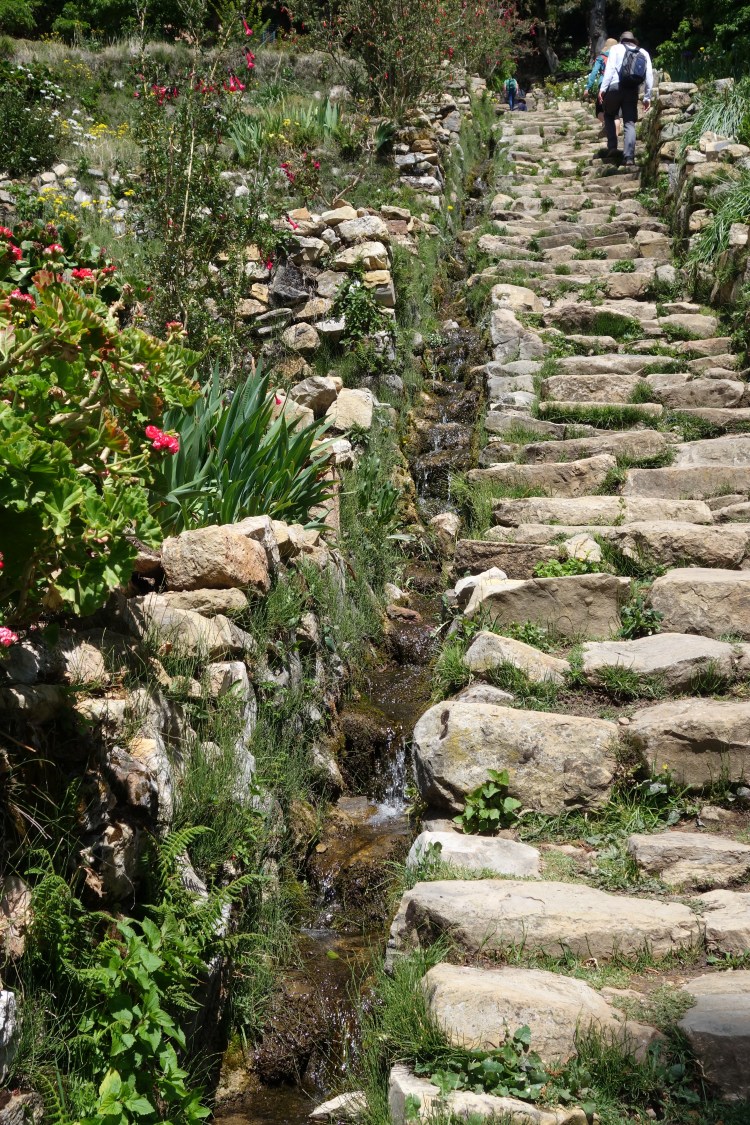
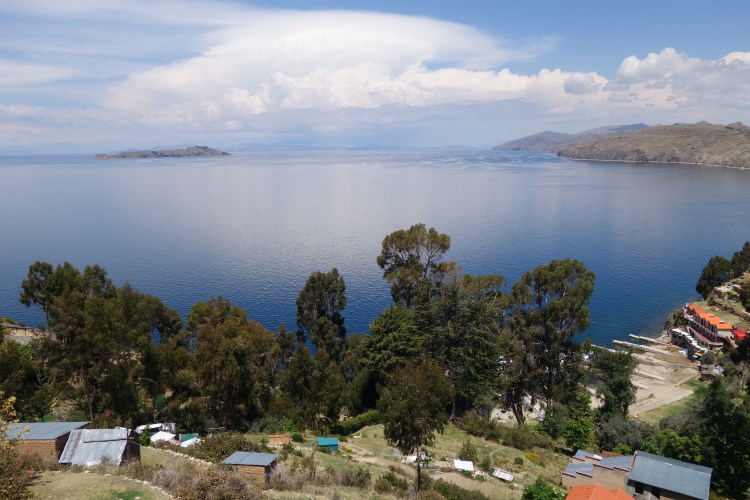
The boat dropped its passengers in a small cove at the southern end of the island. A steep stone staircase lead the way from the beach to the small settlement of Yunani. Moss filled the gaps between precisely placed stones, worn down by generations of foot traffic. Water flowed through drainage channels either side of the stairs and vibrant floral arrangements caught my attention in adjacent terraced garden beds. It was a spectacular welcome, and a short climb enjoyed at a leisurely pace given the unforgettable altitude. After finding somewhere to spend the night, I set out wandering for the afternoon.
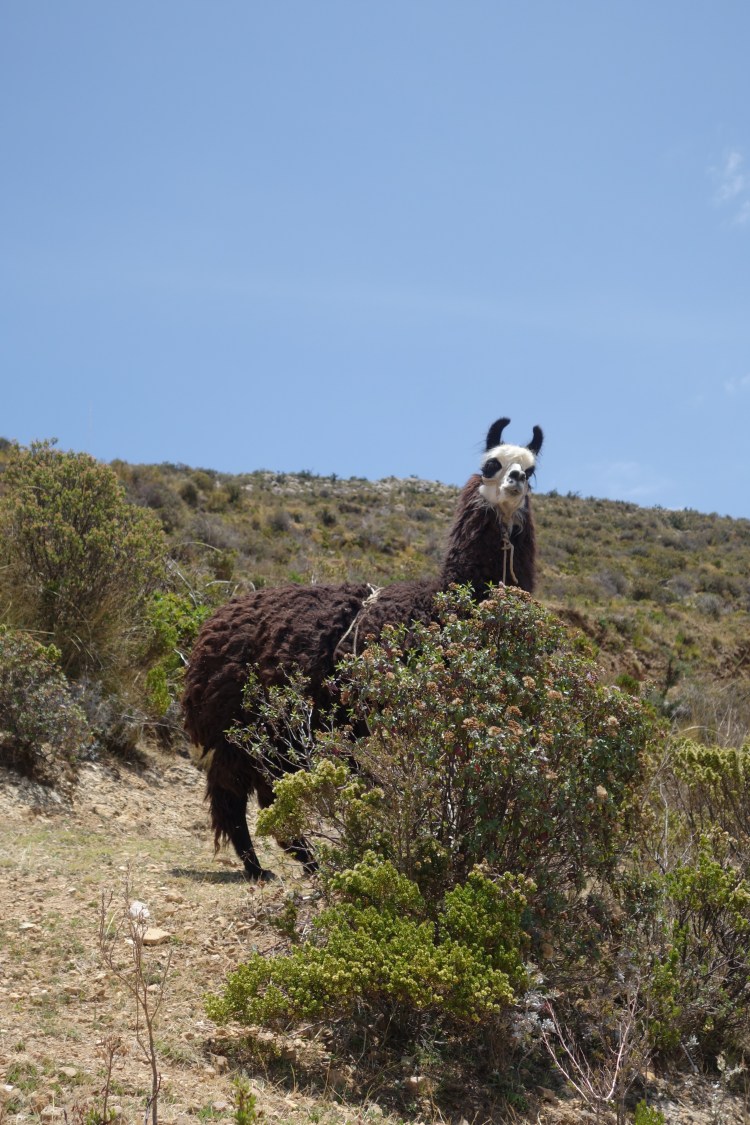
I walked without purpose for several hours. Finding myself satisfyingly lost in a network of cobbled laneways, I followed a group of school children on their way home for lunch. Dirty remnant snow could still be found in shaded spots on the southern slopes of the island. The children wreaked havoc as they hurled snowballs and stuffed handfuls of the leftover winter down the shirts of unsuspecting friends. Alpacas and llamas watched on from adjacent fields, seemingly uninterested in the ruckus. Over the course of half an hour, the merry band shrank in size. As the group rolled on, children broke away, jumping stone fences, scooting up dirt tracks or simply disappearing into holes in hedges, as they made their way to their respective homes. As the only one left at the end of the road, I decided to just keep walking.
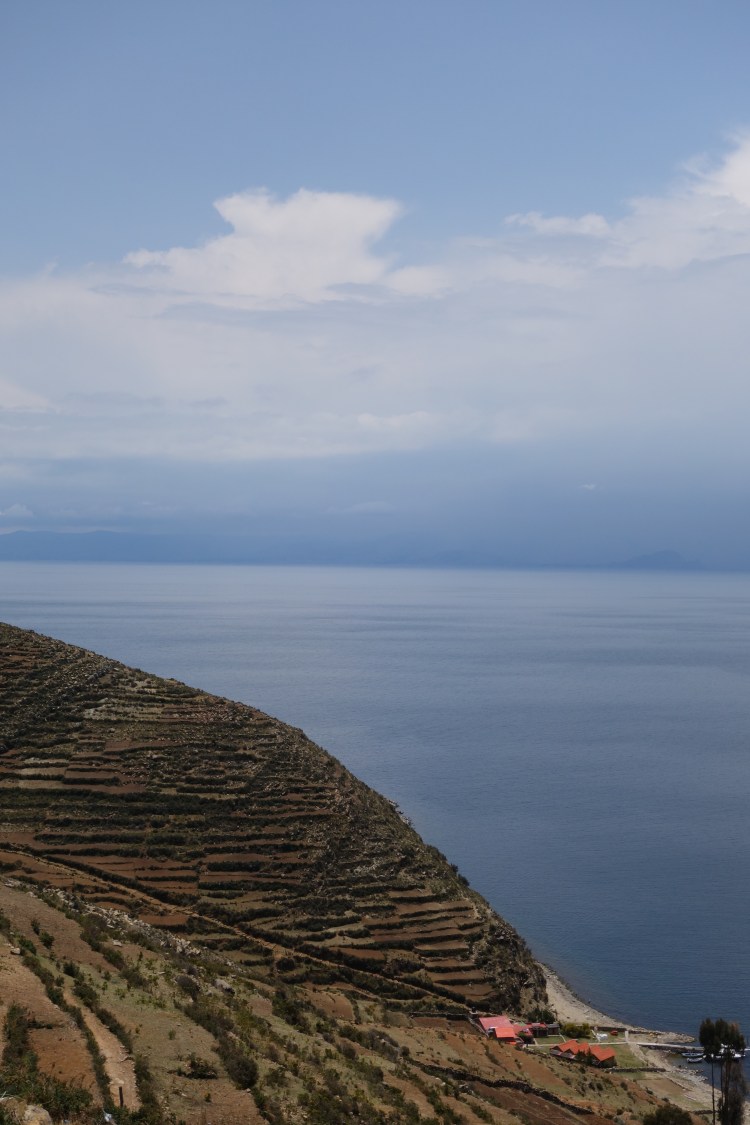
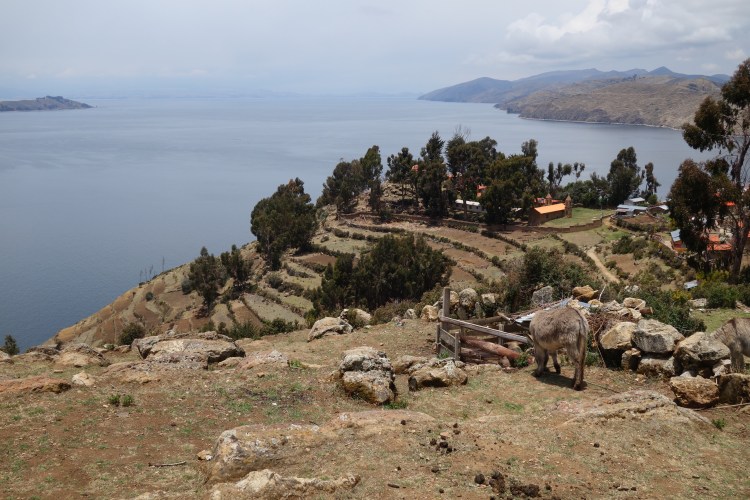
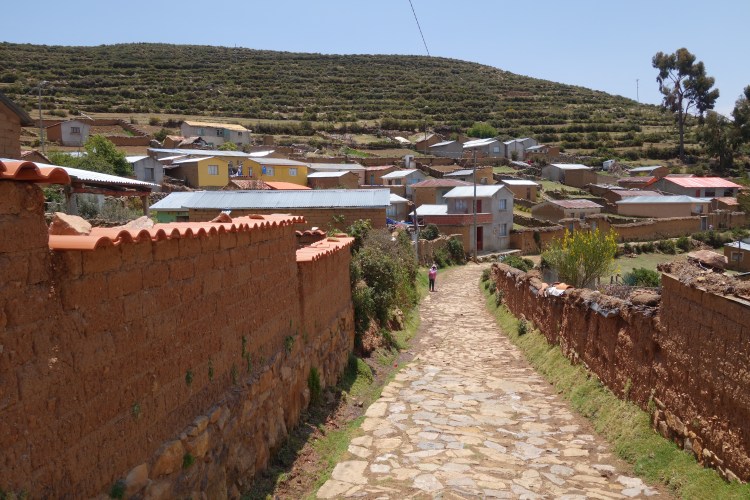
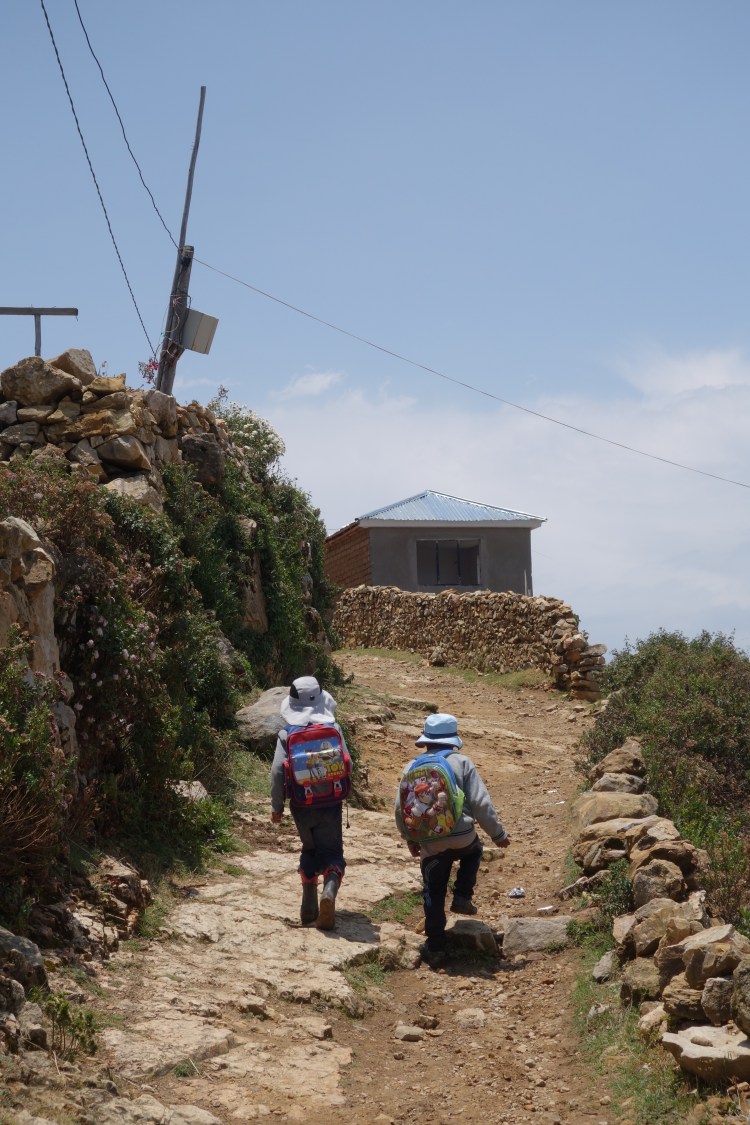
Having quickly gained elevation, the views over the lake were superb. The water looked like an ocean of mercury; a silver, silky stillness interrupted only by the wake of tourist boats. I followed a network of goat tracks over the top of a rise and down a valley to the eastern shore of the island. Farmers and children could be heard as their voices played off the hillsides, yet I was unable to make out their whereabouts in the tapestry of shrubs, trees and various pastures surrounding me. Aware that I was most definitely not on a designated walking track, I trod carefully and quietly to avoid offending or startling anyone with my trespassing.

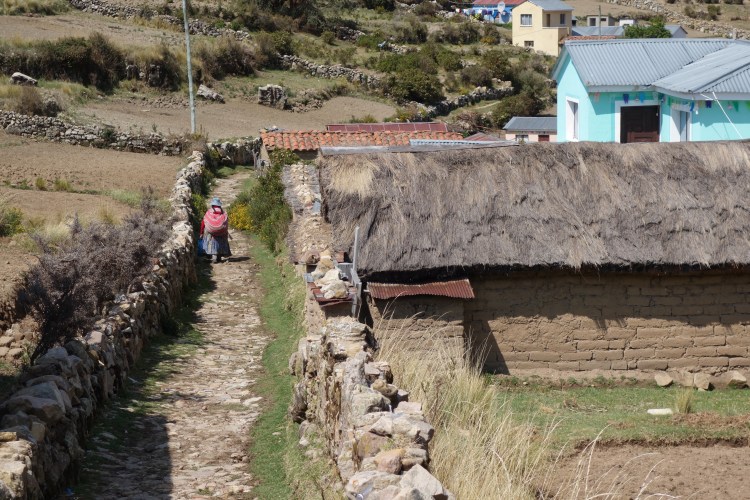
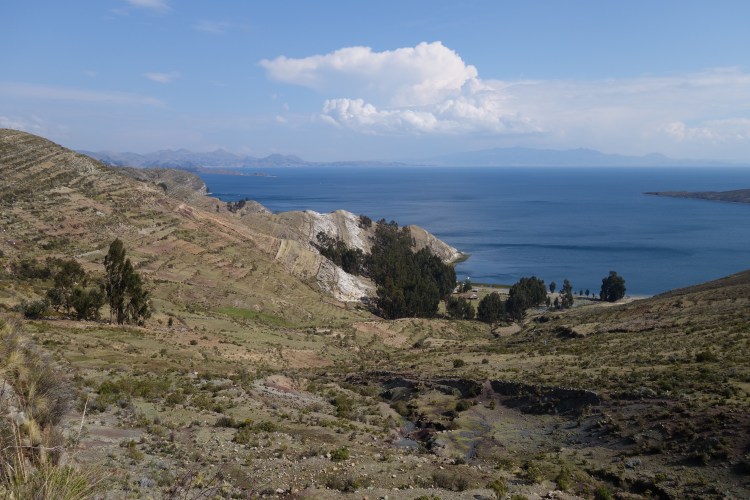
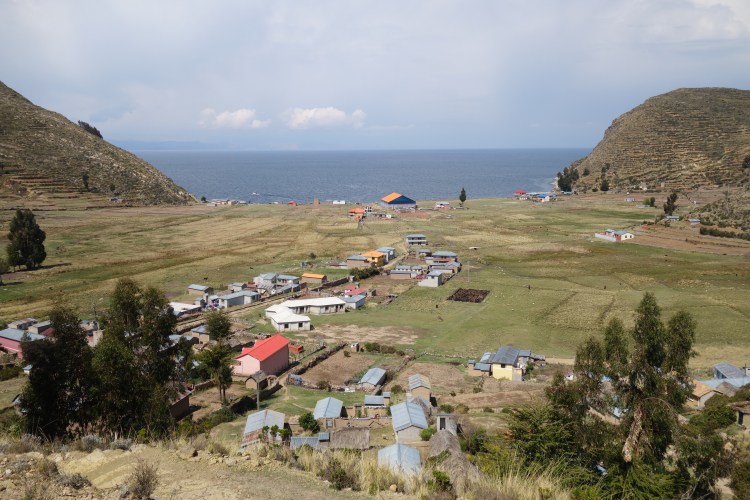
Arriving back at lake level, I found myself alone on the edge of a bay littered with half built boats and other forms of retired infrastructure. An hour passed while I sat on the edge of a concrete breakwater, lost in the deceiving depths of the clear water. Eventually, the heat of the sun made its way into my bones forcing me to get on my way. An obvious resolve would have been a plunge into the unfathomable cold of the lake. Instead, I made my way towards a forested ridge in a saddle between two hills to my north.
Not long after rejoining a significant paved walkway (most likely the route I was meant to be taking all day) and almost reaching the shade, I was confronted by three stern-faced young girls. With hands on hips and expressions that screamed ‘detention’, they made it clear that I wasn’t welcome. Following a short exchange, I discovered I that I had in fact crossed over into the northern part of Isla Del Sol, a region that has been ‘closed’ to tourists (on and off) for several years. The most recent sanctions had been imposed in 2017. I apologised and and began following the trail back towards Yunani. A few kilometres later, I came to a checkpoint which was manned by an elderly gentleman. Given my wayward route earlier in the day, I had bypassed this area. I could tell he was perplexed by where I had come from so I was quick to begin apologising and feigning innocence. He was reasonably accommodating, explaining simply that there has been conflict between the northern and southern communities of the island. In his words, the south still has the ‘liberty of tourism’.
Once back in Yunani, feeling sunburnt but more accepted, I made my way through a dry eucalyptus forest to Mirador K’enuani; a stone monument atop the highest point on the southern end of the island. The panoramic view of Lake Titicaca was captivating. The distant grey skies to the north blended with the silver of the lake, creating an enigmatic, almost absent horizon. As the sun fell over the western skyline, the water of the lake turned all the colours of an Olympic medal presentation. With the absence of the sun, the temperature plummeted and I made my way back to the village. On the edge of town I was literally stopped in my tracks. The twilight had illuminated the distant Cordillera Real; a snow capped mountain range to the east which had been marred by the suns glare all day. I stood in silence for several minutes, shocked by the presence of these peaks which turned fairy floss pink against a bruised, dusk sky. It is of little wonder why generations of people have felt a mystifying allure to this lake.
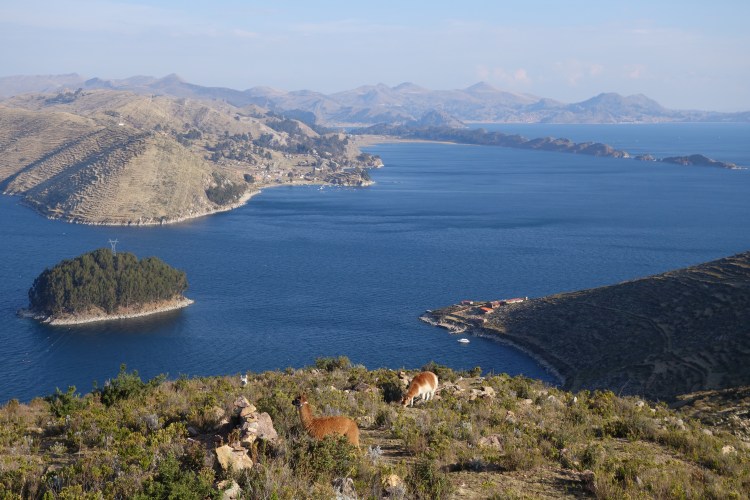
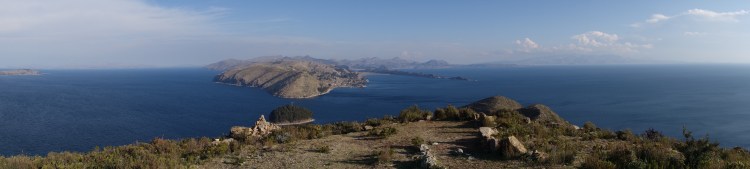
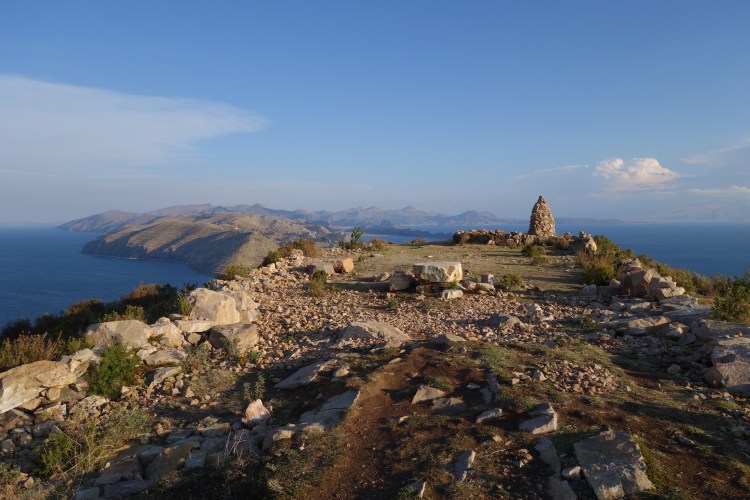
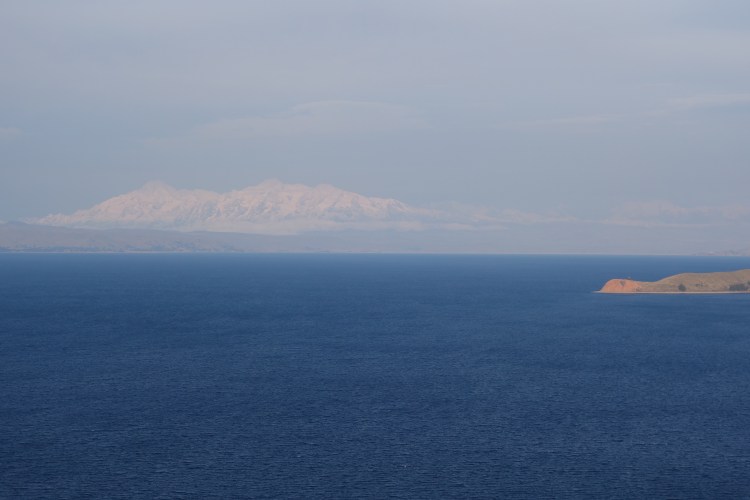
The following morning, the lake was yet again drenched in sunlight. The naming of the island carries very little mystery. With a return boat booked for that evening, I spent the day wandering around the southern slopes of the island. Dirt tracks clung to steep hillsides which were dotted with alpacas keeping the grass down between centuries old Incan ruins. I scrambled down to the water’s edge and read in the sun for a while before summoning the motivation to take a dip in the tropical-looking yet arctic-feeling water. Invigorated and perfectly welcomed by Bolivia, I headed for the jetty to meet the boat. Hummingbirds darted between hanging flowers, sharing space with bumblebees who moved freely in the still air.
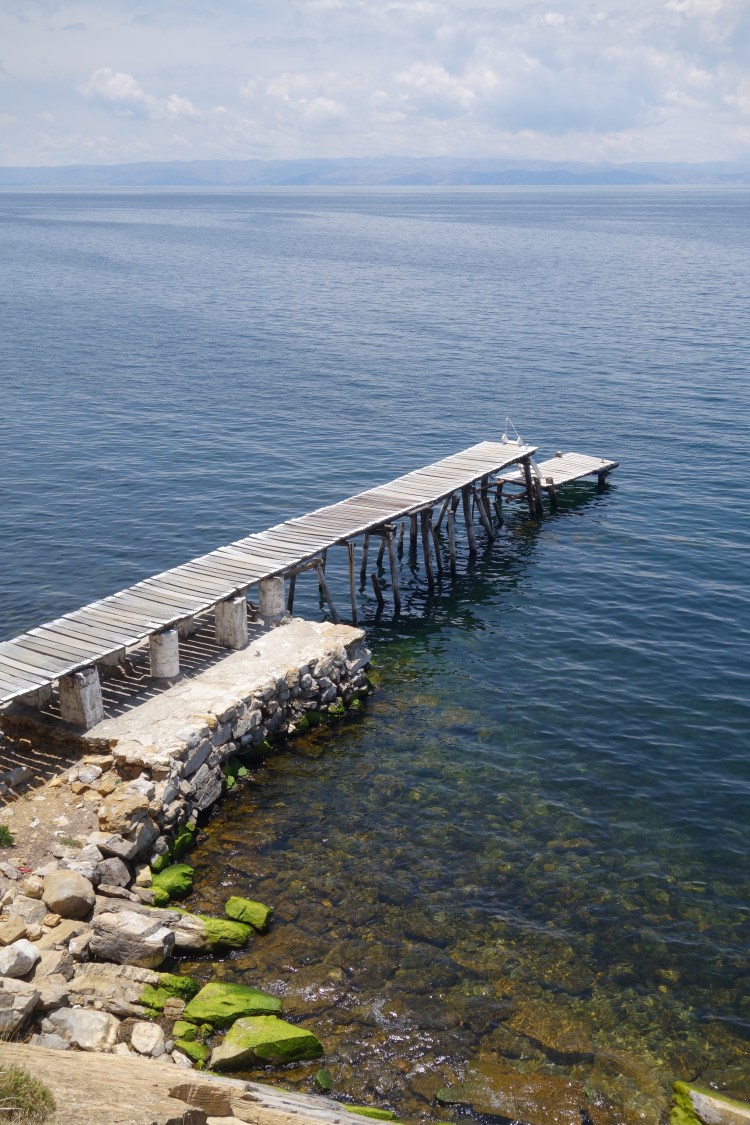
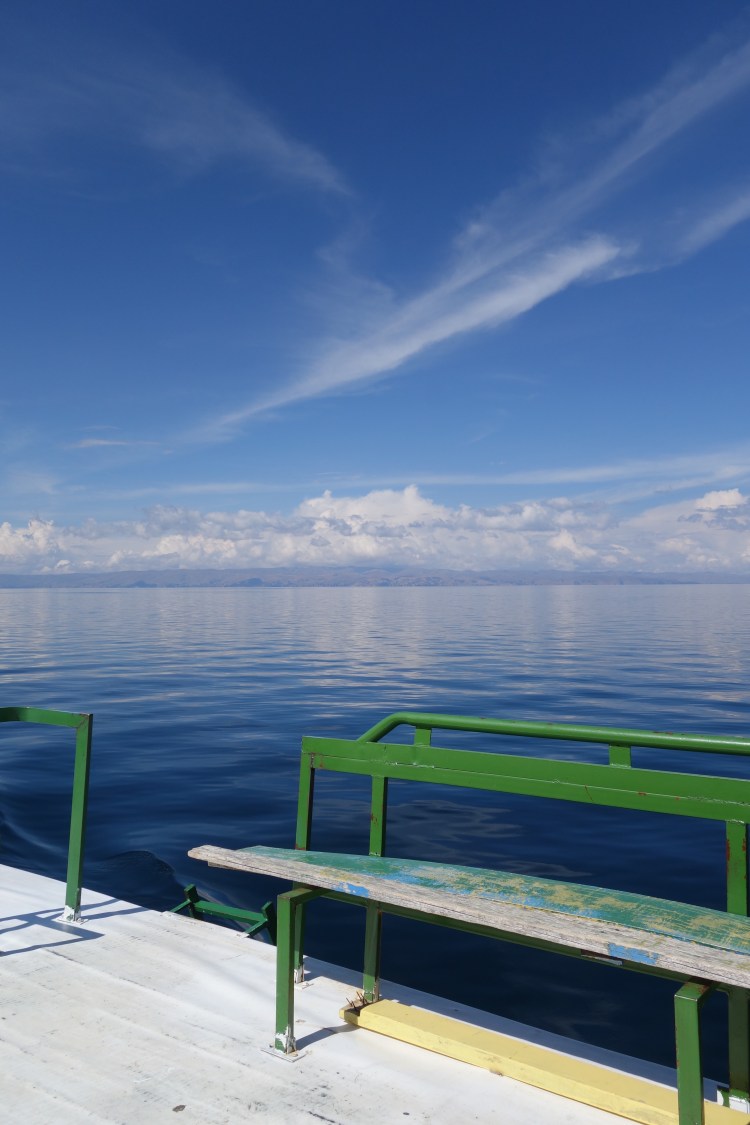
In contrast to the rain-lashed trip to Isla Del Sol, the sun-drenched return journey afforded passengers the opportunity to sit on the roof of the boat, shading their faces from the afternoon heat. I mused at a family opposite me. The child of the Australian father and American mother was caught between the sarcastic and literal senses of humour of the respective nations. Clearly confused by the contrasting narrative from his parents, his dad repeatedly had to tell him what was and wasn’t a joke. My evening was spent route planning and making a few mechanical adjustments to the bike in preparation for an early morning departure which would see me leave the shore of Lake Titicaca for the first time in days.
Chased by storms
I woke to torrential rain which put a dampener on any plans of an early start, yet I wasn’t going to complain about a sleep in. By 10.30am, the rain had eased and I rolled out of Copacabana along puddled roads and beneath an ominous sky. Despite climbing steadily for the first hour, the gentle gradient allowed me to make good time, all the while soaking in the views back over the lake. As I crested the hill and began descending down the other side, I passed a large vehicle with a German flag parked on the side of the road. It has become relatively common to see vehicles sporting international insignia, each one have been shipped over to the Americas for long overland journeys. However, this particular rig intrigued me. Across the side it read ‘Cochlear family on Tour’, and sported the logo of the Australian company behind the world famous hearing device. Strangely, the large beige bus appeared unmanned, and without a soul to be seen amidst the surrounding barren ridge lines, I rode on.
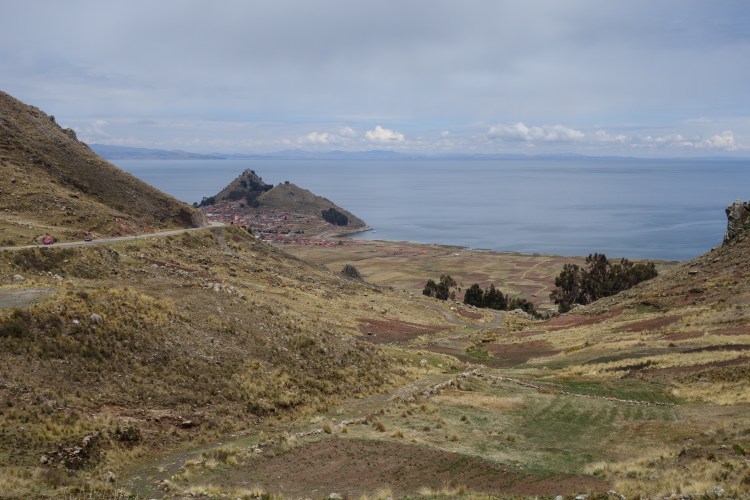
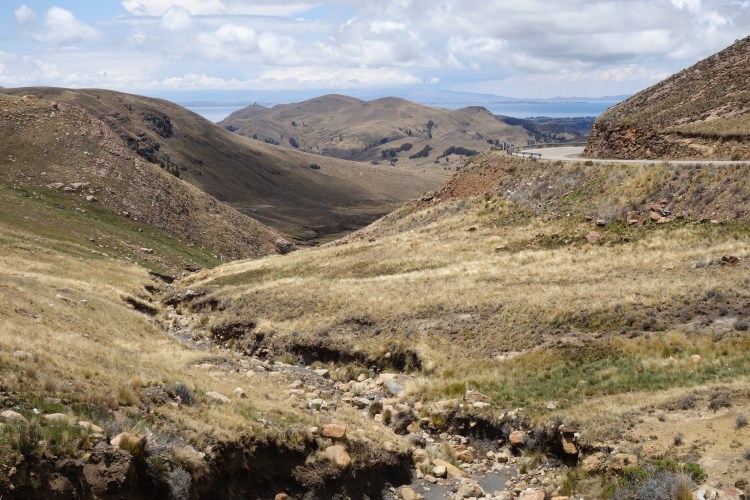
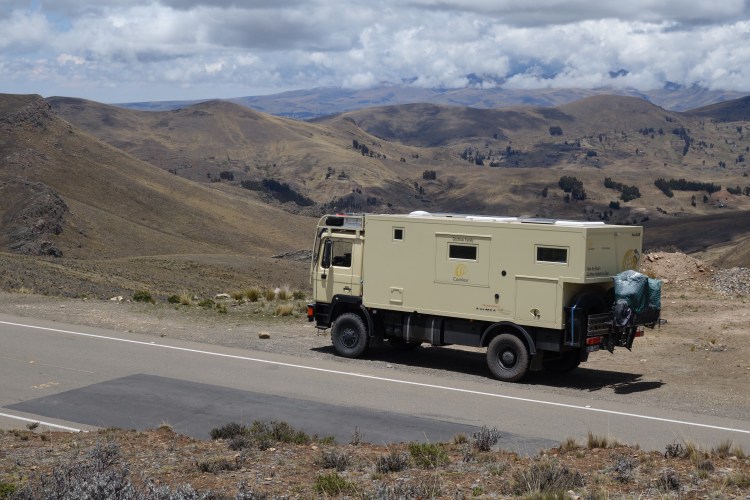
Sweeping descents and favourable winds aided my onward journey. The landscape fell away sharply from either side of the road to where crumbling shale met water. It wasn’t until checking my maps that I realised I was pedalling along a narrow tongue of earth jutting out into Lake Titicaca; the enormous, ever present feature which I thought I’d seen for the last time that morning. At the end of this small peninsula, I emerged from a dense stand of conifers to discover the termination of the road at the water’s edge. A line of tour buses and heavily loaded trucks queued in waiting for a passage across the lake to where they could rejoin the road on the opposite side.
I rolled through a tempting medley of aromas emanating from roadside restaurants, as I went to investigate the crossing options. Countless wooden barges jostled for position, their unflappable skippers using the stern mounted outboards to navigate the unruly vessels to the shoreline. Once their bows mounted the concrete boat ramp, vehicles proceeded to drive aboard. The weight of the trucks and busses caused water to be squeezed up between rotting boards in the hulls. Skippers and drivers appeared unfazed by this activity; a practice which seemingly had been the same way for generations. Having witnessed the successful crossing of a truck loaded with bricks, I figured the extra weight of a boy and his bike would have little effect. Pessimists may have leaned towards the ‘straw that broke the camel’s back’ adage, but there’s no place for overthinking in Bolivia.
The 40 horse power outboard motor squealed in its efforts to get the barge moving in the right direction. Several times it just gave up and sputtered into silence. Nonchalantly, the young skipper would reach into his back pocket and pull out a piece of cord which fit perfectly around the motor’s flywheel. Given the motor was missing its upper casing, I figured this was a daily practice. One purposeful yank on the cord and the motor was brought back to life.
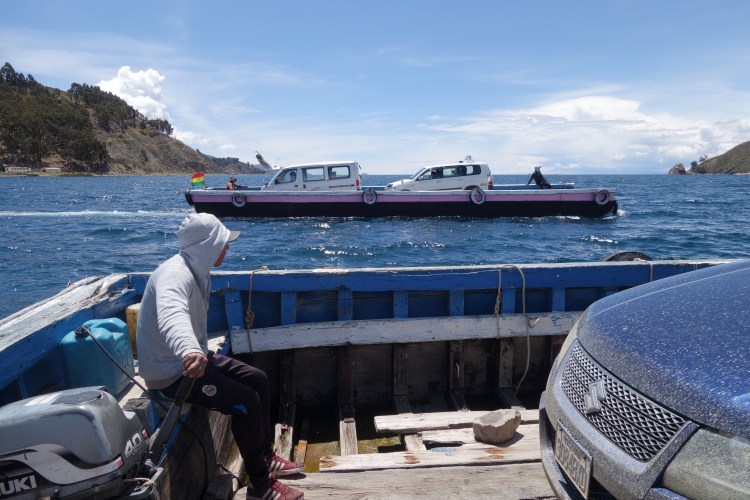
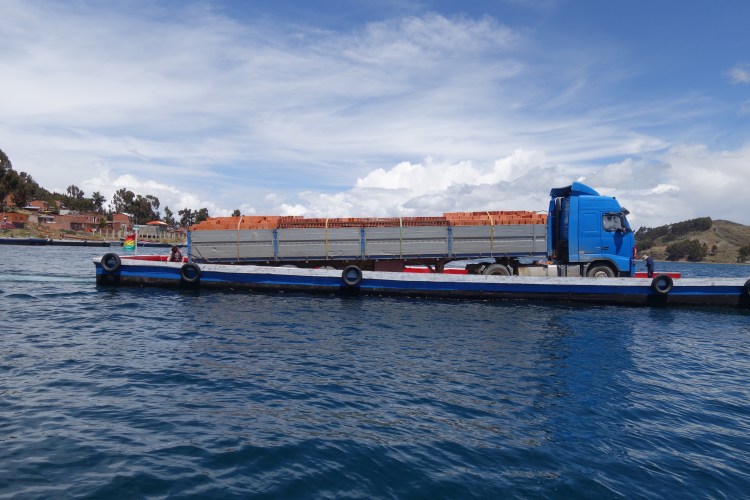
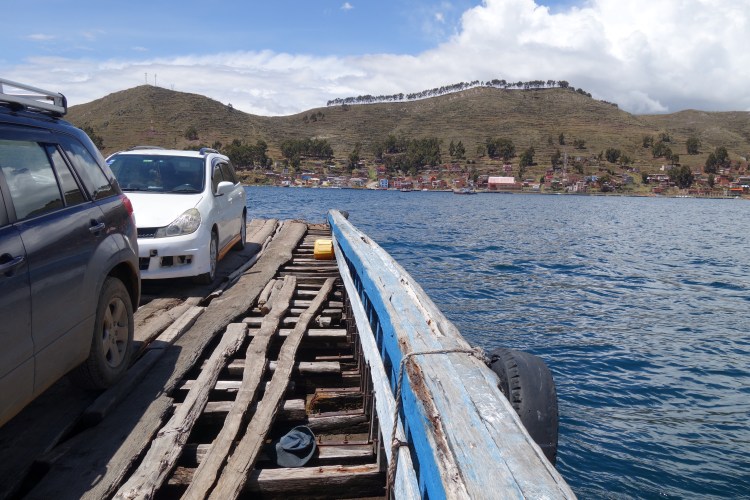
The marble green water was remarkably clear. As we chugged across the passage, I watched torpedo-like coots diving beneath the boat. Their sleek black bodies, marked with a singular white stripe on their crown, made it possible to track them underwater for several metres before they disappeared into the depths. Ducks milled on the surface while gulls circled with purpose.
The simplicity of life on a bike allows joy to be found in the subtlest of sensations. All morning, I had been racing along coarse asphalt roads where the jolt of every loose stone had reverberated through the frame of my bike and into my arms. Now, sitting on the gunwale of the barge, the pillowy softness of the water beneath the hull drew a smile across the surface of my face. It was one of the countless moments throughout this journey where I’ve been reminded to relish the small details and sensations that we so often surpass, or take for granted, in our days. I once read a book by Elizabeth Gilbert (not Eat, Pray, Love) called The Last American Man, about a contemporary frontiersman named Eustace Conway from the Appalachian Mountains. Although it wasn’t a life changing book, within the pages lay some mind altering passages which have continued to influence my daily outlook. One particular quote from Eustace that has stuck with me, reads as follows:
You cannot have a decent life if you are not awake and aware every moment. Don’t pass your days in a stupor, content to swallow whatever watery ideas modern society may bottle feed you through the media, satisfied to slumber through life in an instant-gratification sugar coma. The most extraordinary gift you’ve been given is your own humanity, which is about consciousness, so honour that consciousness.
Show up for your own life.
Revere your senses, don’t degrade them with drugs, depression, with wilful oblivion. Try to notice something new everyday, Pay attention to even the most modest of daily details; be aware all the time. Notice what food tastes like; notice what the detergent aisle in the supermarket smells like and recognise what those hard chemicals and the smells do to your nose and senses; notice what bare feet feel like; pay attention everyday to the vital signs mindfulness can bring. And, take care of all things, of every single thing there is; your body, your intellect, your spirit, your neighbours and this planet. Don’t pollute your soul with apathy or spoil your health with junk food, any more than you would deliberately contaminate a clean river with industrial sludge. You will never grow if you have a careless and destructive attitude, but, maturity will follow mindfulness as day follows night.
Be awake and you will succeed. Only through constant focus can you become independent. Only through independence can you know yourself. And, only through knowing yourself will you be able to ask the key questions of your life; what is it that I am destined to accomplish and how can I make it happen?
The soft, yet slightly alarming, thud of decaying wood riding up onto the concrete boat ramp brought me back to the present moment. I paid the ferryman, now that I was safely on the other side, and began the slow climb back up from the lake’s edge. Upon cresting the first rise, I was presented with fast approaching, deep purple rain clouds perpetuated by unnerving flashes of lightening connecting the sky and the lake. The rapidly decreasing time between lightening strikes and growling thunder suggested that I would soon find myself in the heart of the storm. I rode on in earnest, seeking shelter and a situation where I wasn’t the highest point in the landscape.
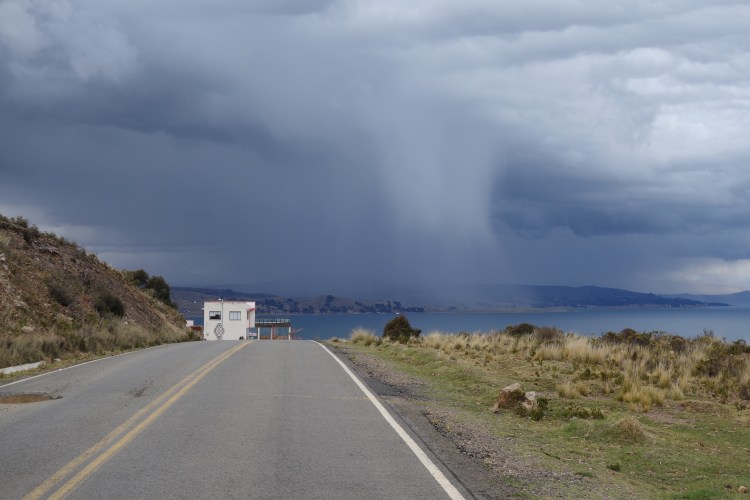
Sheets of rain smudged the horizon as wind gusts whipped across the water, tearing the tops of waves. Just as I began to feel the first drops of water, I passed a football field with an undercover grandstand. Sitting in the empty stands, I contemplated rolling out my sleeping mat and calling it a day. However, as quickly as the rain had arrived, it was gone again, giving way to sunshine which caused the wet roads to steam. I pushed on.
Now within a day’s ride from the country’s capital, La Paz (short for Nuestra Senora de La Paz; Our Lady of Peace), the built landscape was beginning to change. Tiny hamlets were being replaced with larger towns, the road was gaining extra lanes which, in turn, brought heavier traffic, and, every few hundred metres there was a construction crew installing a new bridge or resealing the road. Every time I came upon some of these roadworks I was diverted from sealed asphalt to dirt tracks which had been turned into a thick soup by the recent rain and the constant stream of heavy vehicles. The conditions began to take a toll on both me and the bike. Progress was slow and camping options were non-existent. Each pedal stroke carried a gritty sensation from the mud which had forced its way into every corner of the frame.
Concrete step barriers lined the road, hemming me in with the rest of the traffic and dictating my options. The towns of Huarina and Batallas both appeared to be logical options to pull up stumps, but upon enquiring in both of these centres, I was told by locals that there was no where I was could stay and I would have to keep going. As I sat on a curb studying my map, a hand appeared from over my shoulder. A young guy wearing the jersey of a local football club pointed towards a town to the west of the highway I’d found myself on. A ‘thumbs up’ and a nod of the head was all the reassurance I needed to continue onwards. Only seven kilometres away and back on the edge of Lake Titicaca, this suggestion seemed like my best option.
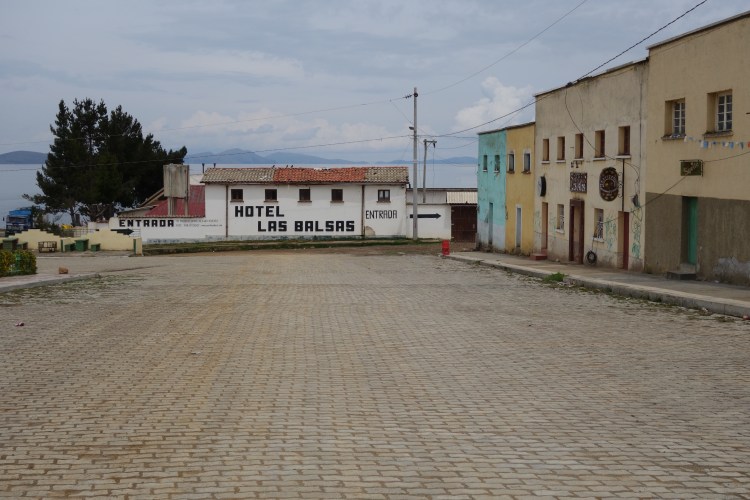
Within minutes, I found myself on a quieter road. Tailed by bruised, threatening skies, a twilight view of the snow capped Cordillera Real was enough to distract me from my increasing hunger. The undulating road toyed with my fatigued cognition. Each small pinch appeared to be the last, only to reveal a small decent and another climb on the other side. When I eventually crested the final hill of the day, I was greeted by the deserted town square of Puerto Perez. Sheeting rain over the lake softened the light, as the sun fell behind the hills.
There was only one light on in town, emanating from a a fancy set of French doors and attracting me like a moth. Painted above the door were the words ‘Hotel Las Balsas’. Upon stepping inside, I, and the well-dressed receptionist given the look on his face, recognised that this style of accommodation was just a little bit beyond me. Courteously, I still enquired about the price of a room for the night. The response I was given was highly perceptive, yet slightly unflattering.
‘How much can you pay?’, he said and sighed at the same time.
I can only assume the figure I mentioned would have been enough to buy a toilet roll in one of the hotel’s rooms. Without further questioning, the receptionist reached for a bunch of keys and gestured for me to follow him. We left the lobby music and warm light behind and headed back out into the rain. I followed him closely across the main square to a wooden door with a chain and padlock. Perhaps the fistful of keys was for dramatic effect and that they were all replicas. The lock opened on the first attempt.
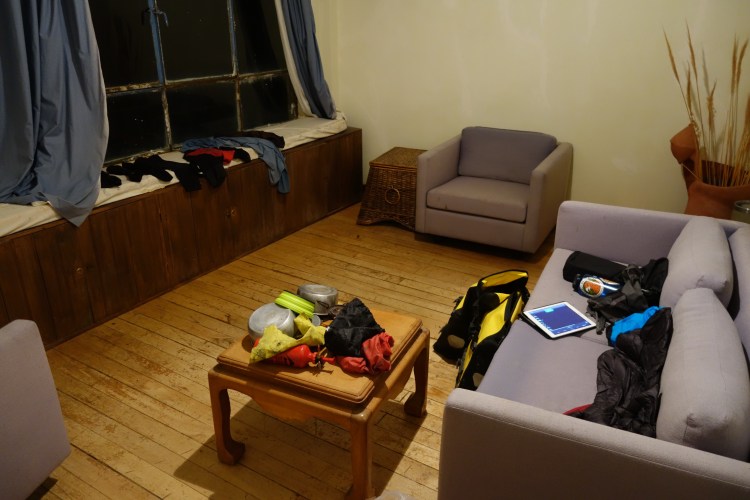
The receptionist swept his arm out in front of him, signifying that I could inside this building. With the rain setting in outside, his budget accommodation was a welcome gesture. He lead me through the dark halls, up flights of stairs and down another corridor, to where he stopped, and again, unlocked a door on his first attempt. He pointed to one of the four beds in the room and bid me goodnight.
Once I’d changed into dry clothes, I wandered the halls of the building that I was to call ‘home’ for the night. It was a strange mix between convent and school camp. Countless rooms and bathrooms suggested that this town might actually see more than an handful of tourists each year. However, this night I was alone. I set up my stove on the floor and cooked up a simple pasta. Pigeons roosted on the windowsill in an effort to stay dry. I spent the evening trying to get my face as close to theirs on the other side of the glass. I’d like to think some trust was established, but perhaps they were just asleep. I eventually followed suite.
A thrilling descent to the city of peace
The following morning afforded me some welcome space and silence. I made a coffee and strolled the empty halls of my lodgings, romancing the thought of being a royal while deliberating which of the countless bathrooms I should take my shower. The illusion was quickly washed away by the cold water and the fact I was sharing the space with my bike as it appeared to be the only opportunity to give it a good wash. For the next few hours, I sat on an antiquated window seat and watched the pigeons wake up from their slumber on the rotting wooden windowsill outside. My bottomless mug of instant coffee steamed the window as I sat and did some writing. The sound of birds’ claws scratching on the iron roof above me and the uneven floorboards beneath my feet were the catalyst for thought. I really should strive to frequent similar spaces on my return home; dilapidated bush shacks, mountain huts or simply forests in which to park my van. Places where creativity and observation can weave and wander, uninhibited.
Realising my goal of reaching the Bolivian capital that day meant that I eventually had to leave my newfound haven. I gave my bike a quick lube and tune and hit the road. Retracing my pedal strokes back to the town of Batellas and the junction with the main thoroughfare into La Paz, the view of the Cordillera Real was again commanding under a threatening mauve sky. I topped up on water and slipped back onto the main road.
The four-lane highway stretched out in a straight line across the plains. Despite closing in on the largest city in the country, the horizon appeared blank. The only indication of a major urban centre was the planes that were dropping from the clouds above me on their approach to a runway, somewhere nearby. After a swift 50km, I pulled off the road to check my maps and plan the approach into La Paz. Sitting in the dust with my back against a half-built building, I was joined on either side by two young mechanics, Christian and Louis. Grease covered their faces and their grey coveralls, but their wide eyes and beaming smiles shone through as we chatted about their work. As I was really beginning to enjoy their company, a car pulled up and they jumped in the back seat, disappearing into the river of traffic within seconds. Their friendliness and warmth inspired me to push on, only to be hit by waves of hunger a few minutes later. I pulled into the busiest roadside restaurant I could find (a sure sign of quality) and inhaled the most delicious vegetable soup I’ve eaten on this entire journey.
With a full stomach came energy and confidence. The riding after lunch was sensational. I love the solitude and introspection that comes with remote riding, however, the thrill and high stakes of being in heavy traffic has always been a favourite cycling environment (perhaps developed during my time living in inner Melbourne). Dad has always told me that whenever I’m riding on the road, I should think that everyone is out to get me. This mentality demands focus and responsibility, and the understanding that you are the only one in control of your safety. It promotes quick decision making and develops great bike handling skills, allowing for a quick response to the decisions of those around you.
This methodology for urban riding is built on a foundation of defence. As I closed in on La Paz, I quickly became acquainted with the utter unpredictability of Bolivian drivers. Any progress in this traffic required offensive riding; game face on. Despite the dirt that filled my eyes, nose and throat, and the developing ache in my knee, the attacking style of riding was sensational. My orange frame and yellow panniers added foreign hues to the dusty grey and brown palette of the city’s fringes. Out of my saddle and cutting between traffic with pace and purpose brought respect from drivers; a complete contrast to what would happen back home if I was to ride in such a way. Whenever traffic came to a standstill and the gaps between cars were too fine for me to squeeze through, I would rest against the doors of cars. Hands reached out of windows to pat me on the back, or to throw me a thumbs up.
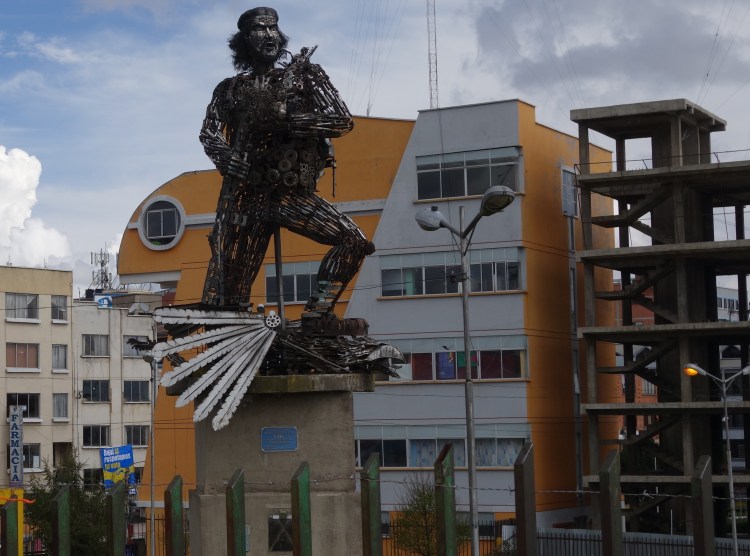
Oblivious to the kilometres that were ticking past, I raced through El Alto; a rapidly growing urban centre on the outskirts of La Paz. My eyes were drawn upwards to shiny red capsules hanging from wires above the road. This Austrian built and funded cable car moved freely above the chaos on the dusty roads below; a stark juxtaposition. A bottle neck formed at a major intersection where a commanding steel statue of Che Guevara towered above the traffic, forming the centrepiece of El Alto’s Plaza de Libertad. I weaved my way through the stagnant congestion until turning off towards La Paz, and joining the Autopista Hereos; a much newer surface than the dusty, potholed streets that had transported me through the outer suburbs. Following an hour in heavy traffic, the Autopista was like a racetrack. Within minutes of passing through El Alto, the landscape dropped away before my eyes. The sprawling metropolis of La Paz lay neatly in the valley below me; the tapestry of concrete structures tucked snuggly into every available cleft and pocket of the landscape. I pulled over to absorb the view. Scrambling up a dirt bank beside the road, I felt like Simba looking out over the Pride Lands. The cable car I’d noticed earlier passed above me before plunging into the city below. I don’t recall ever having such an elevated perspective over such a large urban centre. From this vantage point, the city presented like an organism.
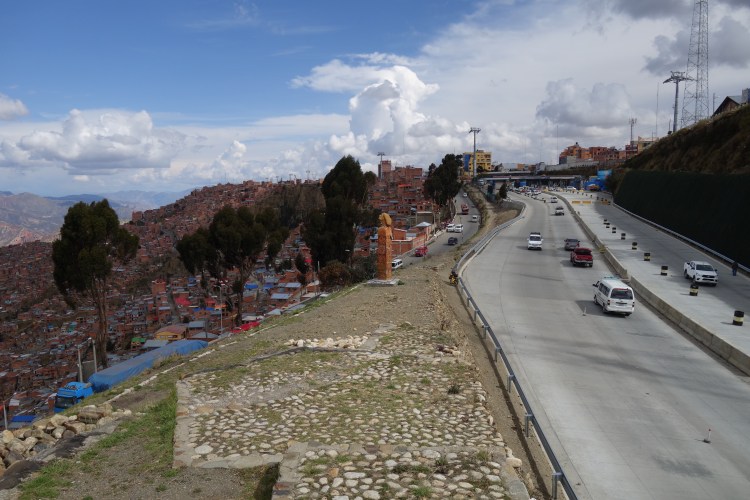
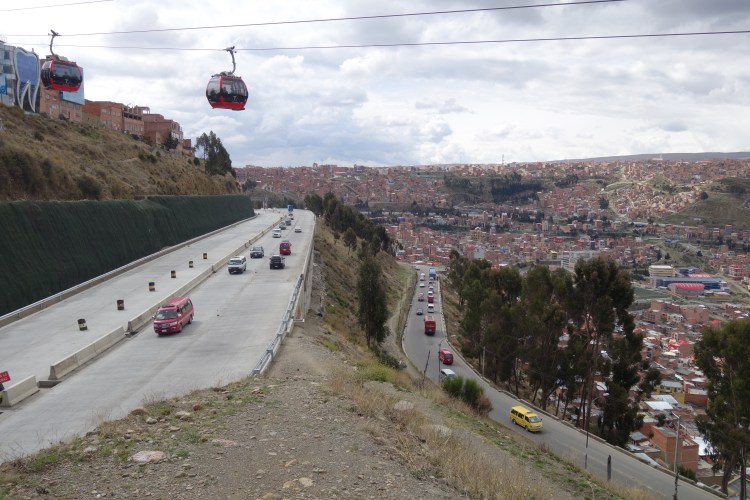
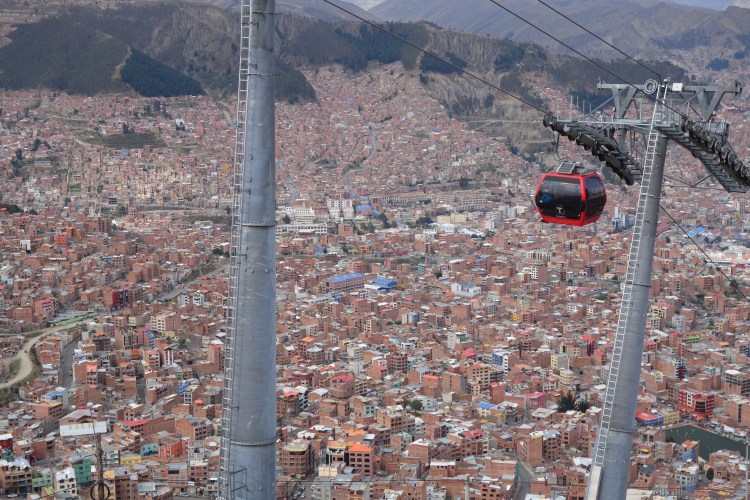
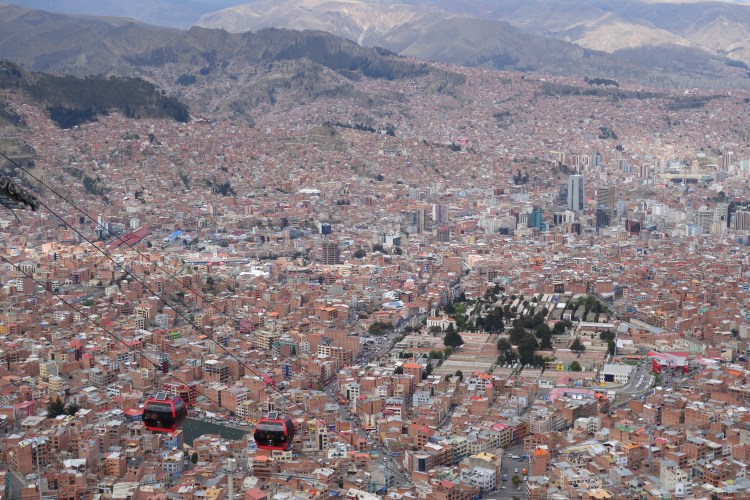
Back in the saddle, I lowered my body position and bombed down the road into La Paz. For seventeen kilometres, I sat on 70km/h, flowing through the deep corners of the road as it snaked its way down the hill and into the city.
A few weeks ago, while staying in Huaraz, Peru, I had been told of the Casa De Ciclitas (house for cyclists) in La Paz. Permission to stay required a simple email request sent to the owner of the house, Cristian. A couple of days before arriving in La Paz, I had confirmed my stay with Cristian who had giving me the green light, but sent his apologies as he wouldn’t be there during my stay. I was left with the address of the house and instructions for collecting the front door key from the shop owner across the road.
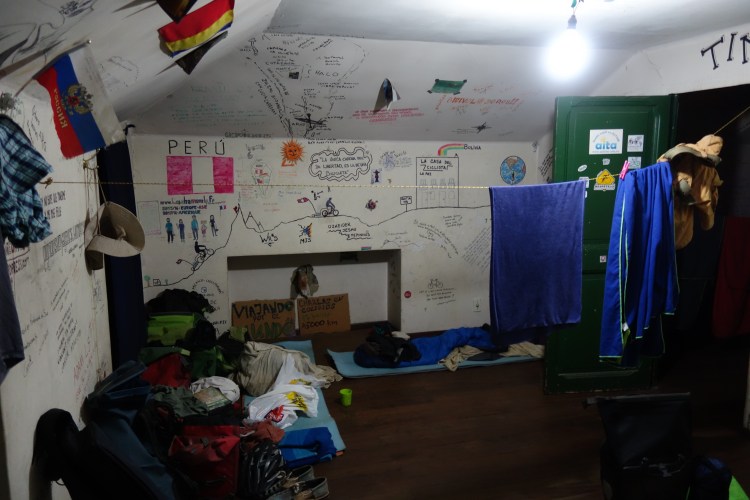
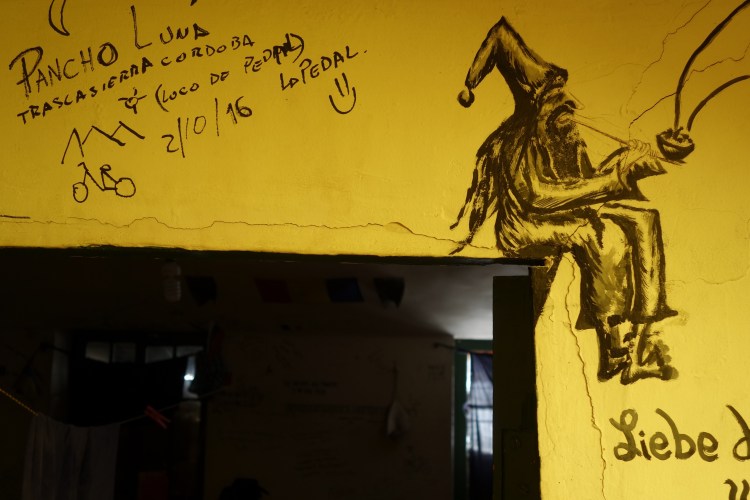
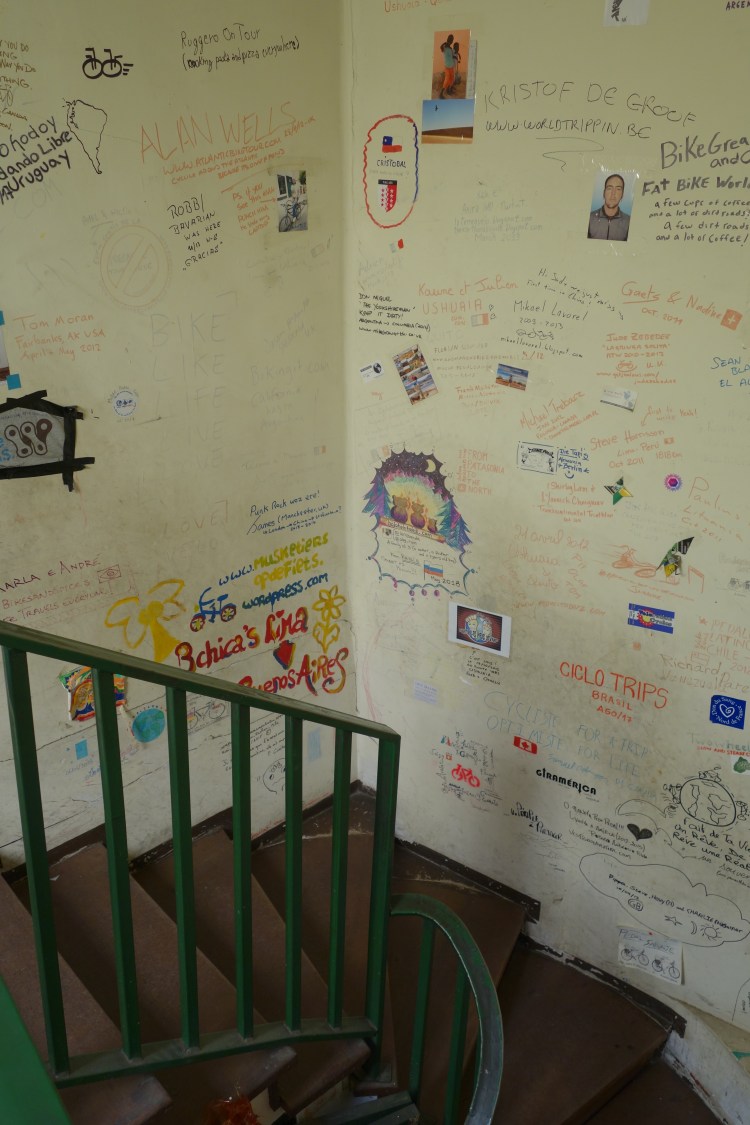
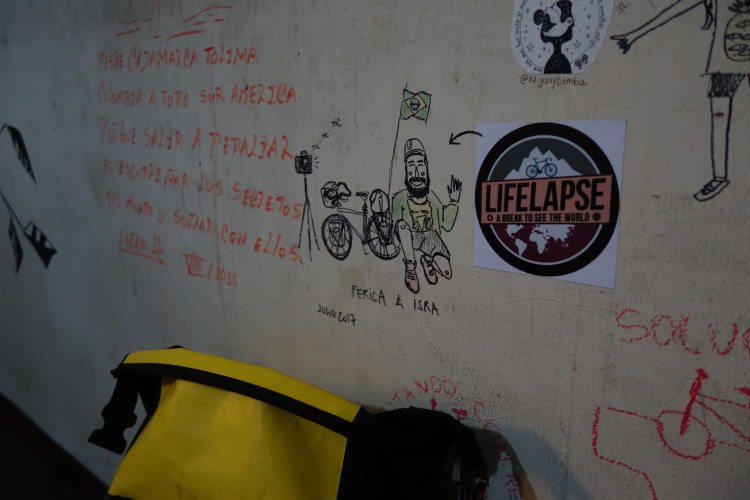
My thrilling descent into the heart of La Paz had shot me past the turnoff I had meant to take to reach the house. After realising my error, I was forced to sit on the side of the road to discern my new position and subsequent directions to the house. With my head in a map I was joined by two overly helpful homeless folk. The lady’s directions seemed obscure and made my head spin, so I turned to the man, who proceeded to point in the other direction and claim to have several illegitimate children living in Australia. It turned out I was majorly disorientated and the woman’s original instructions were on the money. I thanked them both and made the now convoluted trek to my destination. As per Cristian’s instructions, there was a hole-in-the-wall convenience store opposite the New York style appartment block in which he lived. My foreign accent and fully-laden touring bike was all the evidence I needed to provide the elderly shop owner in order for him to hand me a set of keys. Ten minutes later, I found myself sitting amidst several other cyclists in the living room of the the cyclists’ quarters. The walls were coated in the names of riders who had rested their bikes and bodies in the house at some pint over the last ten years, with scrawled words and images in various languages outline their journeys. As I processed my new surroundings and worked on remembering the names the other riders, I was distracted by the unique aromatic composition of the stuffy air in the house. Emanating from the oven was the smell of an over cooked chocolate cake, whilst some of the guys held joints in one hand and burnt sandalwood in their other.
‘We always make a cake when we have the opportunity to use a proper kitchen’, explained a tanned, long-haired Swiss guy who resembled a young Anthony Keidis.
‘And, we’re not meant to smoke inside’, he added. ‘But Cristian’s away for a few days and if we burn just as much sandalwood, he won’t be able to tell. Make yourself at home’.
Thanks for reading.
 Faults and Folds