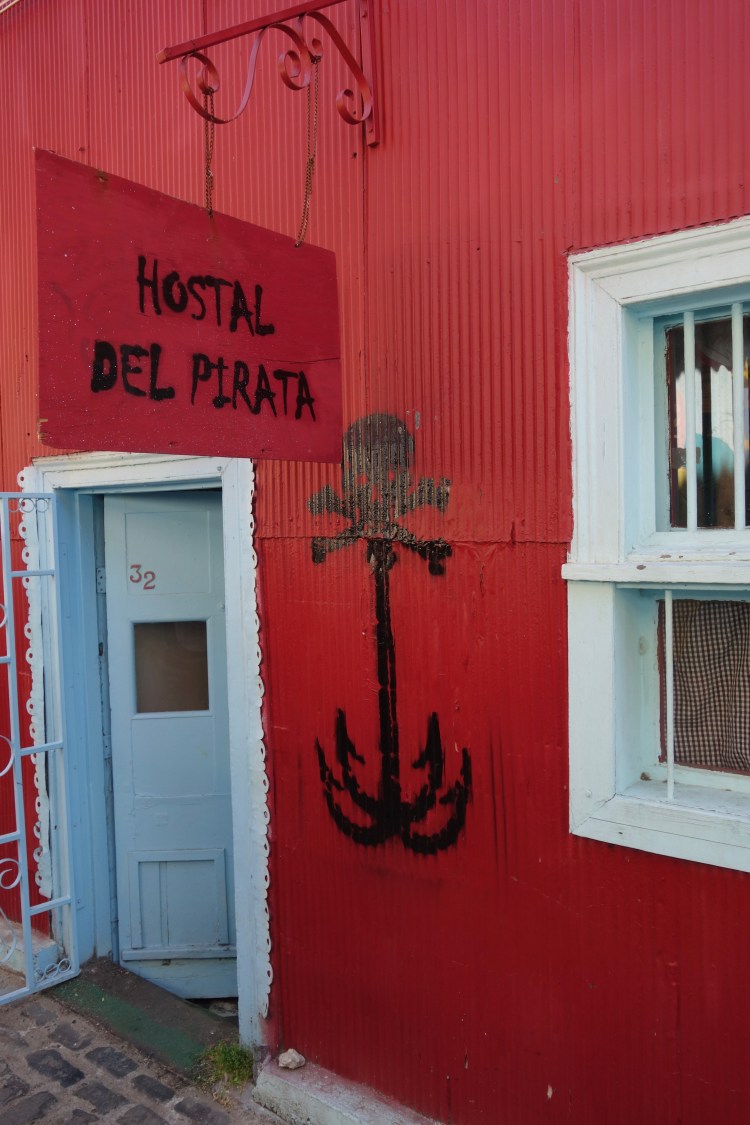
‘Hostal Del Pirata’
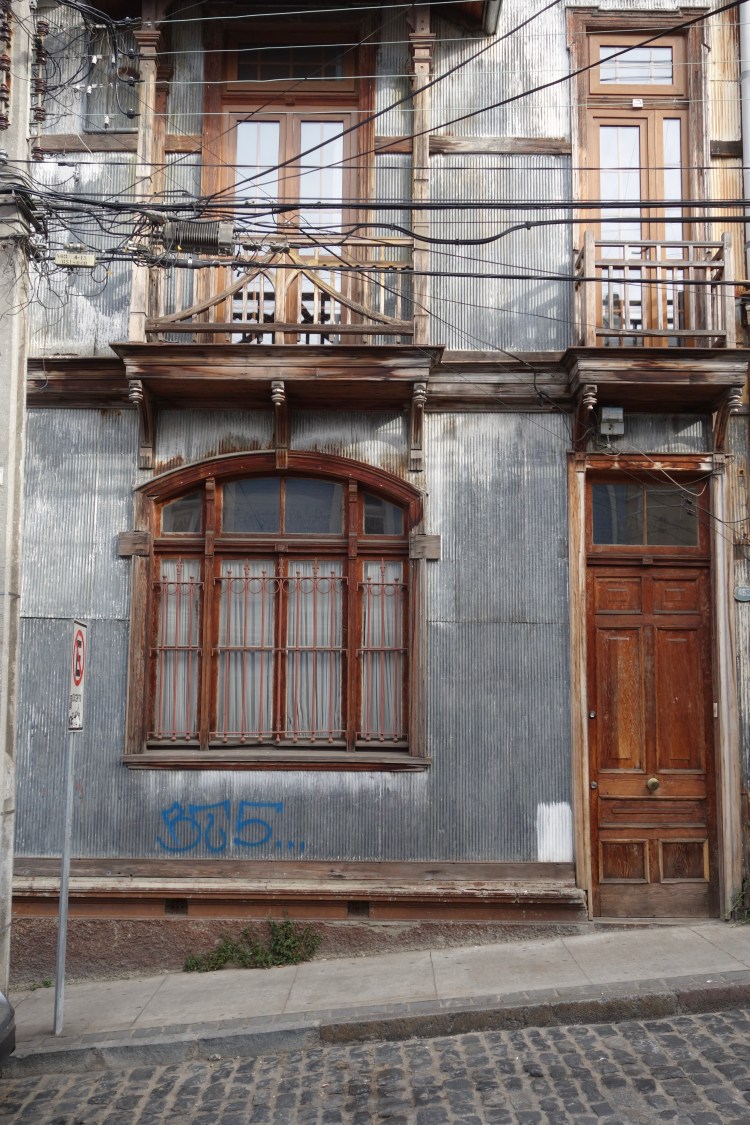
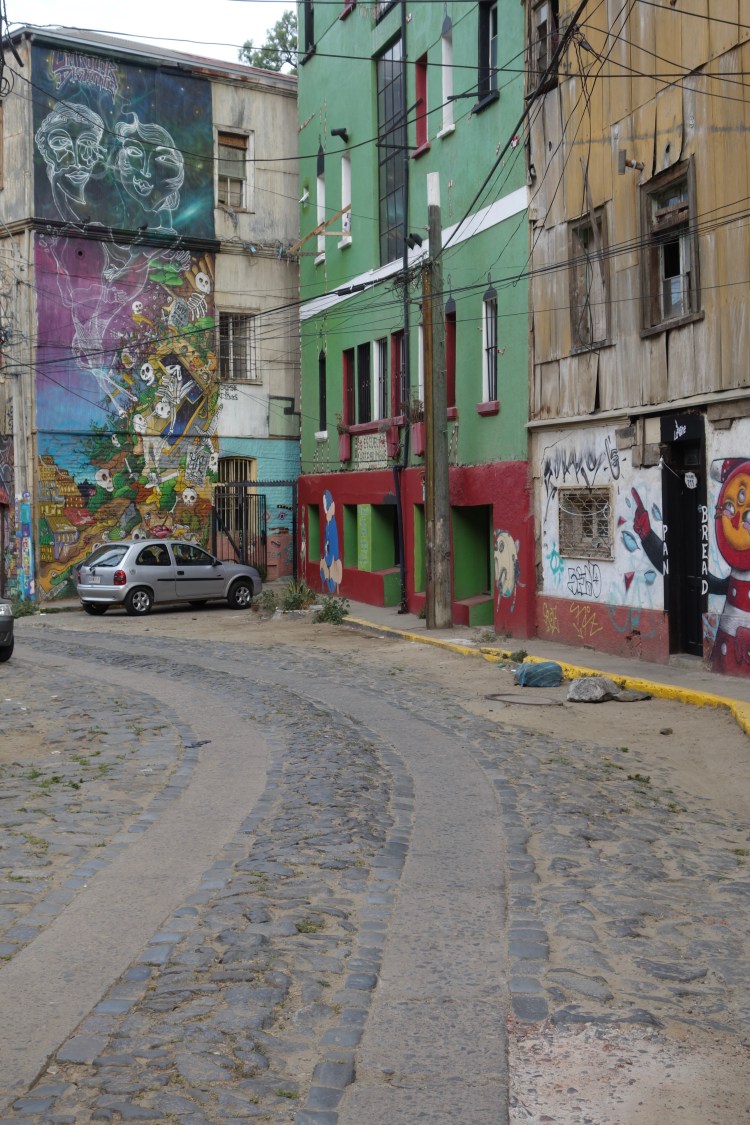
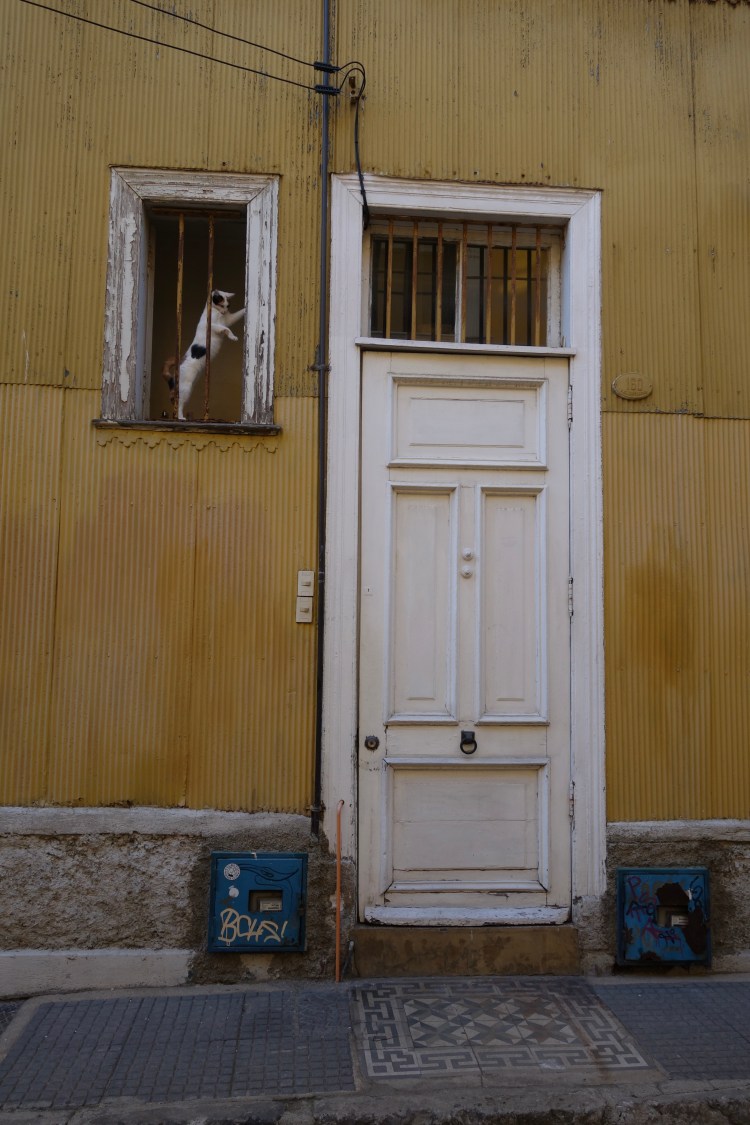
The hand painted sign swung delicately in the sea breeze, which drifted in from the Pacific before being forcefully diffused through the tracery of narrow alleyways and streets. Tall, tightly packed buildings denied the afternoon sun access to the pavement. I was sweating profusely from the effort to reach this hilltop suburb and quickly began to cool down in the shade. Each building in this street was clad in corrugated iron which, given the large patches of peeling paint and rust, appeared to have been regularly buffeted by briny ocean air.
Seconds after ringing the bell beneath the sign, the hostel’s sky-blue door swung open. I was immediately engulfed by a wave of hospitality. Nico, the dreadlocked, tattooed, and football-loving manager of the hostel, was quick to confirm a vacancy, casually waving his hand in the direction of the bunks in the cavernous room at the end of the hall. He then swung around on his computer chair to face me in order to address the finer points of life in Hostel Del Pirata.
‘You can get weed from me, him or him’, Nico said casually, pointing out two guys in the corner who also happened to be the only other people in the hostel. His eagerness to provide me with the local produce also clarified why the three of them had been staring at me and smiling from the moment I had walked in the front door. With two days up my sleeve to explore Valparaiso before making the final bus journey to meet Dad, I decided to fly the pirate flag and embrace life with my new amigos.
Instant family
Pulling out of the station in Antofagasta, I felt the power of the bus’s engine reverberate through the floor as the driver shifted through the gears with ease. It felt good to rest, yet the satisfaction of each kilometre earned on a bike far outweighs the convenience granted by the modern combustion engine. I inspected my legs. The skin was wind burnt and dry and my knees felt tired. I had really struggled over the previous few days. However, I had made it to Antofagasta under the power generated by my body. I certainly hadn’t been aided by the wind.
While the sun continued its daily voyage to the west, the shadows over the desert lengthened. The crumpled, sandy hillsides appeared like the skin of an old, sleeping elephant. The glow on the horizon was as golden as the underside of a hooked brown trout, beaming from the depths as it rolls and writhes in tannin-rich water, locked in combat with the fisherman. High voltage powerlines were held up by tireless steel towers that resembled six-armed skeletons, traipsing over the horizon in a long, obedient line.
I managed a few hours of sleep overnight. I watched on groggily as the morning sunlight illuminated roadside vegetation and distant swathes of greenery; something that had been absent from my life for what felt like weeks. The bus had transected several lines of latitude while I had my eyes closed. In a matter of weeks, I would be crossing the 42nd parallel south; a line shared between Patagonia and my home in Tasmania. I yearned for the crisp, cool air of more southern climes.
As the morning aged, the bus made several stops in increasingly larger towns along the coast. It was 1.30pm by the time we reached the outskirts of Valparaiso. As the bus came to a stop inside the city’s main terminal, I was standing by the door ready to mitigate the potentially rough handling of my bike. Despite the young luggage boy practically throwing it down from the hold in a final effort to debunk my onward journey, it seemed to have survived the trip relatively unscathed.
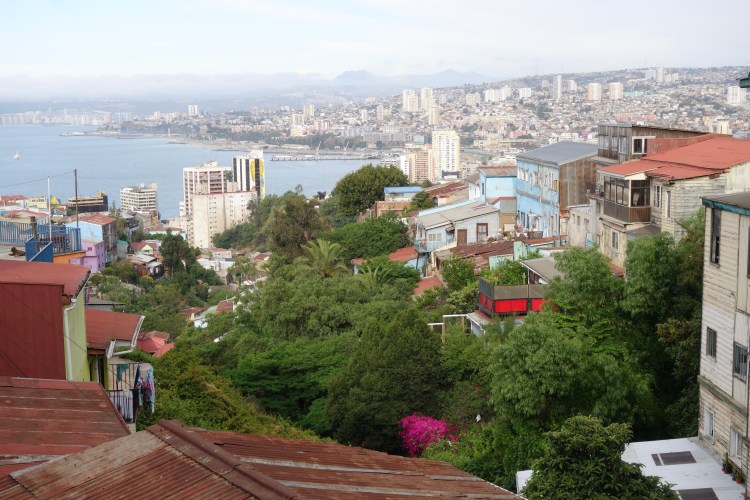
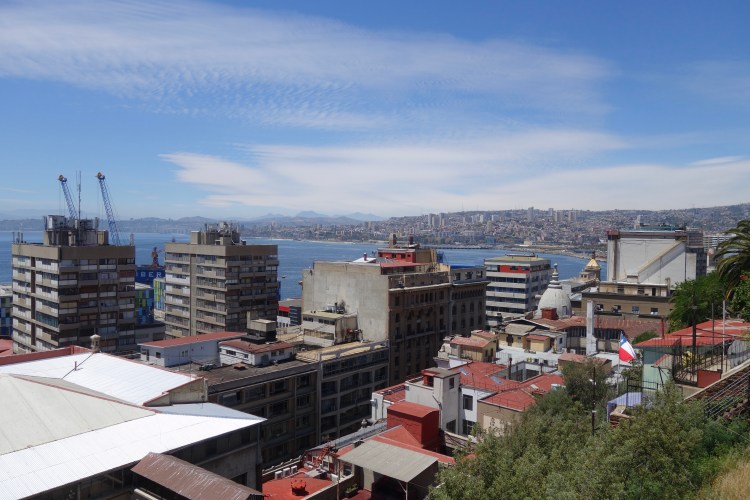
I sat on the curb outside the station, indulging in a freshly squeezed mandarin juice and conceiving a plan for the afternoon. The bus terminal was located several kilometres from the centre of the city, so I loaded my bike and began following the coastline south through the fringing suburbs of Valparaiso. I instantly felt awash with peacefulness. Densely populated hills rose from the ocean, bathed in sunlight which bounced between the colourful roofs and treelined avenues. With my mind set on finding somewhere to stay for the evening, I eventually turned towards the steep streets above the city centre, in search of a hostel I had read about a few days earlier.
Vibrant artwork seemed to envelop every building, taking my mind off the abhorrent gradient of the street I had chosen to ride up. Following several twists and turns that delivered me deeper into the dense hillside fabric of the city, I finally admitted defeat and approached a lady to ask for directions. Sweat rolled from my nose to my toes as she looked me up and down. Perceptively, she could tell that I wouldn’t be fond of riding back down the hill then up another street, so instead quickly began calculating the ‘flattest’ route from where we stood to where I wanted to be. Following a moment of silent consideration, she explained that if I continue to the top of the hill we were on before taking a right onto the ridgeline avenue, then I should find my destination with minimal uphill riding. I thanked her for her sympathetic directions and continued to the top of the hill, from where I managed to catch my breath before having it taken away by the view.
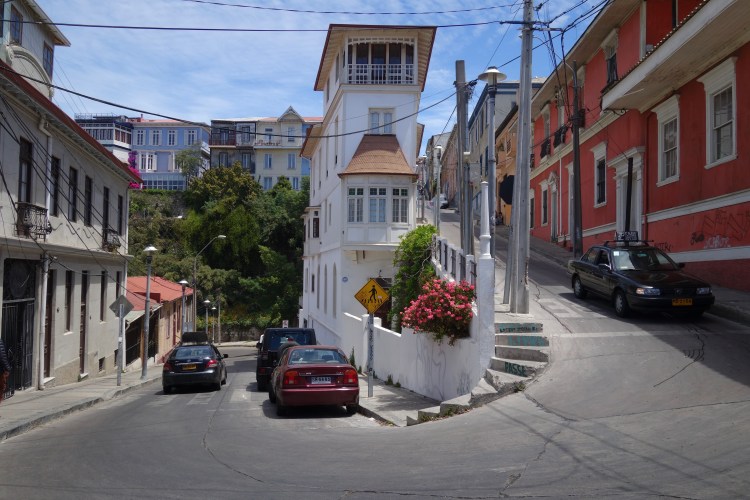
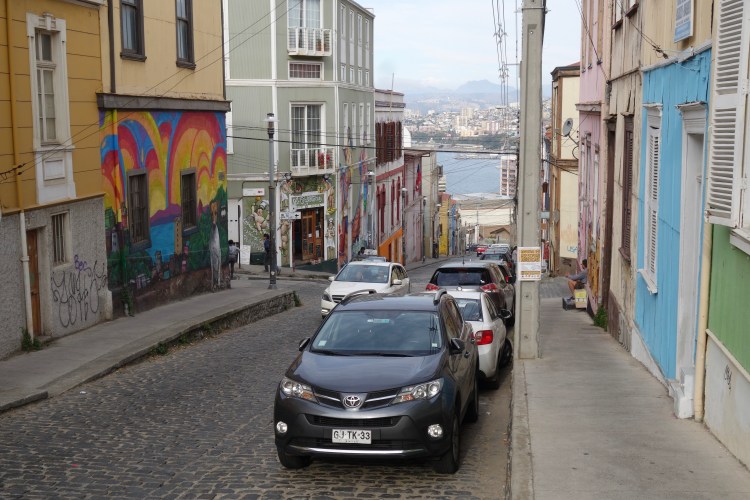
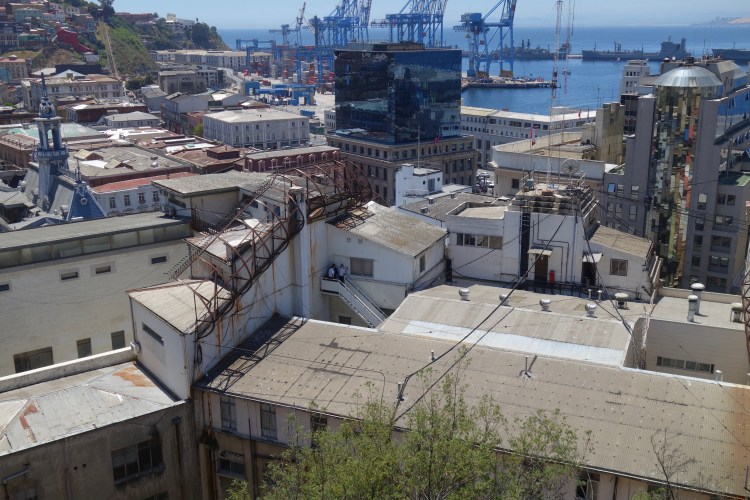
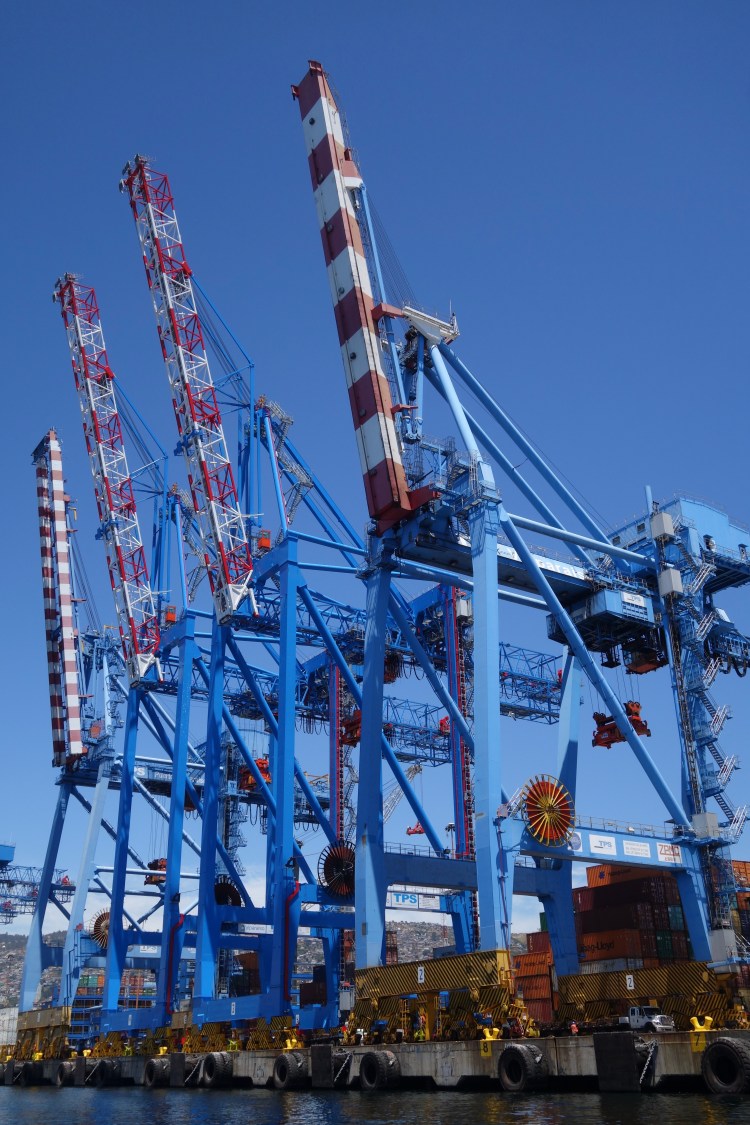
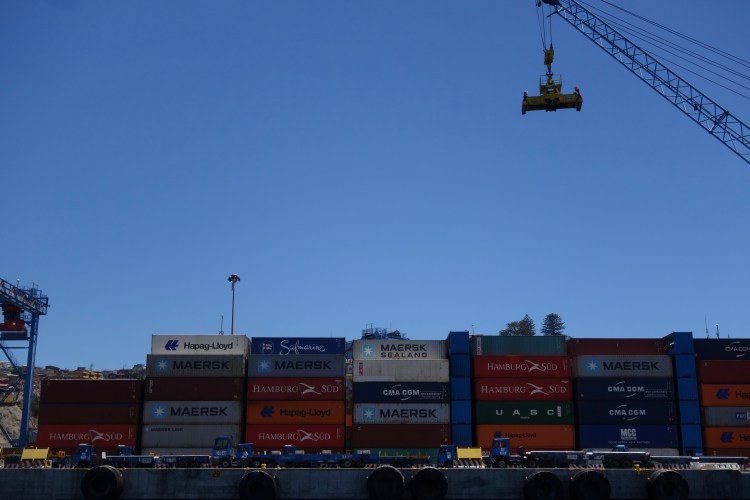
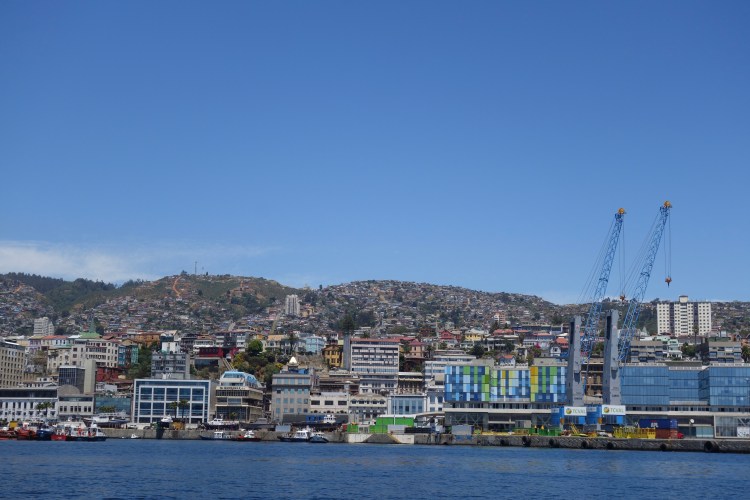
The hillside fell away before me, cloaked in a motley assortment of houses; their design and aspect dictated by the harsh topography. Where the city gave way to water, the harbour took on a life if its own. Large cranes hung like prying fingers over recently unloaded container ships that were tied up to the wharf. Smaller, more nimble vessels cut neat white lines across the harbour. It was a spectacular sight, made even more ethereal by the rich sunlight and warm breeze that scurried in off the ocean. Often referred to as the ‘Jewel of the Pacific’, Valparaiso is known for both its beauty, which is immediately evident upon arrival, and its vulnerability, due to the region’s susceptibility to frequent and powerful earthquakes. I hoped it was only the city’s beautiful side that I got to experience during my brief stay.
Following the lady’s directions, it was a matter of minutes before I arrived at my destination. I had read about Hostel Jacaranda in an old Lonely Planet that had been sitting on the counter of a café in Antofagasta. The writeup in the guidebook had nailed the description of the hostel’s commanding location atop what appeared to be the steepest street in Valparaiso. The view over the harbour was uninterrupted and I could immediately picture myself sitting in one of the open windows above the street, drinking coffee and reflecting on the last few months.
In hopeful anticipation of a vacancy, I approached the front door and eagerly rang the bell. As I waited for a response, I noticed various stickers of rainbows on a nearby window and a small gay-pride flag stuck into a pot-plant on the front step. I didn’t need to be Elton John to establish that the Hostel Jacaranda was a gay-friendly travel hotspot.
This defnitely wasn’t the place for me. I wasn’t beautiful enough.
The man who greeted me was stunning; his chiselled features were framed by neatly trimmed facial hair, the afternoon sun highlighting a plethora of hazel hues in his eyes, and his leather boots were so well polished that I could see my own miserable reflection. How could I possibly stay there looking the way I did?! My beard resembled the abandoned nest of a family of starlings and I was beginning to believe that my clothes were being held together by sweat and sand rather than cotton thread. It was instantly clear that the man wasn’t as taken by my appearance as I was his. He even took a step backwards upon opening the door.
After telling me that there was only one room available and it would cost the equivalent of $200 Australian dollars a night, I quickly got the message that he wasn’t prepared to let me step inside. Thankfully, he did mention that there was a hostel around the corner than I would be ‘more my style’. I wanted to show him pictures of a more well-groomed version of myself but realised the damage of first impressions had already been done. I thanked him for his time and rolled on down the street. I’m sure he sanitised the doorbell that I had touched once I had disappeared out of view.
I have no doubt that if I had stayed at Hostel Jacaranda, I would have left Valparaiso feeling much more rested and rejuvenated than how I felt following a few days with the boys at Hostal Del Pirata. However, I didn’t once feel scrutinised for my fashion (or lack thereof) and couldn’t have been made to feel any more included.
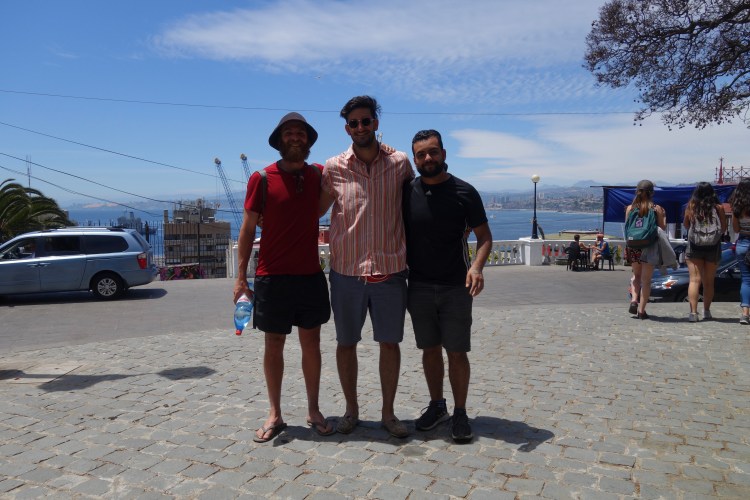
Nico was quick to introduce me to the other two guys staying at the hostel. I assumed Alexis and Martin were also guests, however, after some small talk I discovered that they were working there in exchange for accommodation as they looked for more substantial employment in Valparaiso. All three of the guys were from Argentina; a fact that clearly presented them with a bittersweet feeling. On one hand, they were living their best lives; young and working in a thriving coastal city with plans to travel extensively during the coming years, throughout South America and the world. However, on the other hand, their home country is in the grips of an economic crisis, caused primarily by the government’s approval of excessive foreign currency debt. It was evident that the three of them were incredibly concerned about their financial security. Their savings from Argentina were rapidly losing value against the Chilean Peso, limiting their travel plans until they have worked long enough to save more funds. In addition, each of them subtly displayed apprehension for the welfare of their families back home. Despite the state of uncertainty in their lives, I was soon to realise that it wasn’t getting in the way of the guys having a good time whilst they let the politicians back home sort it all out.
Following a much-needed shower and powernap, I awoke to Latin house music reverberating through the hostel. Alexis saw me rise from my bunk and was quick to hand me a beer, inviting me to join them for the evening as they headed out into the streets. I’ll put it down to the fact it was the tourist shoulder season and I happened to be the only paying guest in the hostel, but I was absorbed into the staff friendship group without question. As we walked out into the night air, beers in hand, Nico locked the front door of the hostel behind him and showed me how to let myself back in later. We didn’t need to a common language for him to accurately assume that I wasn’t as seasoned as they were when it came to late night partying and would most likely being coming home much earlier than they would.
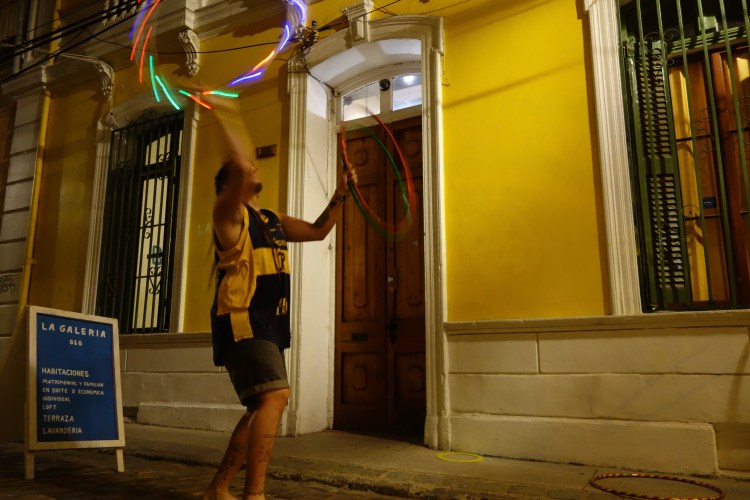
Walking the streets in a group felt empowering, albeit unusual. Eager to improve their English, Alexis and Martin talked constantly, asking me of life in Australia and expressing their own desires to travel the world. Shouldering a bag of juggling batons and longneck beers, Nico lead the way through a maze of tight alleyways and stone staircases, delivering us into the heart of an organised gathering of wonderfully eccentric folk.
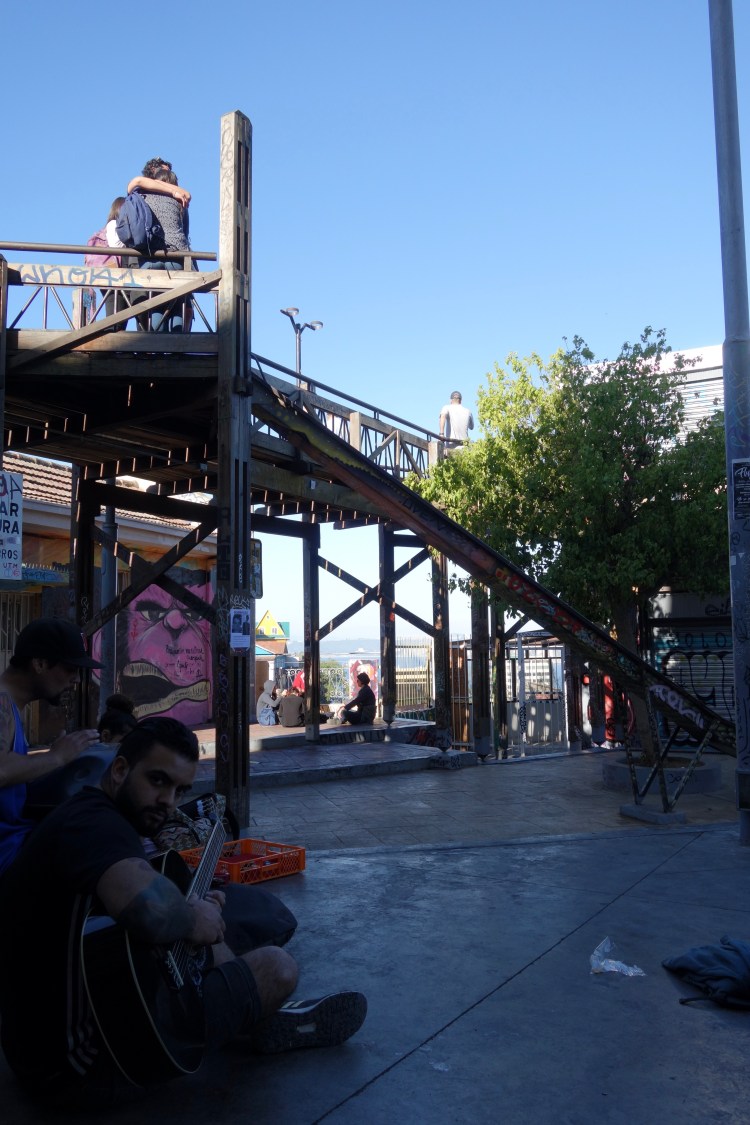
At least 30 people were scattered around juggling, drinking, smoking and playing a range of instruments. A space that would appear derelict during daylight hours had been magically transformed into a hub of culture and creativity, oozing with liberalism and marijuana. A combination of local slang and altered brain chemistry made it increasingly difficult to participate in conversation. Instead, I gravitated towards the delicate aerial sounds emanating from a hang drum being played by a guy called Jose. I became transfixed on his fingers as they skipped and danced across the convex steel body of the drum, producing gentle rhythms and emotive melodies.
After an unknown amount of time immersed in Jose’s sounds, I was thrust back into reality as the people around me began scrambling for their possessions and uttering the word ‘policia’. I followed suit and quickly located Nico, Alexis and Martin, following them down an unlit alleyway, distancing ourselves from everyone else and any potential trouble. I have no idea how word of the encroaching police spread so quickly. It reminded me of nights out drinking in Vietnam when I was younger. Pop-up bars selling the local draught beer known as ‘beer hoi’, occupied street corners with locals and tourists sitting in child-sized plastic chairs. Every hour or so, the owner of the bars would frantically begin yelling that they police were coming. This sent locals at the bar into a frenzy, hurriedly packing away the colourful stools before standing around with their cups of beer hidden behind their backs as the police slowly passed. As their taillights faded up the street, the bar and festive atmosphere remerged as though nothing had happened.
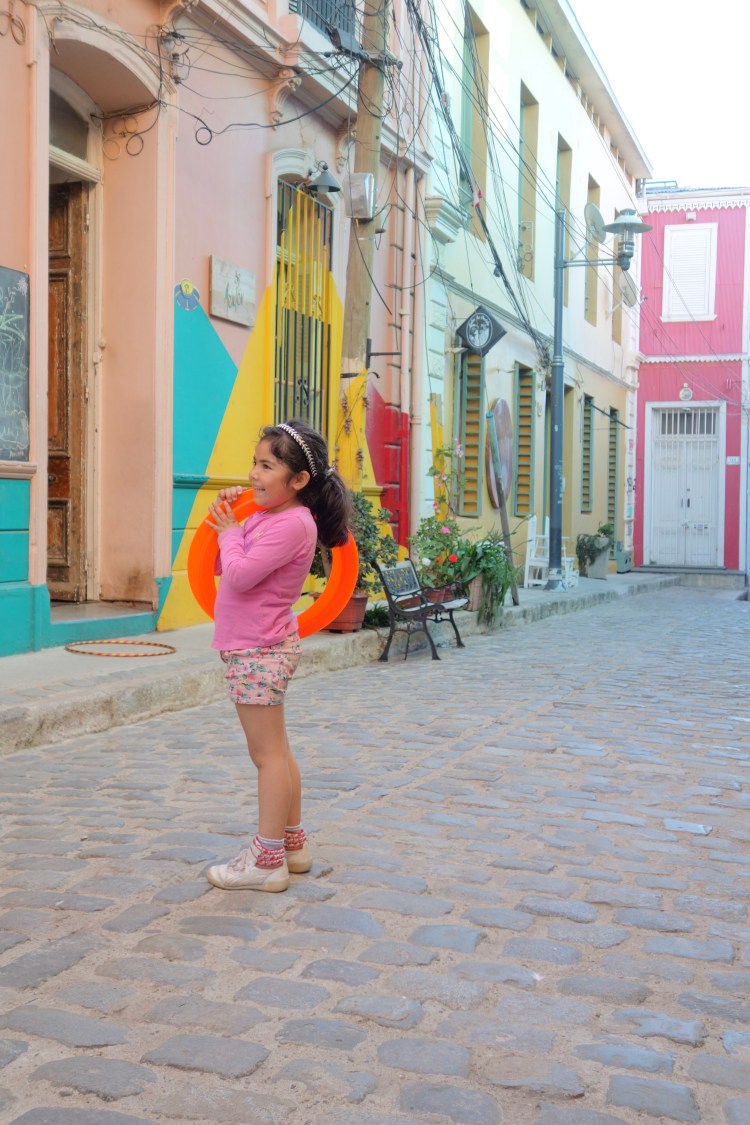
We took a slow, convoluted route back home chatting and sipping unfinished beers. Once we arrived, a smaller version of the party recommenced on the cobblestones outside the hostel beneath the streetlights. A young girl from a nearby house joined in the festivities eager to improve her juggling skills under the tutelage of Nico and the cautious yet encouraging eyes of her parents. I watched on in admiration of her determination and coordination. However, following another several beers, the juggling batons began appearing as a single blur in the warm night air. I slipped off into the shadows and inside the hostel to bed, warmed by the rich pacific air and my newfound friends.
Paintings and Ponderings
The following morning delivered a sore head and a foggy mind, both of which were effectively medicated with several cups of strong black coffee. I sat in the hostel’s courtyard with Martin and Alexis for a few hours chatting about their past lives in Argentina as well as their unbounded dreams. The conversation was awash with questions from both sides, as they were equally interested in my life in Australia as I was theirs in South America. After reaching our caffeine limitations, they suggested a walk into town. Despite appearing to me as locals, they too were new in Valparaiso and keen to explore.
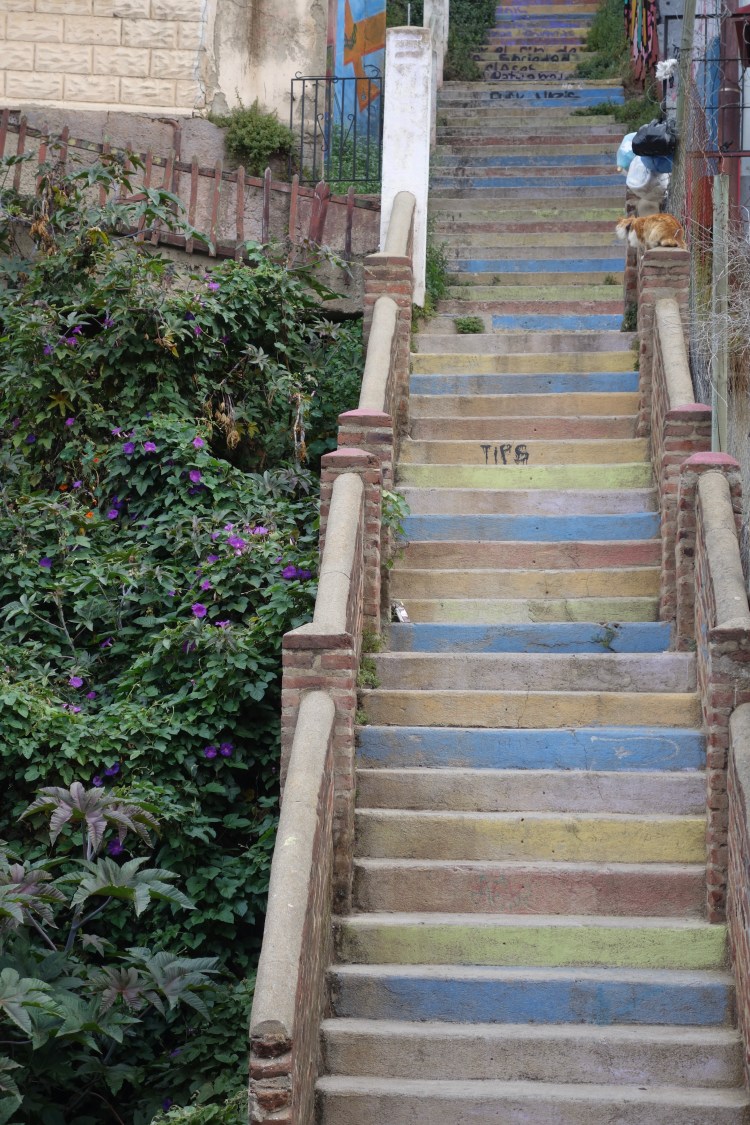
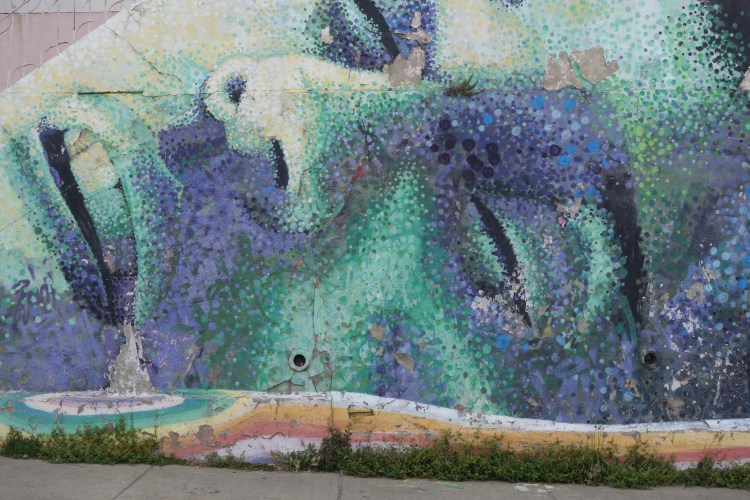
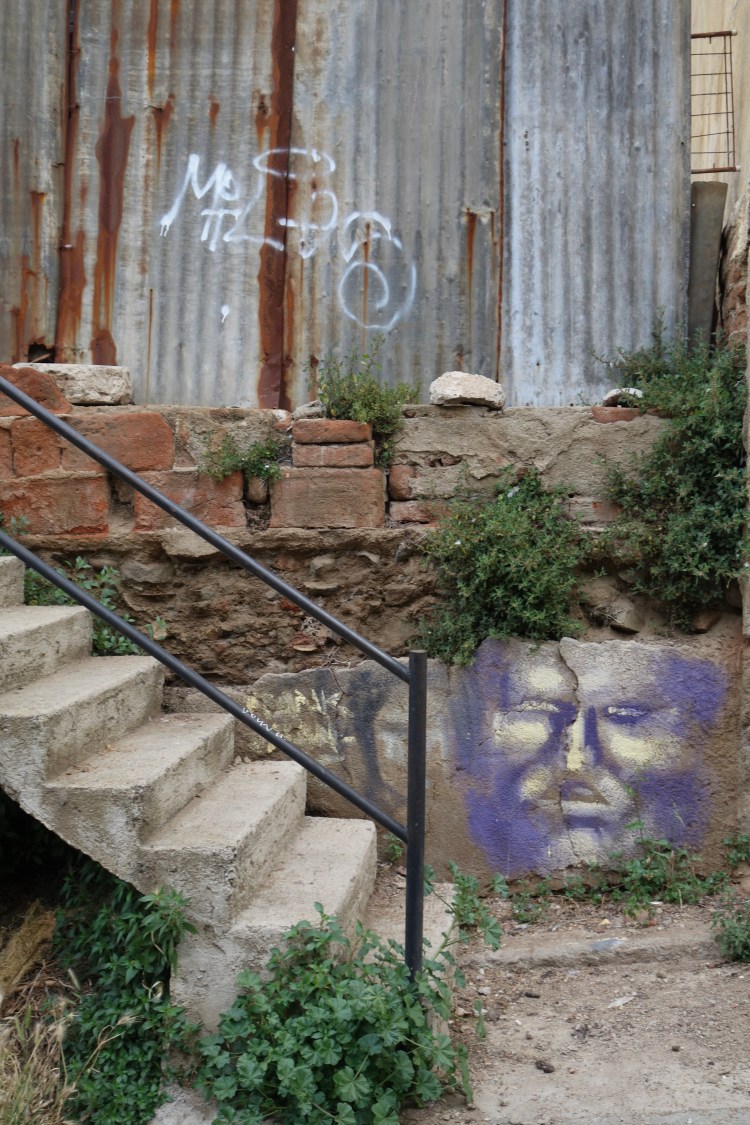
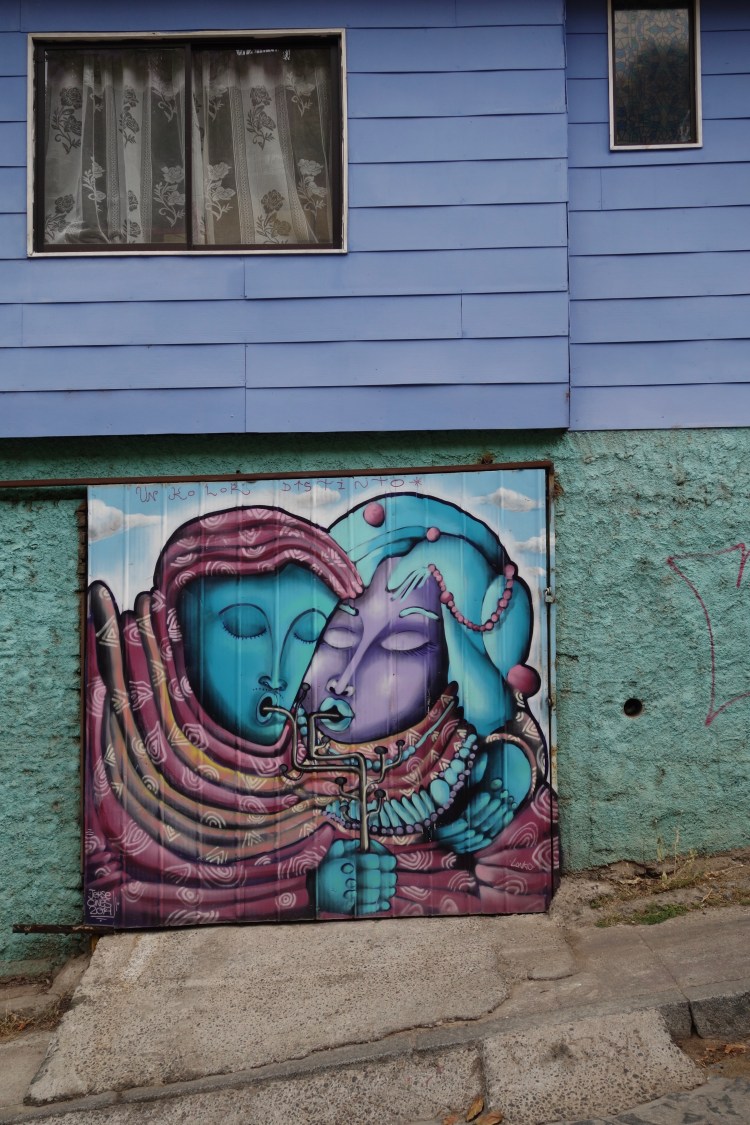
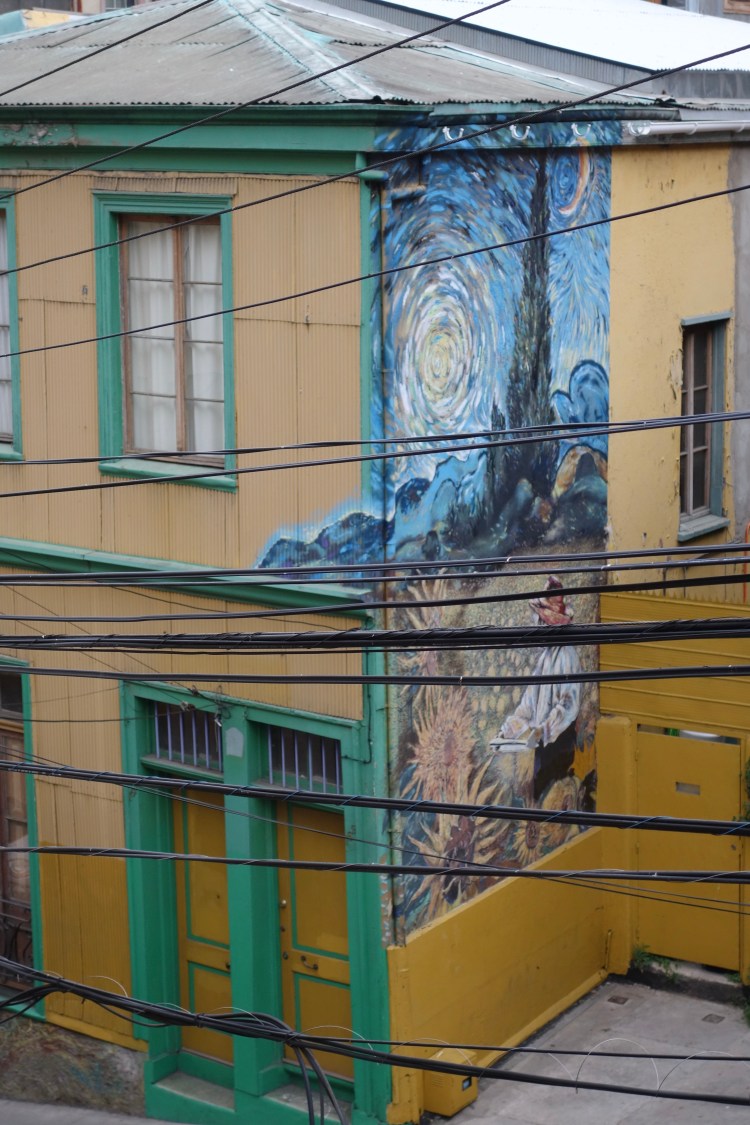
From our elevated location overlooking the city, we headed down towards the harbour via a network of narrow streets and overgrown concrete staircases. Within minutes of leaving the hostel, I had already stopped to take several photos of the vibrant murals which had brought new life to otherwise dilapidated buildings. For what is a prohibited form of expression in so many locations around the world, street art is the key ingredient that makes Valparaiso one of the most beautiful cities I have ever seen.
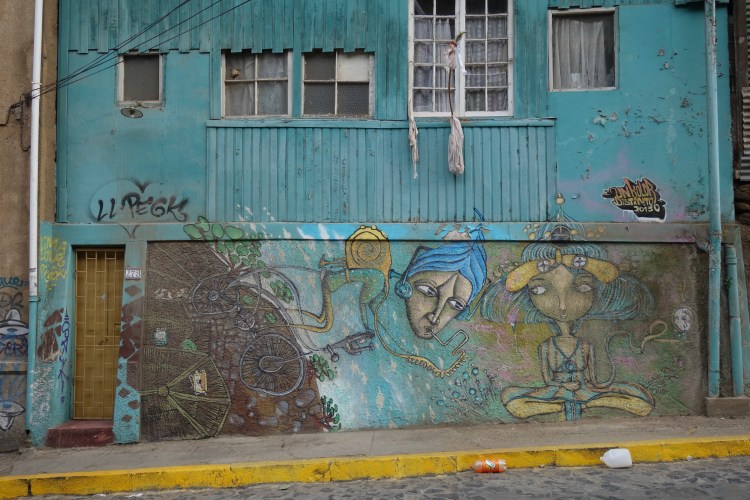
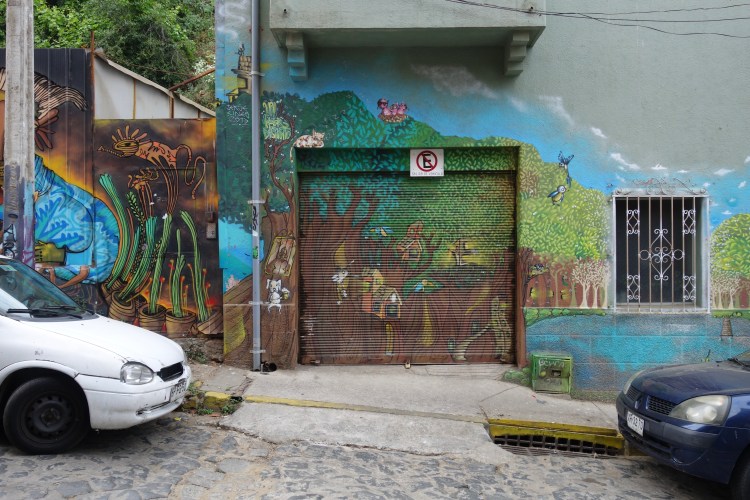
Valparaiso was once a popular layover for European vessels after rounded the southernmost tip of the Americas while en route to the west coast of the USA. As a result, the city was once one of the richest in South America. Word of this wealthy city, which garnered an international reputation as the ‘Little San Francisco’, brought waves of well-to-do immigrants. In turn, a blanket of French and Spanish-inspired architecture was draped over the hillsides of the burgeoning harbourside town.
Everything changed in 1914. The Panama Canal was opened which meant European ships no longer needed to make the arduous journey around the perilous Cape Horn. The commerce activity that had accelerated rapidly over preceding year came to a grinding halt overnight, initiating an economic decline that would force the town’s once-wealthy families to leave in search of new opportunities. If Valparaiso was to ever flourish again, it would require an entire reimagining, as well as someone eager to lead a cultural and economic revolution. It took over twenty years, but eventually the sea breeze delivered a diplomatic poet, armed with the political nuance and creative vision required to initiate such change. His name was Pablo Neruda.
Born in 1904, Neruda grew up a few hundred kilometres from Valparaiso, before moving to Santiago at the age of 16. By this time, he had already developed a reputation as one of Chile’s flourishing poets. However, it was a career that proved creatively rich yet fiscally challenging. Driven by financial hardship, Neruda left Chile in 1927 to commence an honorary consulship in Rangoon, the capital of the then British colony, Burma (now Myanmar). This was the beginning of a burgeoning political life, which involved various diplomatic posts around the world. Before finally returning to Chile, Neruda served as the Chilean Consul General in Mexico City from 1940 to 1943. Interestingly, it was around this time that muralism was beginning to blossom in Mexico. Amongst several other influences and ideologies collected during his time abroad, Neruda has been credited for bringing art to the streets of Chile. When he arrived back in his home country in 1943, it is believed that he invited a few Mexican street artists to Valparaiso; a city at the time that was desperate for a spark.
The street art scene in Valparaiso is recorded to have developed in relative secrecy over the following decades, with a handful of local and immigrant artists quietly honing their craft. Then, in September 1973, General Augusto Pinochet assumed the presidency of Chile following a US-backed coup that overthrew the democratically elected socialist government. The new military dictatorship quickly got to work, banning all forms of political art and ensuring that anyone caught defying this policy was simply ‘disappeared’. Within days of Pinochet taking the leadership of the country, Neruda died under what were considered by many at the time to be suspicious circumstances. Despite being reported as heart failure, speculation was rife as to the true cause of the death of the 1971 winner of the Nobel Prize for Literature.
During Pinochet’s reign, Chileans continued to defy the countless oppressive policies being inflicted upon them, with many people seeing street art as the most effective way to express their beliefs. Valparaiso became the perfect place for this, due to its complex network of hidden streets and staircases, as well as the fact that there was already an underground penchant for painting the town!
Risking torture and death, street artists continued painting powerful political messages throughout Valparaiso over the course of the country’s militarisation. Many people still credit the persistence and proliferation of these groups for helping return democracy to Chile in 1990. In a bid to celebrate freedom of expression following the downfall of the Pinochet regime, Valparaiso’s local government made street art legal in the city. Throughout the rest of the country, street art is still only permitted with formal governmental approval. 76 years after the opening of the Panama Canal and the subsequent demise of Valparaiso, the ‘Jewel of the Pacific’ was back on the map, this time as the cultural capital of Chile!
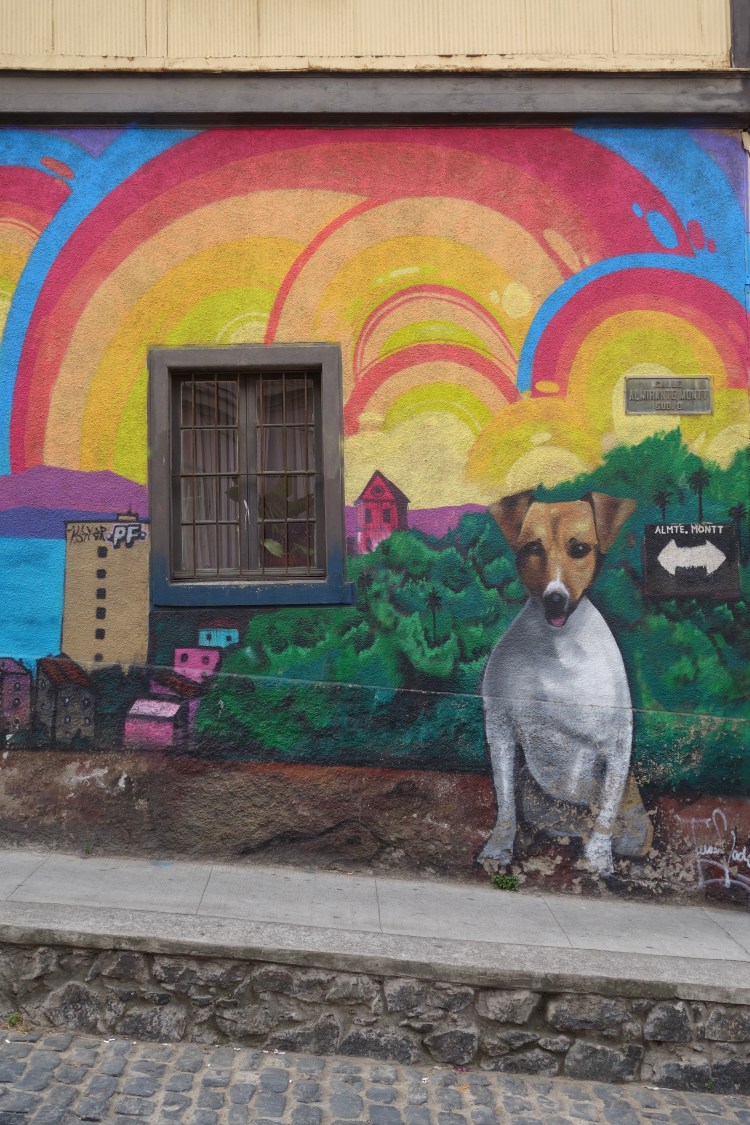
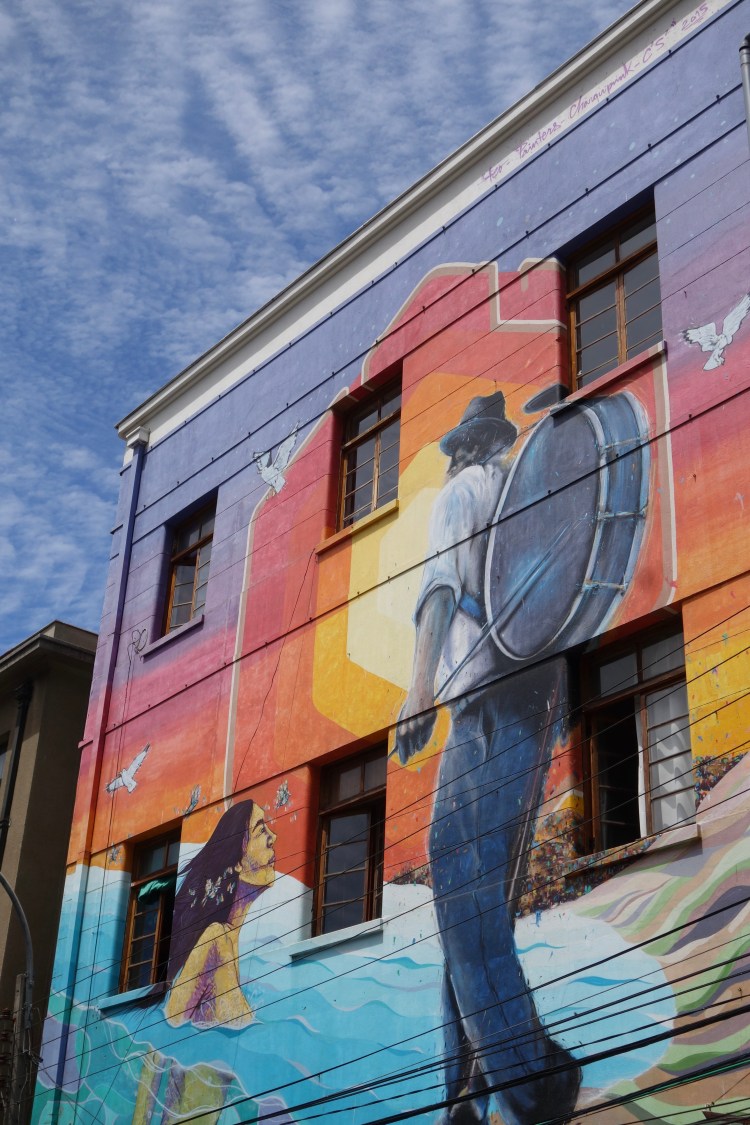
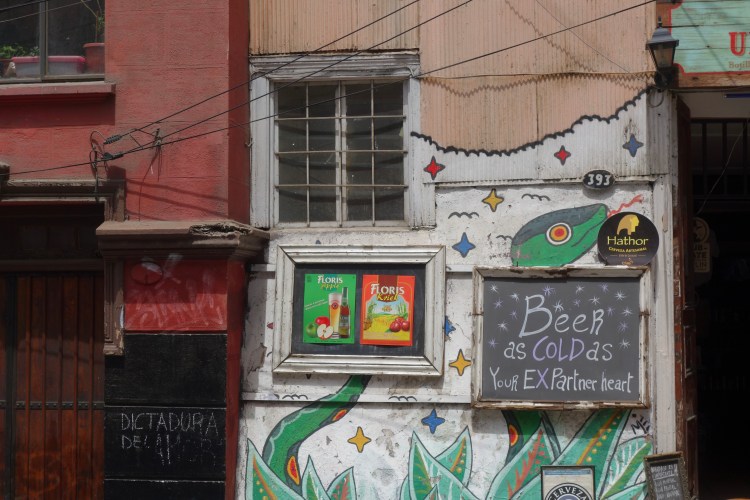
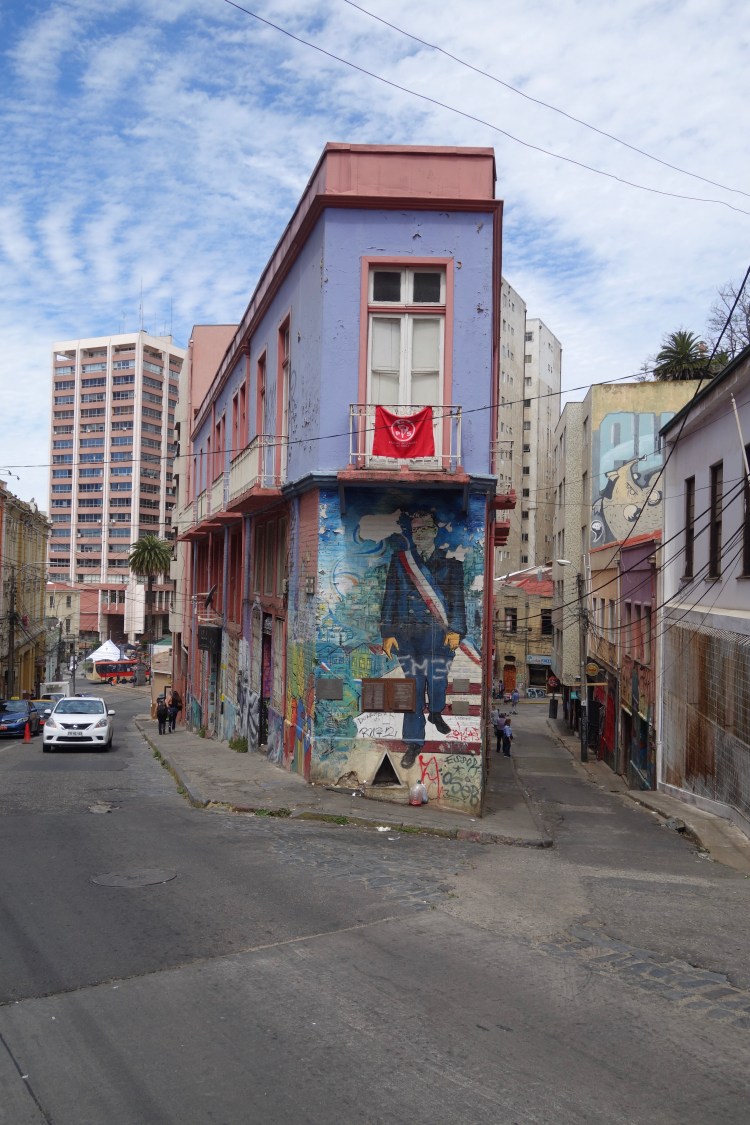
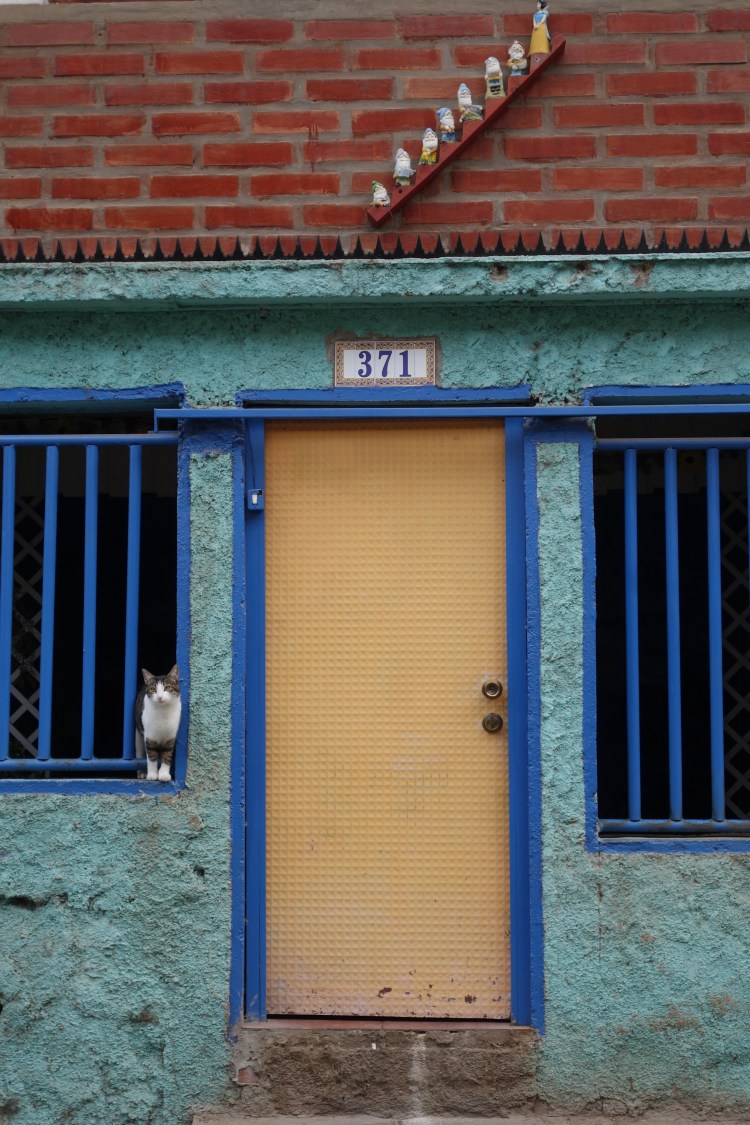
We took our time absorbing the art. Every conceivable space appeared curated. If a surface wasn’t painted, it would be draped in a verdant creeping vine that perfectly stitched together the endless patchwork of concrete canvases. Even corrugated iron sheeting hanging from the sides of buildings appeared to have rusted in tie-died patterns that perfectly suited the surroundings. A host of architectural styles clashed beautifully, creating a disparate yet harmonious synergy beyond the realm of human conception. Valparaiso is under an unbreakable spell of defective perfection and I loved getting lost in the haphazard urban design.
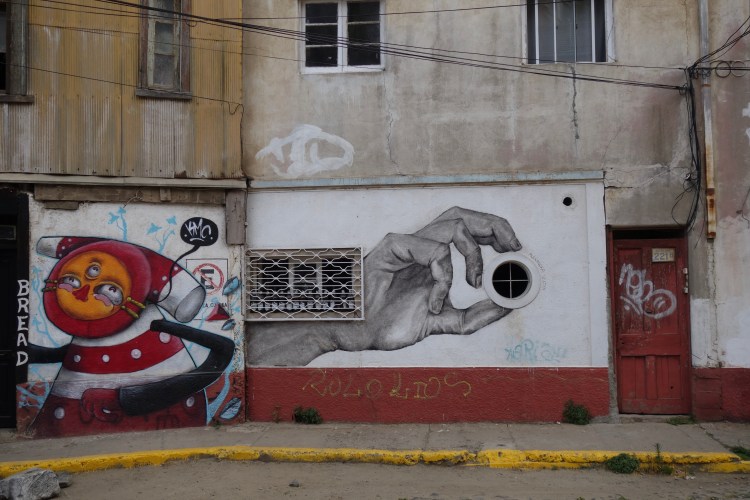
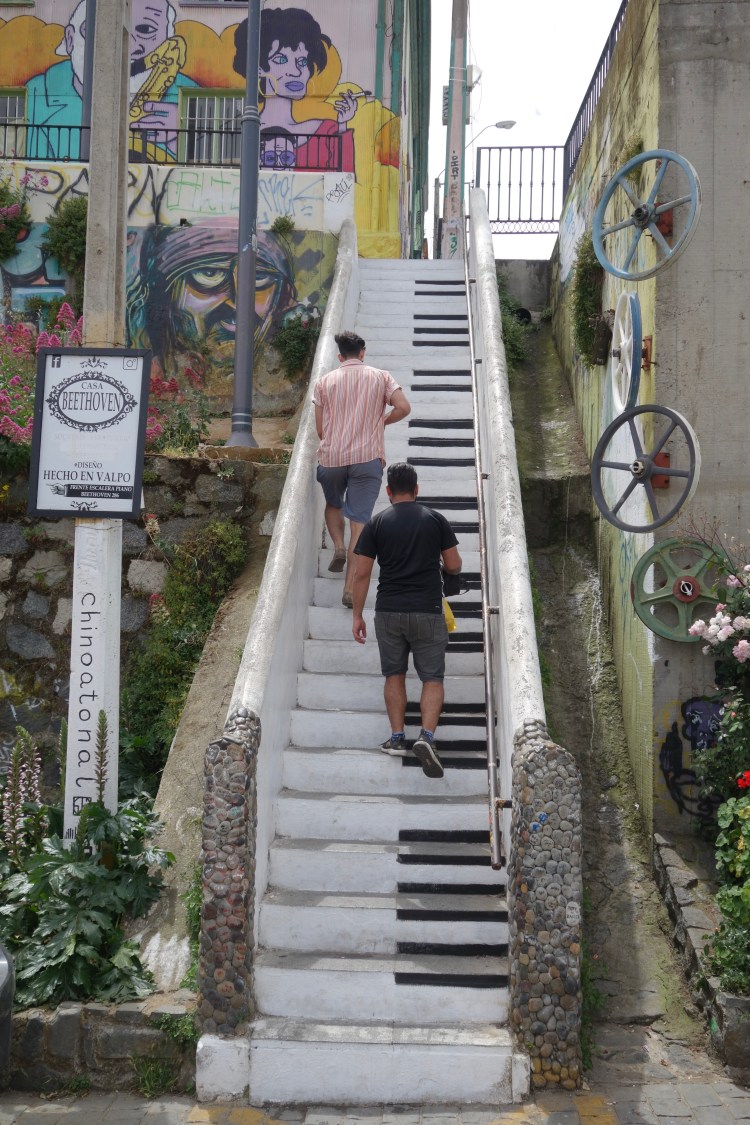
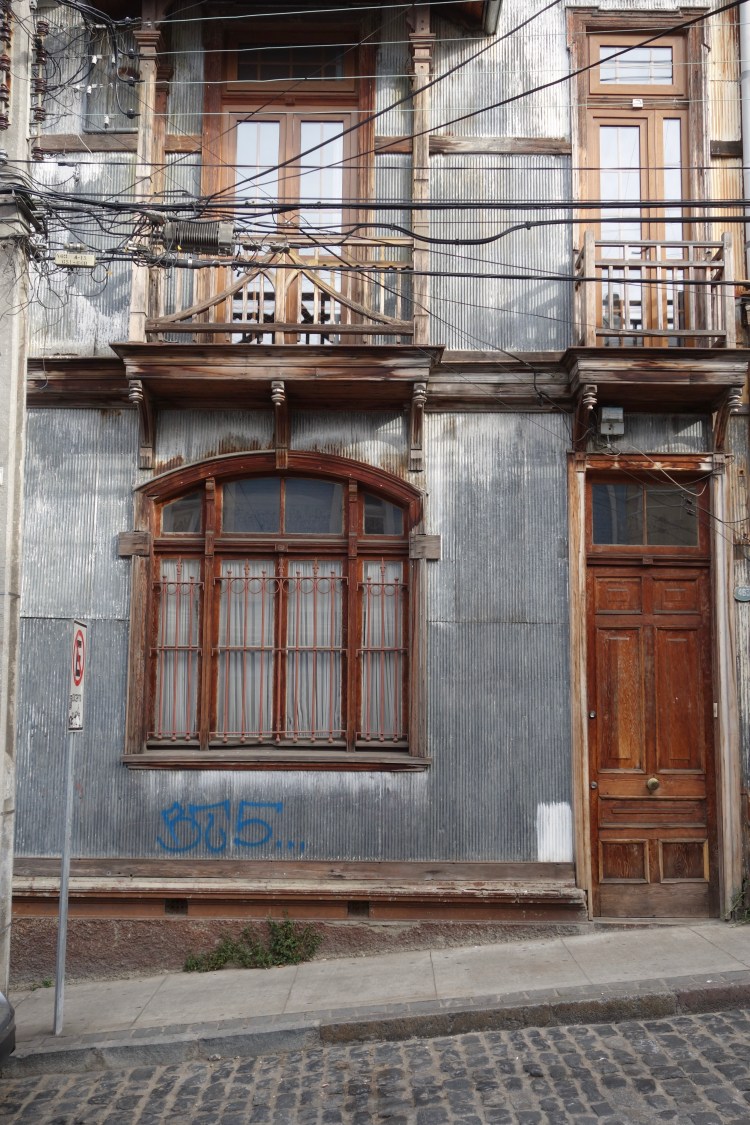
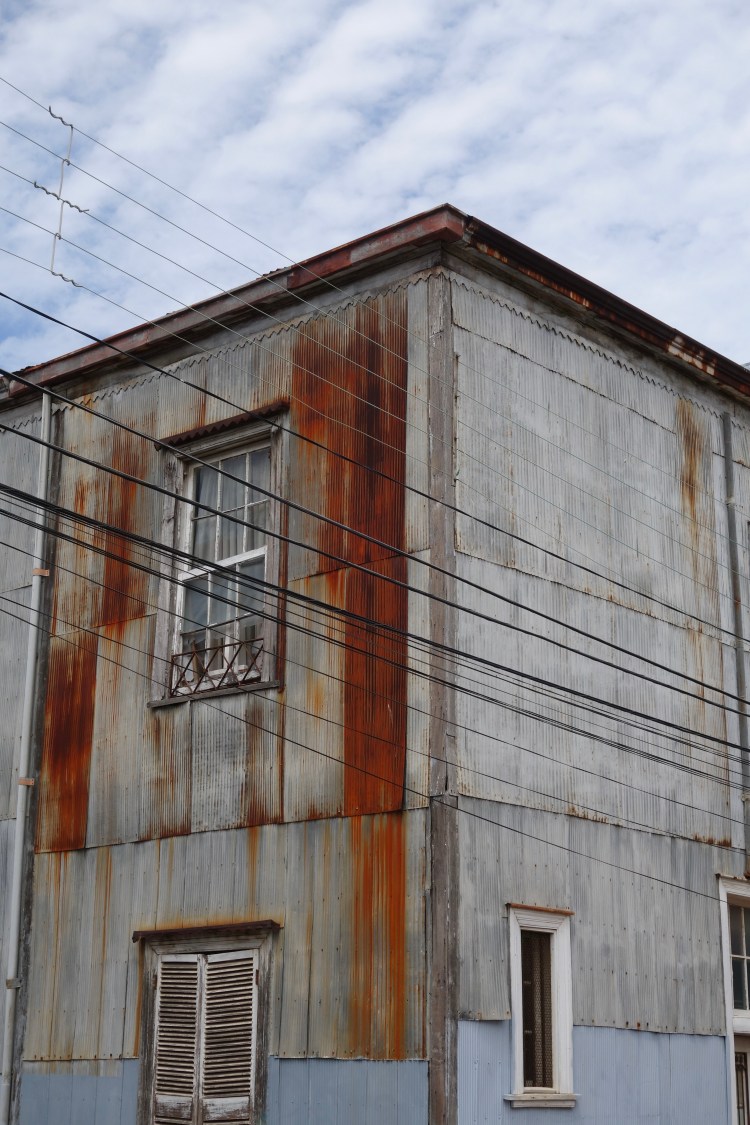
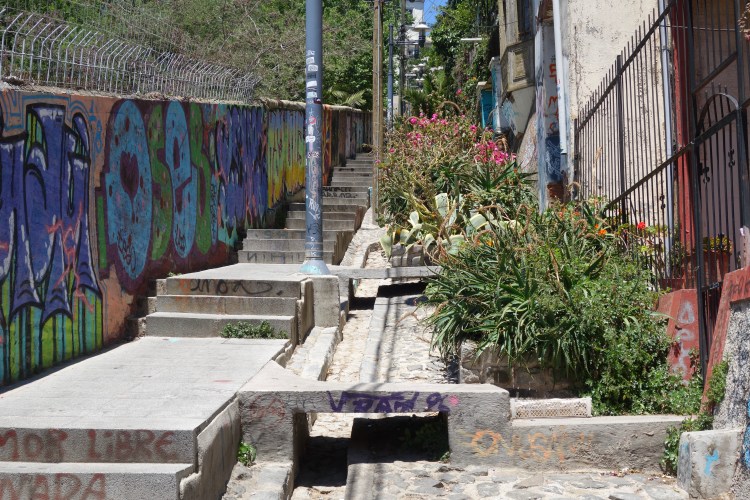
When we eventually made it down to city’s financial district, Alexis and Martin became fixated on stopping at as many currency exchanges as possible. With the state of the Argentinian economy, they were weighing up the best time to convert their savings into Chilean Pesos to avoid losing too much of their travel funds. Their concern was palpable, so I wandered towards the harbour to give them some space. When we eventually reconvened, they discovered me in a losing tussle with a very persuasive tour boat operator who was eager for business. A harbour cruise hadn’t been high on my priority list that morning, but when Alexis stepped in and negotiated a very acceptable price for the three of us, I happily stepped aboard.
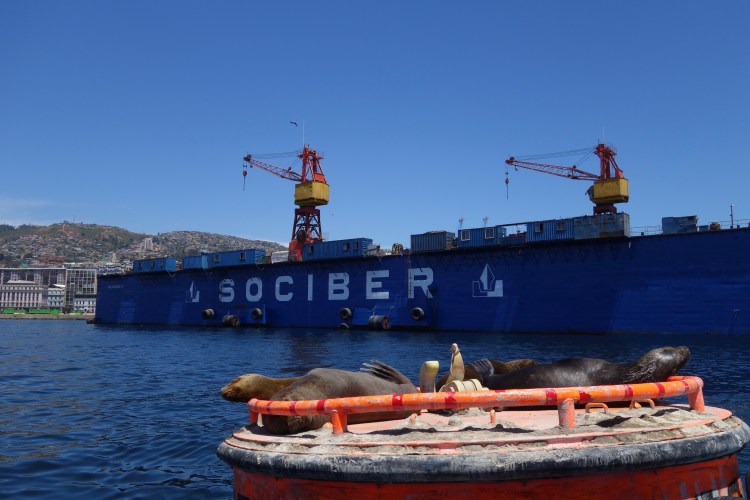
For the next hour, we cruised the edge of the harbour soaking in the views and the welcome sunshine. Crewing our vessel was a hardened looing skipper and a young, charismatic guide wearing an unflappable smile and a handsfree microphone. Unfortunately, I couldn’t understand a word the guide was saying and found myself floating off into my own world. Our position on the ocean afforded a spectacular perspective of the city. The hills beyond the harbour appeared to rise vertically from the water. Colourful rooftops caught the afternoon sunlight on the high ridgeline, while cranes worked steadily loading ships down by the wharf. I was blown away by the port infrastructure, the scale of which dwarfed everything else in view. Suddenly, it was easy to see why this natural harbour had been such a valued stopover for ships throughout the ages. Our skipper slowly guided the boat past a visiting naval fleet that was moored in the bay, before stopping by some lazing sealions.
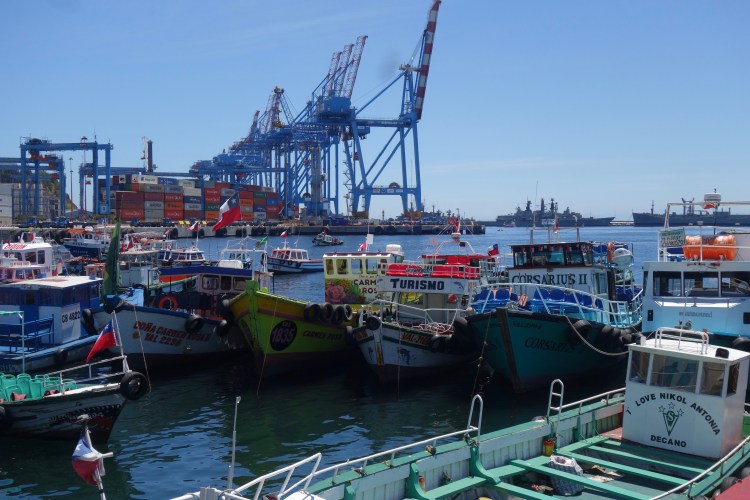
Once back on shore, we wandered aimlessly for a while chatting and attempting to teach each other our respective languages. We passed a market and bought some fresh chicken and vegetables to cook up back at the hostel. Alexis was eager to demonstrate his skills in the kitchen and demanded that we let him cook for us. I wasn’t complaining, taking the opportunity to lie in my bunk and plan my onward journey. Battling the hostel’s slow and sporadic internet connection, I went about booking a bus ticket for the following afternoon. On the booking website, it seemed surreal entering my final destination as Puerto Montt. This was where I was planning to meet Dad and for weeks now it had felt distant and somewhat unattainable. I was beyond ready to commence what was beginning to feel like part two of my journey south. My excitement was tangible.
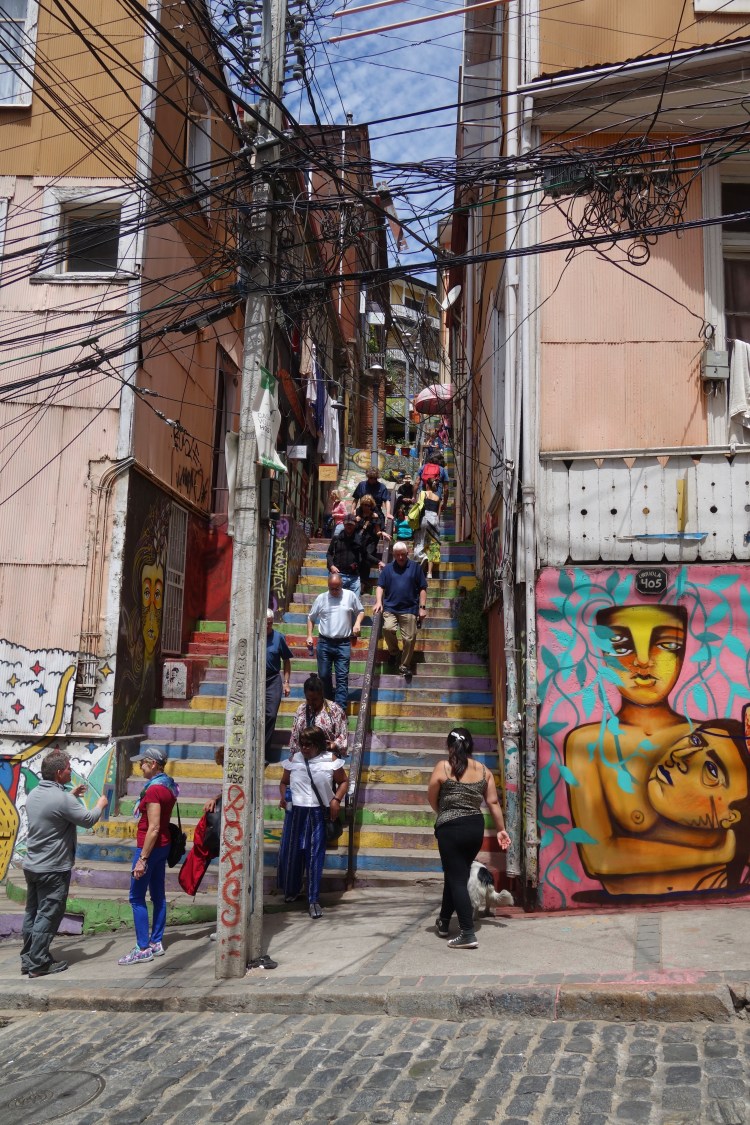
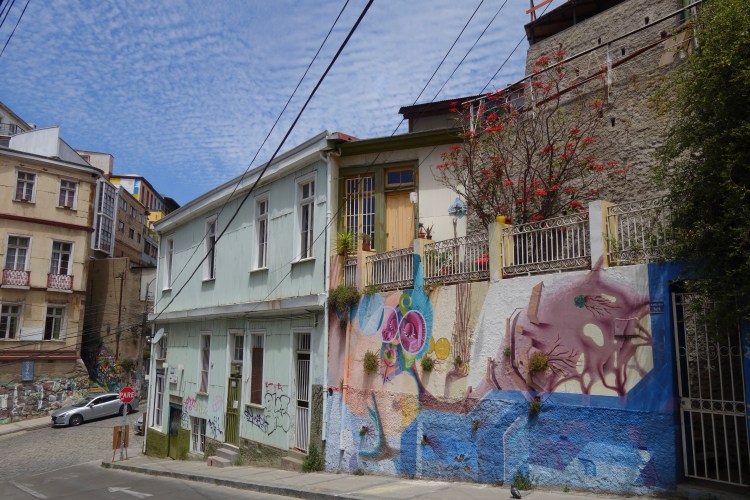
It was around 5.30pm when Alexis served up a steaming bowl of spicy chicken and rice. I followed dinner by taking a walk on my own. Allowing my senses to dictate the route, I wandered freely in the direction of whatever sounded, smelt or looked interesting. Again, I became lost in the abundant street art, eventually winding up in a small café tucked away at the end of an alleyway. The city was coming to life for the night, with groups of young people migrating down from the hills towards their favourite bars, clubs and eateries.
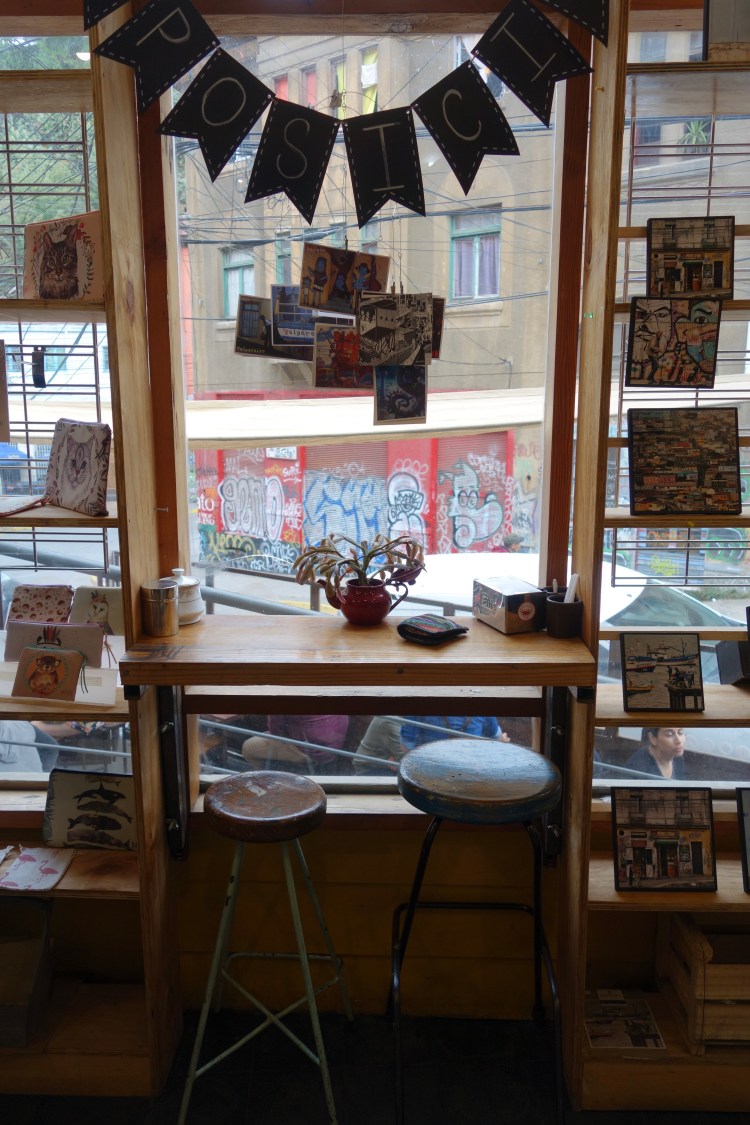
On my way back to the hostel I bought a few longnecks of beer to share with the others, taking note of where I had purchased them. The previous evening, I had witnessed the local bottle return scheme in action with the boys receiving a notable sum of money for each empty bottle they took back to where they had bought the beer. When I got back, the empty bottles were already building up as it appeared the others had begun drinking as soon as I’d left. I joined them as they chatted, drank and smoked. Later in the evening, one of Nico’s friends, Jose, arrived causing me to look twice. He was a spitting image of a young Anthony Kiedis, circa 1990. As a long-time Red Hot Chili Peppers fan, I felt it was the closest I’d ever come to meeting my childhood idol. In an effort to include me in conversation, Jose told me that he had ridden BMX since he could walk. The more he smoked, the more philosophical and reflective he became about his relationship with cycling. After explaining that his bike was an extension of his body, of equal value to his arms and legs, he stood up and hugged me.
The others ventured into town around midnight, but I decided to turn in for the evening. The anticipation of seeing Dad in less than 48 hours was overwhelming and I decided to make the most of a bed as the next night would be spent on a bus.
The end of a chapter
The following day was relatively uneventful. The mood in the hostel was jubilant as Nico prepared to watch his beloved Boca Juniors football team compete in a national final back in Argentina. When news broke later in the day that the game had been cancelled due to torrential rain, he was left with no option but to get incredibly stoned and fall asleep on the couch wearing his team colours. A picture of health and fitness. Around 6.30, I bid farewell to everyone and thanked them profusely for accepting me into their lives for a few days. Chance had brought us together and the company had come at the perfect time.
I rode downtown to the transport terminal where I bought a chocolate bar and boarded the 7.45pm service bound for Puerto Montt, ready to commence part two of the adventure. As the bus pulled out, I struck up a conversation with a well-dressed elderly gentleman sitting opposite. Hailing from Temuco, a town a few hundred kilometres to the south, he had been in Valparaiso for a few days visiting his daughter whose architecture firm had recently completed a major project. He went on to tell me that his wife and son, who he misses dreadfully, are currently living in Auckland for his wife’s work. After telling him why I was heading to Puerto Montt, he made me promise that I cherish every minute spent with Dad over the coming weeks, ensuring me that it will be one of the most special experiences we ever share together. I really hope so.
Thanks for reading.
 Faults and Folds