When I stepped off the bus in Puerto Montt, I was seven degrees further south than where I’d boarded the night before. Immeasurable changes had occurred within the 800km that now separated me from Valparaiso. Cramped conifers clung to hillsides above the road. Locals with weathered faces and woollen hats weaved their way between puddles dotting the streets and sidewalks. My breath was visible in the morning air and I felt an unfamiliar coolness on my skin. However, it was more than the climate that had changed overnight. I could now say that I was meeting Dad ‘today’.
The excitement of seeing a familiar face in a foreign place was one thing, but knowing that my journey would soon become ours, was wonderful.
I bought a toasted sandwich and a coffee for breakfast and found an empty bench seat by the waterfront. Despite being a Sunday and most shops appearing closed, the town was abuzz with people of all ages. It took a while to put a finger on the reason for such an energetic gathering on a universal day of rest. However, after a handful of red-faced runners turned onto the main street and were met with rapturous applause, I realised I’d positioned myself at the finish line of a local running race. I then noticed that most people were wearing matching shirts sporting the word ‘autismo’. For the next hour, a procession of out-of-breath joggers passed by on their way to completing a charity fun run, whilst I watched on effortlessly from my prime position in the sun.
As it was only mid-morning, there were still several hours before I could check-in to the hotel where Dad and I had planned to meet. Dad’s arrival seemed like the first real deadline for the entire trip, leaving me far too distracted to just wander around town in the interim. Luckily, I stumbled across an observation deck extending out over the water providing the perfect place to kill some time and take in my new surroundings. Apart from the sight of a nearby couple in an awkwardly passionate embrace, the views from the end of the pier were glorious. To the south, snow-capped mountain ranges appeared to rise directly from the ocean. It was hard to tell without a map, but I could only hope that in a few days’ time we would be cycling along a road towards those same hills.
For the following hour, a constant stream of inflatable tenders serviced a cruise ship that was moored out in the deeper channel of the harbour. The boats appeared to be ferrying passengers in and out of the city, providing the paying guests with some time on land before returning them to the safety of the ship and what I can only imagine was an all-you-can eat buffet lunch. This thought alone was enough to stir the unrelenting hunger within, prompting me to pursue the search for a few treats in preparation for Dad’s arrival party. Half an hour later, I rode out of town with a pannier full of fresh strawberries, avocado and beer, and an unnerving smugness!
We had planned to meet at a hotel that Mum had generously booked from her computer back in Tasmania. In addition to serving as a rendezvous point, it was hoped that the guarantee of a good bed would allow Dad a solid sleep after his long-haul flight. However, the opportunity of a night of luxury wasn’t lost on me. I began questioning whether it was thoughts of fresh linen and a soft mattress, or that of seeing Dad, which I was most excited about.
The hotel lay a few kilometres to the southwest of the CBD and the ride to get there was divine! The road hugged the coastline, passing wharves where both new and rusty-hulled vessels were crammed together. Flocks of opportunistic gulls caused chaos for fishermen attempting to unload their catches. In roadside parking lots, weathered men sat with oversized needles repairing torn nets in preparation for the following day at sea. The dominant industry of the region was unavoidable. I pedalled past one of Puerto Montt’s primary tourist attractions; the Angelmo Fish Market. Not only did the marketplace appear to attract both locals and tourists with the bounty of produce on offer, but a raft of over nourished sealions also floated nearby in the hope of some tasty leftovers.
As I neared the suburb of Chinquihue where the hotel was located, the harbour narrowed into a scenic passage between the mainland and Isla Tengo. The island was heavily laden with pine trees and other temperate species, all varying intensities of green. The emerald hues of the vegetation on the island were reflected in the sapphire blue of Canal de Tenglo, providing a stark reminder that I had arrived at a latitude rich with life and shaped by water. It felt wonderfully familiar, a sense of homecoming.
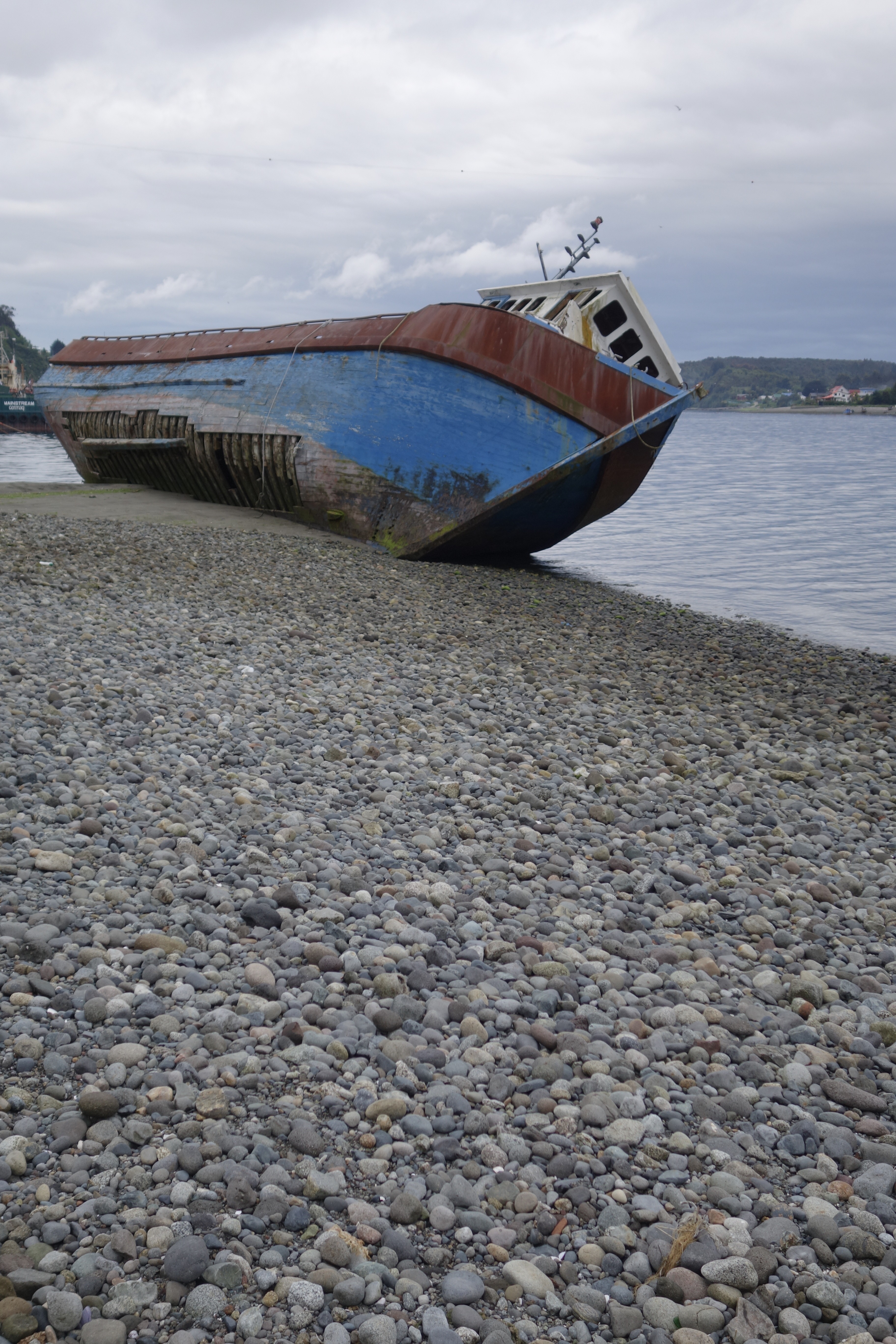
The further I rode, the more industrial the area appeared. Dilapidated, weatherboard huts lined the road, some of which appeared to be homes and others either abandoned or being used for storing old fishing nets. Many of these structures were painted in bright pastels with the intent to inject some vibrancy into the region. In stark contrast, decaying skeletons of ships lay on their side at the high tide line reflecting the unforgiving climate of southern Chile.
It was around 3pm by the time I located the hotel, checked in, and ensured that there would be a taxi at the airport to pick up Dad. I usually would have been embarrassed by my vagrant appearance as I entered the lobby of a hotel. However, the excitement of a rapidly approaching hug with Dad certainly trumped any trivial self-consciousness. For the next hour or so, I showered, organised some washing and lay on the incredibly comfortable bed staring out the enormous window. The sea lolled gently, fishing vessels forged their way across the bay, and the precipitous horizon taunted me through breaks in the clouds.
Dad’s arrival was marked by a rhythmic knock on the door and a predictable gag.
‘Housekeeping!’
Standing before each other was surreal. There weren’t any plans for this shared adventure when I had left Tasmania several months ago. Even since Dad had booked his flights and assured me that he was in fact coming, it had still seemed unfathomable that we would be meeting and hugging each other in a small Chilean fishing town.
The astonishment we were both experiencing at the plan coming to fruition was washed away with a few cold beers. Dad spoke of the confronting language barrier he had experienced in both the Santiago and Puerto Montt airports. He has travelled extensively in Asia and Europe but expressed that he has never felt so alienated through a lack of shared dialect. Perhaps it was because he was travelling alone without Mum’s guiding hand. However, rather than appearing discouraged, this seemed to have just added to his sense of adventure and excitement. He was here now, we were together, and following a few days of acclimatisation, we would soon be pointing our bikes south and forming shared memories.
During the hour we had been catching up, a severe and imposing storm front had developed on the horizon and was now beginning to darken the room. It provided the motivation we needed to finish our beers and jump on a local bus in search of somewhere for dinner before the forecast rain dampened our enthusiasm.
We rode the bus into the centre of the city. By the time we arrived the rain was falling steadily, adding to the urgency of finding somewhere to eat and drink. A large chalk board advertising beer and burgers was all it took to lure us into a busy creole restaurant. The interior resembled a classic sports bar, with hints of both fine dining and the wild west; saloon-style timber doors, the names of local beers written in neon lights, and candles at each table. Conversation was minimal, as our focus was devoted to finishing the gigantic burgers and strong local dark ales that had been delivered to the table.
Stepping out of Central Criollo feeling sufficiently overindulged, we found that the rain had intensified. Scrambling to get on the first bus we saw, we squeezed into the aisle alongside dozens of soggy locals. Dampness, combined with the collective body heat of the passengers, had cloaked the windows in condensation. With the confidence of a few beers combined with the fact I had ridden along the road earlier that day, I promised Dad that I knew at which stop we needed to get off. Peering over the driver’s shoulder to steal a glimpse through the only clear window on the bus, I eventually made the call that we were at our hotel.
As the bus continued up the road, the falling rain awoke me to the fact I didn’t recognise our surroundings. Following an unexpected, yet pleasant, 45-minute walk, we eventually stumbled back into our room. I think Dad was asleep before he lay down and it sure wasn’t long after when I also slid into a deep slumber.
Sitting with Dad at the breakfast table the following morning, I soon recognised that I had developed some polarising habits over the previous few months alone. When we returned from the buffet, Dad’s modest bowl of fruit and yoghurt appeared like hors d’oeuvres compared to my gargantuan serving of eggs, beans, mushrooms, toast, jam, etc. I had undeniably become an opportunistic eater. My body had come to recognise that even when it wasn’t hungry, it would soon be called on to expend an unnatural amount of energy and that any reserves in the system would be greatly appreciated. I tried to explain this to Dad, ensuring him that he too will develop and insatiable appetite over the coming weeks. This was my way of justifying my confronting eating habits, while internally making a pact with myself to begin eating a little more mindfully for the rest of the journey.
Back in the room, Dad spent the morning unboxing and assembling his bike. It was the first time I’d seen his new ride and I’d be lying if I said I hadn’t been feeling a little anxious about what type of bike Dad would turn up with! In hindsight, there’s not much that can go wrong when the brief that I’d given him had been ‘steel frame, strong wheels (as many spokes as possible), and Ortlieb panniers (the tried and tested, bombproof benchmark in the world of cycle touring)’. He proudly unveiled a midnight blue Surly Cross-Check that one of his friends had lying in the shed. There’s a chance that this might be read by the person in question, however, the price Dad paid was a mere donation (a steal!) for a bike that was so perfect for the job ahead!
As he was unpacking the bike box, he handed me a few cards and small gifts from people back at home. A highlight was a typed letter from my grandma, explaining that she and my grandad were planning on coming but just didn’t have the money for new bikes. She also stressed that I must take care of Dad. It wasn’t lost on me that Dad had deliberated the idea of spending an extended amount of time abroad with his elderly parents back in Australia, before making his final decision to join me.
Another welcome gift was a small bag of locally roasted coffee, sent by Mary. I was aware of the irony; South American beans, shipped fresh to Australia, roasted and packed in Hobart, and flown back to their continent of origin. However, considering I’d been riding through the home of coffee, it had been many months between nice brews. I couldn’t wait to boil the pot once we were on the road.
While Dad was tightening bolts and fitting bags, I took the opportunity to swap my tyres. Understandably, the rear tyre was considerably more worn that the front given the amount of weight it had been bearing for the past months. Cracks, splits, and a concerning baldness was evidence of the roads behind me. I could only hope they would last for the duration of what lay ahead.
It was almost midday by the time we headed outside. We located the bus stop that we should have got off at the night before and caught a bus back into town. We drove past a shipyard where several wind turbine blades were stacked and ready to be loaded onto trucks. Otherworldly in shape and size, their futuristic curves and angles were a stark contrast to the rusty surroundings at the wharf. This fleeting observation was the first real insight we would get into the rapidly changing nature and industry of southern Chile; a region of hasty, and seemingly unregulated, development for better and worse.
Once in town, we wandered through the commercial district where new high-rise buildings were being constructed. It was obviously lunch time on the worksite as countless men in hi-vis and hardhats sat on benches lining the road. Concerningly, most of the workers were passing joints arounds before recommencing work on the cranes and scaffolding. It was a good reason to keep moving from beneath the construction sites.
We stopped in at a small information booth to pick up some free tourist maps to begin route planning over the course of that afternoon. It wasn’t until then that it struck me we hadn’t discussed where we would be riding over the next few weeks. Most of our Skype calls had been consumed by conversations of travel arrangements, bike preparation and gear selection. Personally, the next section of the ride had been something I’d been anticipating since Colombia. From Puerto Montt, I planned to follow Chile’s Ruta 7, more commonly known as the Carretera Austral, for the next 1240km. This road is considered by many as one of the most ambitious infrastructure projects ever completed in Chile. Prior to the 1970s, there had been several attempts to connect the sparsely populated settlements throughout rural Patagonia. However, the impenetrable landscape which is regularly intersected by a complex network of fjords, had provided too many obstacles to the successful construction of a road. It wasn’t until 1976, under the dictatorship of Augusto Pinochet, that the most concerted effort to complete such a vision commenced. The Carretera Austral, with a few mandatory ferry rides along the way, now connects around 100,000 people living throughout the wild, mostly untamed landscape. I had read about this road for years. The fact Dad was relatively unaware of what lay ahead only added to my excitement. His lack of expectations balanced out my hopes of what were to come. As we poured over the contours and intricacies of the maps before us the anticipation to get on the bikes became palpable.
We broke up the long stroll back to the hotel with lunch at the Angelmo Fish Market. Dozens of similar-looking restaurants filled every conceivable space throughout the weathered wooden structure. We made our choice of where to eat based on the view. Following a hearty meal of fried salmon, fish broth, and an obligatory Pisco sour, we sat back and watched the sea lions in the azure waters below as they wrestled lackadaisically over fish scraps. We made the most of the fresh fish on offer and picked up a few treats for later before continuing our walk past the bustling shipyards that lined the road for several kilometres.
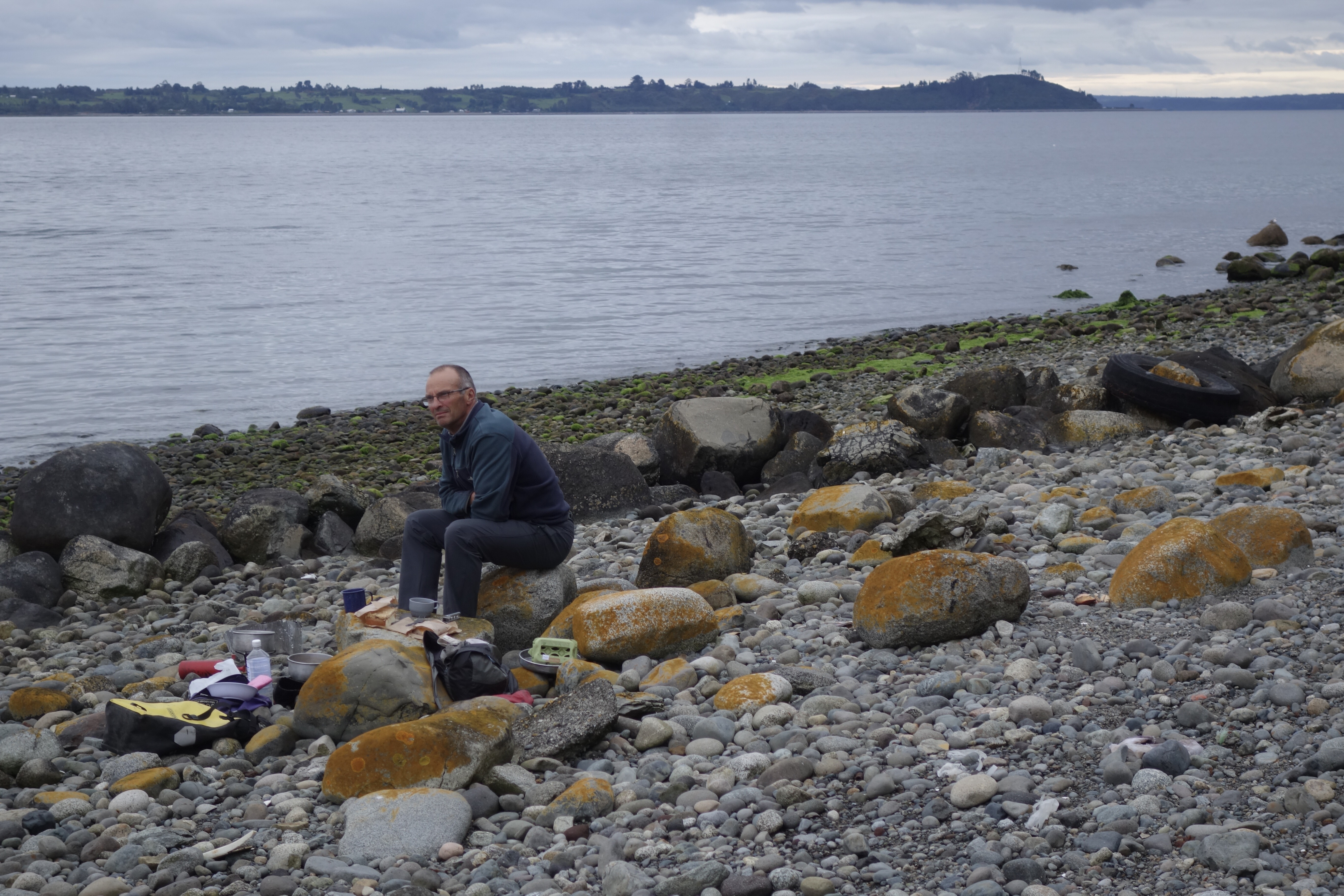
To ensure that we didn’t become too accustomed to a life of luxury, we decided it would be a good idea to cook up some dinner on the small rocky beach across from the hotel. But, following a meal of smoked salmon, boiled mussels, fresh bread, avocado and a few cold beers, it was hard to believe that anyone, anywhere in the world, could possibly be more satisfied and luxuriated than us. Lying back against the rocks, watching clouds and boats make their way across the harbour, Dad commented on the amount of rubbish lying around. Bottles, fishing nets, broken glass, and plastic bags were common among the flotsam and jetsam that littered the foreshore. His obvious disappointment was a timely and sad reminder that I had become somewhat desensitised to the careless disposal of rubbish that I’d witnessed over the past few months. However, it was this fresh perspective that would hopefully reignite elements of my own awareness and inquisition that had perhaps become dulled.
Our last day in Puerto Montt began with another visit to the buffet breakfast. I decided it would be ok if my new eating habits commenced the following day. We rode our unloaded bikes into town to give Dad a taste of riding on the local roads and to get a few jobs done. After several stops to buy a few days’ worth of food, fuel for the stove, and some plastic crockery (the one and only oversight in Dad’s packing and preparation), we left town with slightly heavier bikes and rapidly increasing excitement about beginning the journey proper. Our ride back to the hotel was hampered by heavy rain, forcing us to take shelter in a cabin-style café with tables constructed from solid sections of ancient trees. Once back in the room, we sorted and distributed gear (a process that would continue over the next week before everything found its natural place) and spent the afternoon relaxing. I showed Dad one of my favourite climbing films, ‘A Line Across the Sky’, which documents a traverse of one of the most striking skylines in the world; the Fitz Roy Massif in Argentina. The reason for this was that these mountains are what lie at the end of the Carretera Austral and have occupied my mind for several years. To think that we would be riding beneath the same peaks in a matter of weeks was still inconceivable.
Our last dinner in Puerto Montt came from ‘Shimanji’; a tiny ramen restaurant on the edge of town run by an Okinawan man with very little Spanish. It was about as authentic as Japanese food gets in southern Chile and was the perfect meal for a drizzly evening. It was also a Tuesday night which, coincidently, meant two-for-one at Shimanji! The rain had ceased by the time we left the restaurant. We made the most of the break in the weather, setting up the stove on the beach to boil some eggs for lunch the following day. Beside us lay the rusty, derelict hull of a fishing vessel from a bygone era. Further along the beach sat large white bags which were of great interest to the local gulls; we suspected they contained pellets intended for the salmon farms which dotted the harbour.
Sitting in silence and drinking tea, we watched the post-rain sky breathe a sigh of relief. The ocean was calm, and the last of the sunlight was savoured by the velvet water.
Thanks for reading.
 Faults and Folds