The day began perfectly. I was woken by the warmth of the sun on my face and Dad, after a solid sleep and plenty of fluids, was claiming to be a picture of health. What he was lacking in appetite, he made up for with an overwhelming optimism about the day’s ride that lay ahead. We made the most of the hot showers and internet access before leaving the campground around 10am.
Our intention was to drop into the local supermarket to grab some extra provisions for the following days. However, as we rode down the main street, we observed an eerie quietness enveloping the town. We soon discovered that a major power outage had occurred. All the shops had closed their doors, and no one seemed to have any idea what had happened or when the connection would be restored. Although we had enough food to last until the next major town, we had been hoping for some fresh fruit and vegetables to squeeze into our panniers. Following a quick lap of the town, we relinquished all hope of getting our hands on any additional sources of essential vitamins and minerals.
However, we weren’t entirely out of luck that morning. As we made our way to the edge of town, by chance we saw that Gabriel and Charlotte were still open. We shared a look that translated to something along the lines of: ‘it would be rude not to stop in one last time’.
They seemed happy to see us again and promised that we could have a coffee as soon as they got the generator working to power the machine. We sat awkwardly for 15 minutes, trying not to watch as they tinkered unsuccessfully with the contraption that didn’t look as though it had been fired up for at least a decade. They eventually gave up on the antiquated machine and apologised sincerely for the unfulfilled promised of a long black. Thankfully, the sun was out, they were lovely people, and we really didn’t need another coffee. We thanked them for trying and wished them well for the ensuing tourist season.
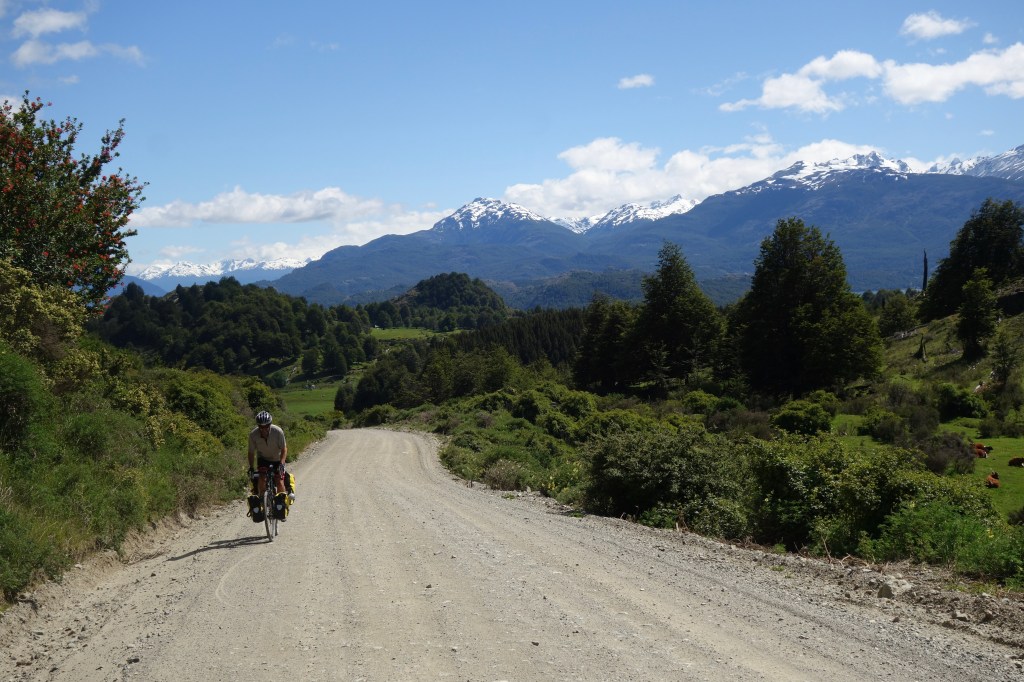
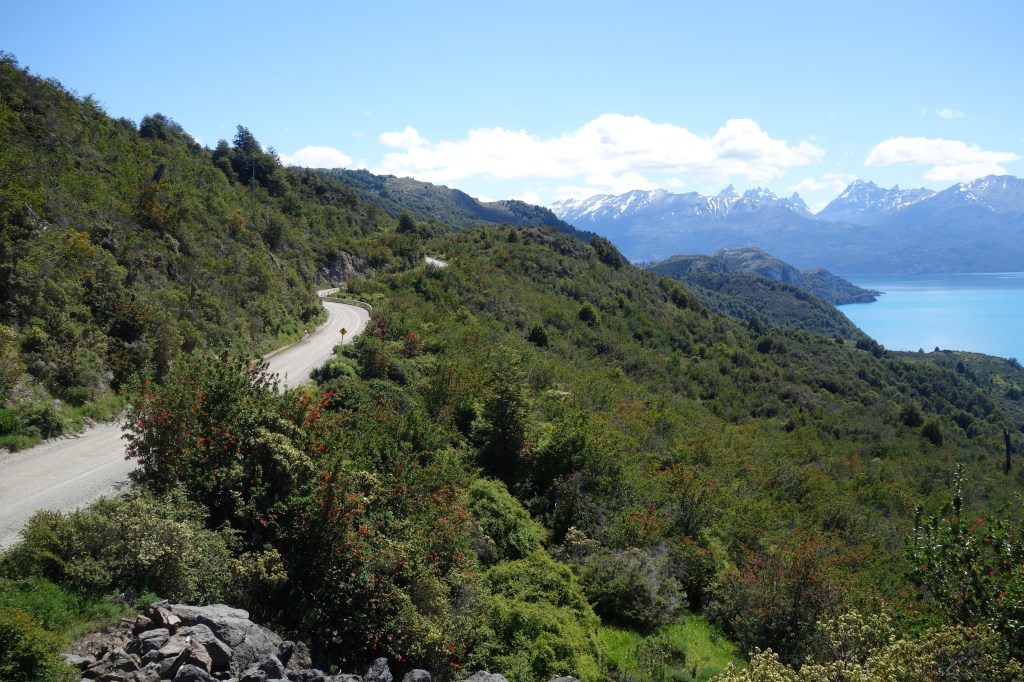
As we rolled out of town we were joined by a black and white dog. With an unbroken, inquisitive stare, he matched our pace with meticulous precision, ensuring the same distance from our back wheels at all times. After ten minutes or so of riding, we began paying him more attention and wondering how long we would be graced with his presence. The road became more undulating but still he never broke stride; it was mesmerising. Five kilometres after he had appointed himself as the third member of the trip, we came to the top of a hill and embarked on a long, straight descent. Naturally, he picked up the pace and soon his ears were pinned back by the wind and his tongue was flying beside him. We began pulling away. The look on his face was different to that of a dog enjoying a run; he looked desperately distressed that he couldn’t stick with us. Eventually, his bounding stride shortened, and he came to a standstill in the middle of the road. For such a healthy-looking dog that appeared well-loved, I have no idea what had inspired him to follow us with such intent. If Dad hadn’t been there for company, I worry that I would have coaxed the dog to continue south, resulting in the purchase of a crate and an extra ticket home to Australia.
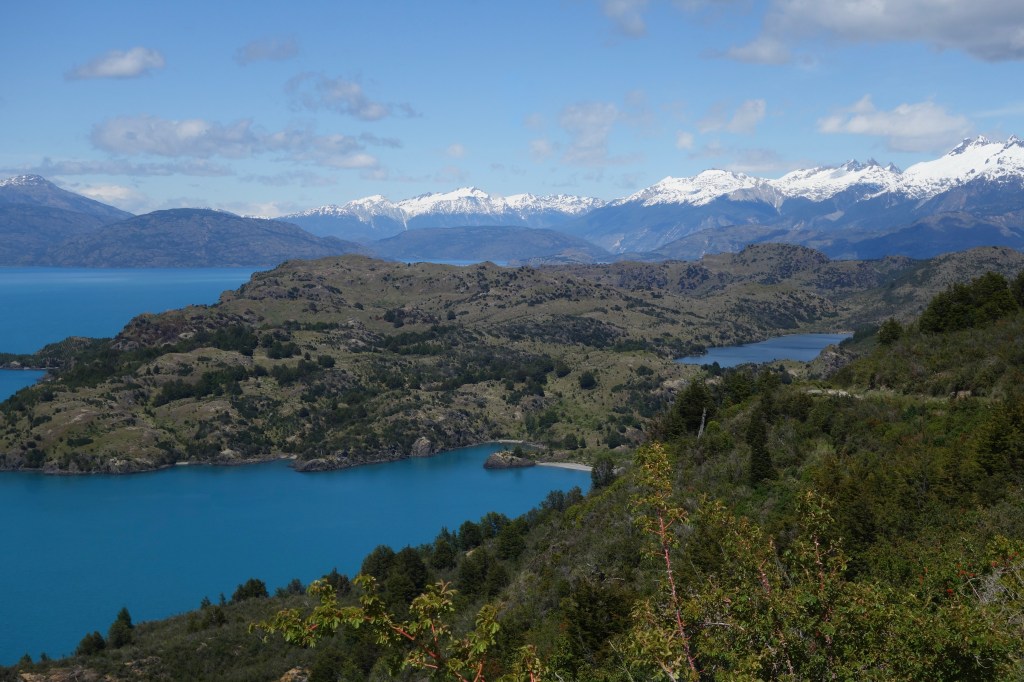
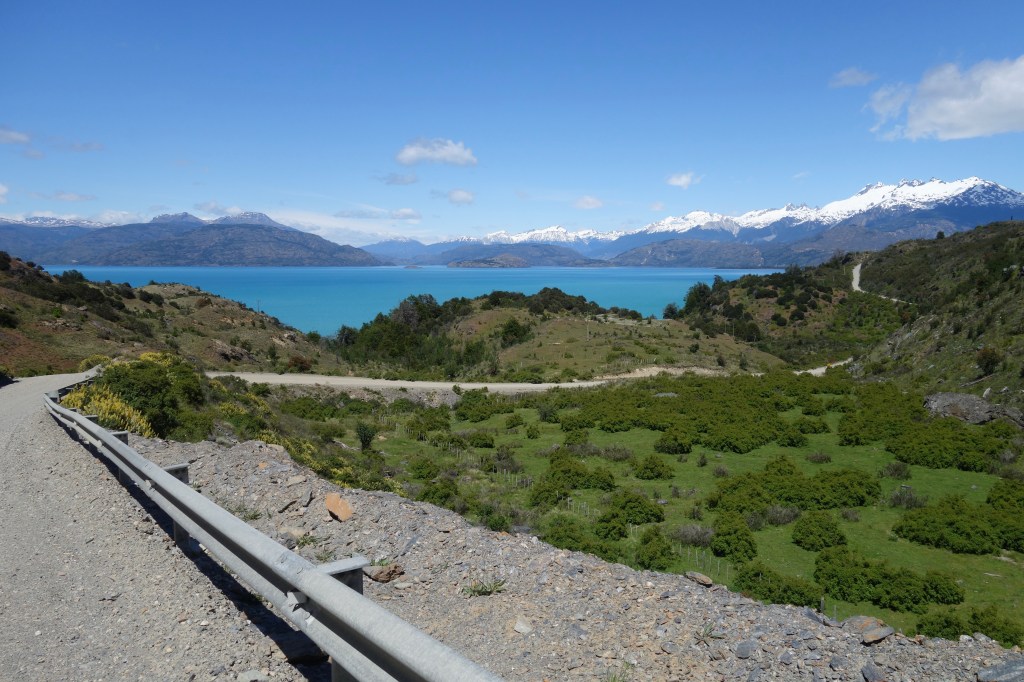
Fortunately, the staggeringly beautiful views distracted me from mourning the loss of my new friend. Small, forested islands were scattered across the vast lake; dark green pockmarks on vivid, turquoise skin. As the road climbed, we were gifted with glimpses of tiny parcels of paradise; hidden coves with pebble beaches and rustic timber cabanas built on the edge of the lake. If I’m ever a wanted man, that is where I will spend my days in hiding.
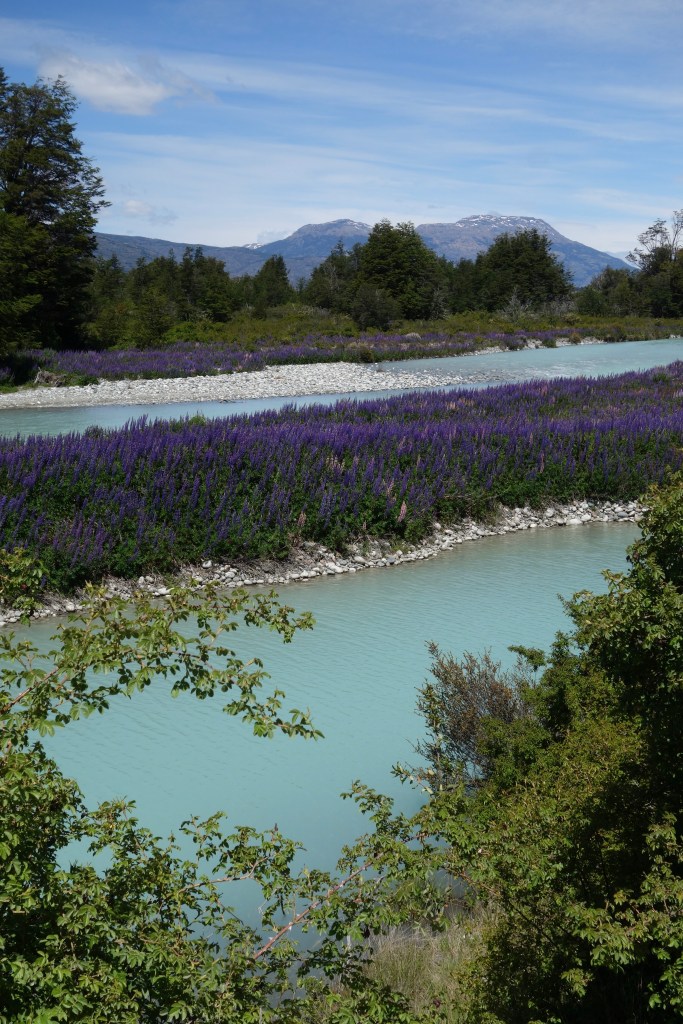
Following an hour of riding, the road swung westward and followed a series of creek systems away from the lake. These waterways were lined with incredibly dense stands of purple lupins. We passed Sophie who was sitting peacefully amongst the flowers in the sun beside the road. At the next bus stop, we stopped for a snack. As we munched muesli bars in silence, a white Volkswagen ute pulled up in the gravel beside us. A woman got out and walked towards us smiling. She had shoulder-length red hair and was wearing several items of Patagonia branded clothing. In an American accent with a subtle southern twang, she asked if we were from the States. It turned out she just wanted to know if we spoke English as she was struggling to find a trailhead which was said to be nearby. We couldn’t help but she hung around to talk for a while. She was from Pennsylvania and had taken three weeks leave from work to come to Chile to do as much hiking as possible. The opportunities for walking and sightseeing along the Carretera Austral are abundant. Each day we passed several signs marking the start of trails into remote lakes, peaks or glaciers. If we were travelling by car, as she was, we’d be wanting to stop at every possible point along the road too! But again, the simple act of moving by bike was so holistic and multisensory that we never felt we were ‘missing out’ on anything along the road. We were fully immersed in our surrounds, all day, every day, and after saying goodbye to the lady, I felt overwhelming thankful for the experience Dad and I were sharing.
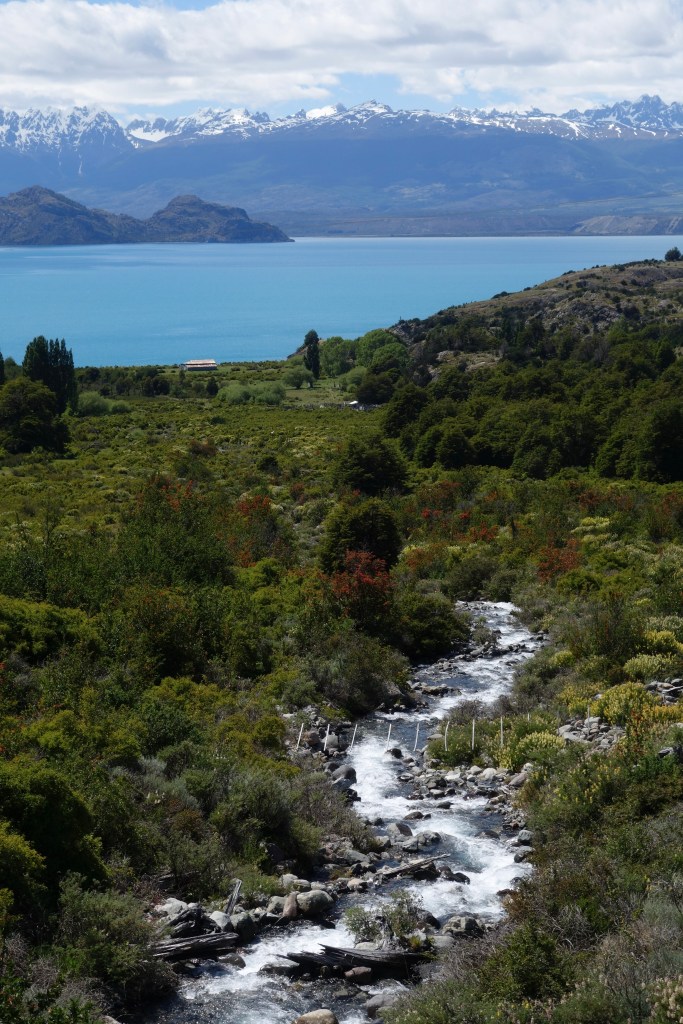
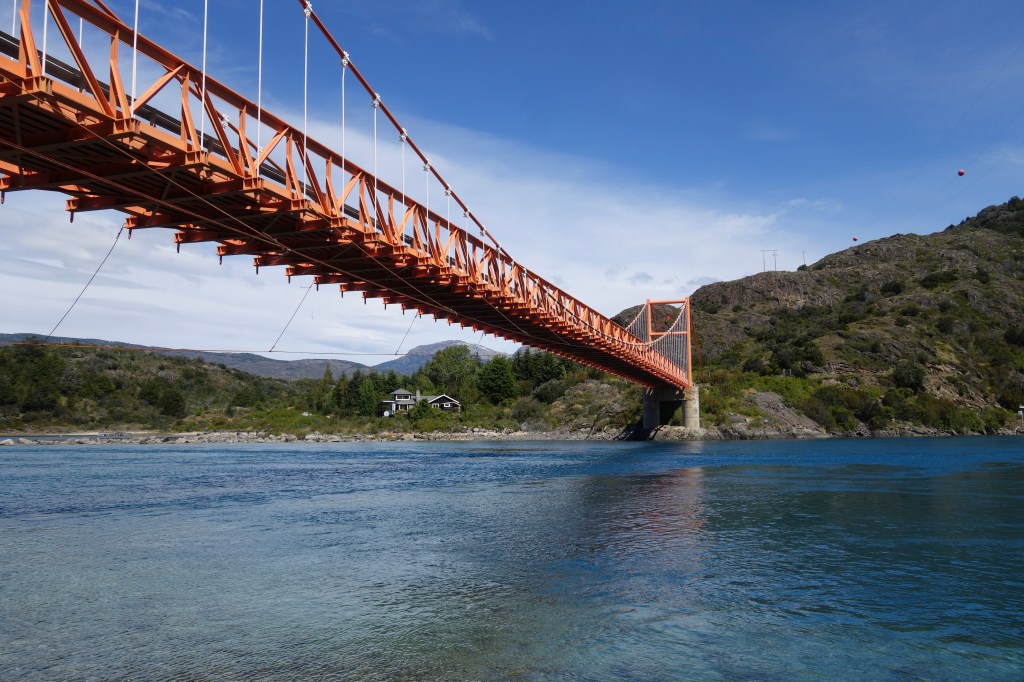
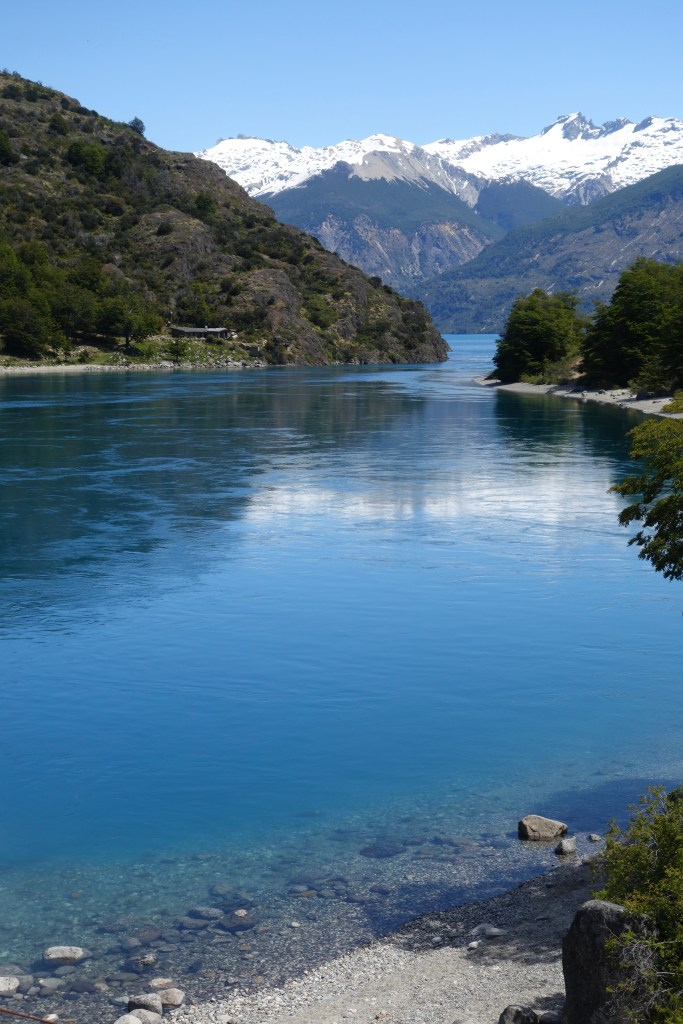
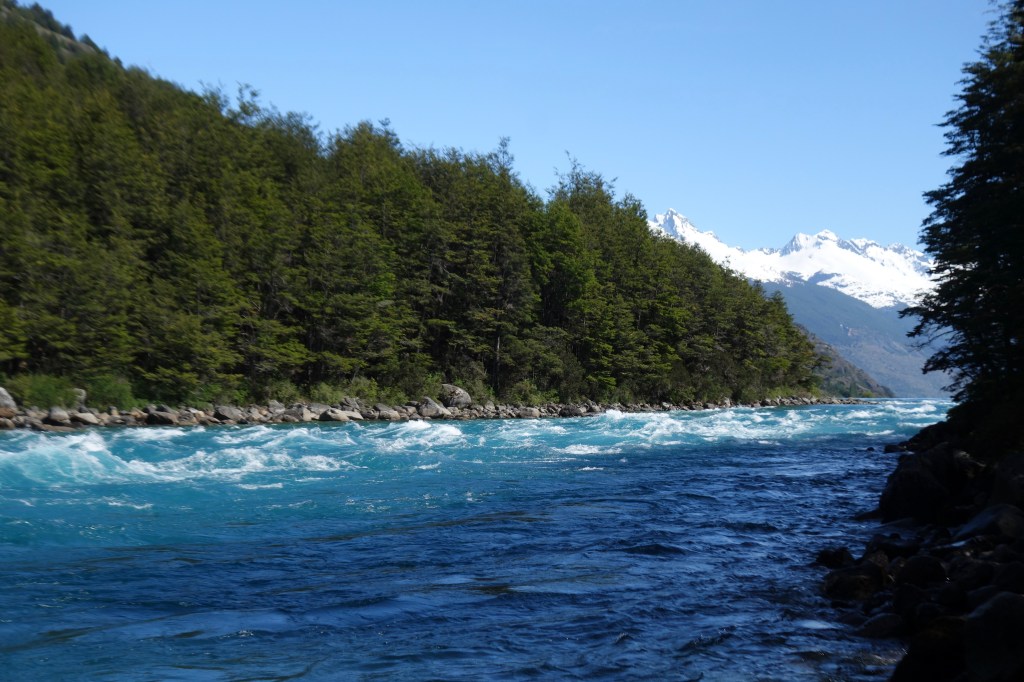
It was around 3pm when we came to a sizeable suspension bridge spanning what appeared to be a large river. Whilst technically it was a river, the map showed it to be at a short, narrow stretch of water between Lake General Carrera and the smaller Lake Bertrand to the west. The former must have been higher in elevation as a strong current pushed against the pylons of the bridge creating deep whirlpools in the clear blue water as it flooded from the larger lake. As we began crossing the bridge, we noticed a small, sun-soaked rocky beach below. We couldn’t resist the opportunity to have lunch in one of the most picturesque spots imaginable, quickly doubling back and finding a small dirt track down to the water. The hour we spent beneath the bridge was heavenly; fresh coffee, views of jagged, snow-capped mountain ranges, sunlight reflecting playfully off the turbulent, azure water, and hopeful trout throwing themselves at dragonflies that flew perilously close to the surface. We were giddy. I took the opportunity to have a brisk swim before we both fell asleep in the heat of the afternoon sun.

I was jolted back to reality by an abrasive ‘honking’. It was Sophie, standing above us on the bridge laughing. She had a large novelty horn mounted to her handlebars, which she’d bought on her first long ride from Egypt to Singapore. After a few close calls in heavy traffic, she realised that she needed a ‘bell’ that would get the attention of drivers. Woken from our slumber, we decided it was probably time to begin the process of pulling ourselves away from this utopian setting.
Back on the road, we passed a large group of school children on mountain bikes coming the other way. The class was stretched out over a few hundred metres. The first students we saw, those at the front, appeared to be relishing in the task at hand, with excited smiles lighting up their faces. Towards the back, facial expressions displayed pure disgust and anger. It must have been a mandatory school camp.
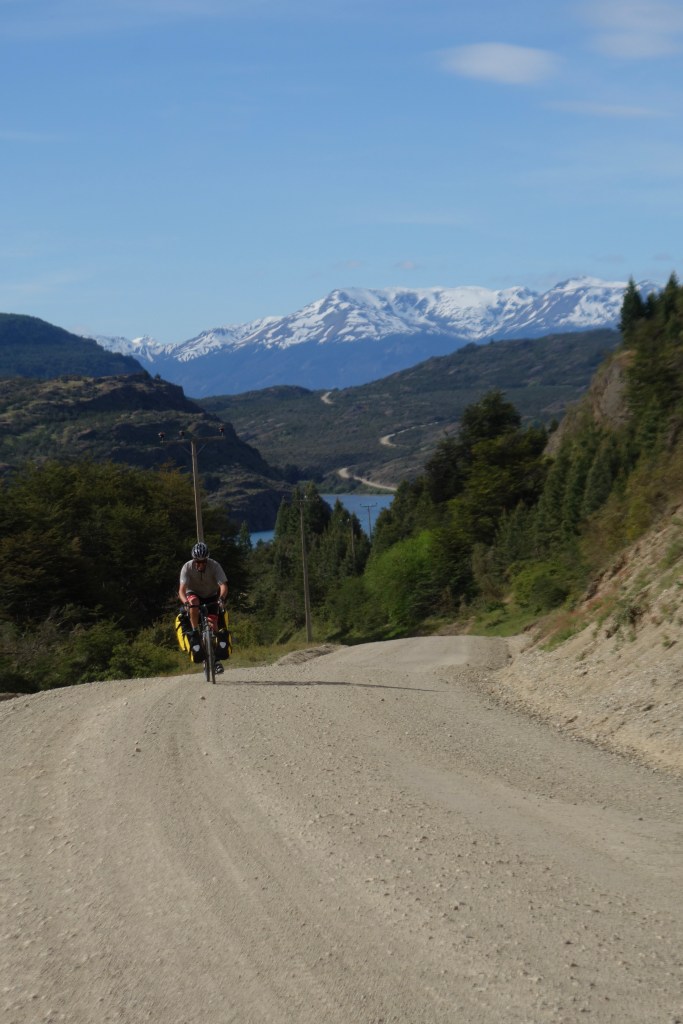
We caught Sophie at the top of the last climb of the day and descended together into the town of Puerto Bertrand. Having had lunch at the headwaters of Lake Bertrand, this town now marked the outflow, where the water continues its journey towards to sea, pouring into the mighty Rio Baker. The flow of water increases significantly as snow melts throughout spring and summer, creating long stretches of thunderous rapids. As a result, Puerto Bertrand has become a renowned white-water rafting destination, with the offices of several tour companies perched on the edge of the lake. Two young girls on bikes, no older than six, followed us through town, desperately spruiking their mum’s hostel and promising that we wouldn’t find anything better if we kept riding. They seemed genuinely perturbed when we said we were hoping to camp further down the valley. I felt a bit bad and hoped that their evening meal wasn’t their commission for bringing in business.
Before riding on, we stopped at a small store and bought a few things for dinner. I was feeling the effects of having been in the sun all day so bought a litre of coke to share with the others. When Dad saw it, he tried maintaining the façade of super athlete/health guru in front of Sophie, reiterating several times that he’d never bought a bottle of coke before.
“What did you buy that rubbish for? I’d never put that in my body!” he preached.
I ignored this waffle as I took a few sips before handing him the bottle. Instinct took over and he chugged at the sweet brown nectar as though he had been stranded in the desert for weeks. Sophie found this hypocrisy particularly amusing and, much to my delight, brought it up with Dad several times over the coming days.
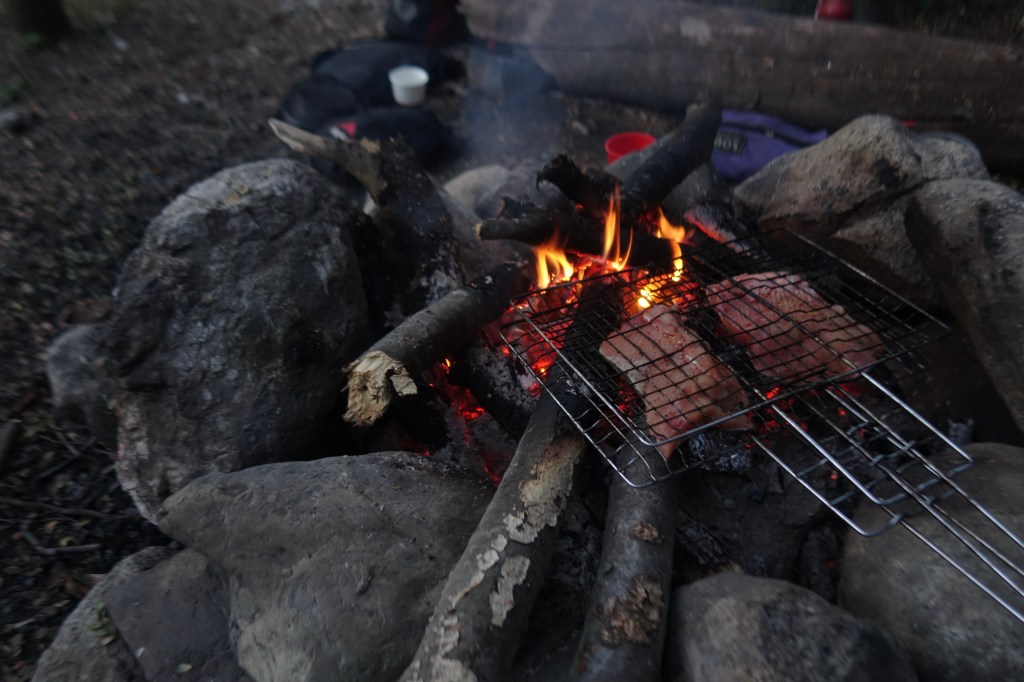
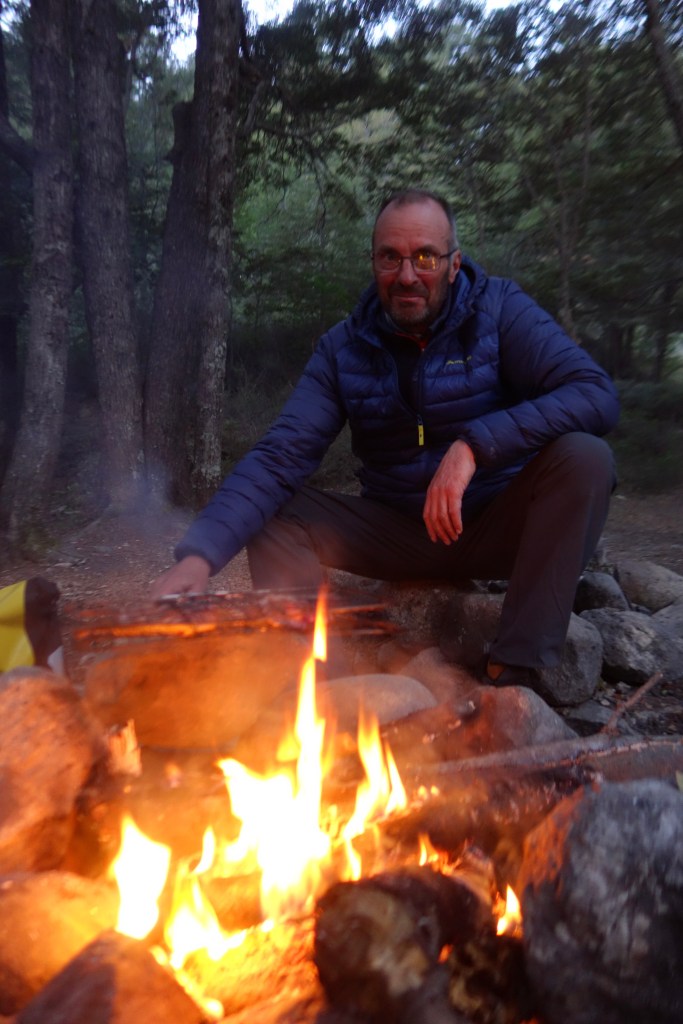
We continued along the Rio Baker valley in search of a campsite we had read about that morning. A narrow dirt path led us down a steep bank to where we found several flat sites nestled amongst the trees. The cyan water of the river was visible through breaks in the vegetation as it raced past the darkness of the forest. We set up camp and went about sourcing fallen timber to fill the stone fireplace that had been built and enjoyed by previous campers. The scene was already bordering on perfection. However, just as we’d struck a match to a small pile of twigs, a man and woman appeared from a thicket of trees. They were quick to explain that they had seen us pushing our bikes down to the campsite as they were driving past in their van, before finding somewhere to park a few hundred metres further on. They went on to tell us that they were from France, and in their retirement had bought a Mercedes camper, which they left in Chile and returned to each year. The man was a passionate fisherman and, having seen smoke rising through the trees from our campsite, had decided he’d better bring us something to cook! He proudly gifted us two plump rainbow trout fillets. As if it couldn’t get better, he also lent us a grilling rack for the fire and some spice mix to rub on the fish. He clearly could have kept talking for hours, but his wife physically dragged him back up the hill towards their van, saying that we would want to cook and eat in peace! It was a memorable way to finish what had probably been the most consistently beautiful day on the bike that I’d had the entire trip. I looked over at Dad and could tell that he was also questioning whether life could really be this good! As we sat in a fulfilled silence watching the last of the coals burn down, Dad asked if we thought it would be rude to see if the French couple were also willing to part with some white wine, or maybe even some croissants for the morning! It was time to put the man to bed.

The following morning marked the first day of summer. Sophie was already packed by the time Dad and I got out of our sleeping bags. We had a quick breakfast together before saying goodbye. She was planning on detouring through Parque Patagonia (another of Kris and Doug Tompkins’ gift to the people of Chile) for a few days so we weren’t sure if we’d cross paths again. After slowly breaking camp and packing our bikes, we wandered down the road to return the grill to the French couple. It was amusing to see that Sophie had only made it as far as their van. As we approached, she shot us a look that screamed ‘help!’. It was clear to us that the situation was the product of Sophie’s politeness coupled with the man’s lack of social awareness. He was in full story mode, spinning endless fishing yarns despite constant eye-rolls and throat-clearing from his wife. Our presence only further excited him! With a new audience, he began telling us all about a ‘must-see’ attraction a few kilometres down the road; the confluence between the Rio Baker and the Rio Neff. Renowned for a series of powerful waterfalls, the meeting of the rivers also creates a whirling palette of blues as the milky tones of the Neff flow into the clear, turquoise depths of the Baker. It sounded great, but what he went on to say left us questioning his approach to travel.
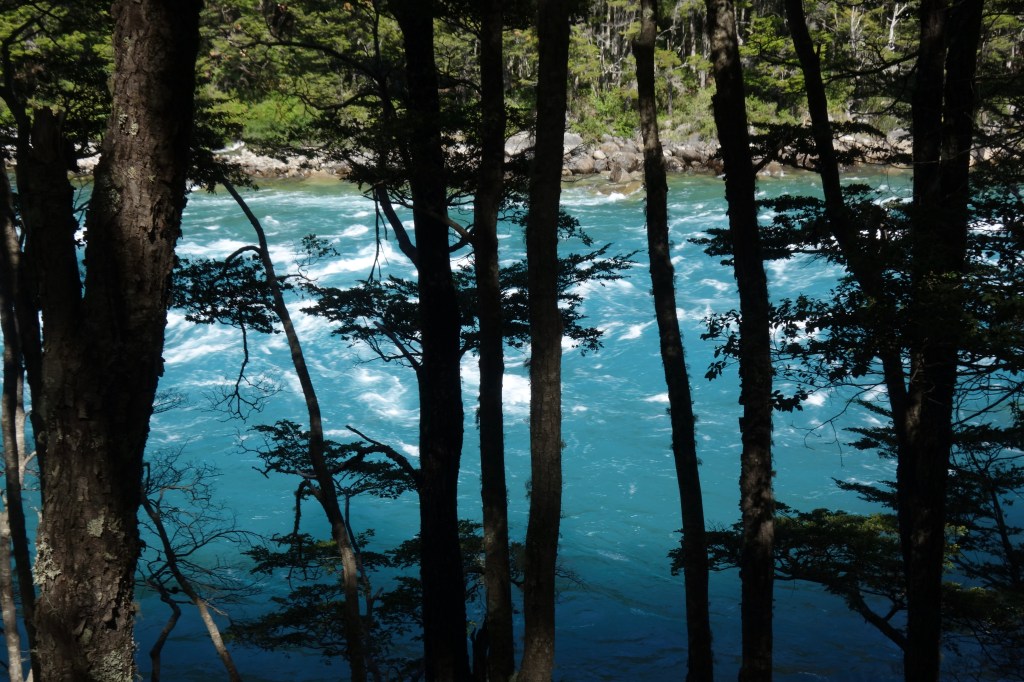
“When we arrived yesterday, we saw a sign saying it was a ten-minute walk to the rivers”, he explained with a look of dejection, “So, I flew my drone to see if it was worth it!”.
He pulled his phone from his pocket and proceeded to show us the footage he had recorded.
“Beautiful, huh?”, he muttered. We agreed.
“You should really check it out today. We didn’t do the walk in the end because our drone footage was so good”.
None of us knew what to make of this logic! As we made obvious movements towards leaving, the lady pitched in and told us that they had also helped Kris Tompkins change a flat tyre the day before. Apparently, she was in the area for a few days visiting Parque Patagonia to meet with some local rangers. This story got my attention, but unfortunately the man began talking about fish again. Sophie used a lull in conversation to ride away, but we stayed for a while longer. It was the least we could do in exchange for the fresh fish dinner from the night before. As the man said, “that fish was swimming two hours before you ate him”.
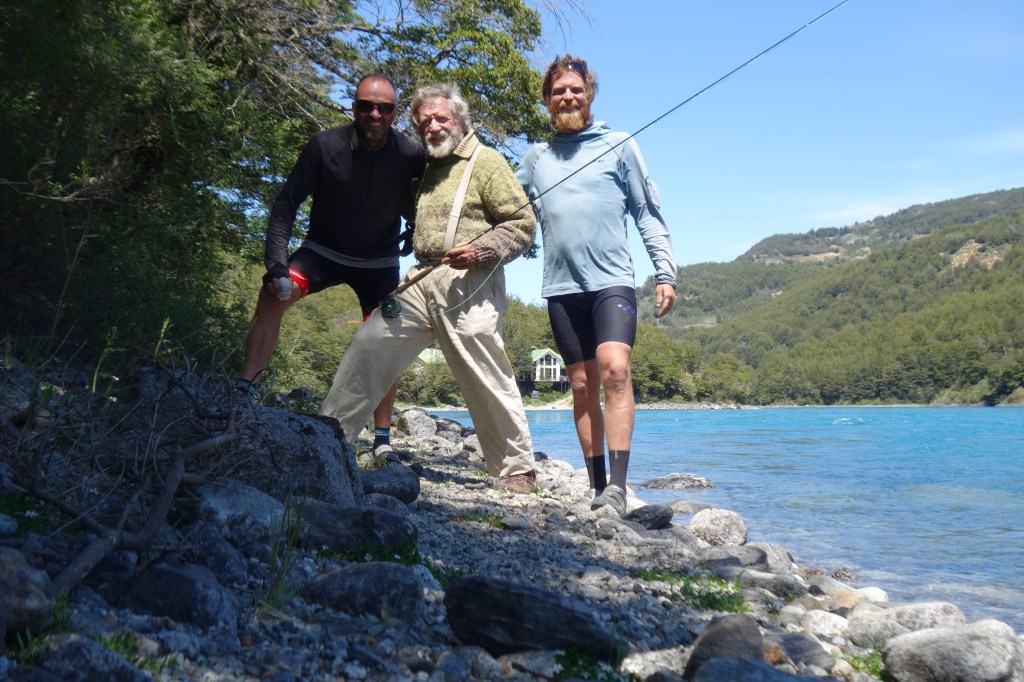
The gnarled boughs of old beech trees hung overhead, casting long shadows across the road in the morning sun. Dad dropped behind to remove some layers of clothing while I slowly rolled onwards. I could see a lone figure up ahead walking down the middle of the road. As I got closer, I was taken by the silver-haired man’s wholesome attire; a hand-knitted forest green sweater, baggy cream corduroy trousers, and well-worn leather boots. With a backdrop of mountains, he was the picture of Patagonia. I slowed to pass, trying not to startle him. However, I was the one who got the shock.
“I can’t believe you guys do this on bikes!”, shouted the man excitedly in an American accent. I was startled by the perfect English that come from what looked like a tenth-generation Patagonian farmer. I came to a stop, turning to face the man, just as Dad pulled up beside us.
A smile beamed from behind the wiry beard of the man who was quick to introduce himself as ‘Carlos from Mexico’. Within minutes of meeting each other, he was demanding that we come and stay at his lodge for a few nights. It took our best effort to convince him that we had only just begun riding for the day and really should keep going. He argued for a compromise; that we at least come and have a quick look at his place. We agreed, hesitantly, having absolutely no idea what we were actually agreeing to do. He was clearly proud of the successful negotiation and pointed back up the road to where a large wooden gate marked the entrance to his lodge. As though he’d forgotten our recent chat regarding ‘urgency’, he casually said he’d be home in half an hour as he just had to walk to the neighbouring property to make a phone call.
“Make yourselves at home boys!”, he hollered as he scampered off down the road.
We rolled down the driveway at a slow and tentative pace. A decaying wooden sign indicated ‘guest parking’ off to the right, and ‘main entrance’ straight ahead. Polished timber poles supported the overhanging pitched roof of what was a rustic, pillared entranceway. Overgrown with an unkempt garden, the façade of the place had seen better days. However, there was no doubt that this had once been a place of prosperity and decadence. The front door was locked so we left our bikes and walked down a small path at the side of the building.
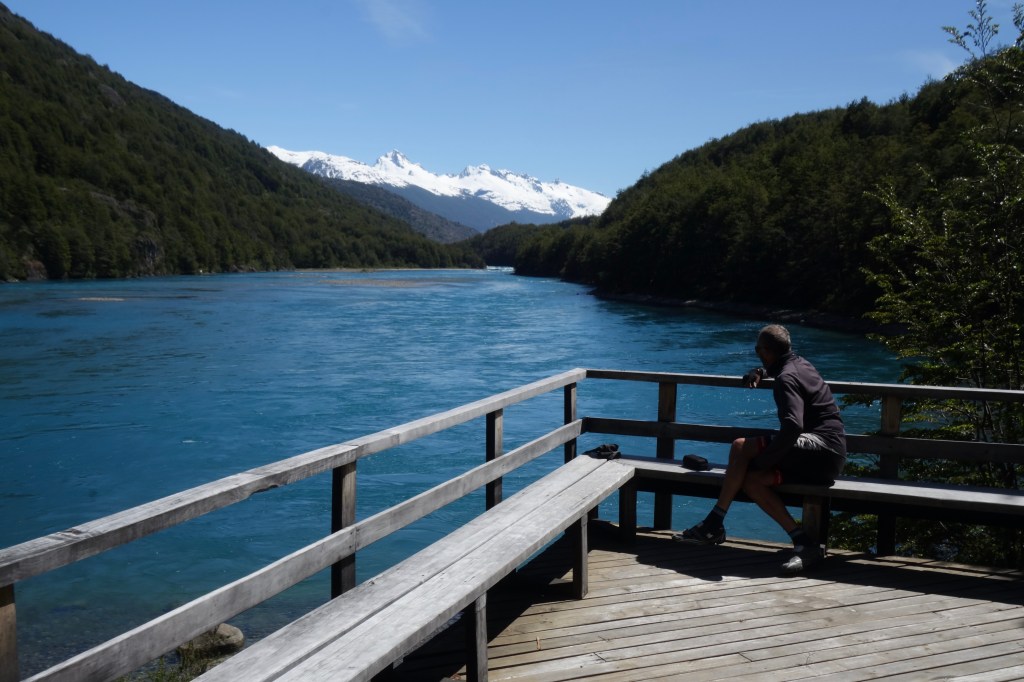
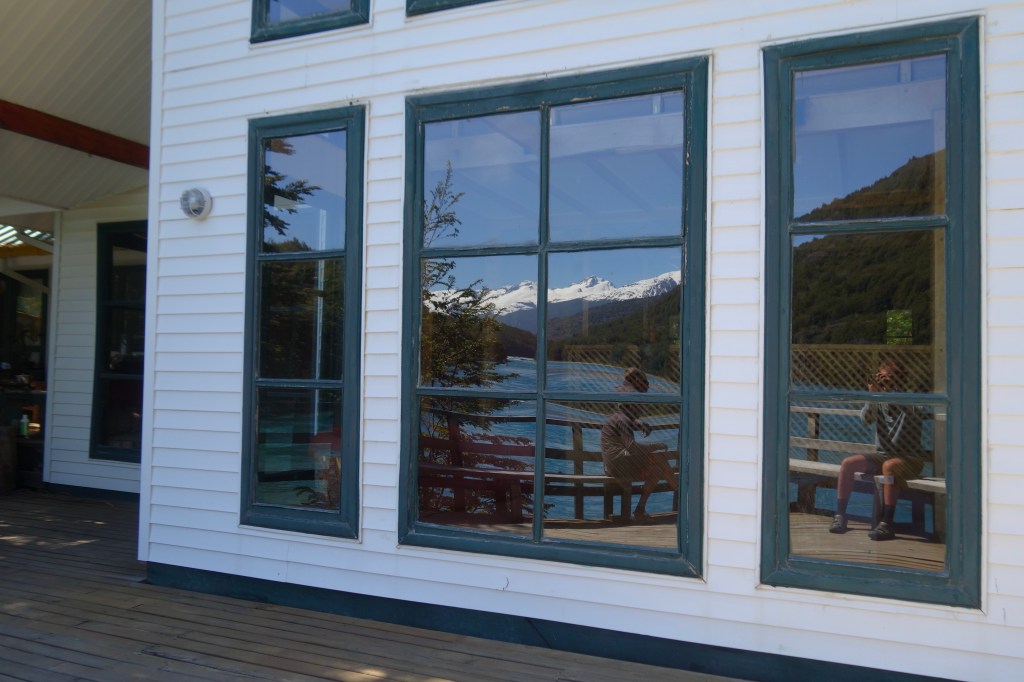
Pushing through some bushes, we stumbled into a scene of Arcadian tranquillity. A triangular-shaped deck extended out from the full glass frontage of the lodge. We stood at the corner of the deck, which was like the bow of a ship, overlooking a calm backwater where the Rio Baker had widened significantly. The view up the valley was unbroken towards churning rapids and high snowy peaks in the distance. When we turned to look at the lodge, the large windows mirrored the scene behind us, creating a 360-degree view of the wilderness. It was hard to comprehend that a place like that existed.
We sat and waited for Carlos. Eventually, a large glass door swung open onto the deck. Carlos stepped out with swagger, proudly extending his arms out towards the view and throwing us two Heineken cans in the same motion. In that moment, I could have been convinced he was Jesus. It was 11.15am. Carlos must have sensed our bewilderment at the whole situation, launching into the backstory of how it all came to be. He explained that he had been ‘quite important’ in the Latin America branch of Citibank and, upon accepting a ‘huge’ redundancy payment, had bought the lodge around 25 years ago. It had apparently been an Orvis[1]endorsed fishing lodge, attracting high-paying clientele from all over the world who were hopeful of hooking a wild Patagonian trout. Living in Mexico, he had paid local staff to manage and run the lodge but, in his words, ‘Chileans will steal the milk from your tea if you’re not looking’. Over the years, he claimed that the lodge had been poorly managed, leading to its subsequent closure and the dishevelled state we were seeing it in. He told us that he had flown in from Mexico three days prior and was intending to spend the next few months returning the lodge to its functional former glory. It was hard to know what to believe, but it was even harder to come up with reasons why not to believe everything Carlos was telling us.

Over the next three hours, Carlos talked as though he hadn’t had any human connection in a very long time. The tales flowed at the same rate and with the same volume as the river. He told us of his long friendship and deep connection with the late Doug Tompkins.
“Sometimes when I was visiting the lodge, and Doug knew I was here, he would fly his small plane really low over the river to frighten all the paying guests. He thought it was hilarious”.
He also claimed to have a similar penchant for conservation as Doug. Over the last 25 years, he believes that the Rio Baker has been decimated by overfishing and the poor management of tourism. Apparently, when he had first visited the area, it was common to catch trout measuring up to 1.5 metres in length, but a good trout these days is only 60 centimetres. The prospect of a 1.5 metre trout sounded fishy, and most likely a tale inspired by several pisco sours. However, I bit my tongue and let Carlos have his moment. He said that he protested, unsuccessfully, to stop the annual fishing competition that takes place each year in Puerto Bertrand.
“Each year, pictures are published of hundreds of dead trout lined up on the foreshore. People celebrate these scenes then wonder why it’s becoming harder to catch fish in the river. It’s crazy!’, he exclaimed. “This is why anyone that stays at my lodge must agree to release every fish they catch. It should only be a catch and release waterway”.
To keep everyone happy, he explained that he has plans to buy the neighbours property on the hill above the road and build a large dam where paying guests can keep the fish they catch.
Carlos eventually asked some questions of us. I thought he was having a stroke when Dad explained that he was a woodwork teacher. After composing himself, he put an offer to Dad.
“John, you and your wife must come and stay. It’s my 70th birthday on March the 19th. Send her an email and tell her to book flights. You can come to my party and then stay for a few months. In exchange for helping me extend the lodge and teaching me the craft of woodwork, you can sleep and eat for free”.
He looked at Dad with pleading eyes, awaiting an instant response. Dad blushed and promised that he’d put the offer to Mum when they next spoke. I found the whole interaction incredibly amusing.
Carlos then led us on a tour of the lodge. He got us to sit in two chesterfield armchairs in his bedroom, while he read excerpts about Doug Tompkins from dust covered magazines and got down on hands and knees to roll out old maps of the region on the floorboards. We were shown the guest accommodation, and Dad was instructed on what would be the first major jobs when he arrives in March. Carlos then asked Dad to lie on one of the beds and imagine waking up and seeing the river and the mountains out of the river. Dad nodded, agreeing that it was a pretty special place. But this wasn’t enough for Carlos.
“No, John. Get over here and lie down”, he demanded. Dad, still wearing lycra, sheepishly sat on the bed and lay down. Carlos bent over him, lifting his head with one hand and adding another pillow.
“Close your eyes”, he instructed. I was kicking myself for leaving the camera outside; it was cinematic gold. “Now slowly open them as though you’re waking up”, he whispered to Dad. “What do you think when you see that view, John?”.
Before Dad could answer, Carlos laughed and said, “that’s why people pay USD$600 a night to stay here, John. Where else can you wake up to a view like that!?”
As we wandered through the surrounding forest, Carlos pointed out where he wants to build more accommodation and, most importantly, where he wants to put the jacuzzi. I also overheard him telling Dad of the two legal wives he has had, as well as the five others along the way.
“Still, none of them were willing to come and live with me here, John”, he joked.
I could see that Dad was starting to question the offer of bringing Mum back to Chile and moving in with Carlos. As we were wandering back to the deck with plans of getting back on the road, I mentioned to Carlos that I have done a bit of fly fishing back in Tasmania. Again, his face lit up as he saw an opportunity to keep us from leaving. He scurried off into the lodge and returned with a rod, reel and a box of flies.
“Go fishing, Andrew!”, he encouraged, before turning to Dad. “John, how about another beer?”.
I rigged up the rod and made my way along the shoreline. The clarity and depth of the water made for enticing conditions. Less than 50 metres from where Dad and Carlos watched on from the deck, I cast at a cruising dark shape. I’d seen a few fish since we’d been there and, due to the depth they were inhabiting, had tied on a sinking nymph. With a flick of its tail, the fish moved with purpose towards the nymph which glistened as it slowly sunk in the current. It was the stuff of dreams! I struck just as the fish swallowed the nymph, setting the hook in its top lip. The fish rolled over in a struggle against the tension of the line, allowing the sun to illuminate the rainbow hues of its silver belly. As I cautiously played the fish, Carlos hurriedly shuffled up the shore towards me.
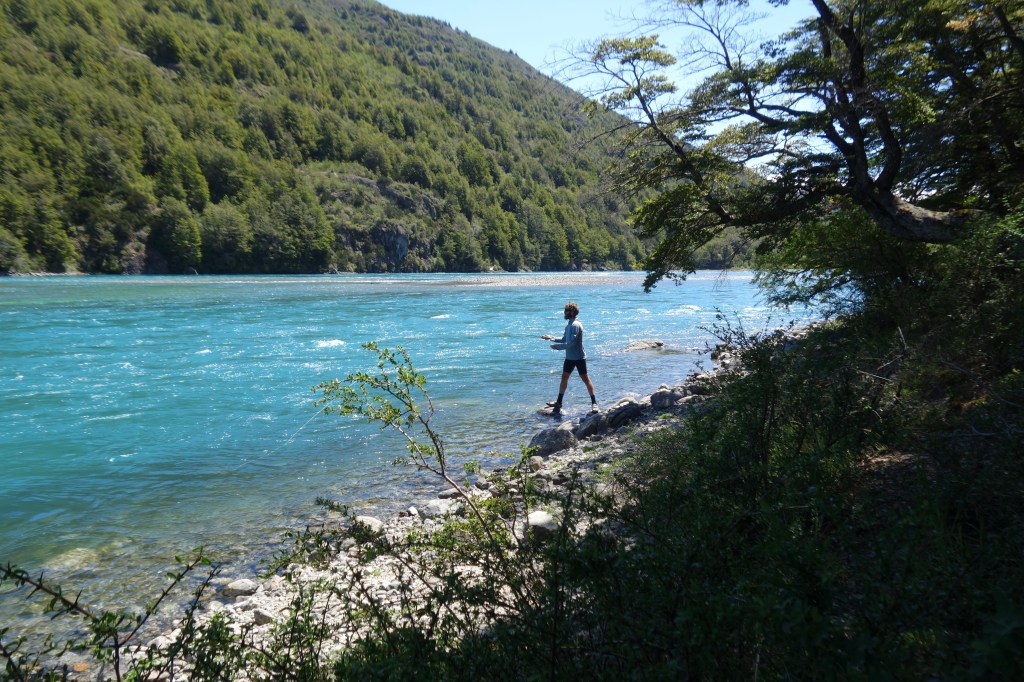
“That’s my dinner, Andrew! Be careful, don’t lose it, I need that fish!”, he yelled desperately. I was so confronted and confused. Having spent hours preaching the importance of ‘catch and release’ to ensure the ongoing health of the fishery, here was Carlos now pleading with me to land and kill a fish! The legitimacy of everything he had told us was quickly fading.
For the first time in my life, I was relieved when the fish snapped the line. I hadn’t been prepared for the sudden change of tone from Carlos.
“That was going to be the first fish I’ve kept from this river in 25 years”, he muttered longingly.
I continued casting into the slack water on the edge of a small rapid, hooking a large brown trout which sparked another display of enthusiasm from Carlos. This also broke off, concluding what had been the most beautiful 20 minutes fishing of my life. To add to the bewilderment of the morning, Carlos reached for the rod and offered me some casting tips. Being the owner of a world-famous fishing lodge, I expected him to divulge some wisdom. However, on the first back-and-forth motion of the rod, it was clear that he had no idea what he was doing. The fly landed a metre from the end of the rod in no more than five centimetres of water. He hushed us as it floated by, as though he expected a fish to materialise from the shallows. It was the kind of moment where a film crew emerges from the bushes and tells us we’ve been pranked, and we all collapse in fits of laughter at the ridiculousness of what we had been watching. However, there was no film crew, and it was becoming increasingly clear that Carlos was pretty lonely.
As we strolled back to the lodge together, Carlos told us that he had suffered two heart attacks during the last few years. He continued asking us to stay for a few days; the only caveat being that he didn’t have much food in the house. We eventually managed to take proceedings back to our bikes, convincing him that we were going to keep riding. As we were putting on our helmets, he attempted to ply us with gifts, many of which were just not practical to carry. We did, however, willingly accept a bottle of pisco and a couple of aluminium drink bottles that were sporting the insignia of Rio Baker Lodge.
We didn’t talk for the first few kilometres of riding. The situation had left us with more questions than answers. The dilapidated state of such a magnificently positioned lodge didn’t make sense. And, why was an elderly man living there without food, car or phone, especially with a dodgy heart? An online search later than night produced endless reviews from happy guests, as recently as 12 months ago. However, there wasn’t any reference to the owner, Carlos. After returning to Australia a few months later, I attempted to send some pictures to the email address that he had written down in my journal. The email immediately bounced back. I sent a message to one of the neighbouring fishing lodges, Green Baker Lodge, asking whether they knew how to contact Carlos. A prompt reply came from the manager, Diego. Bluntly, he said that he hadn’t heard from Carlos, nor did he know how to contact him. It was unclear to me from the email whether Diego even knew of Carlos.
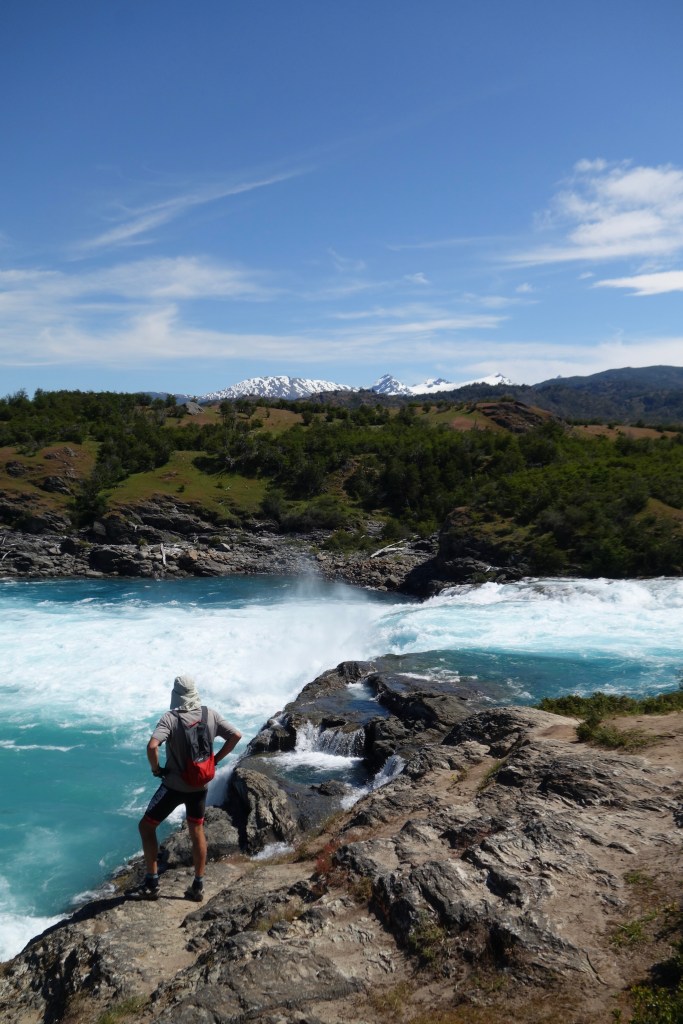
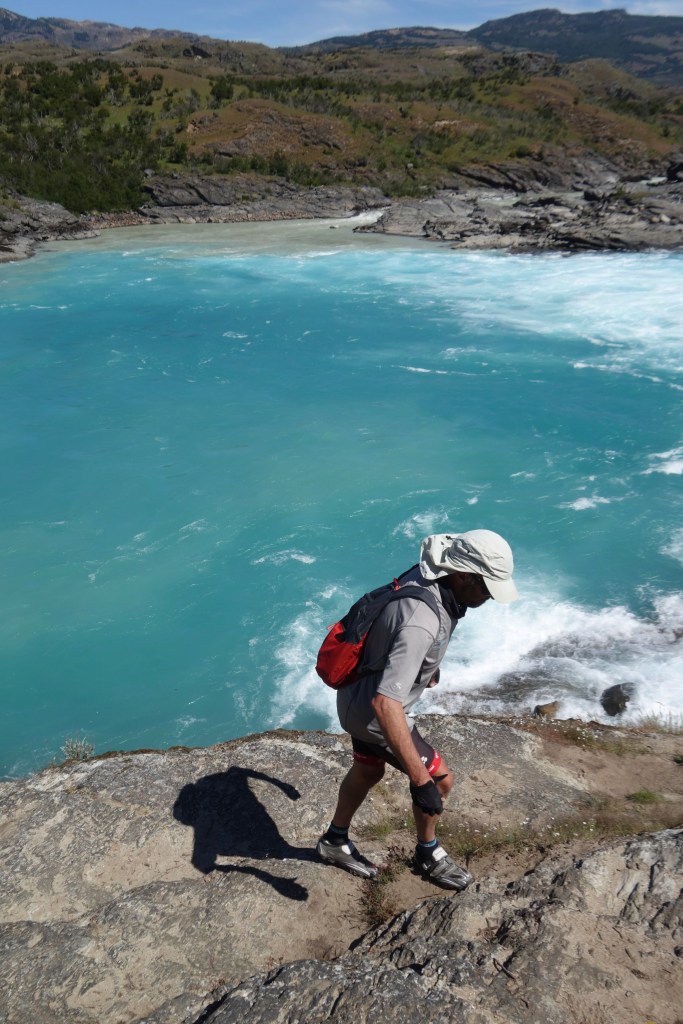
An hour after parting ways with Carlos, we came to a carpark marking the beginning of the trail to the confluence of the Rio Baker and Rio Neff. Despite having already seen drone footage of the famed watersmeet, we decided to check it out on foot. A worn dirt path meandered through a couple of grassy fields, before descending steeply to a rocky outcrop overlooking the water. The volume of water was profuse, which shouldn’t have come as a surprise considering an estimated 1400 cubic metres per second flows from Lake Bertrand into the Rio Baker. Just above the confluence, an evident fault in the bedrock leads to the sudden displacement of water flowing down the Rio Baker. The result is a harrowing waterfall that plunges steeply into what kayakers and rafter refer to as a ‘hole’. Whitewater boils at the base of the fall where it mixes with the turbid waters of the Rio Neff. We sat and marvelled at the kaleidoscope of blues created by the mixing rivers and soaking in the negative ions that were being emitted by the turbulence. Awash with calmness and positivity, we slowly returned to our bikes. It was 4.30pm and we’d covered 20 kilometres. As we chewed down a muesli bar, we began pondered over how far we were going to get before nightfall.
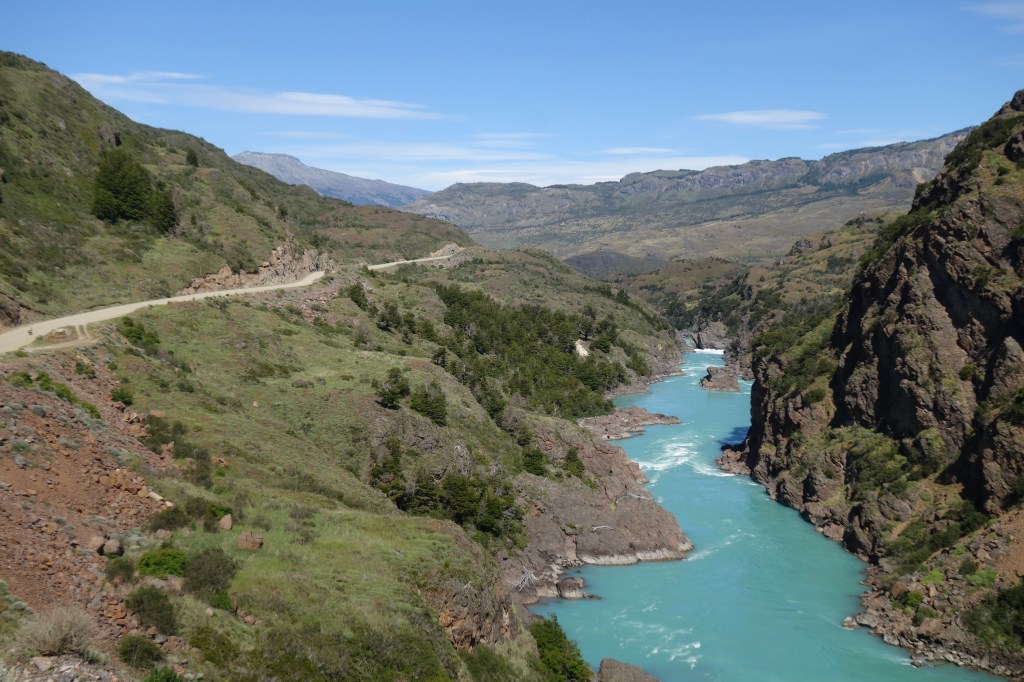
We pedalled with purpose that afternoon. The road snaked along clifftops, high above the now larger and milkier Rio Baker. Short, Sharp pinches of loose gravel sapped our energy. We sheltered from the wind behind a large timber sign indicating the turnoff to Parque Patagonia. As we sat in silence, eating a very late lunch of boiled eggs, a grazing deer slowly emerged from a scrubby thicket, before striking a proud stance upon a lichen-covered boulder. The stout, coffee coloured beast scanned the horizon. I was almost certain that it was a huemul deer, also known as the South American deer. These animals are tragically endangered with predictions of only 2000 left in the wild. Along with the condor, the huemul is mostly seen on Chile’s coat of arms. Considering their status and the fact a sighting in the wild is referred to as a ‘blue-moon treat’, it is likely that my identification was a little off. Regardless, it was a gift to see such a peaceful animal overlooking its wild Patagonian home.
After checking the map, we set ourselves the task of making it to the town of Cochrane before dark. There was very little conversation as we put our heads down and made the most of a stiff evening tailwind. We stopped at one point to chat to another cyclist heading in the opposite direction. His overt enthusiasm for the steep hills and headwinds was admirable, if not slightly repulsive. He was decked out from head to toe in Belgium’s national cycling kit; reflective of his heritage and the pace at which he was approaching his trip. He had begun in Ushuaia and was giving himself six months to see how far north he could get before having to return home for work. As a parting gesture, he warned us of the wind that we’d experience further south.
“If you think this is windy…” he laughed, “just wait until Argentina. I promise you will cry”.
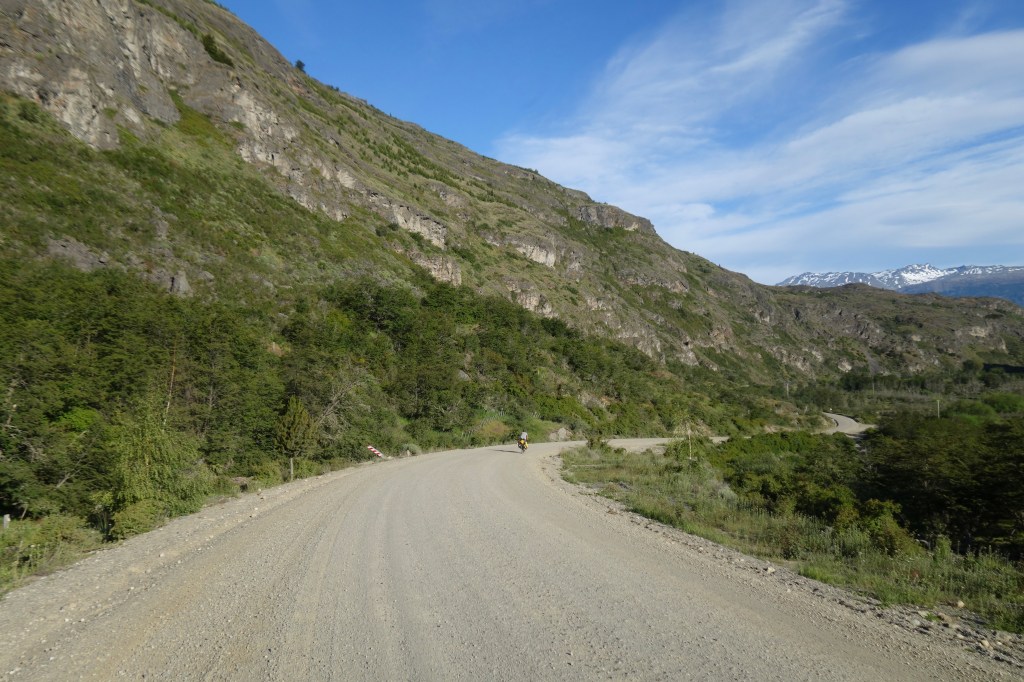
We were exhausted by the time we arrived in Cochrane. We’d only covered 60 kilometres, but the hours spent with Carlos made it feel like 160. It didn’t take us long to locate a cheap hostel called ‘Chef’s’; presumably named after the rotund and affable owner who proudly greeted us wearing his toque blanche. Chef’s was located on the edge of town and sported a squeaky bunk bed and a treacherously slippery, potentially trip-ending, shower. After a careful wash and a fresh change of clothes, we commenced our search for food and beer. Dad was also chasing a Coke to feed his developing addiction.
The centre of town was crowded with cars and people. It was difficult to tell exactly what was happening but, based on the banners hanging in the park, we guessed that a charity telethon had taken place. Whatever it was, it was over, as organisers were busy packing up the stage and PA system while the masses of people dispersed.
Right on cue, we stumbled across a bar serving local beer and classic pub fare. The timber lined interior and low hanging lights gave the place a cosy feel. We settled into a booth and ordered two pints of Patagonian Pale Ale and some steak sandwiches. The food was filling, and the beer barely touched the sides. As we sat back digesting both the meal and the day we’d had, the door of the bar opened and in walked Sophie. She was still in her cycling clothes and was brimming with energy and adrenaline. She’d had a huge day, making a detour into Parque Patagonia and riding halfway along the Valle Chacabucol; the biologically significant heart of the national park. Running east-west, the valley provides an easily navigable path through the Andes and is an evident transition zone between the southern beech forests of Chilean Patagonia and the grassy, windswept steppe of Argentinian Patagonia to the east. She reeled off the exotic species she had encountered in the park and gave a devastating account of the headwind funnelling through the valley. This humbling wind from Argentina was the catalyst for Sophie to turn around and continue along the Carretera Austral, rather than staying in Parque Patagonia for a few days. It was an unexpected rendezvous, but it was great to see her again so soon.
We ordered another round of beers and attempted telling the story of our morning with Carlos. I think Sophie was as confused as we were by the end of the account. However, she did ask me to repeat the bit about Carlos and Dad lying in bed together. It was a tale worth retelling and one that will live on for many years, with extra garnish added each time.
Thanks for reading.
[1] An American company specialising in fly fishing, hunting and sporting goods. Founded in Vermont in 1856 by Charles F. Orvis, the brand is renowned for producing some of the world’s best fly fishing rods and tackle.
 Faults and Folds