Having left the bar a touch before midnight, we snuck back into the hostel as silently as possible in an attempt not to disturb other guests. The level of deftness and poise required to navigate the squeaky staircase made me feel like Catherine Zeta Jones in Entrapment, gliding gracefully between laser beams. In reality, I was most likely channelling Shrek. As a result, our stealthy entrance was foiled and we were busted by Chef himself, who came out of the kitchen to inspect the situation. We exchanged pleasantries and apologised for the late noise. Thankfully, he wasn’t concerned and just wanted us to know that he had to leave town early the next morning and wouldn’t be able to make us breakfast. We tried to explain that this wasn’t an issue, but he promised that he would prepare some food that night and leave it out.
The following morning, we showered, packed up and moseyed downstairs. True to his word, Chef had left a plate of cheese, bread and sliced meats on a table set for two. Beneath the clingfilm, the food was ominously tepid. However, the gesture was wonderful, so we ate up out of respect to Chef rather than the microbes in our guts.
It was midmorning by the time we eventually left the hostel. Despite what we thought was a lethargic start to the day, the town of Cochrane still appeared to be in a deep slumber. Most of the shops were locked up and dark within, and houses had their curtains drawn. We found a small tourism agency and asked the girl inside where we might be able to buy some groceries. As it was a Sunday, she gave us directions to the one supermarket that would be open. Pointing to an electric kettle on a table behind her, she also told us that if we couldn’t find anywhere to have a coffee, we were more than welcome to come back and join her. She was clearly expecting a quiet day.
We found the supermarket and collected some food to last us a couple of days on the road. Like moths to a flame, the supermarket was a social hub for cyclists. As I packed food into our panniers, Sophie rode around the corner having spent the morning doing laundry and other menial tasks. Dad jumped at her offer of an ice cream, and the two of them sat in the shade enjoying the tasty treats while I continued preparing the bikes. I was joined by two inquisitive puppies of contrasting appearance. One, seemingly loved by someone, wore a collar, and had a healthy tan coat and gleaming white teeth. The other had dusty black hair, visible ribs, and a desperate disposition. I couldn’t leave without buying him some dog treats from the shop.
As we were about to part ways with Sophie and the dogs, another couple pulled in with fully loaded bikes and beaming smiles. In broad Irish accents, they introduced themselves as Hannah and Jay. They had been on the road since July, cycling and hiking throughout France, Australia, New Zealand, and Mongolia, before flying to Chile to tackle the Carretera Austral. Following this adventure, they planned to fly to Mexico for a few months before beginning to consider a return to Ireland. We were instantly drawn to their enthusiasm and warm personalities and vowed to catch up again further down the road.
We could have chatted for hours, but there was a palpable eagerness amongst everyone to get on the road. We said goodbye and moved across to the park to make our final preparations. As Dad tinkered with his bike, I set up the stove to boil some eggs for lunch and make a quick cup of tea. Our heartrates spiked at the sight of a worried-looking policeman striding towards us. We were the only ones in the park so there was no questioning who he had on his radar. I stood to greet him but was given no chance to talk.
“You can’t camp here! Move on!”, he spurted abruptly. It was as though he had Googled the English translation of what he wanted to say and practiced it repeatedly in his head as he approached us.
I tried reiterating that we had no intention to camp, but he just kept pointing at scattered possessions an telling us to “go”. To an objective onlooker, it would have seemed we’d reached peak ‘hobo’ level. We began packing our panniers at a rate that seemed to satisfy the policeman, who nodded in approval before sauntering back across the park.
It was 2pm by the time we left Cochrane. I dropped back from Dad as we rolled along the smooth ripio leading away from town. We’d now cycled over 1000 kilometres together. With only a few days of riding remaining on the Carretera Austral, I found myself reflecting on what we’d shared over the past few weeks. Watching Dad ride a loaded touring bike towards a horizon of ice encrusted mountains was one of the more inspiring views I’d ever encountered. After getting lost in the memories of the past few weeks, I managed to pull myself back to the present. The Carretera Austral was only the first part of our adventure and I didn’t want Dad thinking I’d gone soft on him. I increased my cadence and soon caught back up.
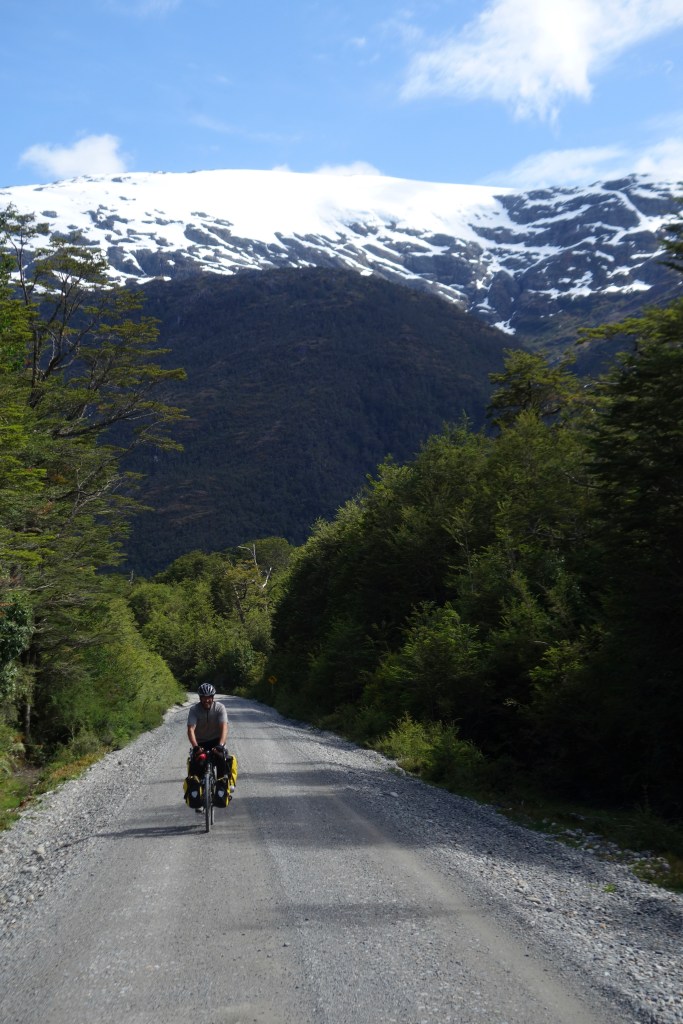
From Cochrane, the road instantly took on a more remote feel. Undulating roads carried us south, through both open pasture, and dense stands of pine and lenga. Around 30 kilometres from Cochrane, we passed a wiry framed runner coming from the opposite direction. He wore a steely gaze and a was dressed in full Chilean Olympic kit. His credentials remained a mystery, but considering how far from home he was, we could only assume he was of the upper echelon of the running community.
The landscape gifted us a true sense of freedom. Yes, our route south was dictated by the cut of the road, which in places beggared belief considering the inhospitable geology. However, it was the nearness of the horizon that called for continual speculation of what lay around every corner. Small creeks running beneath the road would suddenly plunge into deep gorges that dissected paddocks. Every strike and slip, every fault and fold, were reminders of the volatility of this harsh but accepting wilderness. At one point, the serenity was broken by the sight of the road climbing sharply towards a pass. We took sips of our water and began deep breathing in preparation for the imminent exertion. Fortunately, the road gods were on our side. After dropping behind a small hill, we encountered a junction and discovered that of the two options available, our route was the one that stayed low along the valley floor. We were happy to leave that climb for another rider on another day.
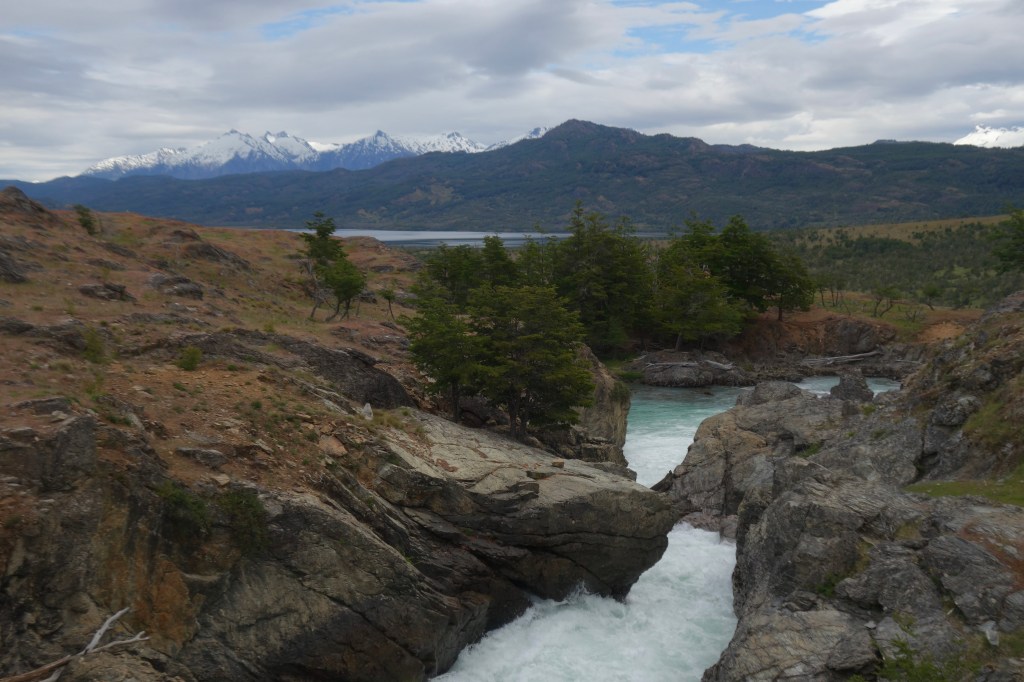
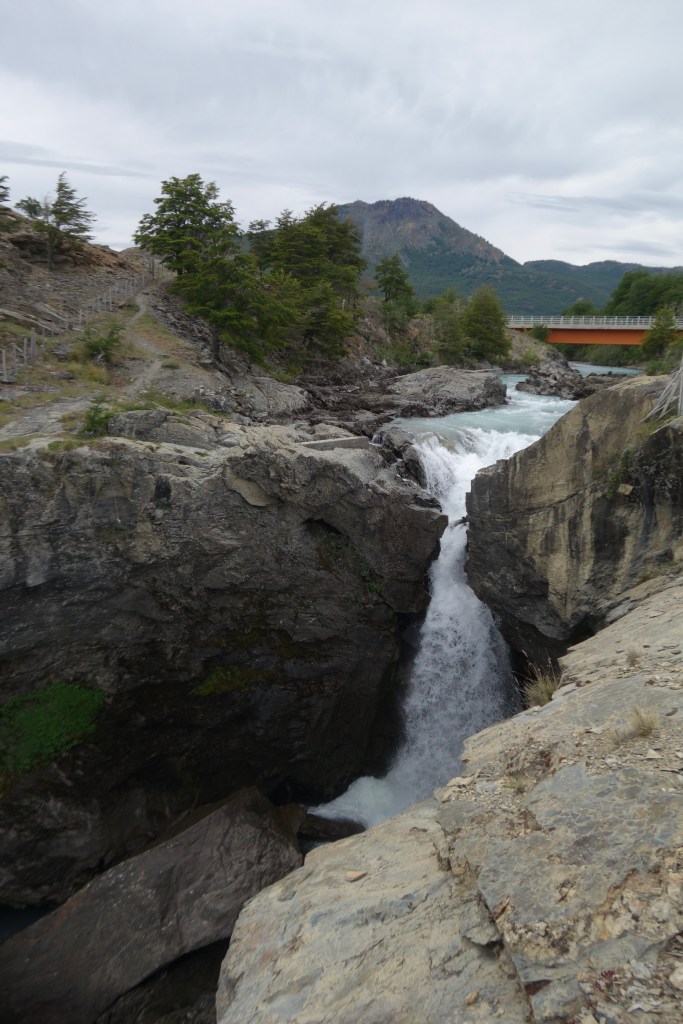
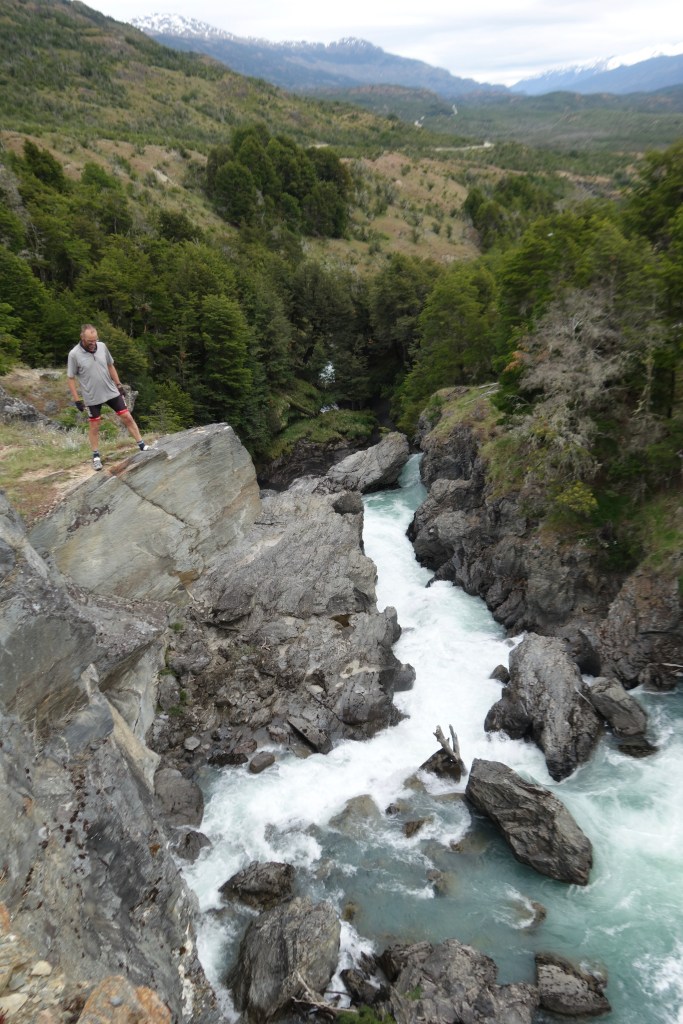
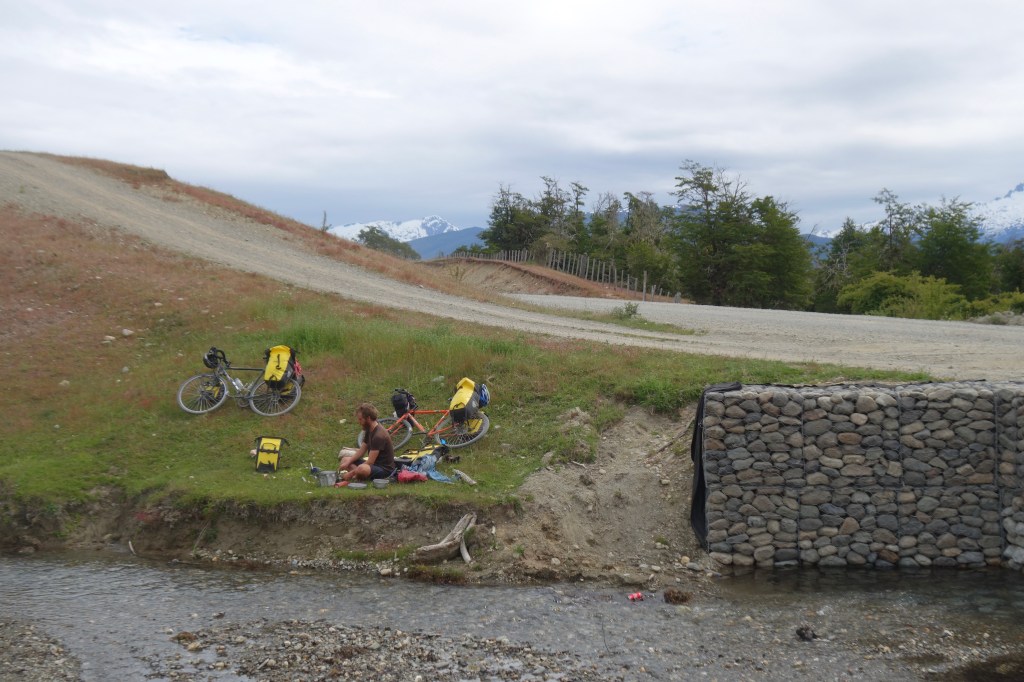
It was an hour or so later that we pulled in beside a small brook and began unpacking our bags for lunch. Upon reflection, we hadn’t shared a word before coming to a stop, proving that our hunger cycles had final merged and we were now truly travelling in sync. A sun-soaked grassy bank provided the setting for a memorable meal. We shared a can of coke that Sophie had given dad that morning; a subtle dig at his bold proclamation of not drinking the rubbish a few days ago. We ate our egg rolls in silence, serenaded by the bubbling and trickling of the creek and flighty swallows that chased insects mere centimetres above the water. Having not seen anyone all morning, a surprising amount of foot traffic passed by as we ate lunch. Three generations of women walked by in silence, each wearing a black woollen hat and using a walking cane. The number of creases on their faces, and the varying extent to which each were stooped over, suggested that they were walking in order of descending age. Soon thereafter, a man and his young son led a cow along the opposite bank of the creek. They acknowledged us with a nod of the head, however, their attention was absorbed by trying to control a large pack of playful puppies. The dogs wrestled and rolled, refusing to conform and behave. As much as I wanted to laugh at the situation, it seemed inappropriate as the frustration on the faces of the two men was growing. Out of respect, we sat still to avoid providing any unnecessary stimuli for the dogs. The owners’ attempts at assertion continued as the caravan continued upstream. Unfortunately, so did the innate playfulness of the canines.

From our idyllic riverside lunch location, the undulating road provided snapshots of silvery lakes and glaringly beautiful mountains to the west. This continued for a few hours, centring our minds, and distracting from the growing fatigue in our bodies. Late in the afternoon, the road ejected us from a dense forest of wind-worn beech trees, leaving us exposed on the precipice of a deep valley. From our celestial position, we could trace the road below with a finger. A snaking line of gravel indicated an imminent descent and the darkening horizon suggested we should soon think about finding a campsite. We tightened our helmets and let gravity carry us down to where the churning Rio Barrancos carved a path between towering granite cliffs, like those of Yosemite Valley.

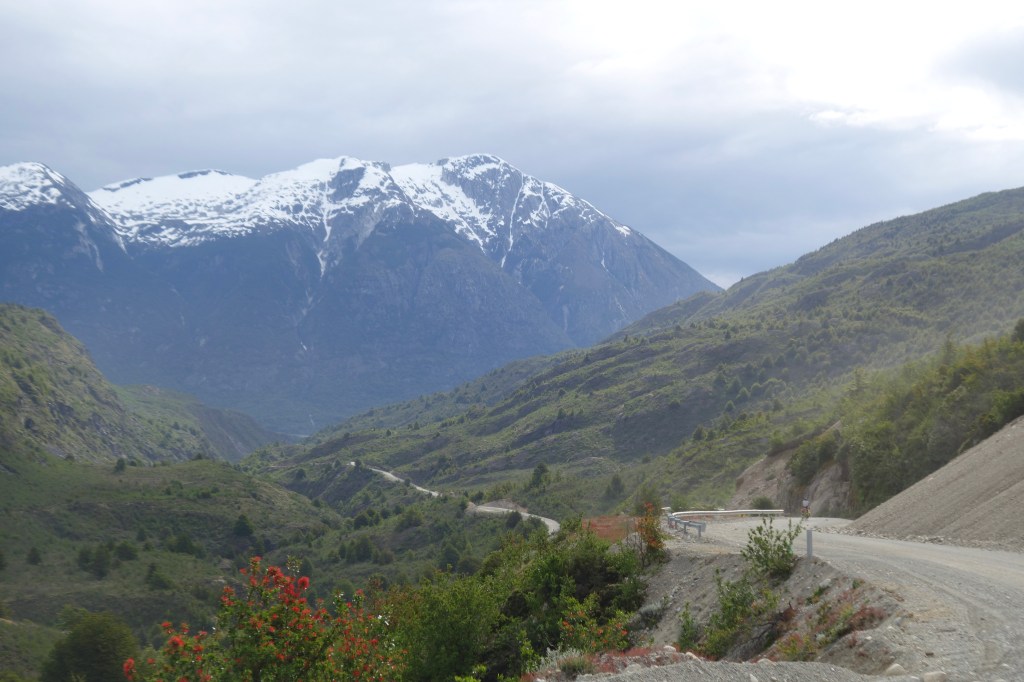
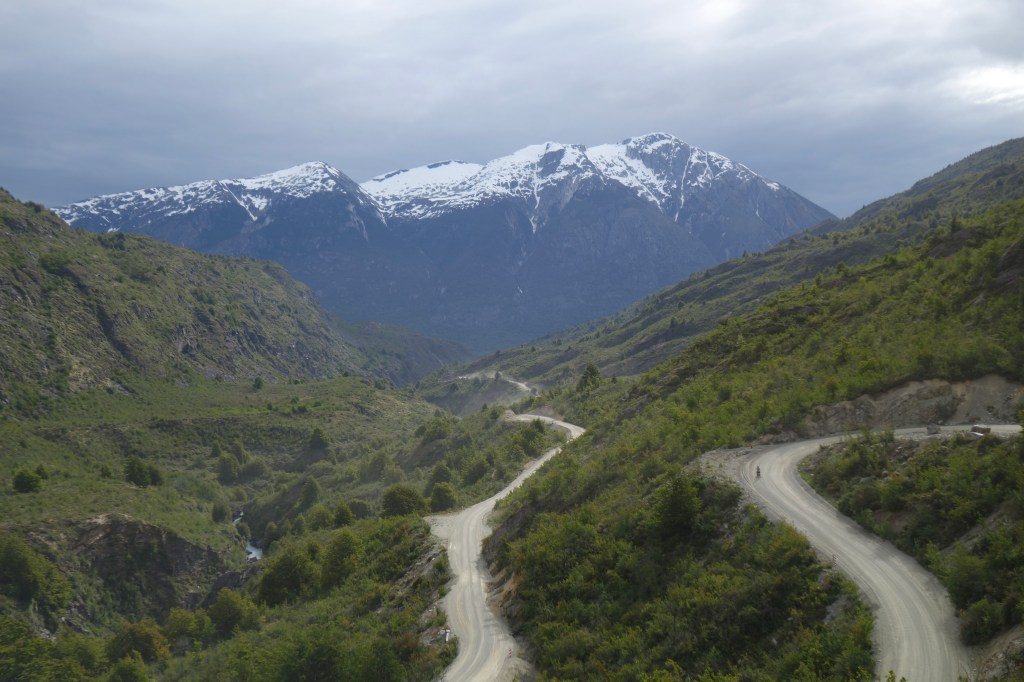

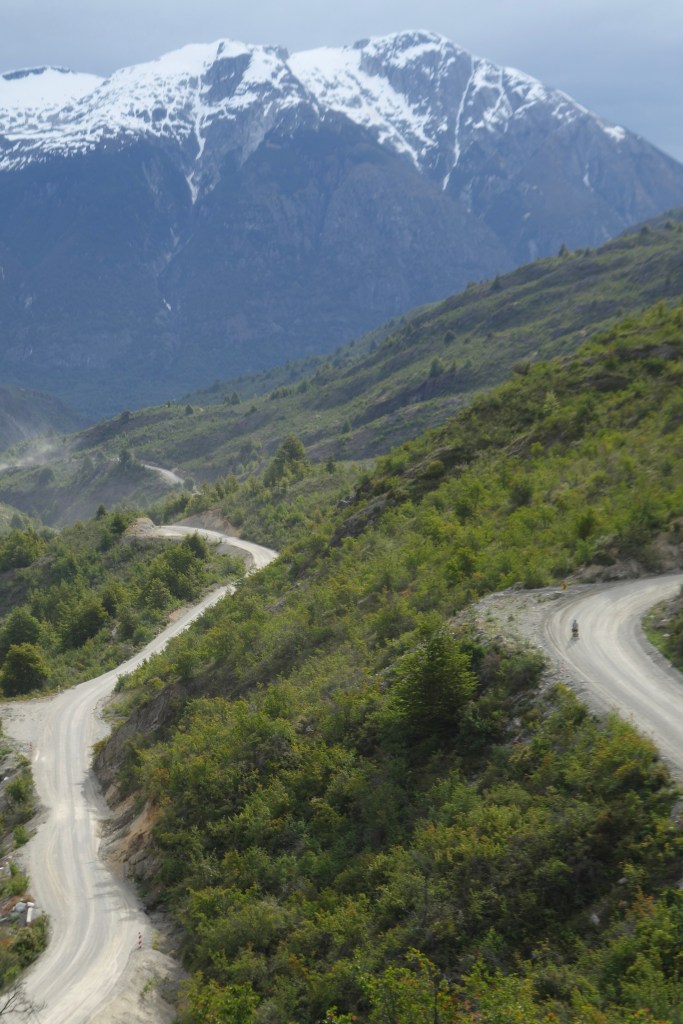
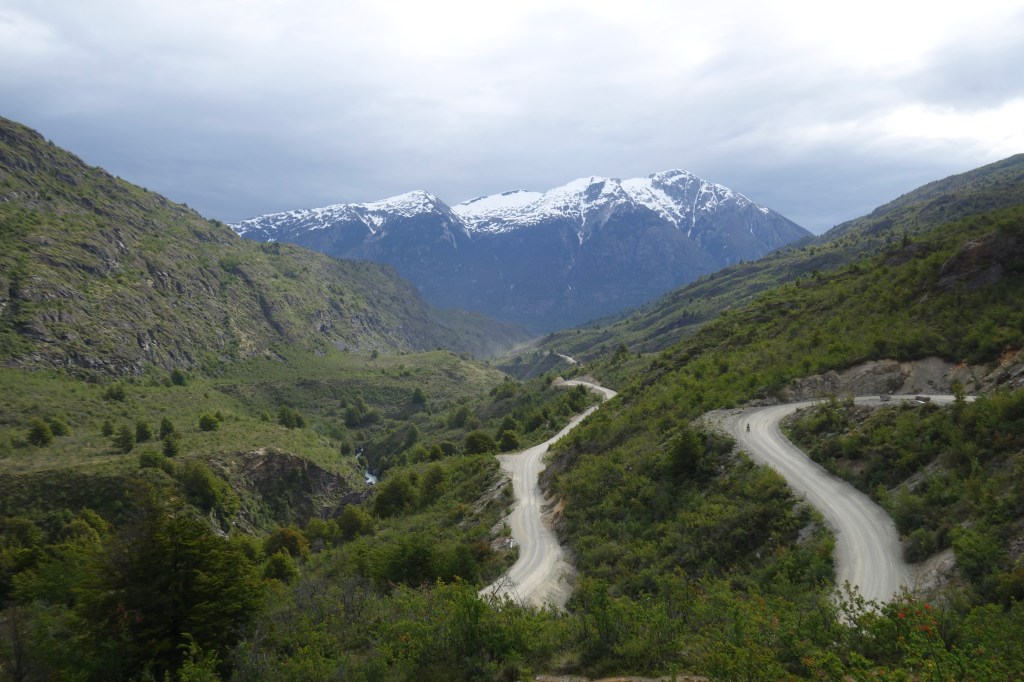
We reconvened on the valley floor, where we stood on a bridge and peered back up at where we’d been standing several minutes earlier. From our position above the river, we spied a potential campsite a few hundred metres upstream. We wheeled our bikes back up the road and slipped into the trees to find patches of flat ground and blanket of soft beech leaves. We assumed our evening roles and it wasn’t long before we’d set up camp, washed in the river, and were sitting around a fire swigging from the bottle of Pisco from Carlos. Smoke rose slowly through the thick canopy and upwards to the night sky. The distilled grape juice inspired Dad to recount every job he has ever had, with a sense of passion and pride that I’d never heard from him when it came to his professional life. I was inspired by his ability to reflect upon certain decisions that changed the trajectory of his vocational journey. It was a poignant tale, as we were both currently at a career crossroad. Dad was in deep and constant contemplation of retirement, while I was experiencing a swelling discontent with teaching at the opposite end of my working life. It was affirming to realise that were both hoping to gain clarity from our time alone together on this long ride south.
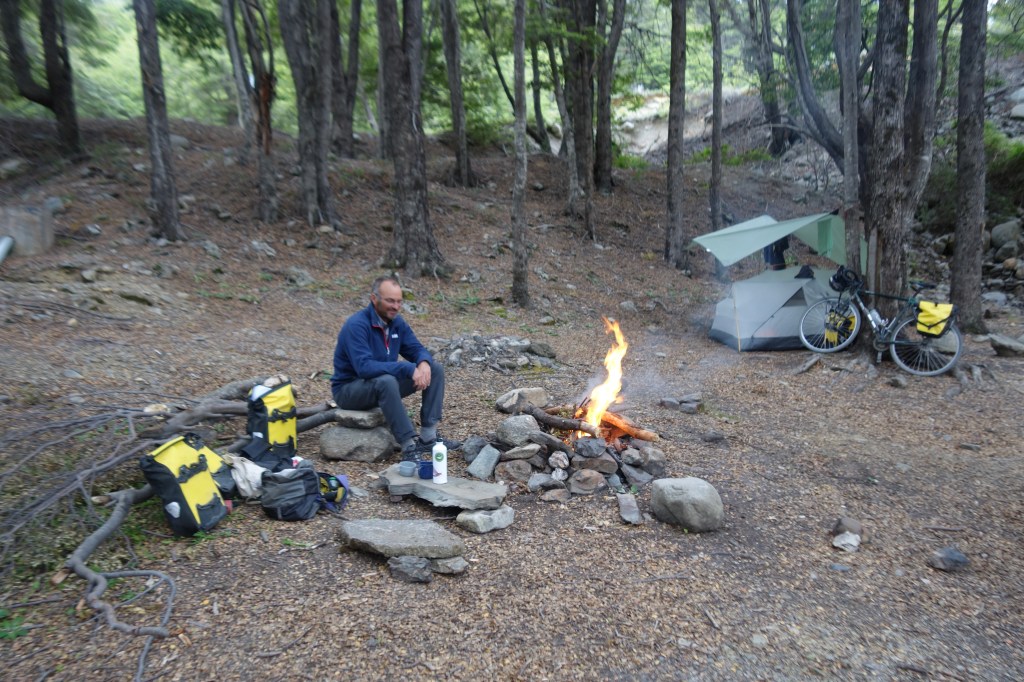
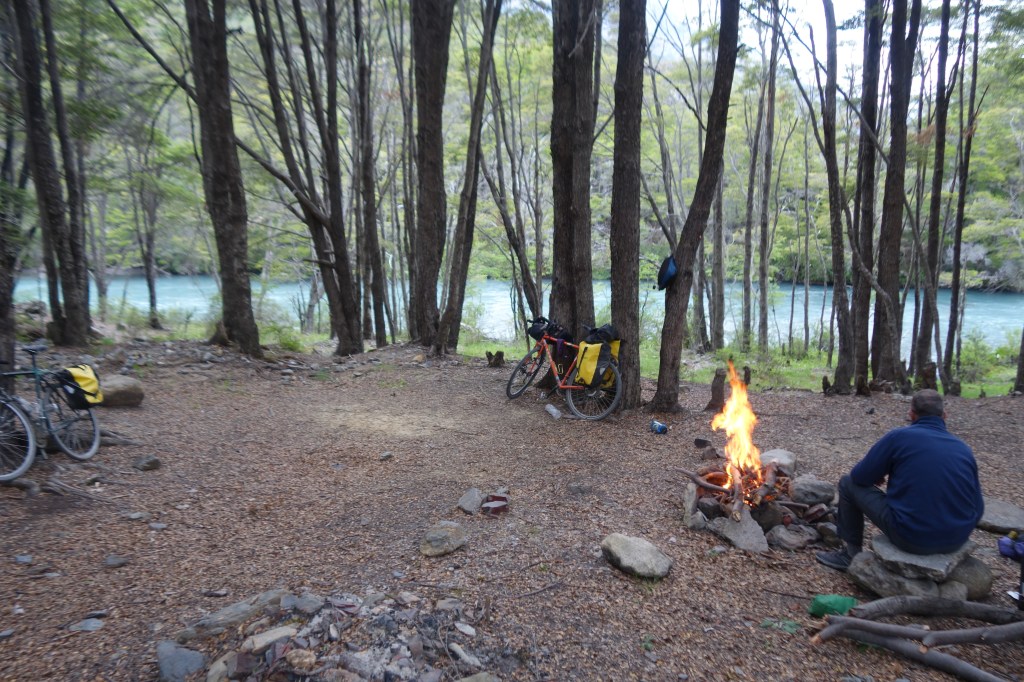
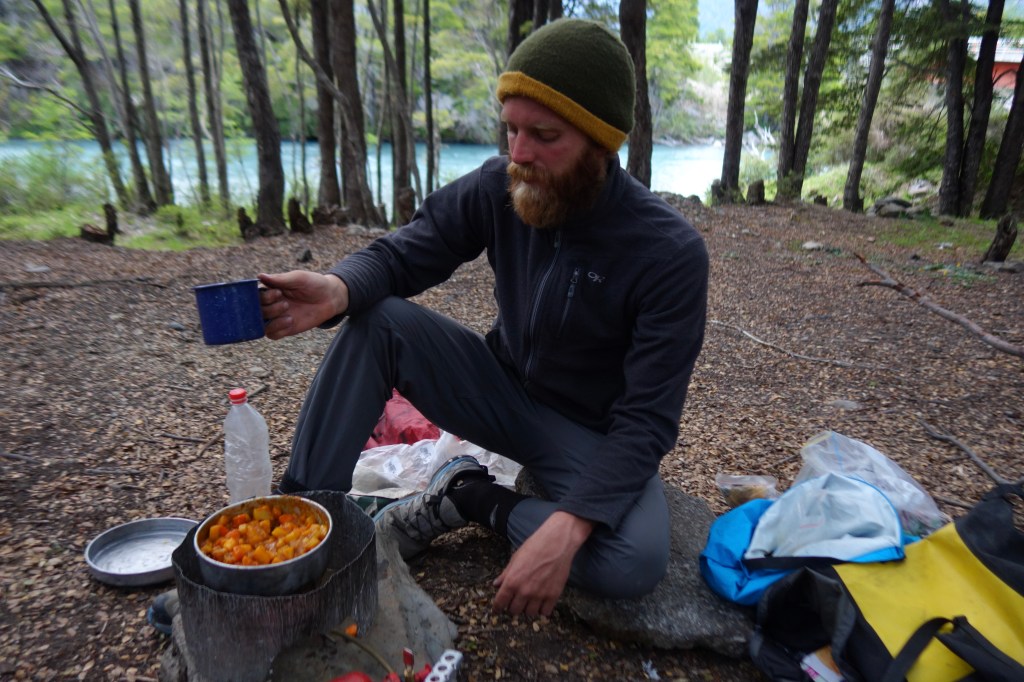
Following a sound sleep, we were greeted by a plague of morning mosquitoes, prompting uncharacteristic efficiency. Within 20 minutes of waking, we had broken camp and relocated to the other side of the river where we set up for breakfast in the sunshine. We soon relapsed to a more familiar morning pace. We let the sun warm our skin while coffee worked its magic from the inside.
Beneath a cloudless sky, we cycled onward along the valley floor. Uncomplicated, flat roads allowed us to make good progress. After a few hours of consistent riding, we spotted the first dwelling we’d seen all day. Bordered by a roughly constructed log and limb fence with a Chilean flag hanging limp from a timber pole in the front yard, the house matched the description of the place Sophie, Hannah and Jay had talked about staying. Considering the hour of the day, we were certain they would already be on the road. But, as we neared the front gate of the farmhouse, we saw two tents pitched within a small orchard of apple trees. The fogged-up windows of the house indicated the presence of warm bodies. We knocked on the door and were instantly welcomed into the cosiness by the matriarch, Señora Belarmina.
Hannah, Jay, and Sophie sat around a small timber table loaded with fresh bread rolls and several varieties of homemade jam. Their flushed faces and lethargic postures suggested they’d been settled in at the breakfast table for some time. Señora Belarmina promptly drew two chairs from another table and ushered us to sit down with our amigos. Before our backsides touched the chairs, more bread and jam had been added to the bounty of food on the table. Despite having eaten a few hours earlier, we were aware of the ride ahead so politely nibbled our way through a second breakfast and a few extra cups of coffee. The morning sun streaming through the condensation on the windows cast diamonds across the table. With a wood fire burning in the corner, it was uncomfortably warm. As the conversation flowed, layers were removed and coffee was exchanges for glasses of water.
As I listened to Jay talk about his profession and passion, it became clear why he was seemingly so comfortable in the hot and humid room. He and Hannah live in Dublin, where he works as furniture maker, specialising in steam bending. This piqued Dad’s interest, and the two of them branched off into discussions of specialty timbers from around the world. Watching on, I could gauge Jay’s jealousy of Dad’s experience with various Tasmanian timbers. As Dad dropped the names of species such as ‘Huon Pine’, ‘Myrtle’, ‘Celery Top Pine’, and ‘Blackwood’, Jay followed with respective ‘oohs’, ‘aahs’, and ‘no ways’. I chatted to Hannah about her work as a high school Maths and Biology teacher. She told me of their plans to relocate from Dublin to her hometown of Westport where they have purchased a block of land. Hannah already has a job lined up in a local school and Jay is planning to set up his own business and shop front on the west coast. They seemed intoxicated with thoughts and dreams for their new life on return to Ireland.
We spent another hour together, sharing stories from the road and plans for when we all return home. The walls of Señora Belarmina’s home were adorned with tea towels from around the world, and faded photographs of her husband in uniform. For a while, I assumed these were lasting memories of the man. However, as we were leaving the house, the man from the photos poked his head out from the kitchen to thank us for stopping. Señora Belarmina quickly reminded him of his role in the business and he disappeared as suddenly as he had arrived.
Finally reacquainted with fresh air, we exchanged details with Hannah, Jay, and Sophie. They were all planning on an overnight stop in the village of Caleta Tortel, which we were planning to bypass. It was therefore unlikely we’d be crossing paths again any time soon. Hannah and Jay gave us an open invite to their block of land in Westport, while Sophie asked for a picture together. We thanked her for her company over the previous few days and gifted her the remaining Pisco from Carlos.

We rode away from Señora Belarmina’s house with the wind on our backs. This natural aide was short-lived, however, as a tight dogleg in road pointed us back into the wind and an oncoming rainstorm. The wet and undulating road was a stark reminder that we were in the heart of Patagonia. Following a steady two hours of riding, we pulled off the road and into the trees beside a deep tannin-stained creek. As we stood overlooking the water and chewing on muesli bars and ginger biscuits, our bodies were colonised by a swarm of large-bodied, black flies. Given the cool, wet conditions, it was no surprise that these minibeasts were lethargic and slow moving. Consequently, for them, they were supremely easy to swat. A slap of my chest stunned half a dozen flies which fell to the ground dazed and disorientated, buzzing sporadically on their backs. With malicious prepense, I bent down and flicked one of the insects into the water, where its struggles to survive cast micro ripples all the way to the far bank. I watched the gentle current carry the corpse away, questioning my moral intent. However, the disruption to the slick surface had caught the attention of another onlooker. From the dark depths, the slimy nose of trout emerged, penetrating the tight film like a breaching whale. The fish slurped down the easy meal and again became one with the brown substrate on the bottom of the creek. For the next 15 minutes, Dad and I perpetrated a massacre on the local fly population as we continued to feed the ravenous trout. Having spent a significant portion of my adult life trying to coerce trout to consume artificial representations of food with the intent to embed a hook in their lip, it was a wholesome to observe the species feed without consequence. Their appetites also offset any guilt I was feeling towards the flies…something about the circle of life.
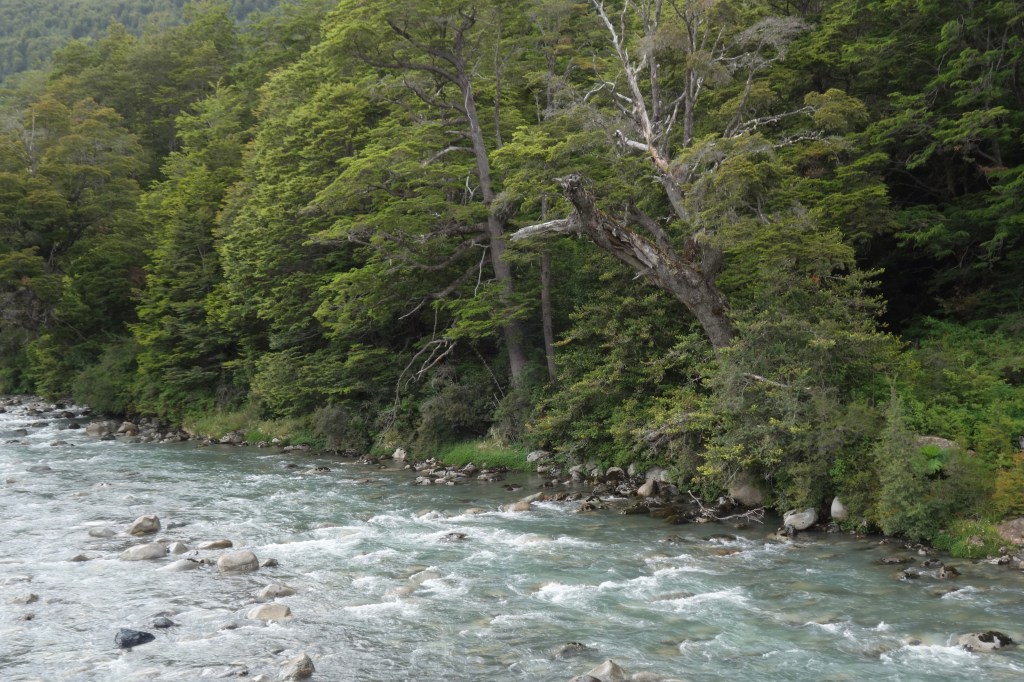
Our murderous ways were interrupted by the unique and resonating toot of Sophie’s bike bell. She rode past waving in what would actually be the last time we saw each other out on the road. Trying to do up our panniers and get back on the bikes was hampered by swarms of flies getting their revenge. With both hands occupied by various tasks, we took turned waving flies from each other’s faces as we readied ourselves to continue riding. Once back on the bikes, the flies were no match for our speed as we left them behind in a cloud of mourning.
The road followed the ever-widening Rio Baker. The width and less temperamental nature of the river indicated that we were nearing the coast. We rode with the river on our right and sheer, streaked limestone cliffs to the left. The greys and browns of the rock formations contrasting against the fertile blue and green hues of the rivers and riparian vegetation was reminiscent of places I’ve visited in South East Asia. Following a minor disagreement with Dad fuelled by fatigue-induced irritability, I rode hard to put some distance between us. Following an hour or so of solo riding, we reconvened at a bus shelter marking the junction between the Carretera Austral and the road to Caleta Tortel. A standard lunch of boiled egg, avocado and mayonnaise rolls dissolved any remaining tension as we began putting our minds to the afternoon’s task. Having been the masters of our destiny for what had felt like weeks, our itinerary suddenly became dictated by a ferry timetable. We still had 20 kilometres to ride to Puerto Yungay where the last ferry was scheduled to leave at 6pm, which was in two hours. On paper, it was well within our means. However, the contours on our map also indicated that we were in for a significant climb to the ferry terminal which sat on the other side of a high pass. We summoned the collective energy and committed to the challenge of catching the last ferry of the day. We were sharing the bus stop with a French girl who was hitchhiking her way south and was also hoping to get on the boat. Despite the challenge ahead, we were thankful for being able to travel under our own steam, especially as traffic was becoming increasingly sparse the closer we got to the end of the Carretera Austral.
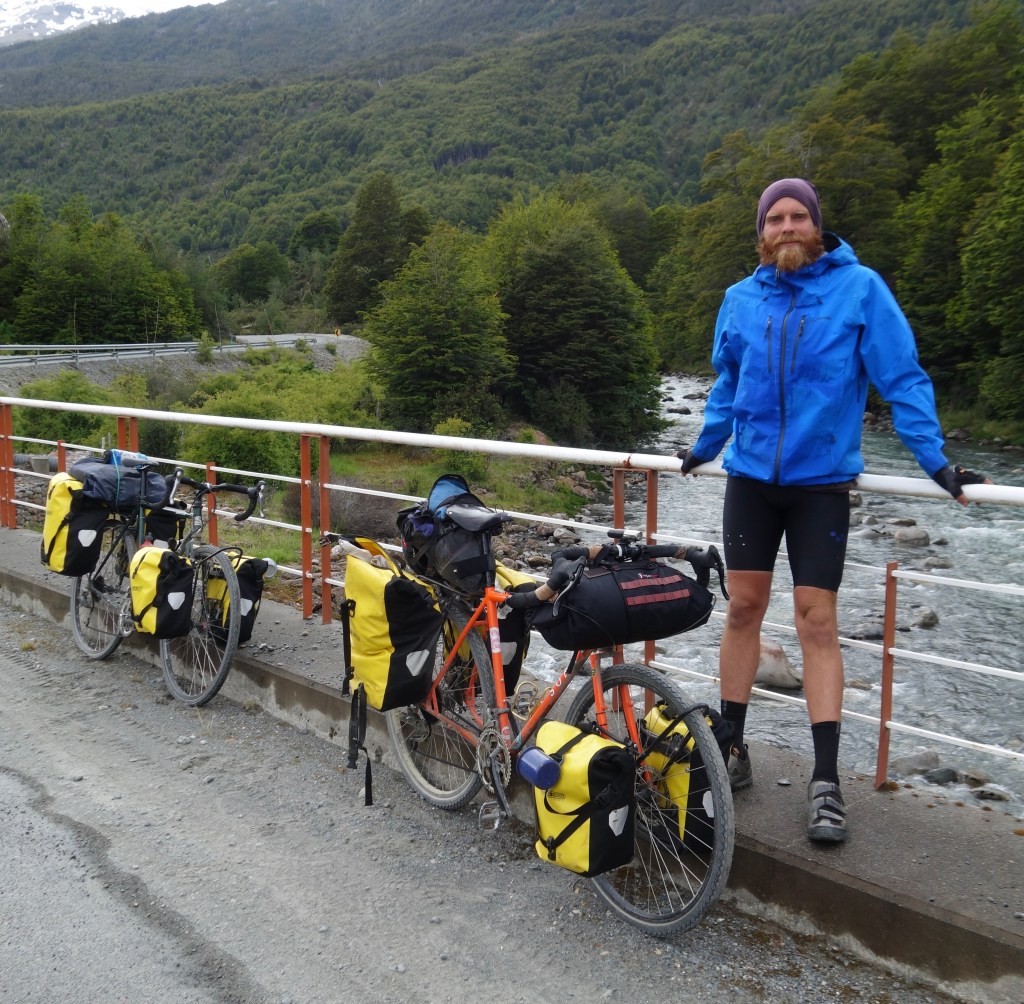
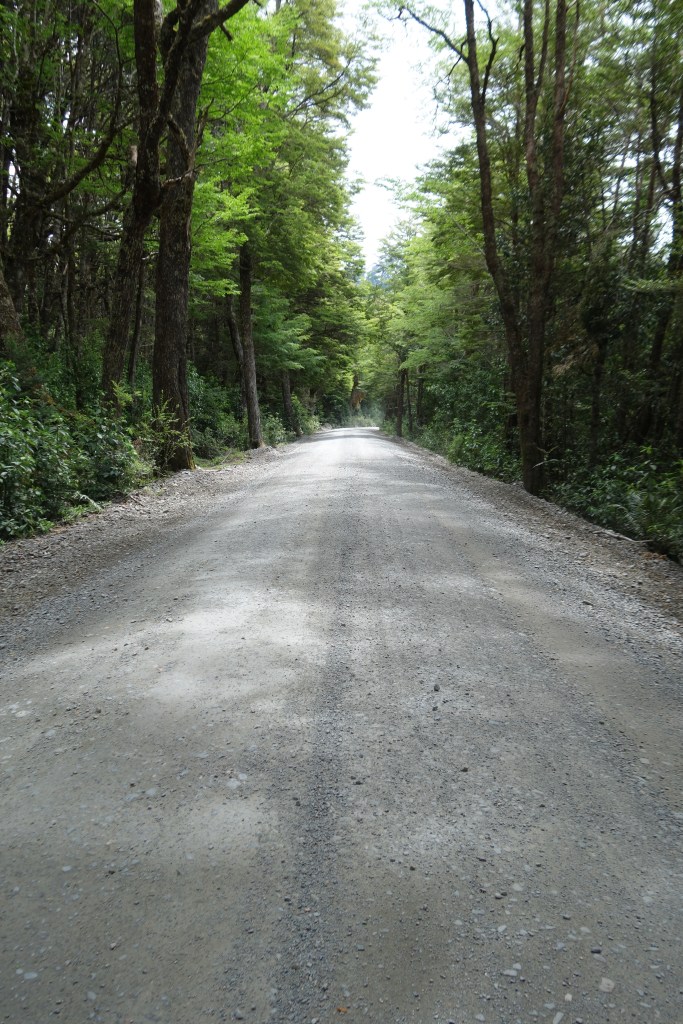
Within ten minutes of leaving the bus stop, the steep switchbacks had forced Dad into pushing his bike up hill. My pace had also been reduced to that of walking, eradicating any pride I’d gained by struggling in the saddle. I joined Dad in his bipedal approach to the incline as we silently re-evaluated our goal for the afternoon. Fortunately, those first few switchbacks were the steepest sections of the pass and the gradient soon eased.
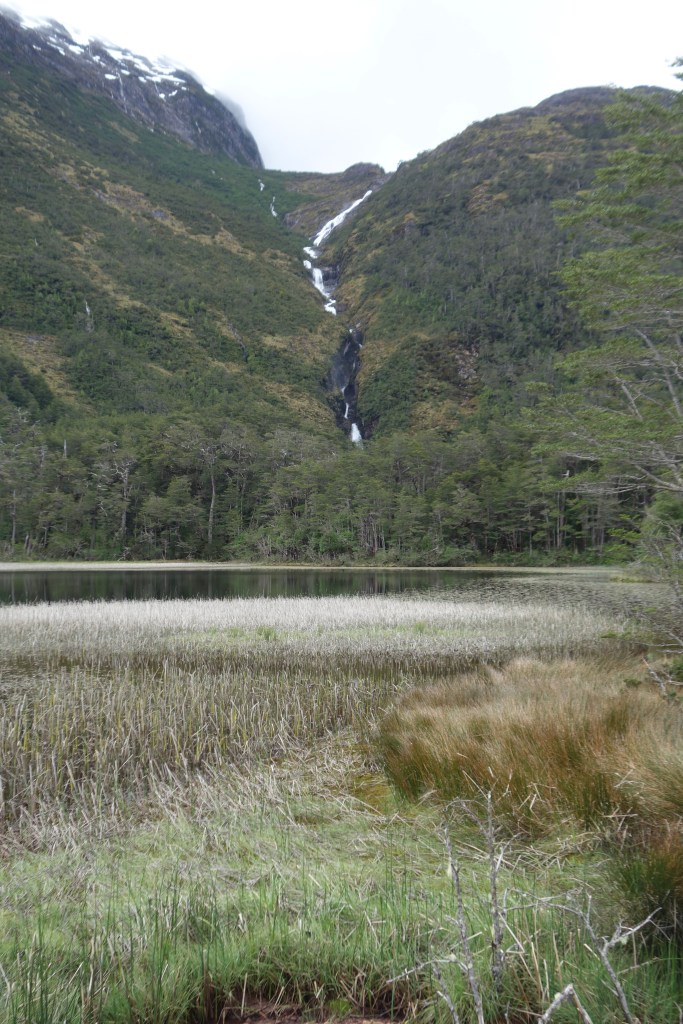
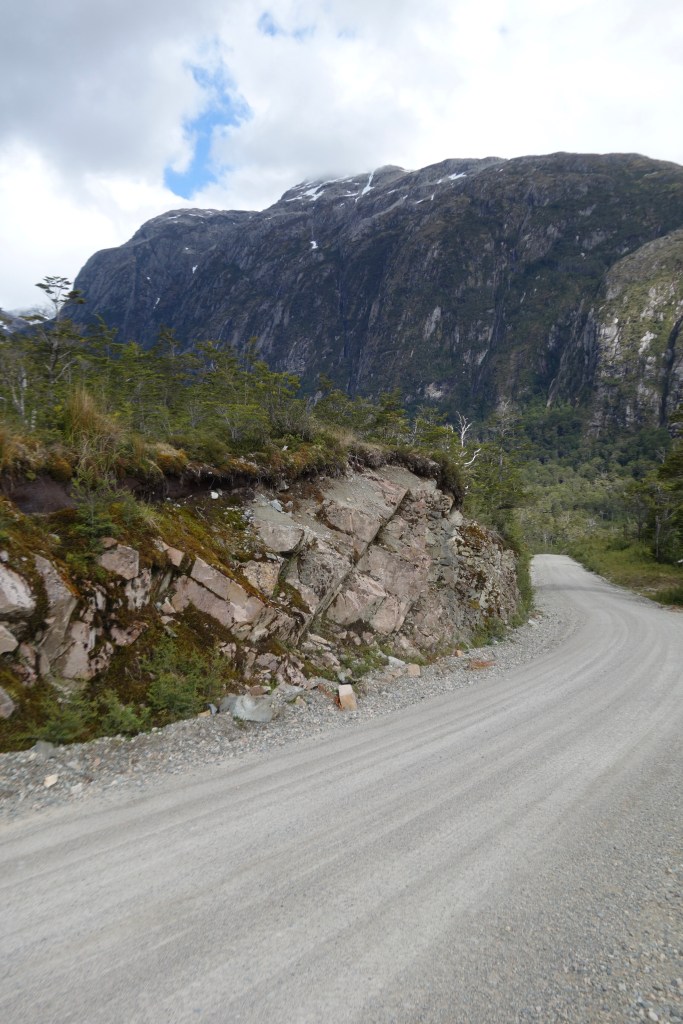
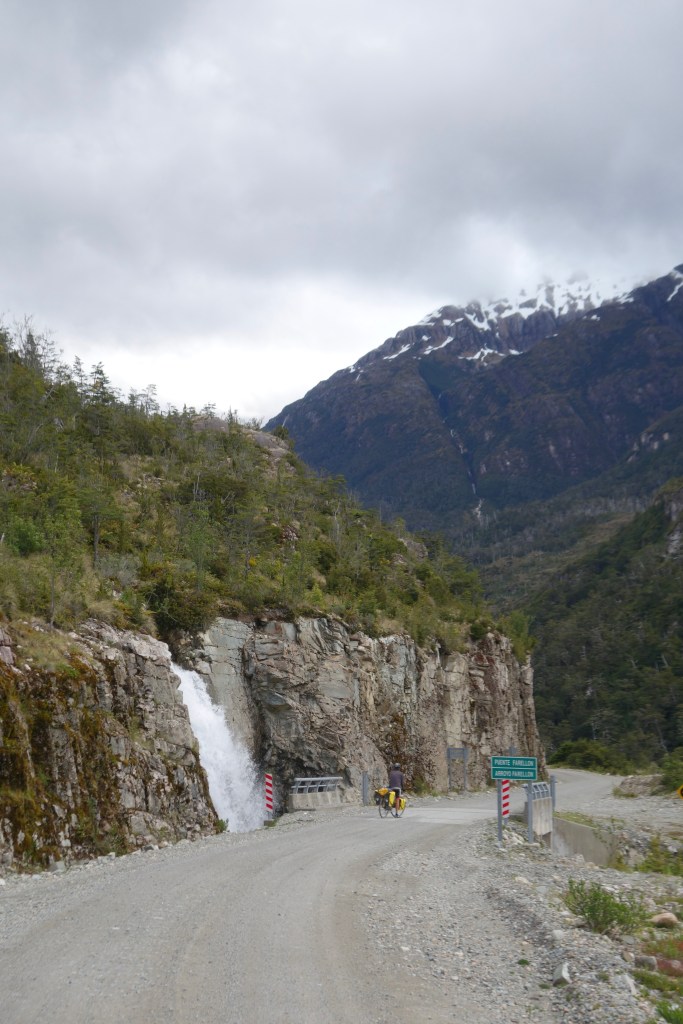
The remaining ride to the ferry felt like a homecoming. Tannin-rich creeks fell away from the road, dissecting small valleys coagulated with ferns. Dark lakes were encompassed by an impenetrable verdancy. It felt remarkably Tasmanian, or at least what I think of when I imagine home. The mountainous horizon and abundance of waterfalls was a little grander, perhaps, but in no ways wilder. Distracted by the landscape, we were both surprised to reach the top of the pass. We crested the final rise just as another cyclist came over the top from the ferry side. Incredibly clean cut and dressed in full wet weather gear, the man didn’t appear strained in any way. He was either supremely fit, or it wasn’t that far down to Puerto Yungay. Fortunately, it was the latter, and a swift descent delivered us to ferry terminal at 5.52pm. Our well-timed arrival was marked by clapping from the drivers of a few cars who had overtaken us struggling up the hill on other side of the pass. We wheeled our bikes aboard and climbed to the top deck, elated with our achievement and timing.
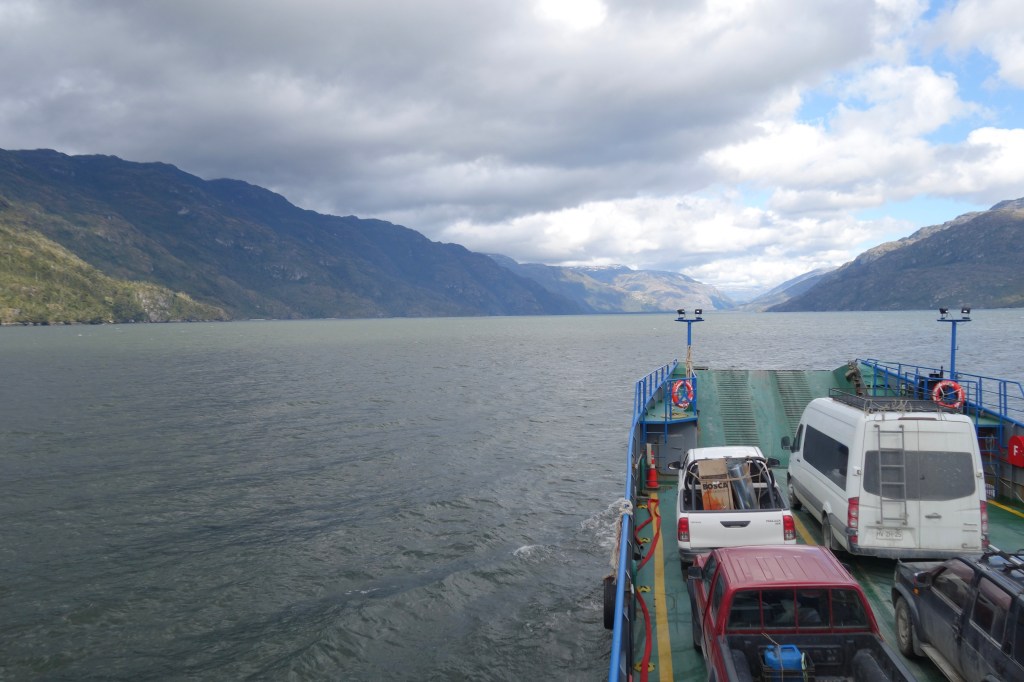

It was 6.45pm when we disembarked on the other side of the fjord, allowing the Carretera Austral to continue its fragmented course south. The other passengers sped away in their vehicles and the ferry was quick to depart. We were left alone on the edge of the water beside a small wooden refugio designed to offer waiting passengers respite from the wild weather that regularly scours the region. An empty room with a wooden floor and elevated benches, it was just like a mountain hut. We rolled out our mattresses, strung up a line to air our cycling gear, and quickly transformed the space into a high-end cycling hotel. A locked door to a toilet presented the only barrier to our accommodation receiving five stars. However, a scout of the perimeter revealed an open window into the toilet. With a leg up from Dad, I managed to wind the window out as far as it would go, use my pocket knife to unscrew the window chain, shimmy through the small gap, unlock the toilet door and reattach the window. The space was now perfect, and we could plead ignorant if caught using the toilet. We spent the evening on the verandah cooking pasta and watching the lake get swallowed by darkness. Last light was at 10.30pm; a true sign that we were amid a deep southern summer.
I was woken the next morning by the sound of the door creaking open. Subconsciously nervous, I sat upright in fear that we were about to be discovered by someone in a position of power. Fortunately, it was Dad heading out to enjoy the morning sun that was now streaming in through the window. Within seconds of waking up, I became uncomfortably aware of the musty aroma within the refugio. A combination of damp, sweat-soaked cycling gear and our equally unwashed bodies was enough to drive me outside into the fresh air.
Stepping outside, I was confronted with a scene that suggested Dad had finally cracked. Positioned on the edge of the verandah, he had pulled his orange sleeping bag liner over his entire body like a giant sock. He claimed it was the easiest way to air out his gear. I assumed he’d lost control. Like a carrot in the sun, he remained in this state while I made coffee and porridge.
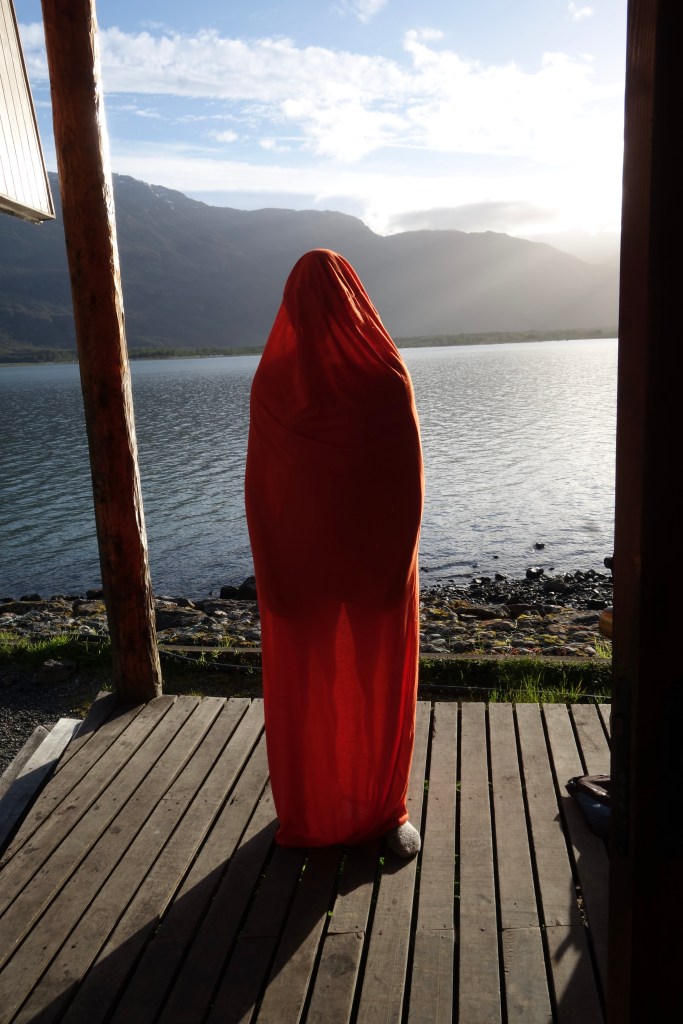
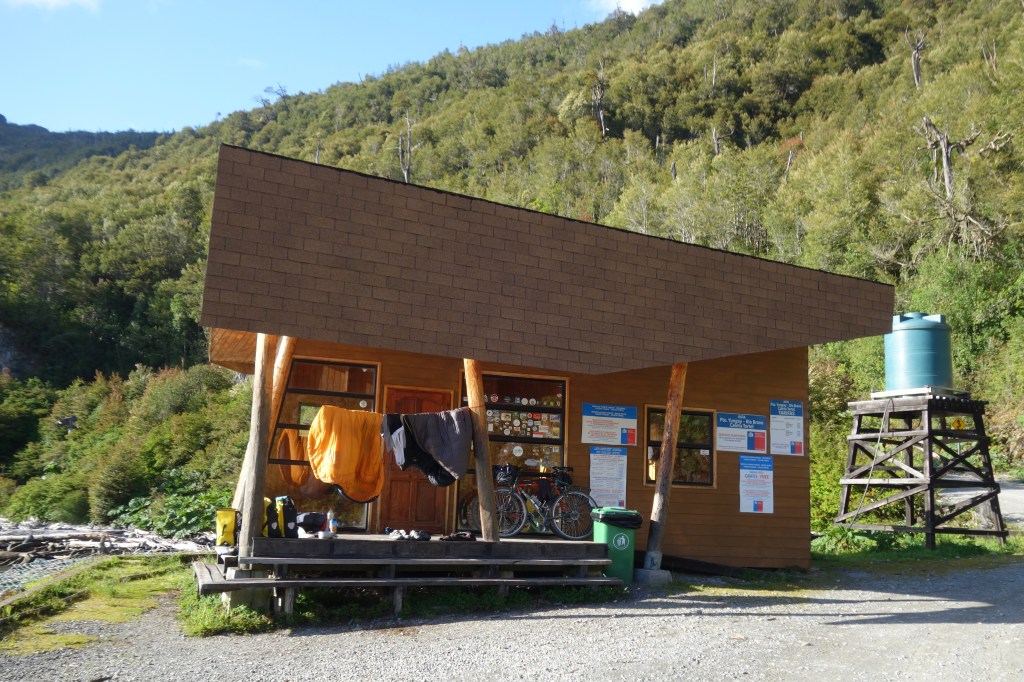
As we worked our way towards a necessary level of caffeination, a blanket of clouds swept over the mountains and an unpleasant chill filled the air. We packed efficiently and began the final day of riding on the Carretera Austral. With an hour or so before the first ferry was due to depart Puerto Yungay, the road was noticeably void of traffic. We utilised the entire width of the gravel highway as we sliced through the crisp morning air with careless affirmation.
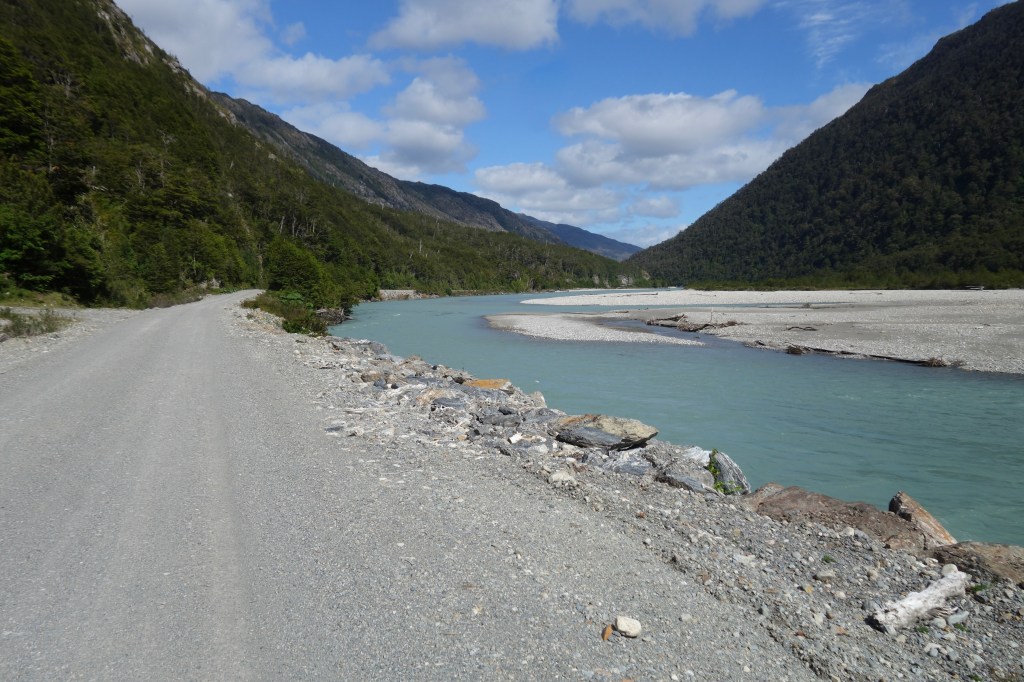

The first 20 kilometres of the day were as good as it gets. An encouraging tail breeze guided us through a passageway of dense forest, delivering us to the banks of the baby blue Rio Bravo. Eventually, and as expected, the road pitched upwards towards the jagged peaks we’d been admiring all morning. Abrupt, exaggerated switchbacks soon elevated us above the valley floor. Looking back towards where we’d ridden from revealed a striking spine of snow covered, precipitous mountains. Thick sheets of ice hung precariously in suspended valleys, threatening to release their hold on the rocks as the sun worked its way into every crack and crevasse.
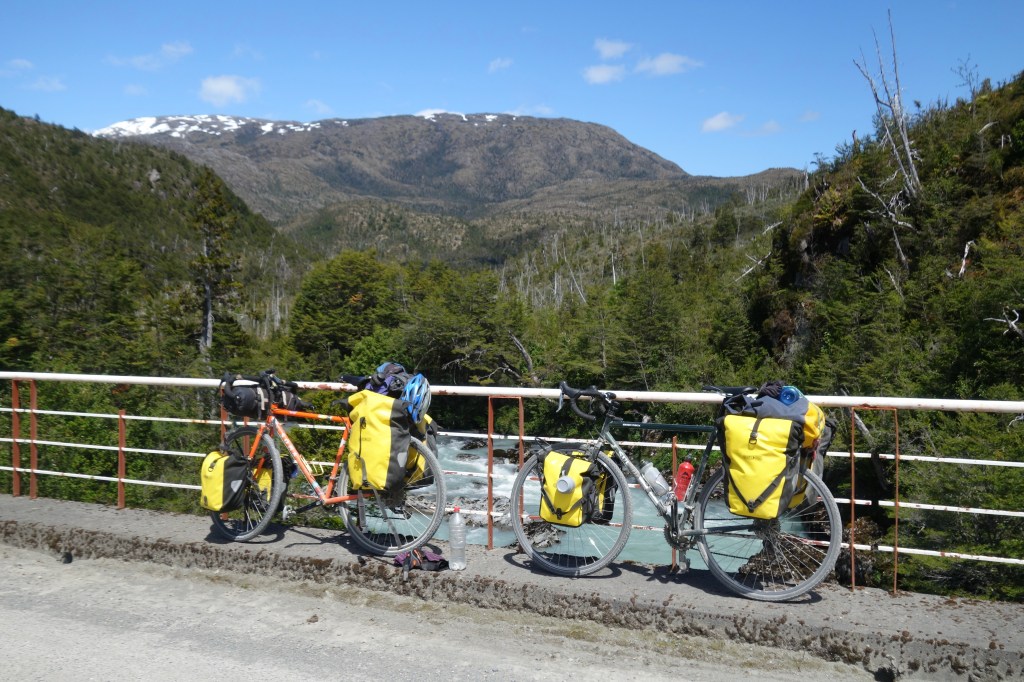
We crested the pass with surprising ease and were rewarded with an equally steep descent. A conveniently located bridge over a boulder-ridden creek provided a scenic option for our first break of the day. Coincidently, this point on the road marked my 6000th kilometre in the saddle since leaving Bogota. We sat on the bridge throwing stones at an open drain which provided a viable excuse for putting off the next climb.
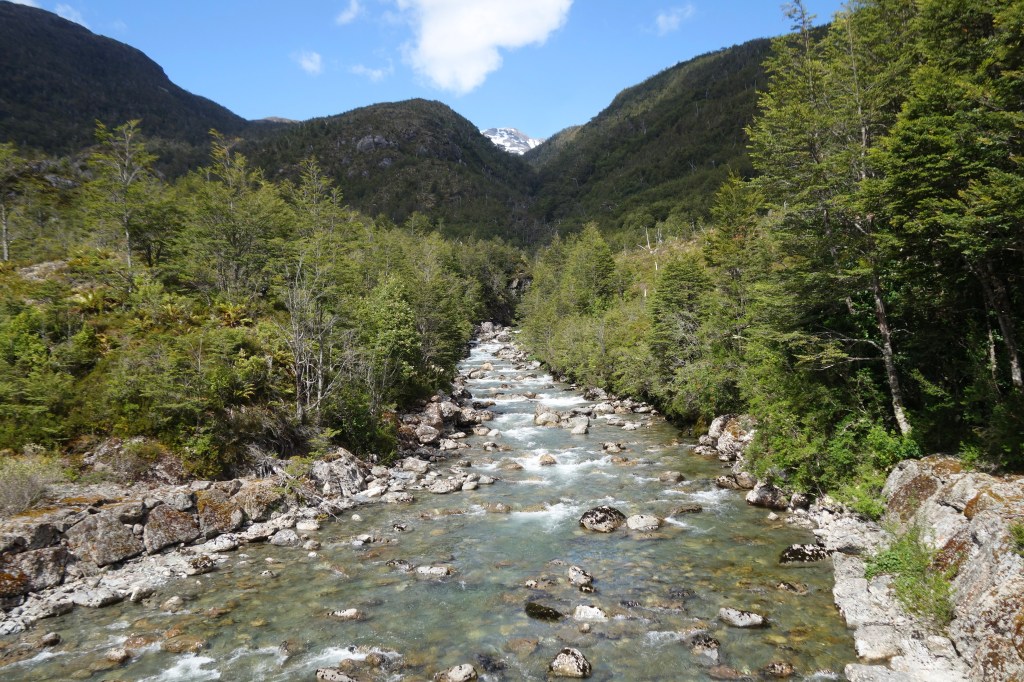
The stones eventually ran out. Unlike the first climb of the day, the second was a slow burn. The road clung to the edge of a gorge carved out by the Rio Bravo which churned with relentless ease below. The higher we climbed, the deeper the gorge appeared, and the more precarious the riding seemed. Great balance was required as we kept one eye ahead and the other peering over the guardrail to the left.
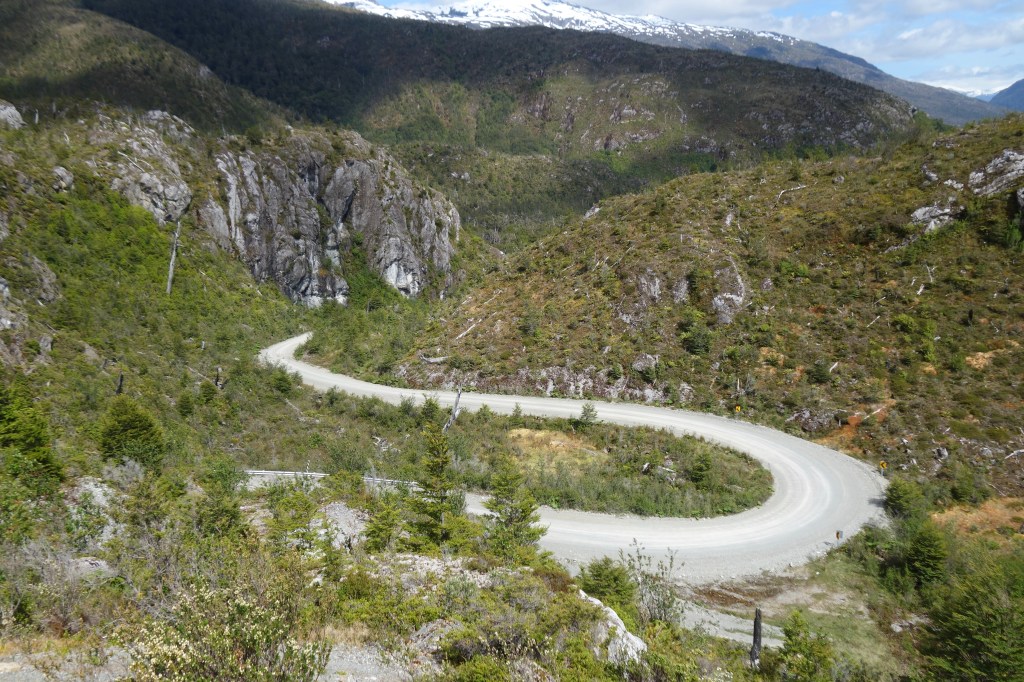
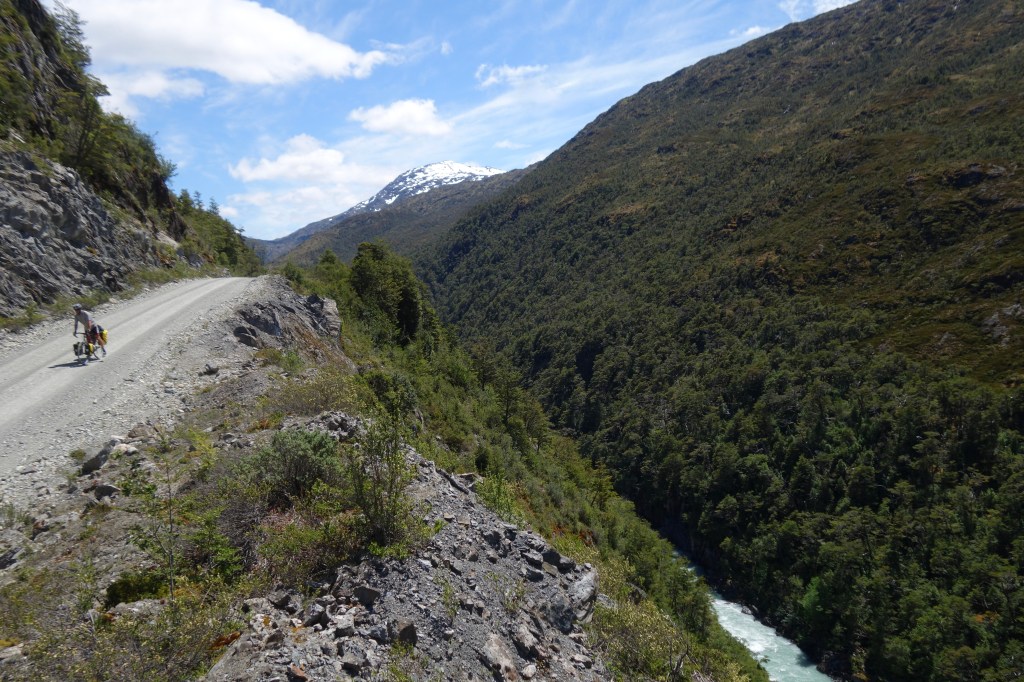
Deep concentration and a persistent gradient rendered us exhausted. At the apex of the climb, the road and river parted ways and we were presented with a barren alpine plateau extending to the southern horizon. Having been sheltered from the wind on the climb, we were jubilant to discover a dogged tailwind whipping over the highlands. We raced onwards with the breeze as our friend and the alpine sun on our faces. Roadside vegetation was gnarled and stunted by the harsh climate that gives Patagonia its wild reputation. We were so grateful that it was looking out for us as we passed through with deepening appreciation and respect.
It was the type of riding that you wish could last forever. The only thing stopping us from riding to the end of the earth was our stomachs. Finding a sheltered spot for lunch was harder than anticipated with bonsai-sized trees lining the road. We eventually found a stand of taller shrubs on the edge of a lake which provided protection from the wind. Lying in the grass waiting for water to boil left us with sunburnt faces and the sudden desire to find shade. It was an ongoing battle with the elements; necessary evils. We spooned freshly prepared packet pasta into wraps and filled our stomachs with carbs. With tired legs, overstimulated senses, and bodies in dire need of fresh and nutritious food, we couldn’t resist a post-lunch siesta. I set up the tarp for protection from the sun and we lay back into restful shadow.

Our placid slumber was shattered by the passing of several motorbikes laden with duffel bags and oversized panniers. It was 4.30pm and we still had 40 kilometres of riding to reach Villa O’Higgins. Within a few minutes of being back on the road, we stopped to talk to a German couple riding the Carretera Austral from South to North. It was their first full day of cycling having spent the previous day completing the infamous border crossing from Argentina simply to get to the start of the ride. The further south we travelled, and the nearer we got to the end of the road, the more we began hearing about the formidable task ahead if we wanted to continue heading south. With Villa O’Higgins marking to end of the road, literally, vehicles wishing to continue into Argentina were required to backtrack to Cochrane, over 200 kilometres behind us. However, for those on foot (and bikes), we had read and heard about a 20-kilometre trail that presented a challenging yet viable alternative for crossing the border. The German couple were the first people we’d met that had undertaken the trip. Despite sporting a heavily bandage wrist following a fall during the crossing, the man told us it was perfectly doable and quite popular amongst cyclists. However, he stressed that we shouldn’t expect to ride any of the route as it is a rough hiking path at best. It sounded like a fitting and adventurous means of parting ways with the Carretera Austral.
As we talked to the German couple, another convoy of touring motorbikes roared past leaving us to wipe the dust from our eyes. Again, the general disinterest from the motorcyclists left me perplexed. In relative terms, there were very few opportunities to engage with other travellers throughout the day on these remote Patagonian roads. Aside from our chosen forms of transport, we were all seeking adventure and exploration, and I couldn’t understand why they chose to ignore us completely. Perhaps Wolfgang had been correct in Bolivia, with his theory that our presence made motorcyclists feel embarrassed that they required motor assistance to achieve what we were doing with our legs.
We pedalled along the western shoreline of Lago Cisnes while the afternoon rolled into the evening. The wind had ceased entirely since lunch and the lake offered a faultless reflection of the surrounding skyline. Rolling green hills rose from the midnight blue water, their softness contrasting the serrated mountain range on the horizon. Looking across the water, we spotted several headlands extending out into the lake, where secluded timber dwellings were tucked into stands of pine trees. I couldn’t envision a more celestial location for a creative and emotional retreat.
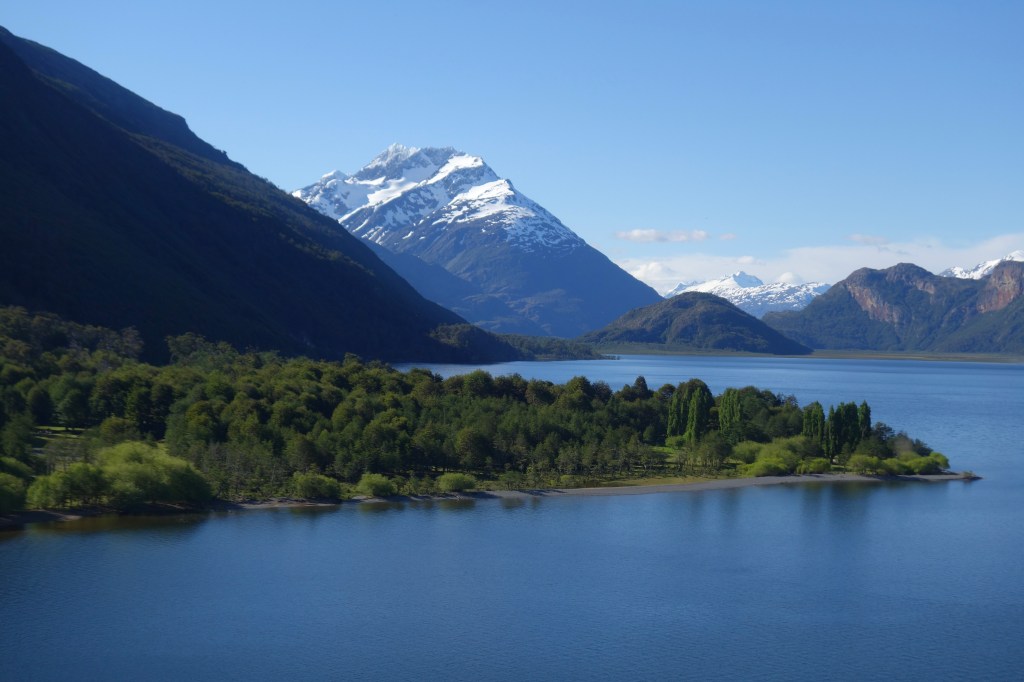
The final hour of the day really made us earn it. A steep decent on loose gravel followed by a sharp left-hand turn delivered us to the lake’s southern shoreline. With 100km of riding behind us, our patience was tested by a local driver who passed at high speed, missing our handlebars by centimetres. Road rage was the last emotion I was expecting to experience at the terminus of Chile’s most southern and remote route.
As the dust settled, we rallied ourselves for the final kilometres. The continual undulations in the road as it dissected a fragmented forest were like gentle ripples in an ocean of trees. Patches of pasture and clusters of cattle were evidence of the small-scale agriculture that was slowly eating away at the remnant native vegetation. There is no doubt that the constant improvements and upgrades to the Carretera Austral are driving the expansion of cattle grazing in these most southern inhabited regions of Chile. The road has essentially connected the area to the rest of the world, allowing locals to monetise and industrialise an activity that has historically only provided enough food and income for subsistence.
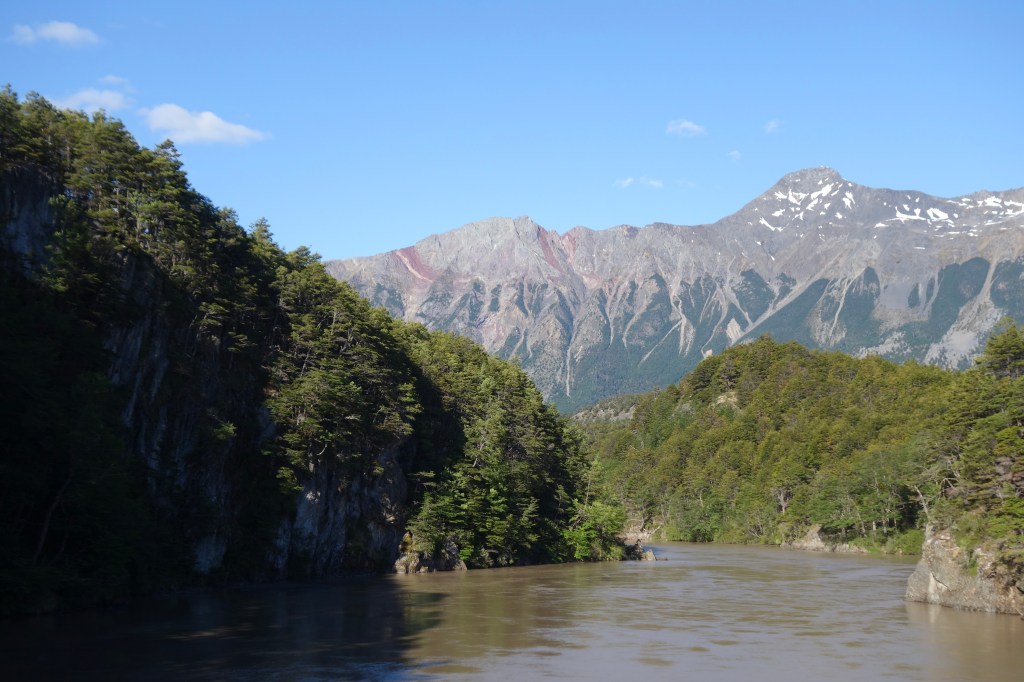
A bridge over the milky Rio Mayer marked our arrival in Villa O’Higgins. Established in 1966 by the Chilean independence leader Bernado O’Higgins, the town was only connected to the rest of Chile by road in the early 2000s. Hemmed in by mountains and lakes, the town’s remoteness and historic isolation is believed to have shaped locals into some of the warmest, and most receptive to visitors, in the entire country.
The famed hospitality was on show as soon as we pulled into the hostel carpark. A Czech guy called Martin wandered out to greet us as we were taking off our helmets. It was his third season working at the hostel, El Mosco. Despite saying each year in Villa O’Higgins would be his last, he explained that he felt an incredible connection to this special community and was always drawn back to the town at the end of the road. Martin led us up some external wooden stairs and into the upper storey of the hostel. The interior was clad entirely in a light, roughly milled timber, creating a gratifying cabin-like atmosphere. We thanked Martin, returned to our bikes, ferried our bags upstairs, and indulged in a world class shower of exemplary heat and pressure.
Despite the persistent evening light on offer in these southern latitudes, we had to be mindful of the time. A permanent yurt set up on the main street acted as the booking office for Robinson Crusoe; the company operating the daily ferry that would deliver us on the doorstep of Argentina. We were hopeful of getting a ticket for the following morning and made it to the yurt with minutes to spare before they closed for the day. Before parting ways with Sophie, she’d asked us to reserve her a seat on the ferry for a few days later. The staff were accommodating and seemingly unconcerned that our late arrival might stop them from getting away from work on time. Despite a few days of bad weather that kept the ferry at the wharf and caused a backlog of passengers, we were fortunate enough to secure two tickets for the 8am ferry the next day. We were also able to keep our promise to Sophie and ensure she arrived in town with a guaranteed onwards passage. As we were leaving the yurt, a German man arrived on a folding bike, the likes of those used by commuters in major cities. The only difference between those used by businesspeople on trains and busses, and this one, was the extortionate number of panniers hanging from the frame. If it weren’t for the two small wheels, his set up could’ve been mistaken for a pile of luggage on the ground. We struck up a brief conversation which was comprised mainly of the German man complaining about how hard his journey had been to this point. We nodded politely before wishing him well for the road ahead. We walked in silence for a few minutes before simultaneously turning to each other and sharing the same thought; ‘you’d think he would’ve thought about how hard this would be before he chose to do it on a fun-sized bike!’
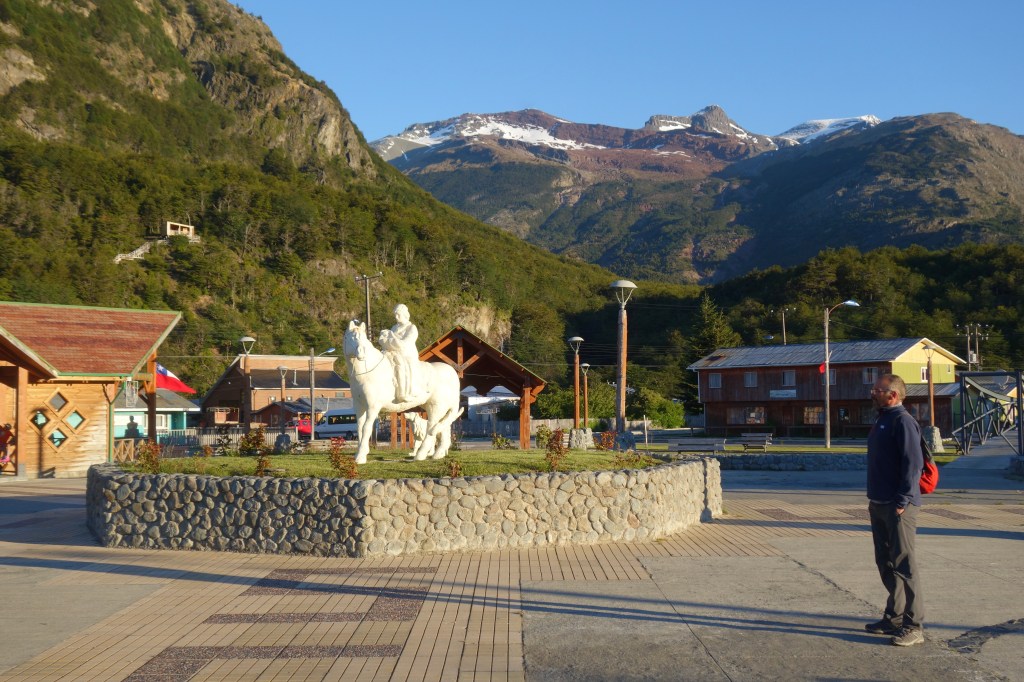
The highest points of the surrounding hills were still painted with a golden glow as we wandered down the empty main street. A white statue of a young girl on horseback marked the centre of town. We sat back on a wooden bench to admire the last of the daylight and reflect on the fact we’d just finished riding the length of the Carretera Austral. When Dad had arrived in Puerto Montt a few weeks earlier, he had never heard of the road and put his full faith in my route planning. It was humbling to think of the relationship we’d built with this remote gravel highway, the people we’d met along the way, and with each other. We still had a few weeks of riding ahead of us, yet I was overwhelmed with what we had just achieved together. My admiration for Dad was growing with each day we spent on the road.
As darkness crept over the town, we picked up a few supplies for the coming days from a small convenience store before walking in search of somewhere to eat. It seemed suitable to indulge in a can of beer as we walked. However, our dehydration took over and we both stopped on the spot and unashamedly tipped our heads back, emptying the tins in a matter of seconds. Distant neon lights at the other end of town marked the only restaurant open for business. We made our way up the road and entered the dimly lit, cavernous space. It was remarkably void of patrons given the size of the venue. Again, it was hard to picture these towns brimming with people during the peak tourist season, but it must happen if the number of empty tables and chairs within the restaurant were anything to go by. We indulged in some classic pub fare, washed down by a locally brewed Pale Ale named after the Rio Mayer that we had cycled across that afternoon. I’m not sure if the beer even tasted that great, but our newly developed affinity with the region prompted me to buy another two to take back to the hostel.
With an extra layer of clothes from our room, we headed back out into the crisp evening air to share a final beer on the Carretera Austral. Neither of us really felt like it but the moment was there, and it seemed appropriate. We sat in a small terrace watching stars begin to pop in the clear blue-black sky. Our drinking sped up as the cold of the night seeped beneath our clothes and we scampered back inside as soon as the bottles were empty. As Dad got ready for bed, I perused a pile of books in the hostel’s common area. My attention was seized by a hardcover copy of a book by a French photographer named Camille. The cover included a black and white image of a quintessential Patagonian mountainscape with a tormented glacial river in the foreground. I remembered Carlos talking about a book that matched this description. He claimed to have hosted Camille at his lodge and guided her around the region as she compiled images for the book. Since meeting Carlos, Dad and I had concluded that the tales we’d been told had sprouted from unfulfilled dreams rather than experience. However, upon opening the cover of the book and paging through the front matter, I was stunned to discover a dedication to a special someone. The author, Camille, had devoted an entire page to thanking Carlos for his hospitality and expert knowledge of Patagonia. I was humbled, as was Dad when I took the book into the room to show him. As the saying goes, ‘don’t’ judge a book by its cover, until you see the book cover it was talking about’.
I went to sleep that night somewhat saddened to think of what might have happened in Carlos’ life to result in him now being alone in a decaying lodge of palatial proportions on a gravel highway at the bottom of the world. Our time on the Carretera Austral had come to an end, but the lives and landscapes we’d connected with will continue to occupy our memories and imaginations forever.
 Faults and Folds