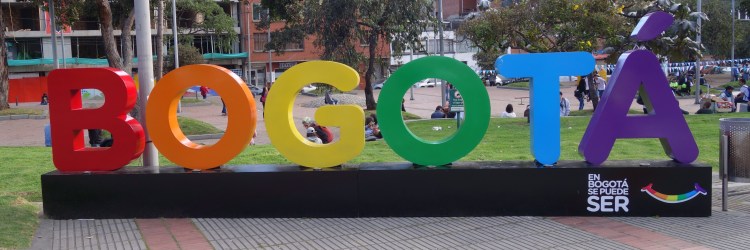
I landed at Bogotá’s El dorado Airport with a box containing my deconstructed bike, a duffel bag with the remainder of my contents for the next 5 months, and the phrase ’no hablo español’ (unfortunately the Spanish lesson podcasts had taken a backseat in the weeks leading up to leaving Australia). But at least this was an honest dipping of my toe into the language I’ll be using for the next five months. Unfortunately, it turned out that this put a further wall up rather than unlocking the door of conversation that I was seeking. It quickly became evident that the irony of this statement (‘I don’t speak Spanish’, in Spanish) was too much for the immigration officer, who confusedly responded, in Spanish, to which I then responded, in English. He shrugged, stamped my passport and gave me the thumbs up.
I progressed from immigration to customs where I was now left with nothing but charades up my sleeve. As I put my bike on the final X-ray conveyor belt, the expressionless and steely-eyed customs officer gestured at the box and said something under her breath. I hadn’t slept for 30 hours and thought she had said ‘Argentina’, to which I started pedalling on the spot, saying ‘Yes! Yes! Argentina’. She continued to stare (perhaps more out of bewilderment this time) before saying ‘No, No…USADA’. The silence was then broken by her fierce cackle. Unbeknown to me, Colombian cycling hero Nairo Quintana had won the previous night’s stage of the Tour De France and, in a country where cycling rivals soccer in terms of popularity, this lady was questioning whether I had been drug tested by the governing body of sports doping – USADA. My sleep-deprived delirium aside, this expression of humour, in a section of an airport which can increase the heart rate of the most innocent person, was a reassuring welcome to the country.
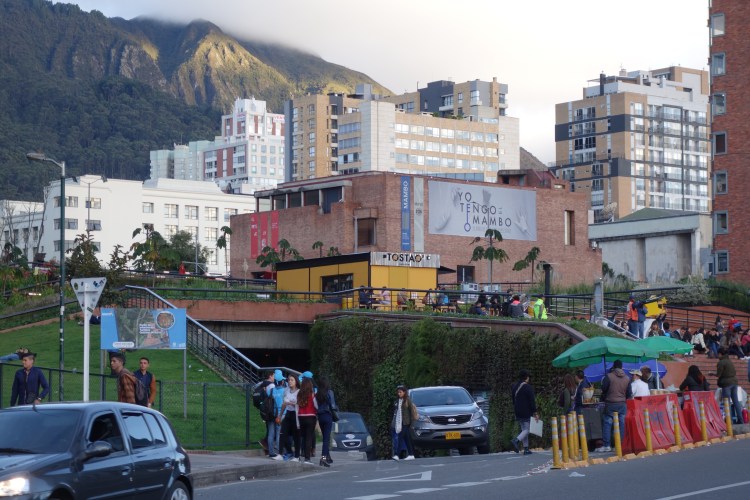
I woke the next morning to the sound of salsa music. Seriously. Out of my window, I watched as one of the mountains that stands above Bogotá, shedded its evening gown of fog, letting it pour down over the city like a breaking wave. For the duration of my stay, I became used to this morning occurrence which engulfs Bogotá in ‘mizzle’ (misty drizzle) until 11ish, at which point the sun has summoned enough energy to push the clouds aside. I also learnt that the Bogotá sun has a point to prove, burning an exposed receding hairline within minutes. The harshness of the solar rays here is probably due to the fact that the city is 2600m closer to the sun than any of the world’s coastlines.
It was a strange sensation stepping out of the hotel where I was greeted by one of the countless statues in Bogotá of Simon Bolivár – the driving force behind Colombia’s independence which was finally established in 1819 . This is a city I’ve read so much about, discussed as a case study of sustainable development with my classes, and was so excited about visiting. However, over the weeks leading up to this trip I discovered that the word ‘Colombia’ evokes some bizarre, yet disturbingly common, statements from people. The number of times people rubbed their noses with a smirk or referenced ‘Cocaine Cassie’ became too many to count. Admittedly, I never argued otherwise. I’ve watched the Netflix hit ‘Narcos’ and would watch it again. It’s an incredibly confronting yet captivating tale which took place only a few decades ago. However, it is also one of the many representations of Colombia in popular culture, in particularly the macabre events that occurred during the cartel era, that so strongly influences the perceptions of the general public. I recently read a report by Swedish criminologist Nils Christie that stated that depictions of organised crime in films, books and video games are currently worth more than organised crime itself. Unfortunately, this phenomenon has drastically influenced the western world’s view of Colombia. Interestingly, it was the preconceptions people had of the dangers of which I should be aware and, subsequently, the advice they gave me that was the most concerning. A few people actually asked me if I was going to buy a gun when I arrived to keep in a pannier ‘just in case’. This extreme aside, everything I had read did mention the word ‘crime’, followed by various descriptions of mugging and theft techniques of which to be aware. Oh, and don’t go out at night. On the back of all of this, I’d be lying if I said that I wasn’t hyperaware of my possessions against my back in my rucksack during my first morning in Bogotá.
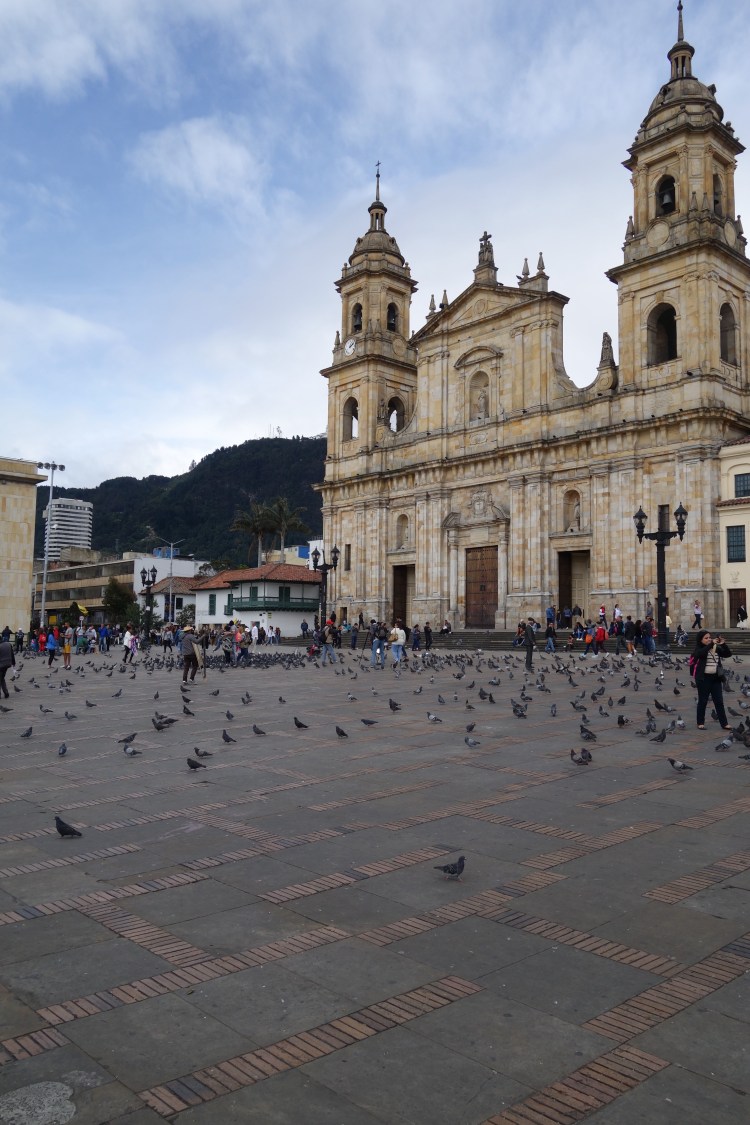
My experiences, however, when compared to the stereotypes that shroud this country could not have been more to the contrary. Perhaps 10 years ago I wouldn’t be writing this but, as so many locals continue saying, this is the ‘new Colombia’. Over the course of the next few days Bogotá welcomed me with open arms, opening my eyes, and leaving me with a deep desire to return. I was overwhelmed at times by the expressive nature of Bogotános; a reflection of their recently established freedom and a shameless love of salsa. For a city that has been surrounded by a decades long civil war and where class division is still so clearly obvious, the sense of community within Bogotá has left me with many ideas on what a good city should provide for its people. And, in addition to the developments that have occurred here over the last few decades, this is still a city in the grips of change. My three days in Bogotá were the perfect introduction to Colombia, sending me on my way with an already established love for this country and its people.
(I haven’t become complacent, Mum. I’m being careful.)
Expression
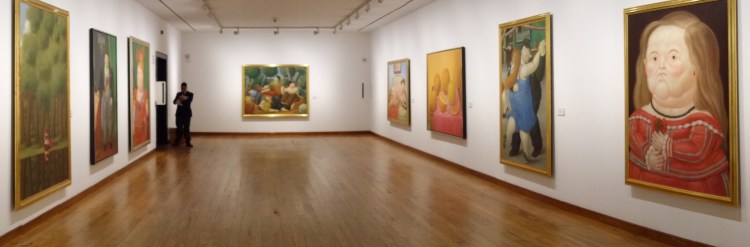
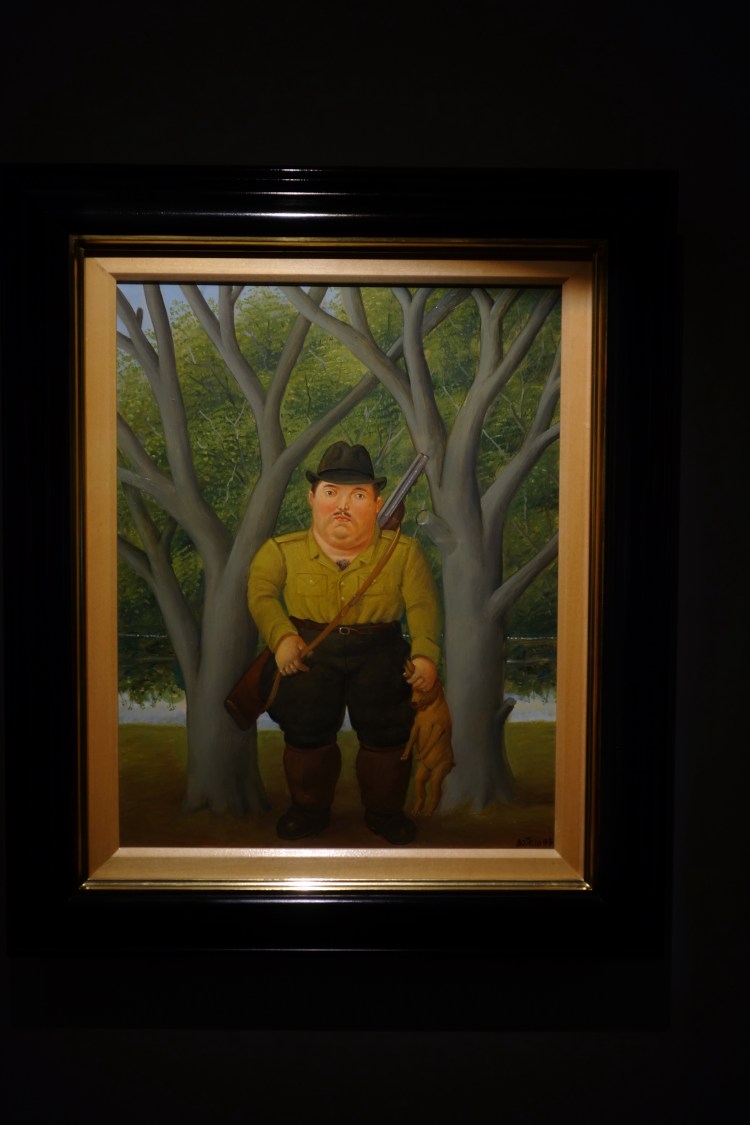
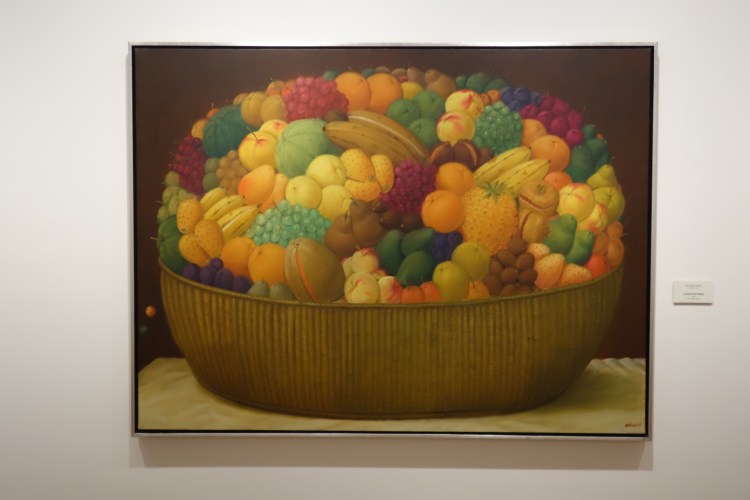
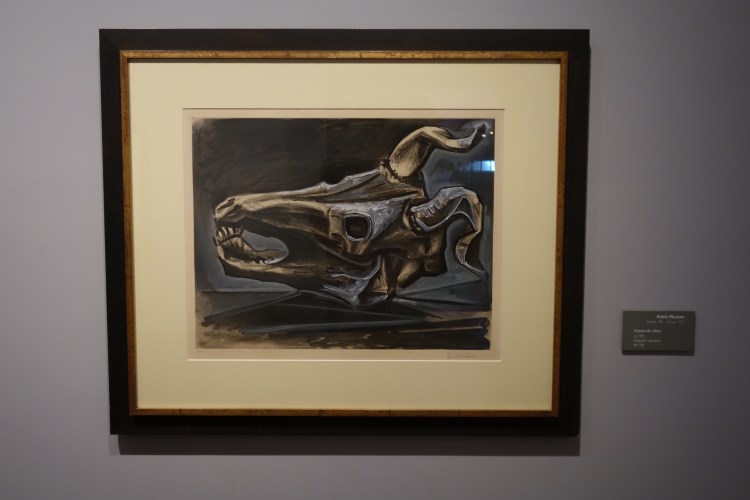
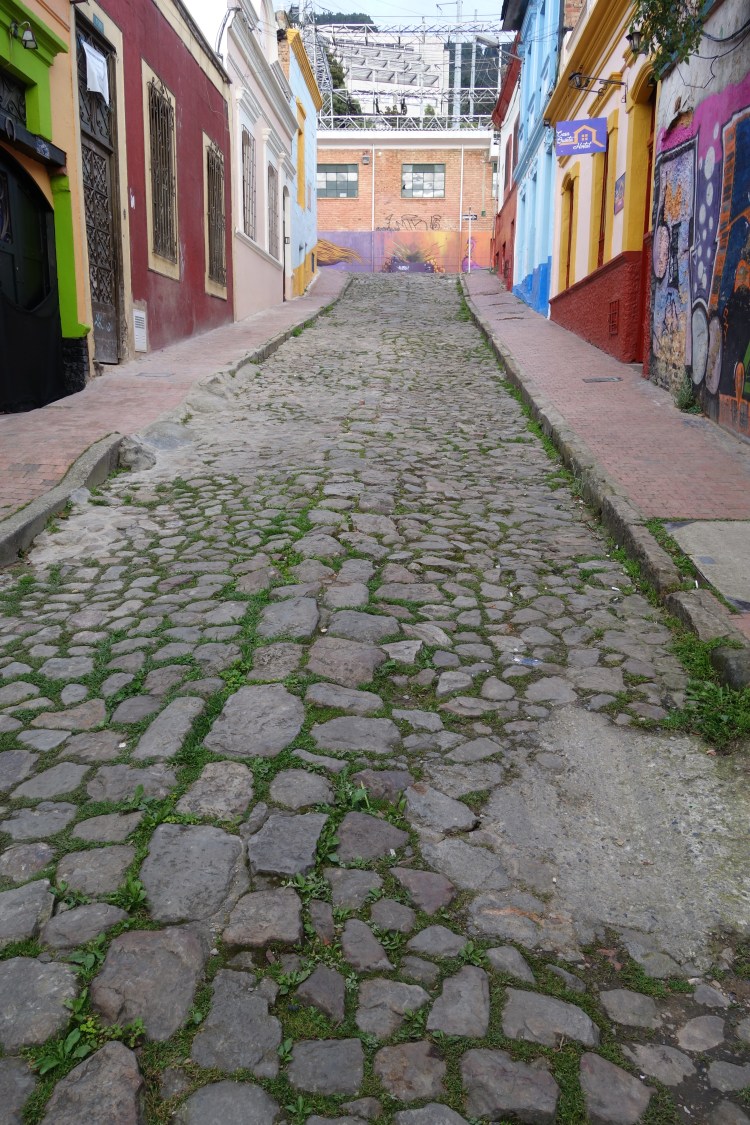
From my previous post, you’ll know that the streets are Bogotá are alive with artistic expression. The colour palette of the city is overwhelming; from soft pastels to vivid hues that would make David Walsh blush. In addition to the street art that covers the external walls of Bogotá, the inside of many buildings throughout the city are also teeming with art. As well as being the geographical heart of country, and the capital, Bogotá is also home to some of the county’s most impressive galleries and art collections. I experienced this first hand when wandering the streets on dusk one night. A warmly lit colonial building was displaying a subtle sign indicating that it was the ‘Museo Botero’ – one of the city’s most cherished galleries, which is also free to enter. Upon walking into the first of several rooms, spread over two floors, I came face-to-face with a Picasso. Having been in Melbourne a few days before and visited the current MOMA exhibition, I was genuinely stopped in my tracks. Did I mention this was free? As I wandered on, I was alone in the room with several more works by Picasso, as well as ones by Renoir, Dali and Monet. But, I was most enthralled by the work of the gallery’s namesake – Fernando Botero. Botero is Colombia’s most famous artist (both a painter and sculptor) who has donated 123 of his pieces in order to create a gallery that would be free for all Colombians, for all of time. His work depicts all things chubby; bowls of fruit, women, moustached men and the occasional FARC leader. It is so much fun.
The artistic expression within in this city doesn’t simply lie in the hands of artists. The tattoo culture has spread throughout Bogotá like a leaking ball point in the back of your jeans – there is ink everywhere. From lads with full sleeves and facial numbers, to women in business attire with sporadic line drawings down the back of their calves. In fact, the majority of the population here seem to be showing some form of art imprinted on their melanin-rich skin. I can only assume that these expressions of individualism come off the back of a recently established freedom within the country.
Alternatively, it could be argued that expression is simply in the blood of Colombians. Walking through the numerous green spaces within the city, I was hard pressed at times to decipher whether the resting bodies beneath the trees were individuals, or couples in an inseparable embrace. More often than not it was the latter – you just need to count the legs. The Assistant Principal at my old school, who used to get around with a ruler at springtime ensuring couples were separated by more than five centimetres, would be appalled. The affection within the city is overbearing. And it is not just between lovers. Everywhere you look you will see mothers and daughters of all ages walking hand in hand, three generations of men from the same family having a drink at a café, and owners constantly ruffling the back of their dog’s neck. In fact, nearly every street corner in Bogotá is marked by a policeman with his often muzzled dog (German Shepherds and Rottweilers seemed the most common). However, despite the intimidating façade, when the street is quiet it is common to see them check no one is watching and get down on their knees to give the dog some attention. I even saw one security officer unmuzzle his dog and throw his pacifying baton for the dog to fetch. The dog’s energetic return of the baton was met with a vigorous rubbing of the dog’s back before they both resumed their positions.
One aspect of daily life in Bogota that I fell in love with was sitting at busy intersections and watching street performers earn their keep. In the bigger cities within Australia, you’ll often be approached by people with buckets of soapy water offering to wash you windscreen whilst you wait for the lights to change. It’s often not a pleasant interaction – for the window cleaner or the driver pretending to look straight ahead as the squeegee is waved at them in anticipation. However, in Bogota, when the light turns red, performers will run out in front of the waiting cars and execute a perfectly timed performance, before standing with a hat in hope of some spare change as the drivers move forward again. Over the three days I saw a break dancing troupe who would fire up the boom box on the red signal before head spinning and popping until the green light shone again, and a man bouncing a soccer ball on his head whilst skipping. Most impressive of all though, was a guy who placed a spinning basketball atop a closed beach umbrella, before proceeding to open the umbrella, balance it on his head with the ball continuing to spin out of his sight, and then begin to juggle swords.
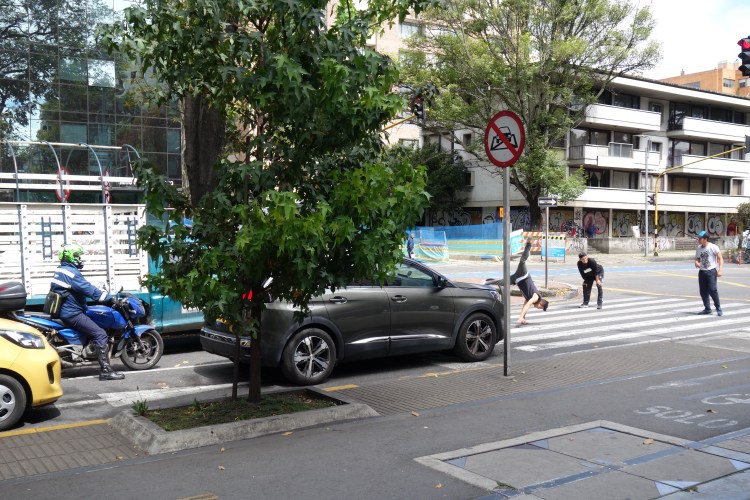
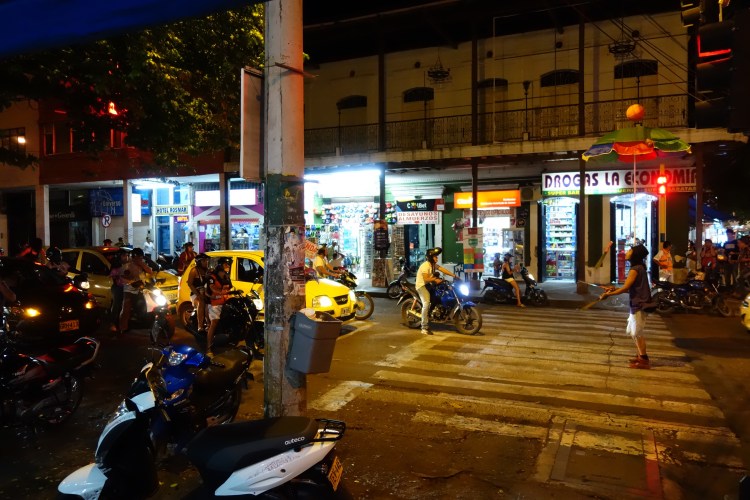
Like every city of this size, there are also those people and sights that are indescribable. The most captivating example that I witnessed was a traffic policeman in the middle of an intersection. This job required him to frequently use his whistle. However, he also seemed to have a pretty steady nicotine addiction. He had it all worked out though – he would inhale through his cigarette and exhale through his whistle. He still managed to direct traffic despite sounding and looking like a steam engine. These are the types of people that make life interesting.
Community
I once heard Tim Costello from World Vision speak about the ‘Lottery of Latitude’; a term used to describe the fortune or misfortune we are born into depending on where in the world we live. It is often the geographical location of where we enter the world that will unfortunately dictate the lives we will live. Bogotá, in many ways, appears to be a microcosm of this concept. The upper class citizens reside in the leafy suburbs of the north, with newly constructed skyscrapers and parks that are free of rubbish. But by taking only a relatively short bus ride south, you observe the spectrum of class division unfold. Homelessness is common and correct rubbish disposal is clearly not a priority.
But it is not just class that is clearly delineated within the city. Everything has its place. If you want sunglasses, there is an entire street devoted to optical shops. If your fridge stops working, there’s only one place in the city you need to go. It certainly makes life easy for the tourist as there a specific zones for shopping malls, parks, restaurant, and bars.
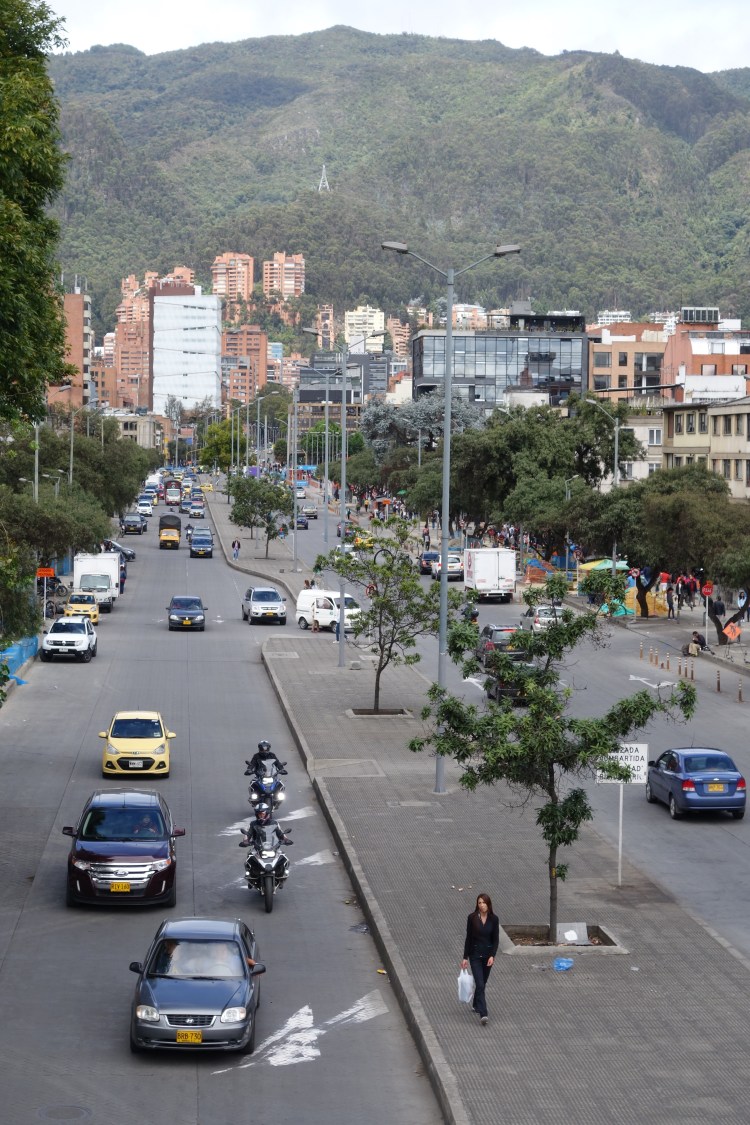
Despite appearing to contradict myself here, the thing that excites me most about Bogotá is the way all people, despite class, are connected. This creates the most overarching sense of community that I think I have ever witnessed.
The first element of this social connectivity is the prioritisation of bike lanes, making this city a cyclist’s dream. It was the desire of a mayor named Enrique Penálosá to develop a sense of love amongst Bogotános for their city. His view was that if you don’t love where you live, then why would you treat it with respect? By prioritising bike lanes over the development of more roads, it was his aim to make all people equal, whether they drove a $30,000 dollar car, or rode a $30 bicycle. In addition, he ensured that the newly developed bike lanes wound their way between the rich north and the impoverished south, and past a number of newly constructed libraries and green spaces. On top of this, he established the Ciclovia; the closure of over 170km of streets within the city every Sunday for people to feel safe to get out and explore their city. (I’ll write more on this soon, as I’m hoping to join in on the festivities of the Ciclovia as I ride out of town).
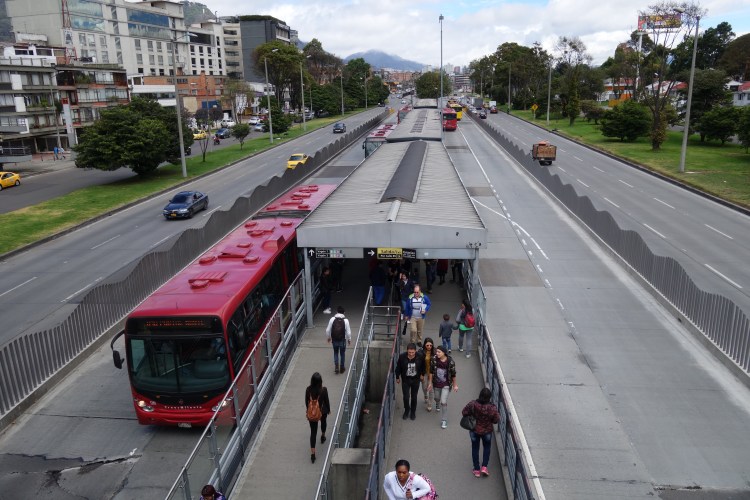
Another vision of Penálosá’s was to develop a highly efficient, affordable public transport system that would aid in the connectivity of all people within the city. He named this system ‘Transmilenio’ to give people the sense that this system was state of the art and not simply a ‘bus’. The red Transmilenio busses are the blood that pumps through the arterial roads of Bogota, keeping the city alive. They have designated lanes, run to time, have stops that are more like train stations, and employ a simple ticketing system, much like that of the Myki in Melbourne. When developing this system, urban planners used existing lanes for the busses and consciously chose not to provide more for those with cars. It was hoped that traffic would simply become more congested in the remaining lanes, providing more of an incentive to use Transmilenio! I love it.
In addition to these revolutionary planning decisions, there are a number of cultural elements that also flow through the streets of Bogotá, uniting its people. As mentioned, salsa is a common occurrence, whether being danced within restaurants or blasted from a boom box outside the bank. It is certainly the soundtrack for the city making it hard not to smile the entire time.
And how could I not mention again the city’s (and entire nation’s, I assume) love affair with the cyclist Nairo Quintana? The coverage of the Tour De France is constantly playing here at the moment, and although the entire race is broadcast, there is a definite focus on Nairo. If the leaders are five minutes up the road, the cameras will still be on him. The hashtag #ThankNairo is constantly floating across screens, regardless of whether he is winning a mountaintop finish, or limping in well behind the leaders with a bloodied elbow. The patriotism here is astounding.
Change
On the morning of my final full day in Bogotá, I decided to head up Cerro De Monserrate – the mountain that has a overwhelming presence in this city, much like that of kunanyi/Mount Wellington in Hobart. Bogotá is more or less hemmed in by mountains to the east and west, resulting in an easily navigable grid system of streets called Carreras and Calles. Carreras run parallel to the mountains, their numbers ascending to the west, while Calles run perpendicular with their numbers increasing to the north.
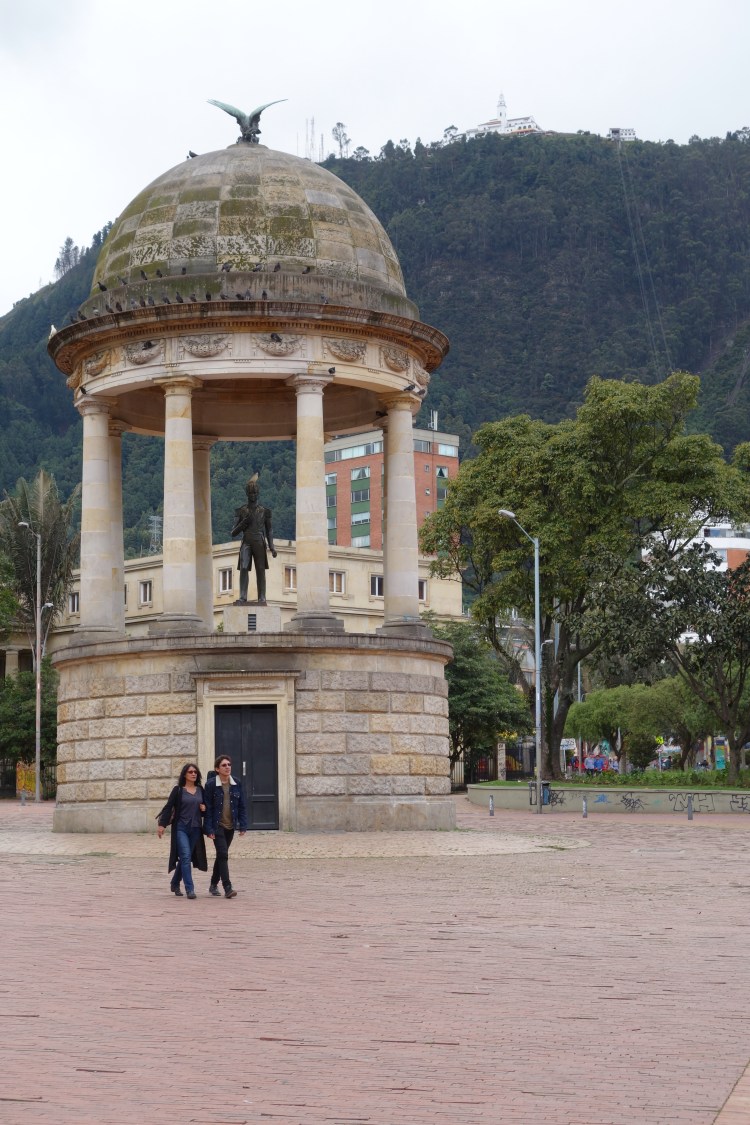
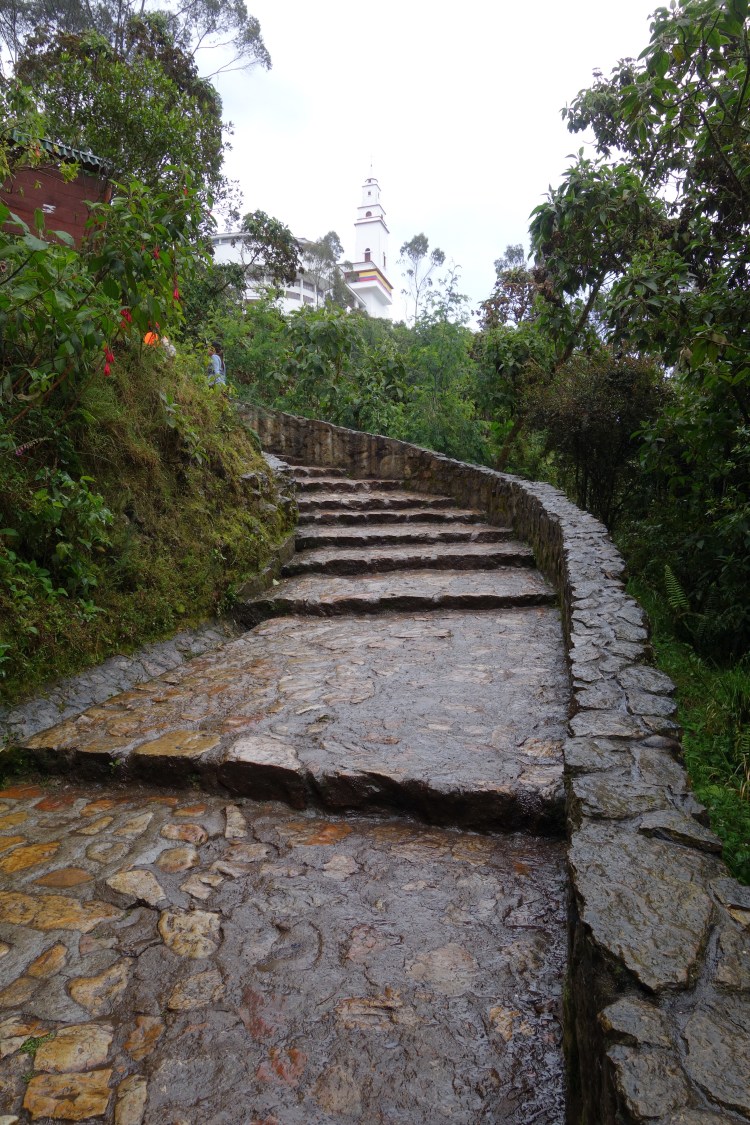
Cerro De Monserrate stands to the east of the city and, at 3150m (as mentioned, Bogotá is at a literally breathtaking altitude of 2600m), is central to the weekend exercise regime of many locals. Despite the options of a cable car (I won’t make another Hobart reference here) and a clunky funicular to take me to the summit, it was Saturday morning, so I joined the crowd and tackled the 1500 steps that rise above the sprawling metropolis below. The stone staircase itself was a work of art.
The lack of oxygen was obvious, albeit not restricting, which was an encouraging sign considering the route I’m planning over the next few months. I took it slowly which allowed me to take in the views of the city from the elevated position. In the same vein as when bushwalking back home, seeking higher ground is often a humbling experience, reiterating my insignificance in the surrounding landscape. Bogotá is a city of eight million — that’s three million more people than Melbourne. I had spent days immersed in the streets which had begun to feel familiar and safe. However, viewing the sprawl that extended beyond the haze on the horizon suddenly brought me back to reality. The next day I would be trying to ride my bike out of Bogotá and that began to feel intimidating.
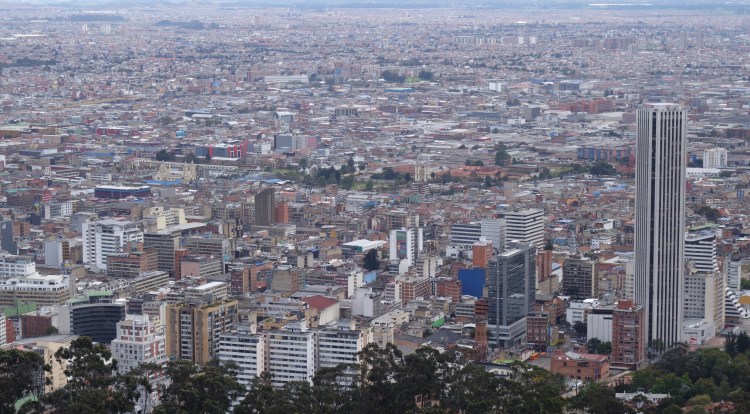
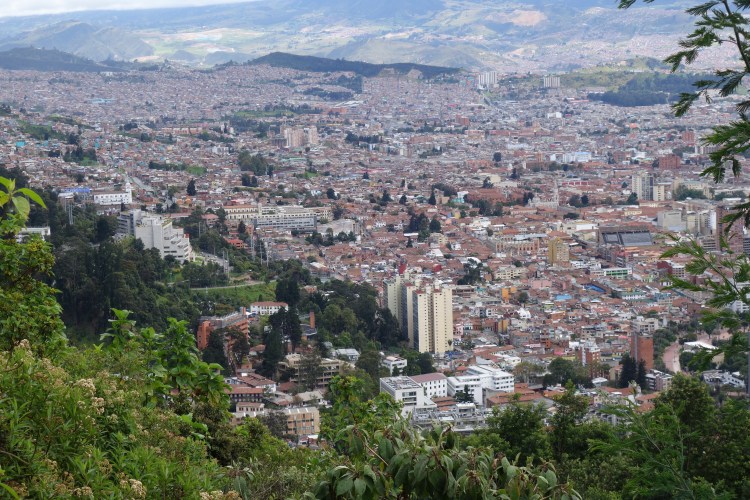
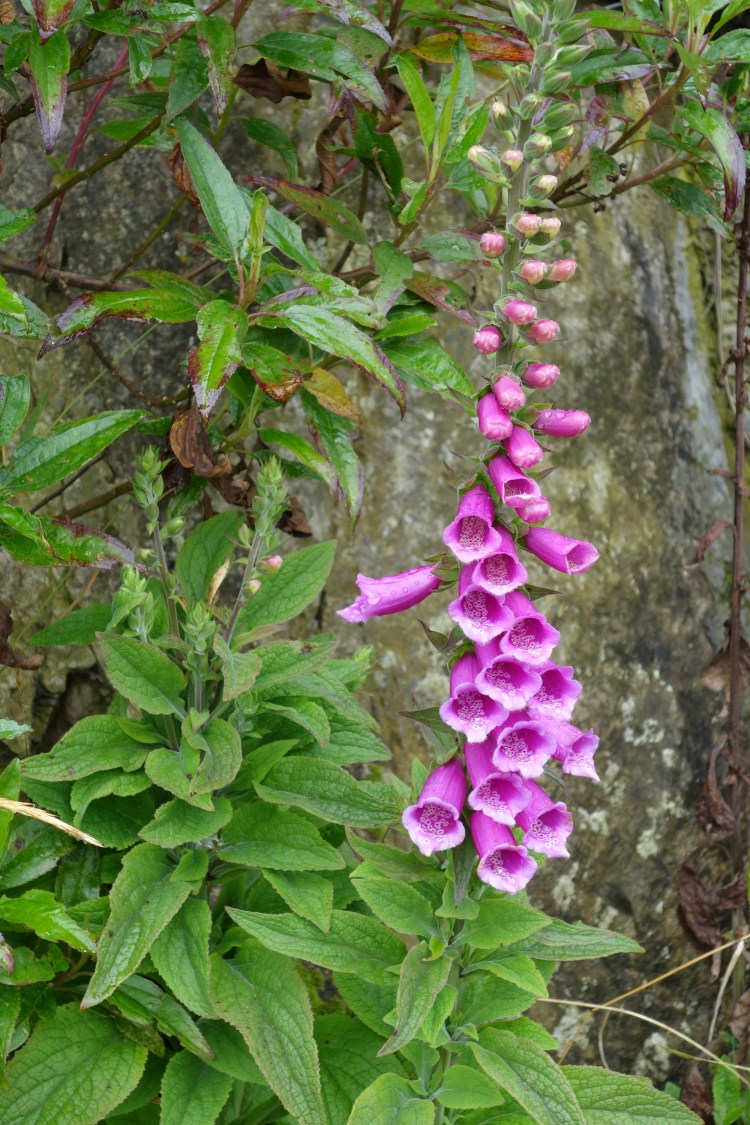
To ease this apprehension, I spent the remainder of the walk focussing on my surroundings at a smaller scale. For example, the flora. In the same way that expression and individualism flows though the people of Bogota, the diversity of the natural world is equally as stunning. Colombia has more plant and animal species per unit area that anywhere else in the world. This became starkly obvious as I closed in on the summit. Amongst the floral arrangements of assorted colours, I was flooded with a sense of home as I walked between stands of Eucalytpus and Acacia species, all thriving at over 3000m.
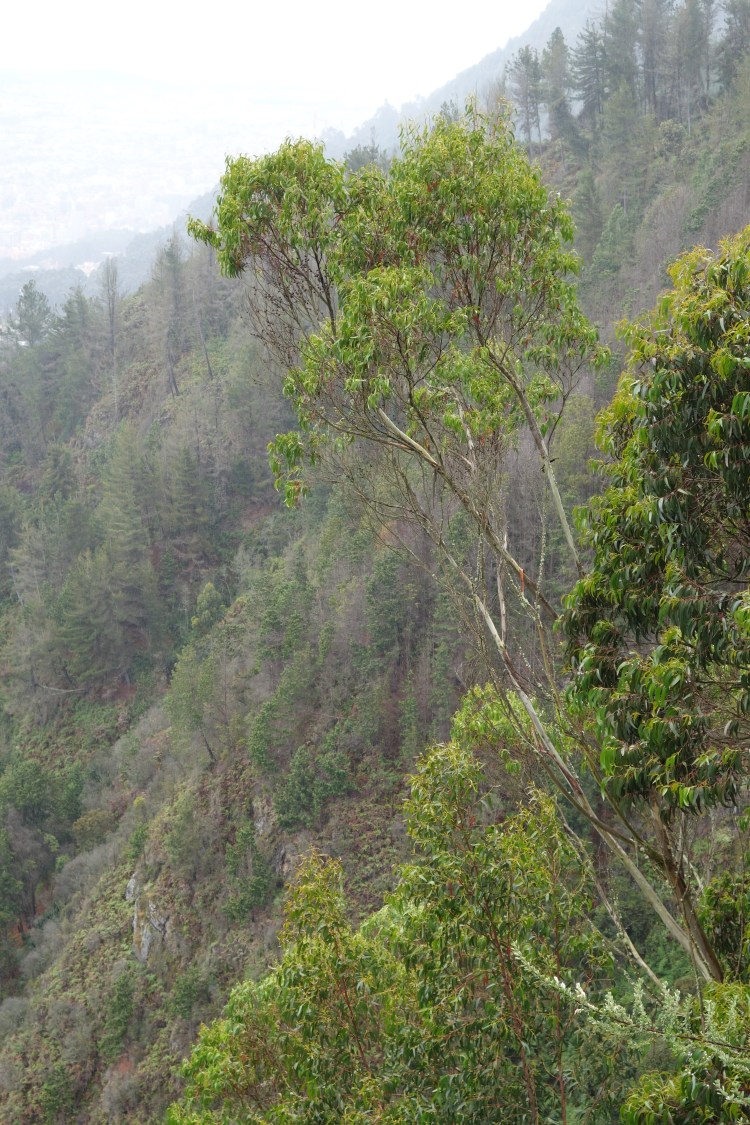
Despite the low cloud and constant drizzle that was engulfing the city on this morning, the view was impressive. Green hills to the east and a valley to the west that was flooded with humanity. Atop Cerro De Monserrate is a church, which was mid-service when I arrived. This place holds a special place in the hearts of many pilgrims. It is thought that during the solstice, if you stand in the main plaza of the town, the sun rises from directly behind the mountain. I have to question this chicken/egg scenario (plaza/mountain), but nonetheless, it is clearly a place to be celebrated.
I stood next to a man who was sucking in his breaths, while he pensively gazed at the city below. Between inhalations he spoke to me. I followed quickly with ‘no hablo español’. He then responded in English, without breaking his gaze over the city.
“I used to live here. 35 years ago I moved to Miami. So much has changed. The city is enormous and there are skyscrapers! The people are happy. This new staircase is incredible. I’m back now. I think I’ll stay”.
Despite not having my own reference point on which to evaluate the change that has occurred here, it doesn’t take much reading to uncover some impressive details. Between 2002 and 2010, foreign direct investment in Colombia exploded from $2 billon per year, to over $10 billion. Most people associate this economic boom with the hardline tactics taken by President Alvaro Uribe in the ongoing battle with the FARC. His predecessors had attempted negotiations with the overbearing guerrilla group, but when Uribe was elected he took a more militarised approach. He viewed the FARC as terrorists and treated them as such. In the wake of his actions, highways once controlled by FARC roadblocks began to open as the rebels were pushed further back into the countryside. In addition, many wealthy Colombians who had left the country due to constant fear of kidnapping, began to return. With them they brought the foundation for economic growth, and as such the city began to grow, upwards as well as outwards. The skyscrapers, many of which are mid-construction, and the business districts throughout the city, are a symbol of this newly established sense of safety.
But like everything viewed through the tourist gaze, there is often more to the story. Uribe’s success was somewhat undermined by a scandal which broke out in 2008. Journalists uncovered that the army were responsible for the killing of over 3000 peasant farmers in the remote countryside. It was discovered that they had then been dressing the bodies in rebel uniforms and claiming them as ‘combat kills’ in their search for promotions or days off. Regardless, Uribe’s success in reducing the control of the FARC is still celebrated.
This ‘dirt under the rug’ scenario reminds me of when I was in Myanmar in 2015. As a relatively ill-informed traveller, I, like many tourists was excited by the recently elected National League for Democracy (NLD) party who were in power, led by the celebrated Aung San Suu Kyi. Within the tourist centres, propaganda promoting this party lined the streets, and many locals wore t-shirts proclaiming their support. However, in talking with locals on the peripheries of these areas, the disillusionment quickly became clear. Many were disappointed in her lack of ‘spine’ and inability to follow through with her promises. What has occurred on the Myanmar border in the years following my visit only reiterates the views of these people.
A similar concern is evident here in Colombia. In 2012, President Juan Manual Santos signed a historic peace agreement with the FARC, proclaiming that the era of rebel control was now in the past. But much like in Myanmar, once the agreement was established and the handshakes had been photographed, people began to question his execution of this deal. As a result, President-eclectic Iván Duque Márquez will be taking up office on August 7. He promises to continue implementing the peace agreement, closely following its established parameters in a hope to truly bring peace to the county. Time will tell.
My descent from Cerro De Monserrate left me thinking about the continued change that will occur here over the next 30 years. It also provided me with more oxygen as I skipped down the stairs in anticipation of lunch.
I found some lunch that afternoon, in a restaurant called ‘La Puerta Falsa’. It is the oldest restaurant in town, opened in 1816, and was on the top of the list of recommendations written for me on a napkin in a café. Pressed in amongst local diners, I looked at the exposed wooden beams and flaking mud render and had to wonder whether Simon Bolivár had come here to celebrate his victory in 1819.
Reassuringly, on this last day in Bogotá, I ordered my meal, requested the bill, and complimented the chef, all in Spanish. Admittedly these are three key phrases in the ‘dining out’ section of my phrase book, but it certainly beats my attempted charades at the airport. However, there is still so much to learn and adapt to as a move through this country. It is one thing ordering a meal in Spanish, but is a completely different challenge working out the correct way to consume it. At one restaurant I was presented with a bowl of potato soup, a cob of corn on a skewer sitting in the soup, a side of cold rice, half an avocado, and two shot glasses, one containing capers and the other mayonnaise.
But for now, all I can focus on is the ride out of the city. I don’t think I have any comprehension of what five months on a bike really means. I certainly lack any understanding of the reality of riding at over 4000m. And, as for where I’ll be staying in the coming nights, I have no idea. All things going well, I’ll hopefully be able to answer these questions in the coming weeks.
Thanks for reading.
 Faults and Folds