If you find yourself looking at a relief map of Colombia, it’s hard not to be drawn to the three, scar-like Cordilleras (mountain ranges) that run from the north to the south of the country. Whilst they are dominating in their own right, the Cordillera Occidental, Cordillera Central and Cordillera Oriental (from West to East as seen in the image below) also comprise the northern Andes. These spines of rock, reaching upwards of 5500m in places, are separated by deep valleys in which rivers flow, connecting Colombians and providing a sustaining fertility. The most notable of these is the Valle Del Magdalena – home to the Rio Magdalena (Magdalena River). Whilst the valley is wide in the north, as you trace your finger south over a map, Cordilleras Central and Oriental converge, joining Cordillera Oriental as three become one. From here, the one plunges south as the Andes proper, where some of the most captivating and alluring peaks in the world can be found.
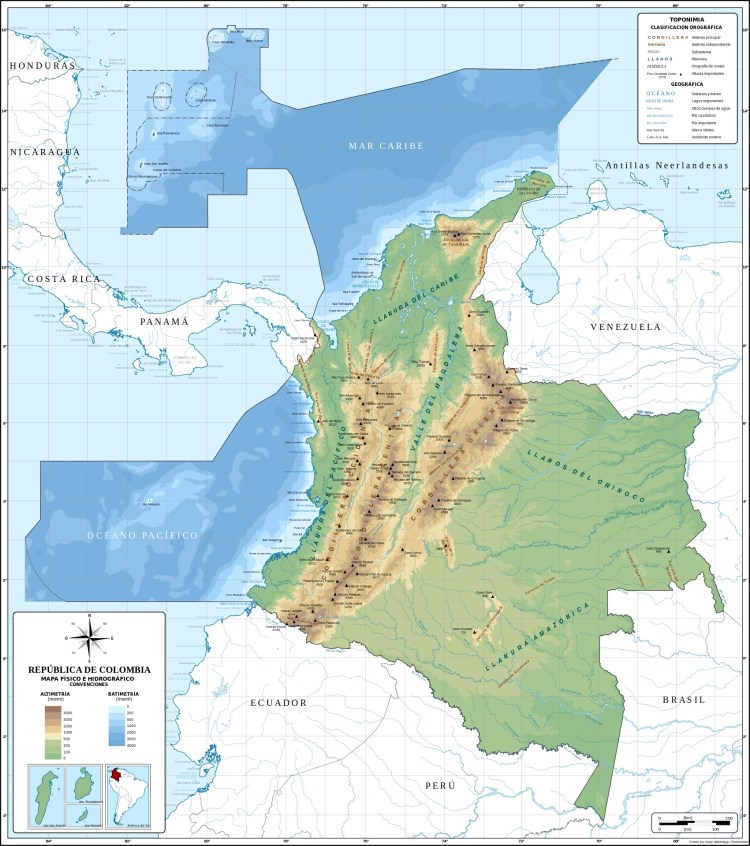
Bogotá, at 2640m, is set on a plain that is perched on the western flanks of Cordillera Oriental. As I sat in my hotel room with my reconstructed bike and its swollen panniers, I poured over the various shades of brown, yellow and green on the map in front of me. The route seemed obvious. I decided that I would leave Bogotá and let the Valle Del Magdalena guide me south. The Magdalena River is Colombia’s most significant, flowing over 1500km from its headwaters in the south of the country, all the way north to the Caribbean. It’s drainage basin covers 270000 square kilometres which is 24% of the country’s total area. Of most interest to me, however, is that the Magdalena basin is home to 66% of Colombians. If I wanted to connect with Colombia and its people, it was clear that I needed to head to where they reside.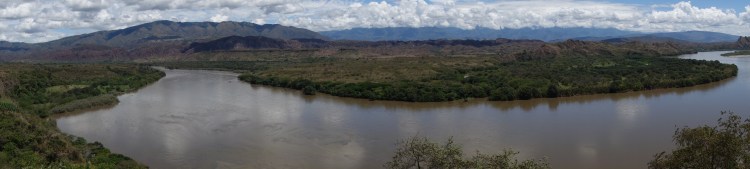
In theory, this was a simple line on a map with an origin and a destination. The reality of my descent in to Valle Del Magdalena was so much more than I could have expected. After my first week on the road, I have formed a firm understanding of why Colombia’s outgoing president, Juan Manuel Santos, was recently quoted to have said “the biodiversity is to Colombia, what oil is for the Arabs”.
Ciclovía
From the conception of this overland journey, I knew that I would cycle out of Bogotá on a Sunday. Ever since reading about the Ciclovía – the revolutionary concept that occurs every Sunday in Bogotá – I knew that I had to experience it first hand. Each Sunday from 7am until 2pm, over 120km of Bogotá’s streets (and now a host of other cities around the world due to the success experienced in Colombia) are closed to cars, to allow cyclists, runners, walkers and skaters the freedom to roam the roads. Most importantly, the Ciclovía route, which is linked to create a circuit, uses all parts of the city as a means of connecting people from all walks of life and developing a sense of community within this rapidly growing metropolis. It would appear that the Ciclovía has become a pivotal part of life for those living in the city. In 2007, congressman José Fernando Castro Caycedo, proposed a law banning Ciclovía, based on the argument that it caused traffic jams. Ciclovía users rallied in protest and the proposal was defeated. Further evidence of the local attitude towards the program is that fact that approximately 2 million Bogotános (around 30% of the population) use the Ciclovía every week.
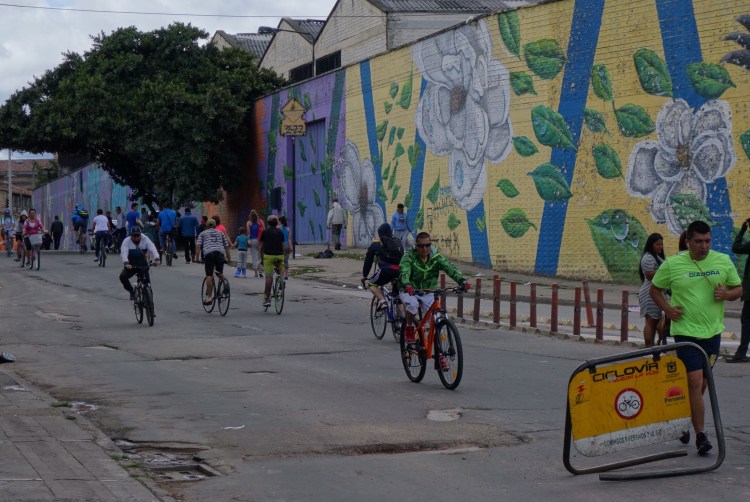
On Sunday July 29, I clipped into my cleats and took my first pedal strokes towards Argentina, via the Ciclovía.
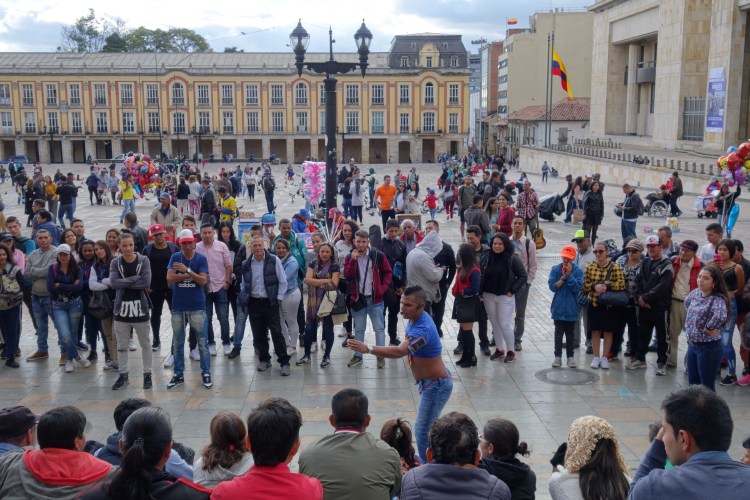
The streets outside my hotel were devoid of people. After rolling down the cobblestones towards Plaza de Bolívar (Bogotá’s main town square) and Carrera 7 (the street permanently closed to vehicles), the reason behind the absence of human activity I’d observed a few moments before was explained; everyone was here. Carrera 7 is a central component of the Ciclovía route, and where I had landed was clearly the epicentre of the weekly festivities. I joined the flow of human traffic and was reduced to pushing my bike due to the congestion. However, the countless number of street performers, music troupes, food stalls and even a dog show, took my mind off the fact I was meant to be riding. I was swept along in a sea of vivacity, and once out the other side, I was able to mount my bike again.
As I’m not carrying a mobile phone on this trip, I’m consequently reliant on paper maps, written and spoken directions, and memory. Whilst I had printed maps with a route out of the city, I threw caution to the wind and continued to ride along side my fellow two-wheeled companions. The streets that would otherwise intersect the route on any other day of the week were blocked off by large aluminium signs marking the Ciclovía. Given the dilapidated state of these signs, it was clear that they had been dragged out every Sunday for a number of years. This event is simply a way of life for Bogotános.
The mood was joyous. The pace was pleasant. Smiles were abundant.
The diversity of users was striking. There were lycra-clad roller bladers in full stride, bent forward with one arm behind their back for aerodynamics and the other swinging to generate momentum. They would fly past the families, some of who were testing new matching bikes for the first time and others simply walking their dogs. Even teenagers had dragged themselves out of bed, some with hoodies on sitting comically low on their BMX saddles. I think I could comfortably say I was the only person out there that day with five months worth of gear and equipment strapped to my bike. Nonetheless, I was simply contributing to the wide array of participants.
I continued rolling along and even considered whether I should just leave the next day and complete a full circuit. However, the anticipation of the unknown got the better of me and I decided to begin heading south. Unfortunately, by this stage I had no idea where I was in relation to my planned exit route. Whilst standing on a corner, obviously looking out of place (red-faced, with an oversized bike, holding a map), one of the Ciclovía facilitators pulled up next to me. I had seen these people throughout the morning as they rode along in red and yellow uniforms, with matching hats, bikes and backpacks. They were reminiscent of Australian lifeguards, except they were 500km from the nearest ocean. He asked me if I needed help and when I told him of my intended route for the day he was a little perplexed. His expression alluded to the question of why I would want to ride anywhere else but the Ciclovía? However, he pointed me in the right direction and even made some suggestions to improve the ride out of town. As it turned out, I was only 500m from the main highway out of town. I swung my bike back around to face the direction that I had come from, and revelled in the last few minutes of this simple yet unifying phenomenon that is Bogotá’s Ciclovía.
Falling from Bogota
After parting ways with this fossil fuel-free utopia, the traffic, and my stress levels, increased dramatically. I would have photos from the ride out of the city, however for almost two hours I was running handlebar-width gaps between trucks or caught in the grips of a motorbike peloton. My defensive riding skills were tested and considering that I’m writing this, I would say I passed. It was a sweaty rush, especially as the tarmac heated up and the emissions from the cars surrounding me increased with the growing number of vehicles.
I eventually made it to a sign for El Charquito – the turnoff that the Ciclovía facilitator had told me to take. Instantly, the riding changed. I knew from my planning that I would come across the Bogotá River, one of the Magdalena’s major tributaries. However, I was not prepared to smell it before I saw it. The stench, on top of a water and food depleted body, was almost too much.
It is said that the expansive plain (originally known as Bacatá) in which Bogotá now lies, was once completely occupied by a lake. The Indigenous people who lived there, the Muisca, called themselves ‘the frog men’. One day, the frog men managed to dislodged an enormous boulder, which consequently allowed the lake to drain and the Muisca people to be frog men no longer. As the water gushed out of the lake it poured over what is now known as Salto de Tequendama – a 137 metre high waterfall. Later on, this site became a favourite spot for rebuffed lovers to leap to their deaths. However, in more recent times as Bogotá has experienced rapid growth and urbanisation, it has consequently outgrown its sewerage system. It’s said that the smell is so bad that it is now keeping even the suicidal away. I’m sure the frog men (or now more fittingly, bog men) would be appalled.
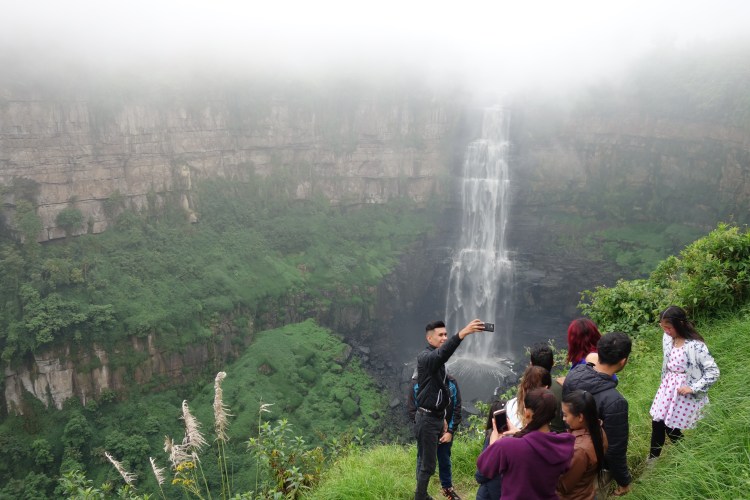
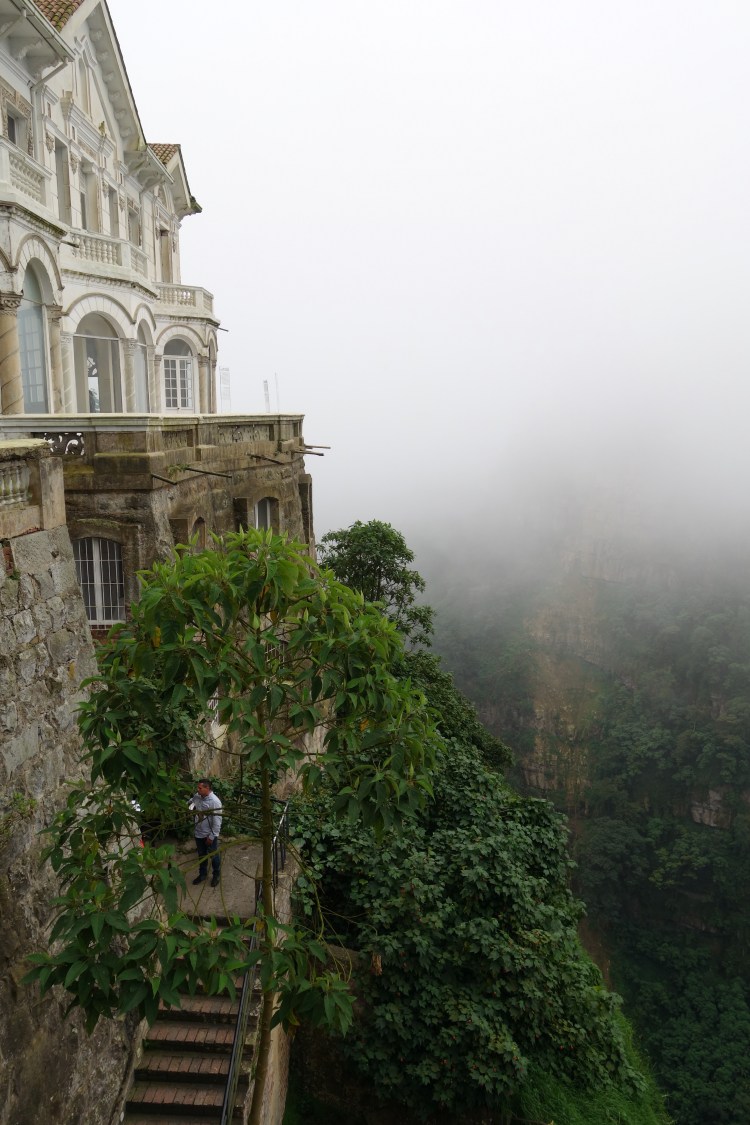
Despite the odour, I continued alongside the river as it cascaded over large boulders into swirling eddies, which were foaming due to the overwhelming nutrient levels in the water. About an hour after turning off from the highway, I rounded a bend and was confronted with the grandiose Tequendama Hotel. Now functioning as a museum, the hotel was ambitiously constructed high above the river in the 20s and became a popular escape for the city’s elite.
On the southern side of the hotel were a string makeshift restaurants, perched precariously on bamboo stilts on the edge of the steep cliffs. These shops, serving an array of fried food, were teeming with tourists and selfie sticks. It appeared to be an incredibly popular place for couples to come on their motorbikes, take a photo, eat an empanada, and return to the city. Since the falls have been dubbed the ‘largest wastewater fall in the world’, it’s a good thing multi sensory photography is yet to be invented. A ‘scratch and sniff’ would take all the romance and splendour out of a photo that can still be afforded by the tumbling water. I silently thanked the frog men for releasing the boulder and allowing the water to fall out of the mist, before saddling up for the next section of the ride.
Once back on the bike, I succumbed to the same fate as the water, as I descended 1600m over the next 20km. Within 45 minutes, I had gone from the falls where I was inside a cloud and wearing a fleece, to riding past banana plantations and sugar cane crops, being yelled to by fresh fruit vendors. It was a gradient in temperature, elevation and environment that I had never experienced before. I was caught in the predicament of controlling a loaded touring bike around steep, sweeping bends, and trying to absorb the changes that were occurring around me.
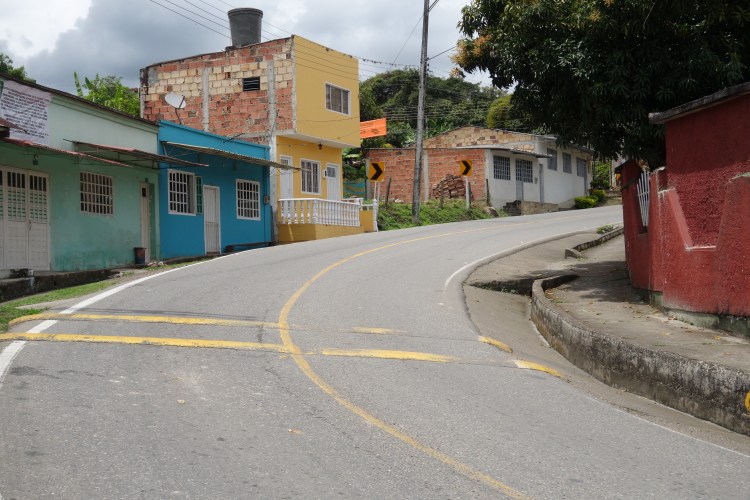
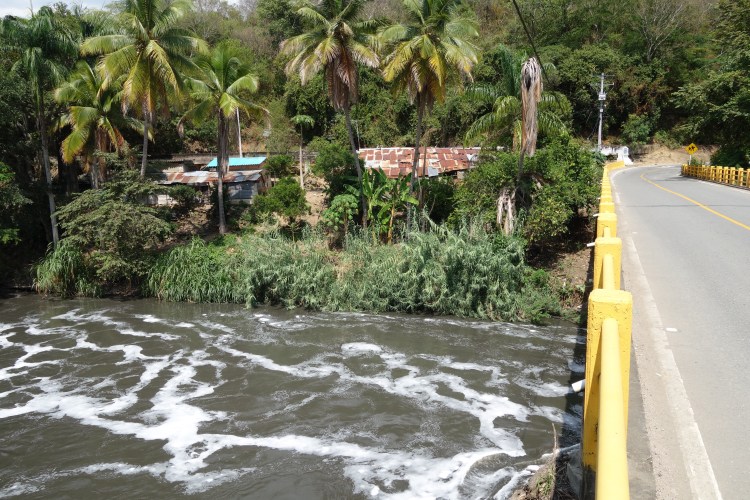
As I lost elevation, the surrounding vegetation only became more luxuriant. And with the richness came more life. Not only did I begin to see this transition, with the increasing number of birds of varying sizes and colours, but I began to hear the changes as well. Being my first day on the bike, I was hyper aware of how it was performing. After a number of false alarms, it became comically evident that the masses of insects at these lower elevations create sounds that resemble mechanical issues on bicycles. The hissing and screeching sounding all too much like air flowing from a punctured tire or misaligned brake pads. At times, the insect choirs were still audible over the rumbling of passing trucks. The road I was taking was providing me with a private tour of Colombia’s ever changing emotions.
Colombia has the second-highest level of biodiversity in the world, behind Brazil. Given its relative size, this is incredible. Due to its position slightly north of the equator and the presence of the Cordilleras which capture a large amount of precipitation, Colombia is considered one of the world’s 17 ‘megadiverse’ countries. It holds first position worldwide in number of orchids and birds, second position in plants, amphibians, butterflies and fresh water fish, third place in species of palm trees and reptiles and globally holds the fourth position in biodiversity of mammals. As of 2016, records show that there are 56,343 species registered in Colombia, of which 9,153 are endemic. I can only wonder how high this number would be if botanists and environmentalists had been able to explore the jungles and forests that have been off limits due to the presence of the FARC over the last 50 years?
The first two days on the road were dominated by the decent. In the evenings, my hands were so fatigued from squeezing the brake leavers that I struggled to wring out my clothes which I was hand washing. I’m sure next time it rains I’ll be leaving a soap slick on the asphalt behind me.
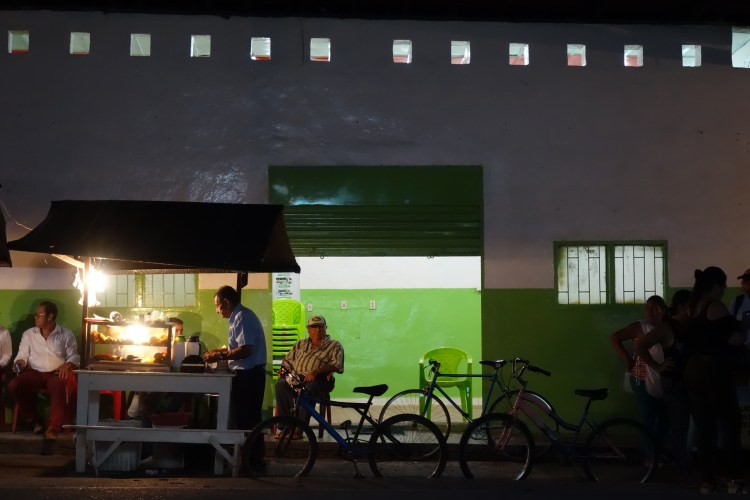
Towns came and went as I made my way to the base of the valley. Regardless of their size, passing through each settlement brought with it the sounds of children, vehicle horns, booming salsa music and the smell of burning wood with various beasts being slow cooked on manual rotisseries.
I spent my first two nights in the towns of El Colegio and Giradot. Both of these towns, as I’ve now become well accustomed to, share the standard Colombian blueprint with everything centred around a town square and cathedral. Regardless of the day of the week, it is assured that the centre of town will always be a sea of rainbow umbrellas housing food vendors, each powering their stall with a two-stroke engine to keep their produce cool. In addition, there always seems to be a service underway in the cathedrals. With doors open to the street, the sounds of organ music and preaching becomes a constant soundtrack for each town.
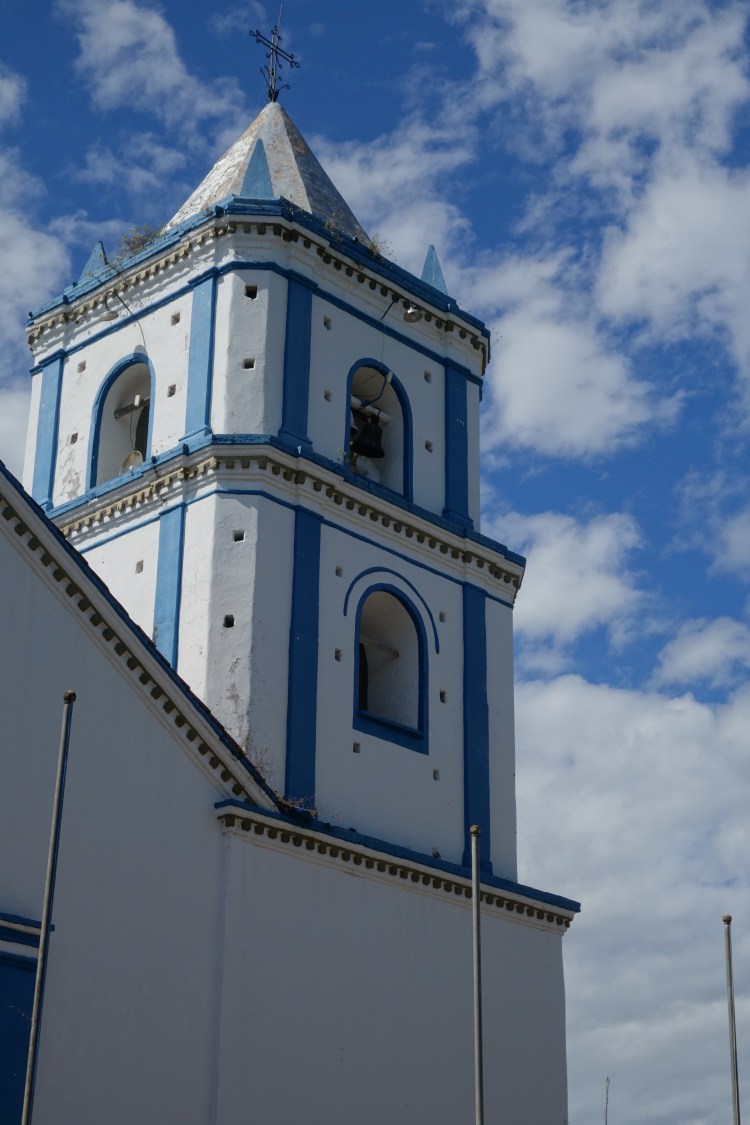
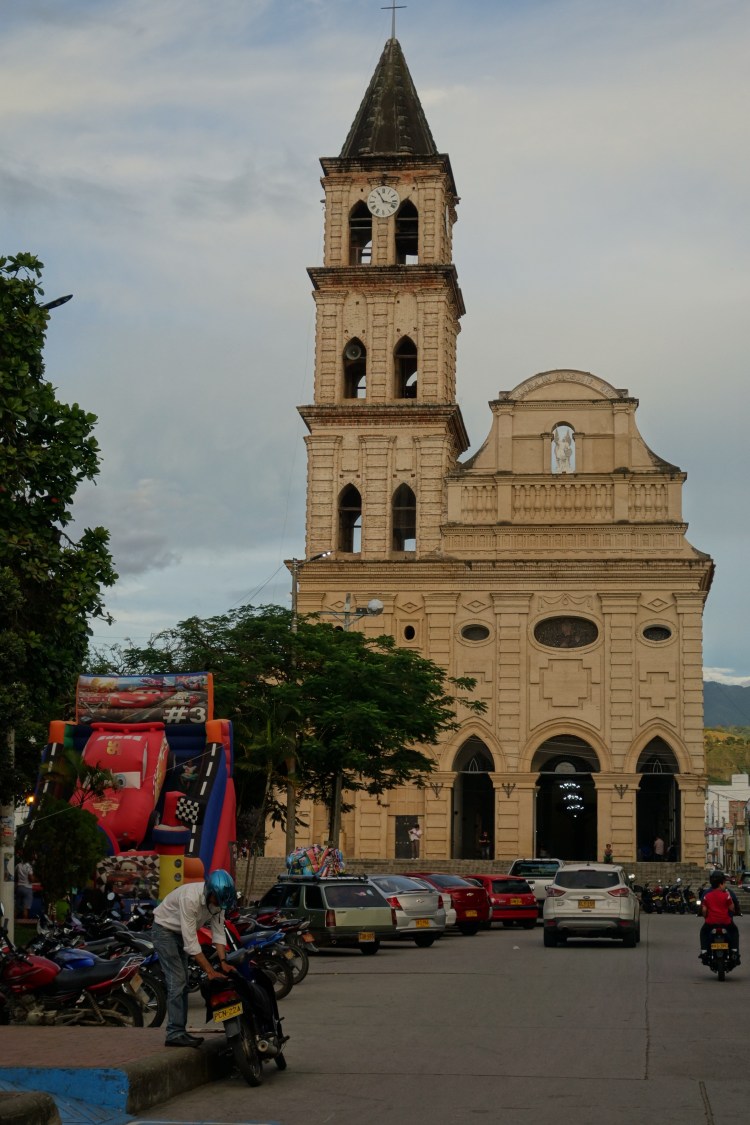
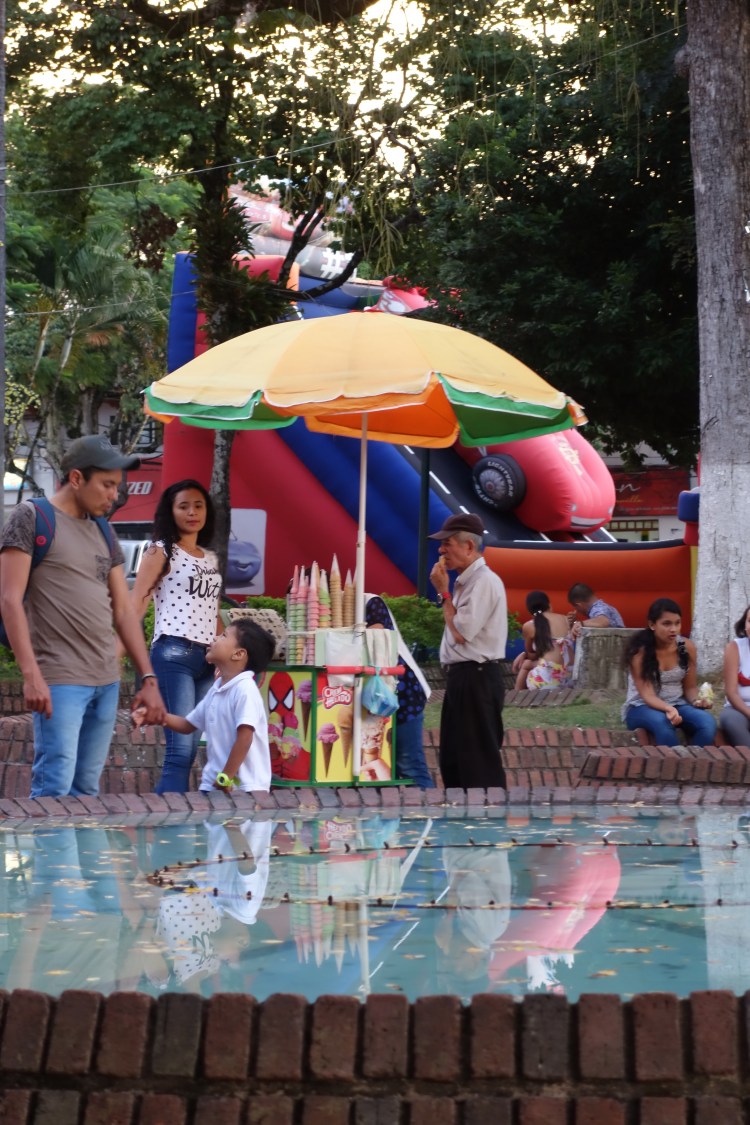
The town of Giradot is positioned at the confluence of the Rio Bogotá and Rio Magdalena. This signified that I was now on the valley floor as I watched the chocolate milk Magdalena surge by as a creature composed of whirlpools and standing waves. When staying in hotels, I am required to provide my passport as documentation. Each time, the hotel owners interpret my name as John. Fernando, the owner of Hotel Sucre in Giradot took a liking to me during my short stay. He sat with me on the balcony showing me YouTube videos of the various forms of dance and music in Colombia…Salsa, Mapale, Cumbia, Joropo, etc. At 1am I couldn’t take any more and managed to communicate my need for sleep. Fernando, still on the edge of his chair and clapping his hands to the beat of each track, patted my back and wished me goodnight.
“Buenas noches, John!”
Another aspect of being in the lowlands was the heat. I really wasn’t prepared for this, especially having landed in Bogotá where the four days I was there hovered between 12-16 degrees Celsius. As I continued south from Giradot I was forced to adjust to daytime temperatures of 35-40 degrees. And, as I was still somewhat adjusting to the new time zone, I wasn’t in the state to be on the road early during the coolest part of the day.
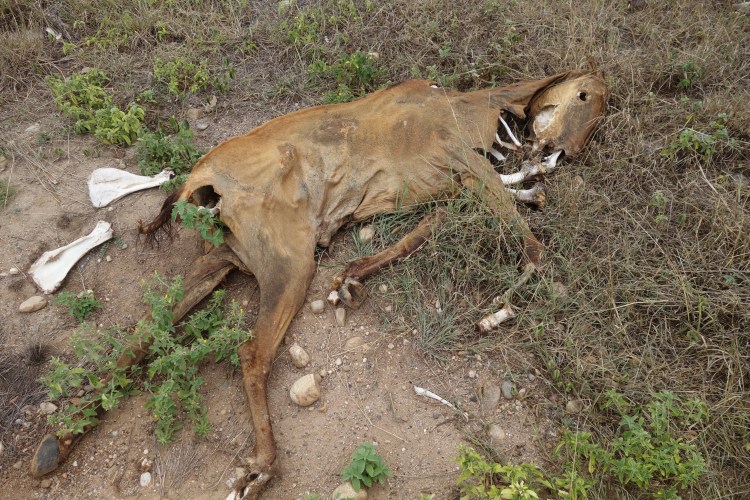
From Giradot, I followed Carrera 45 south. Despite being one of the country’s main routes, it was pleasant riding. The highways have shoulders of at least a metre and the road surfaces are phenomenal. The relatively flat, easy (despite the heat) riding, gave me a great vantage point from which to observe the ever changing nature of the Colombian landscape. The further south I ventured, the land use became much more agricultural, with sprawling rice fields, various crops of leafy greens and ever present cattle. Despite their lush surroundings, the cows are all at fighting weight, with visible ribs and skin that hangs from their bones like an oversized sweater.
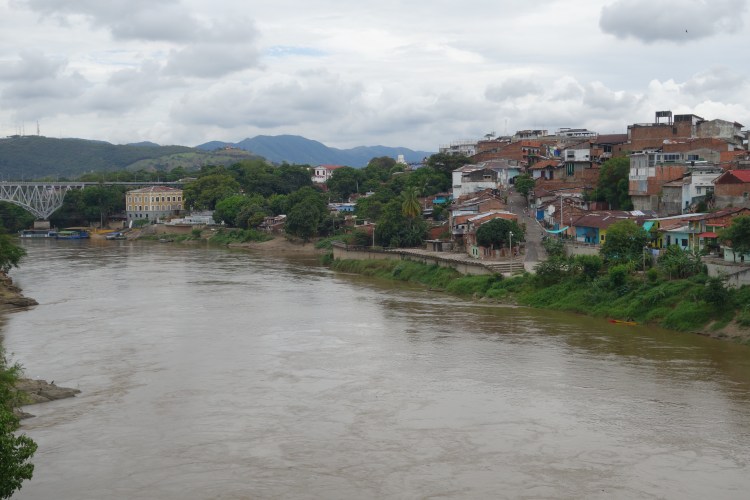
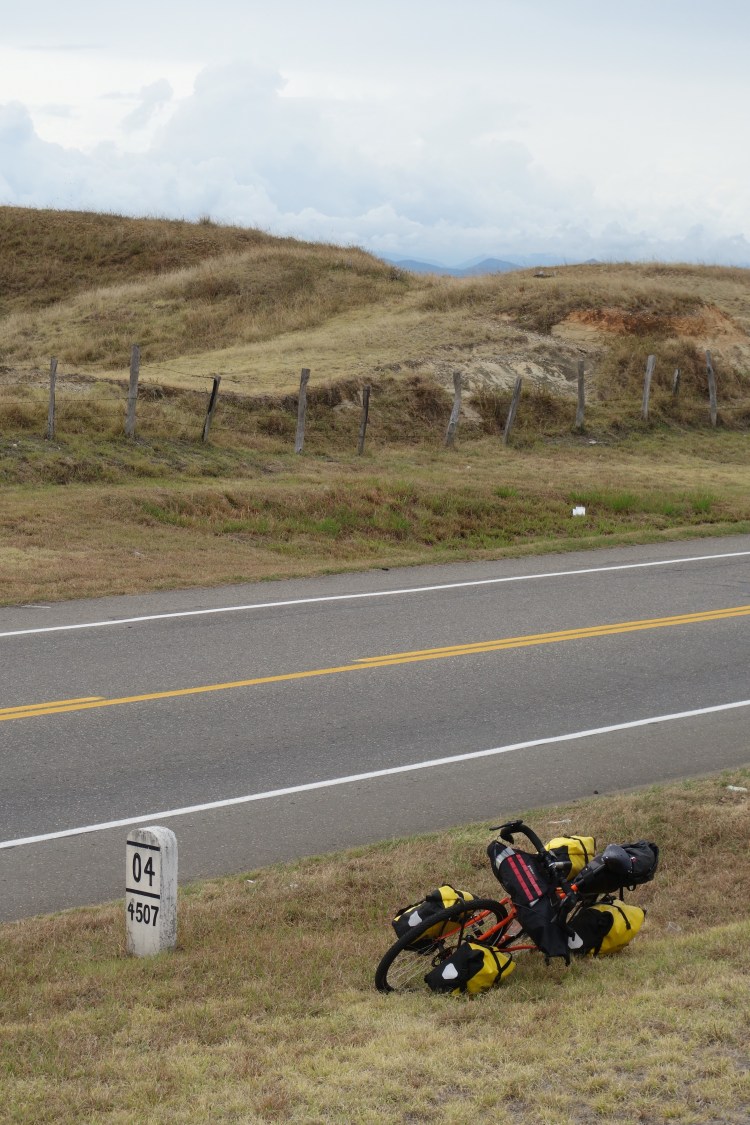
All the while, the view of the cordilleras to my east and west were constantly marred by mist and sheets of rain. It is the rain that falls in the hills that clearly provides life for the lowlands, as I was yet to feel a single drop of water hit my face while the rice crops beside the road were flooded.
On my approach into a small town called Castillo, a man in a Ute pulled up and offered me a ride. To his bewilderment, I declined, telling him that I want to ride my bike. As he drove off with raised eyebrows, I decided that whenever I feel like accepting a lift, I will have a rest day to recharge.
The further south I rolled, the more barren the landscape began to appear. Tumbleweed was caught in the powerlines, and the tree skeletons lining the road appeared to have forgotten how to grow leaves. This all made sense as I was making my way to a desert – Desierto de la Tatacoa. All the while, the persistent sheets of rain over the hills began to appear like a mirage as I sweated my way down the highway.
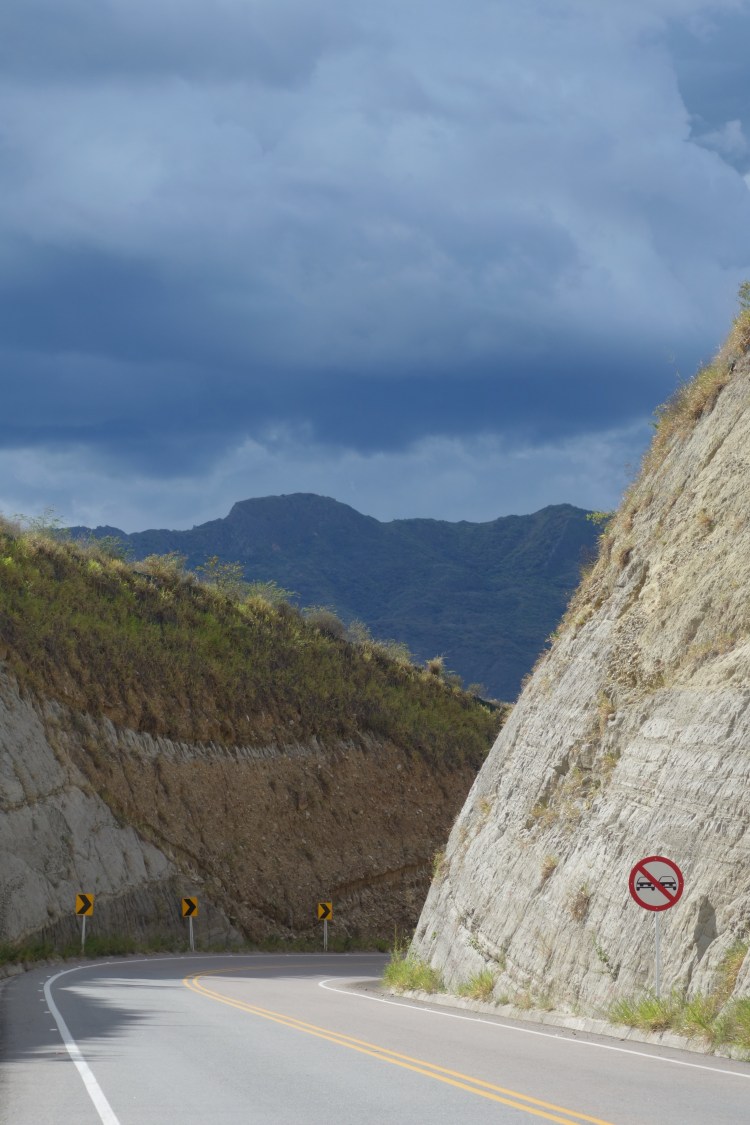
Rainbows In The Desert
The main route to Desierto de la Tatacoa involves heading south to Neiva, the capital of the Huila department, then north again on the eastern side of the Magdalena. As I studied my map, I noticed a road which left the 45 and headed directly to the desert – a journey of 40km as opposed to the 150km option via Neiva.
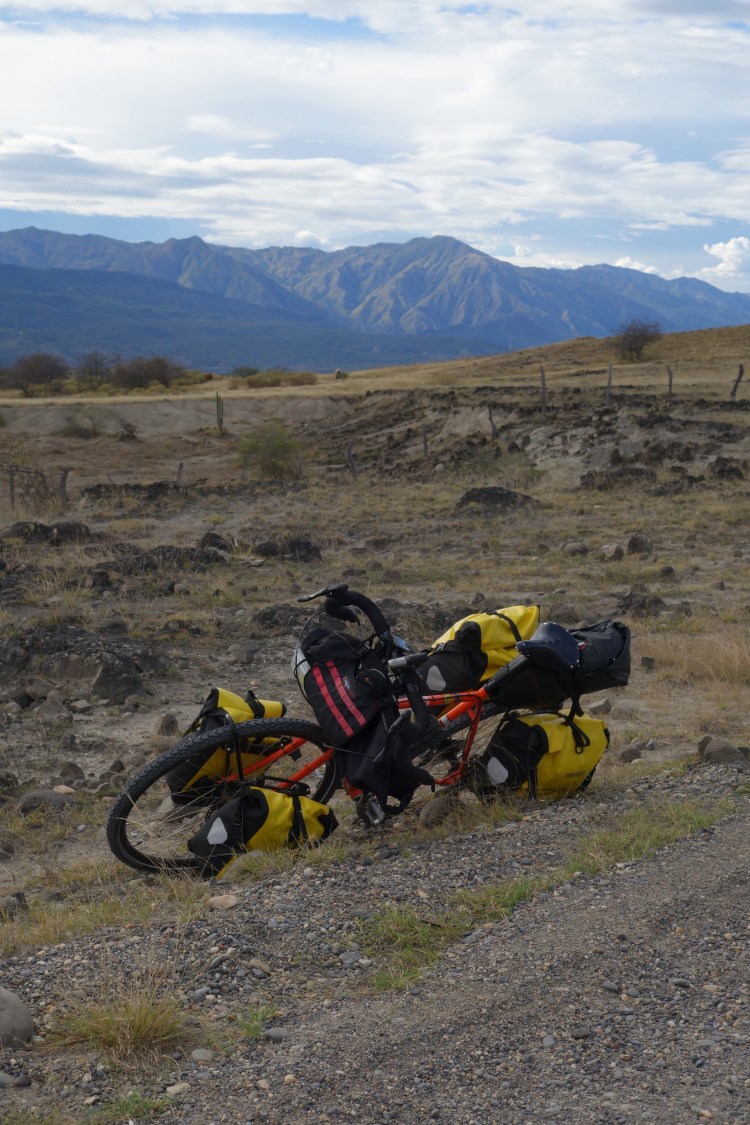
This route was a magnificent find. I turned off from the highway around an hour from the town, Natagaima, where I had spent the previous night. The road was unsealed, pot-holed, and oozing the elements of adventure that I was seeking. Within minutes I came up alongside my first cactus, a sure sign I was heading in the right direction to find a desert. The road continued through tree-lined avenues, over large steel bridges and through a series of arched tunnels which cut through hillsides. Although I was sharing the road with the occasional motorbike that would rattle past, my main obstacles were goats. Much like Salto de Tequendama, a herd of goats is certainly smelt before they are seen. Despite the stale odour they produce, each passing herd was comprised of beautiful animals of varying colours and patterns.
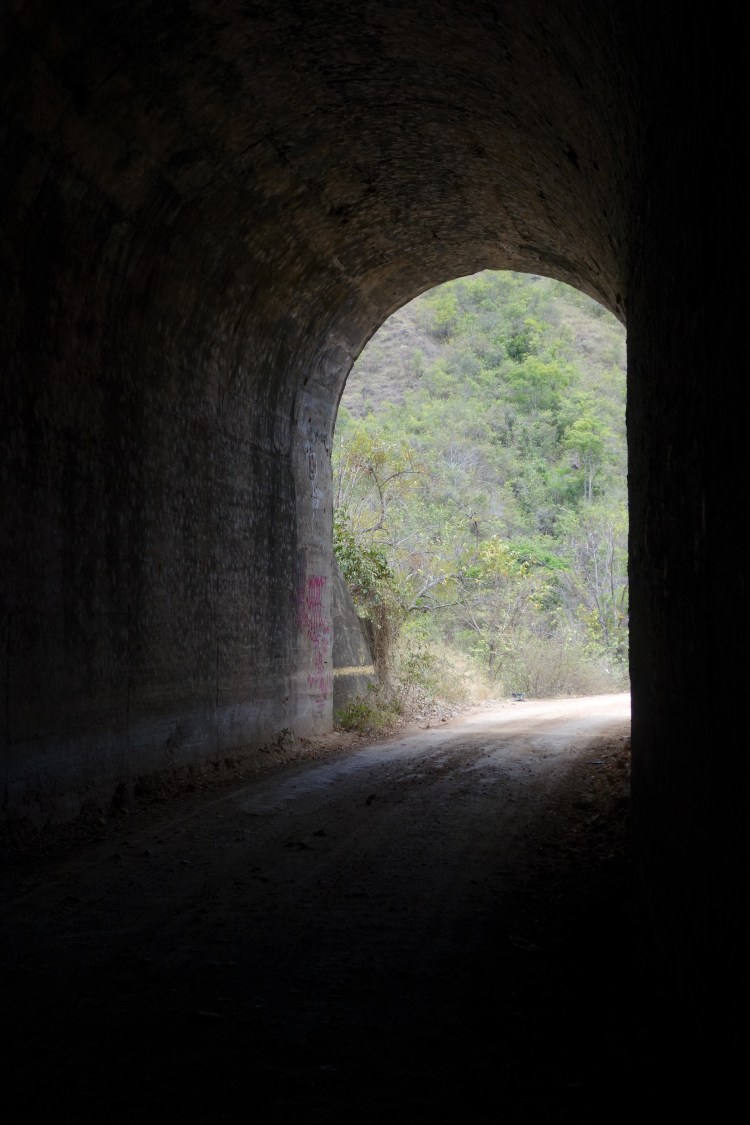
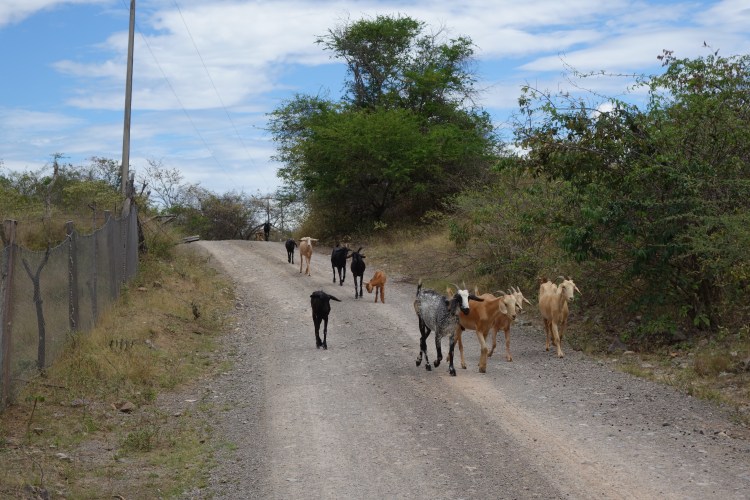
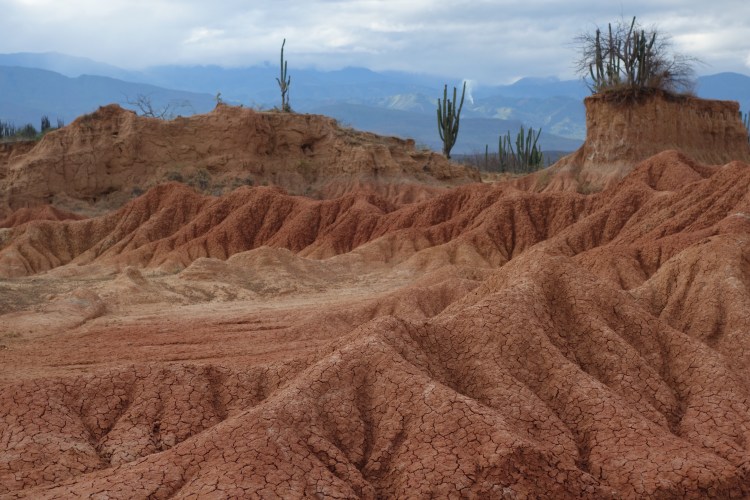
The views of the surrounding mountains were spectacular in the fading afternoon light. I’ve come to think of the creased mountains lining my route as scrunched up pieces of paper on the desk of Colombia’s architect. The way the folds catch the sun’s rays, lighting up ridge lines and casting shadows over the depths of gullies, is nothing but magnificent. To add to the surrealism of the view, the cactus-dotted landscape of the desert was being framed by rainbows.
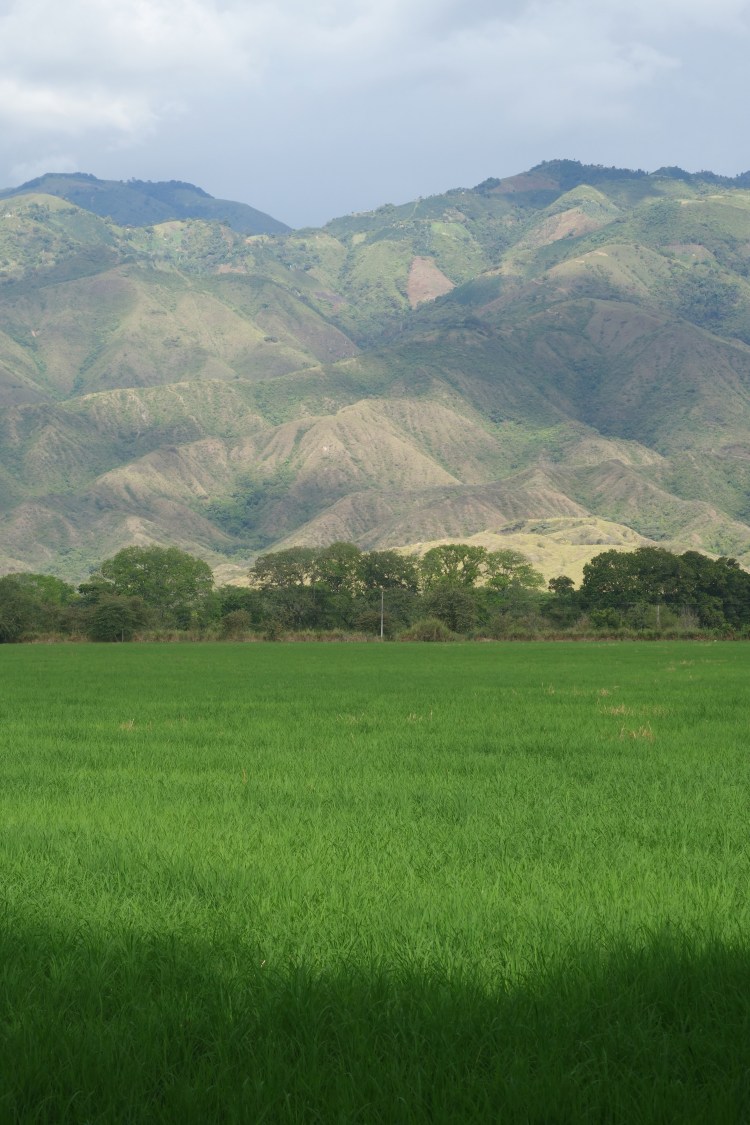
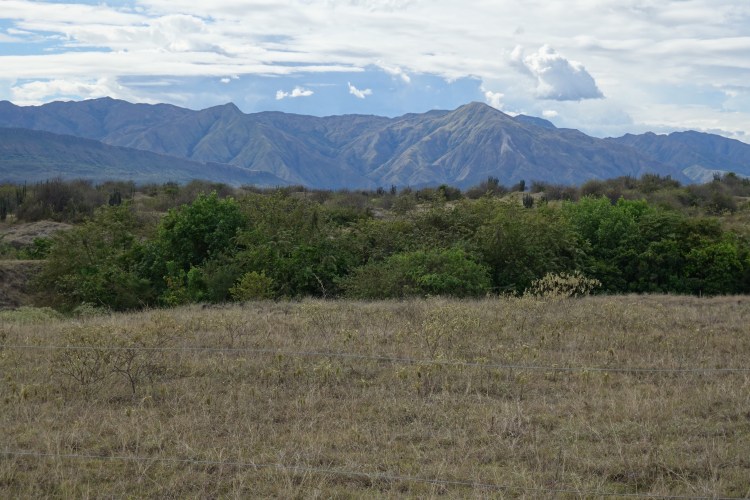
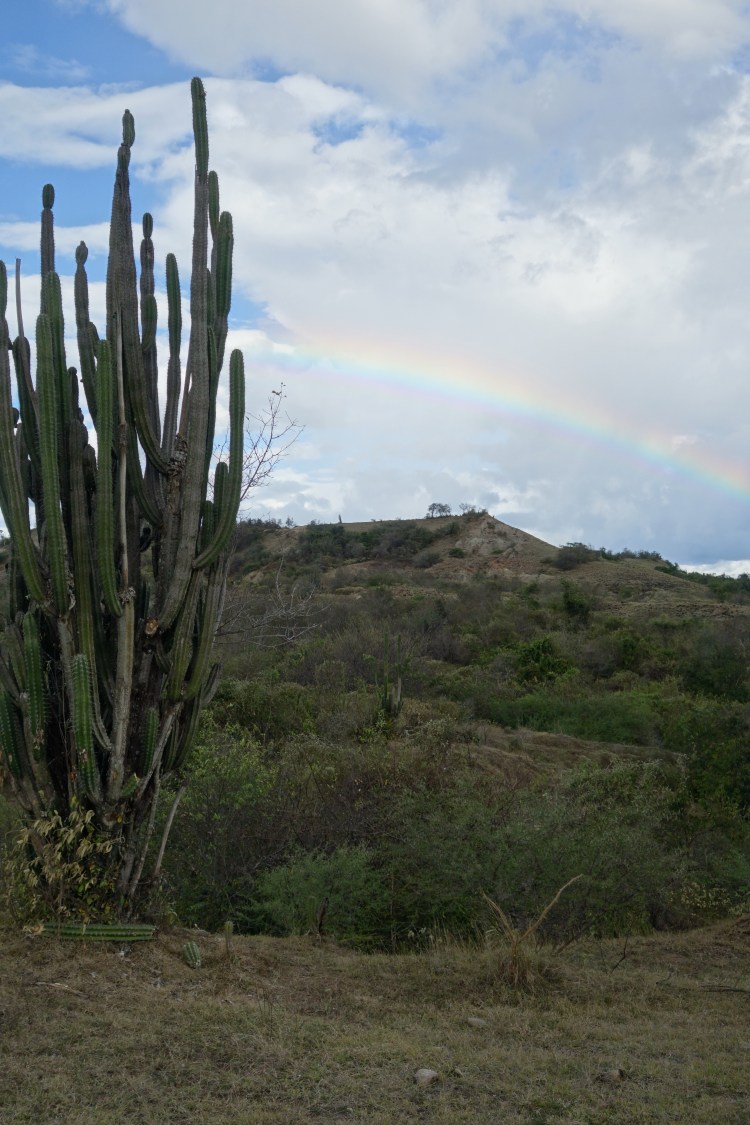
Desierto de la Tatacoa is surrounded by greenery, as the adjacent mountains catch the incoming precipitation (hence the rainbows I was seeing), leaving the Tatacoa as a parched anomaly in the centre of this landscape.
I eventually pulled in to the Observatorio Astronomico de la Tatacoa, sweaty, lightly dusted and in a perpetual state of vibration due to the last 40km of unsealed road that I had absorbed with my entire body. I asked if I could camp and was directed out the back where I set my tent up under the watchful eyes of at least a hundred free-range chooks and two possessed puppies. After watching the light fade over the desert’s abstract hoodoos, and a dinner of goat milk holoumi, I joined in with the crowd that had gathered at the observatory.
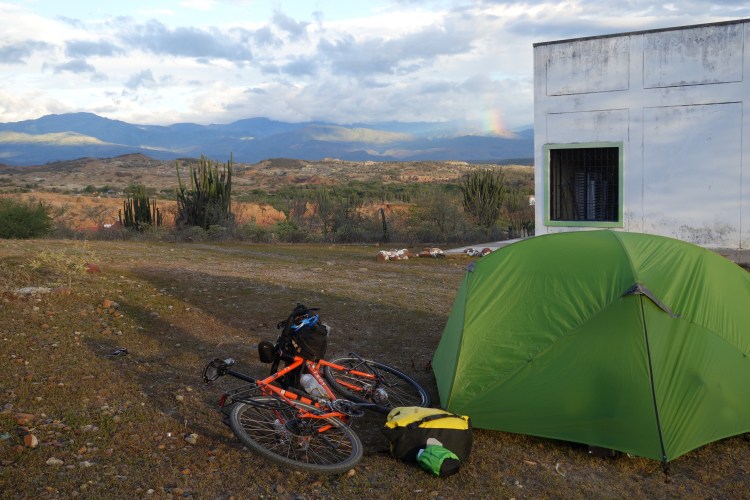
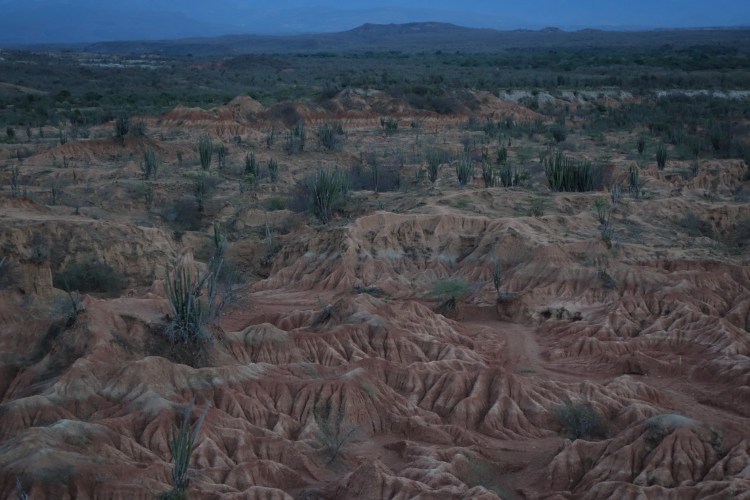
Every evening, between 7pm and 9pm, local astronomer Javier “I AM NOT AN ASTROLOGIST” Fernando guides his audiences through a celestial navigation. The show begins by establishing the main cardinal points. This is done by making reference to the various glowing arcs on the horizon. The desert is known for its lack of light pollution and thin air, making it supreme for stargazing. The glows that we could see were major Colombian cities – Bogotá to the north, Cali to our west, and Neiva to the south. The absence of traffic and noise allowed me to find deep relaxation for the first time on this trip.
Javier used two telescopes which allowed us to see Jupiter and its moons, and Saturn encircled by its rings, looking like a well-cooked piece of quinoa. He taught us that an ‘astronomical unit’ is the distance between the earth and the sun – 150 million km. As we took turns gazing at Jupiter he reminded us that it was five astronomical units from the sun. He spent a lot of time emphasising relative size. The fact that 1000 earths could fit within the sun was humbling. The idea that Antares, the largest star visible to us that night, is 800 times as large as the sun was simply beyond comprehension. These statements reminded me of the concept of ‘deep time’, of which I first read about in Robert MacFarlane’s book, ‘Mountains of the Mind’. Simply put, ‘deep time’ refers to the overwhelmingly profound expanses of geological history that extend up to and away from the present moment, humbling the human instant.
I fell asleep that night feeling so wonderfully insignificant. My concerns, fears and aching body parts meant nothing to the stars, desert, mountains, and most likely, Javier. During my time spent in the Tatacoa, they were also of very little interest to me.

Highway Amigos
I believe there is a very clear delineation between ‘being alone’ and ‘being lonely’. I can understand how heading to South America on my own, with my bike, could appear a little delusional to some people. However, whilst I am here alone, I have most certainly felt lonelier at home, in the company of people who speak my language and know my name.
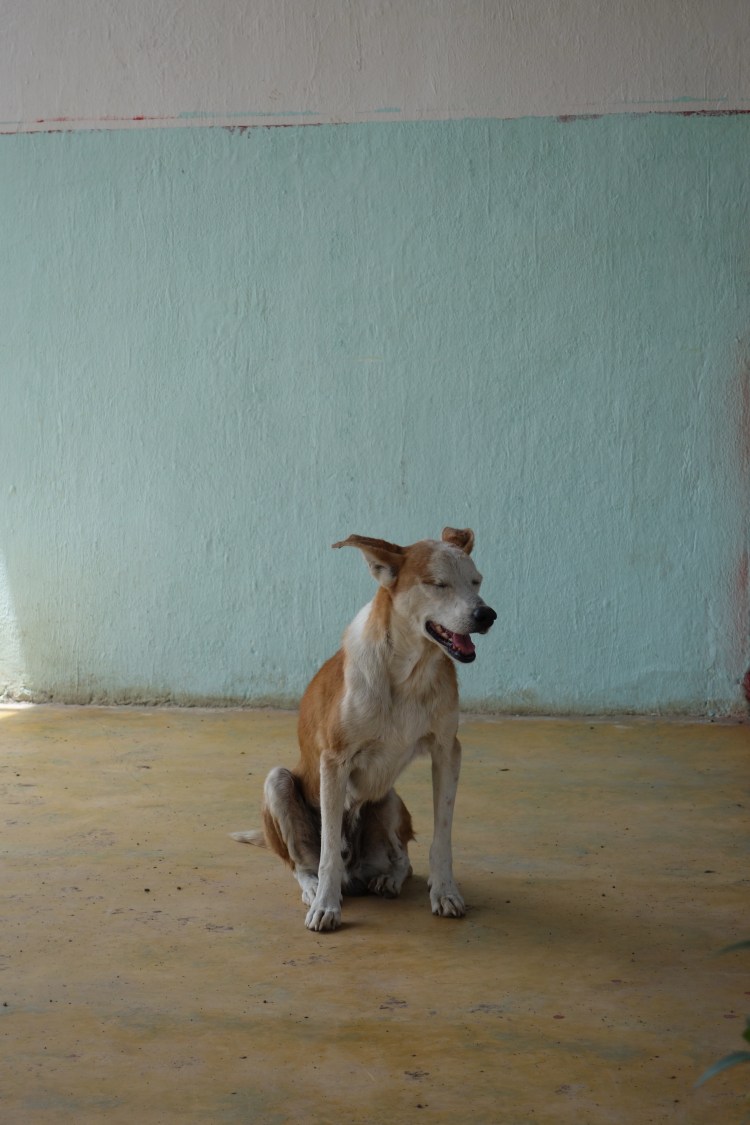
Friends along the road are plentiful, regardless of the form they take. The Colombian countryside is littered with stray dogs. Having watched Wes Anderson’s ‘Isle of Dogs’ on my flight over here, I keep expecting them to talk back. The strays seem much more perceptive than their domesticated counterparts. They watch you intently, reacting to body language and responding to the tone of peoples’ voices. They also know Spanish, so I’m yet to truly befriend any of them, despite the continual sharing of my lunch on the side of the road.
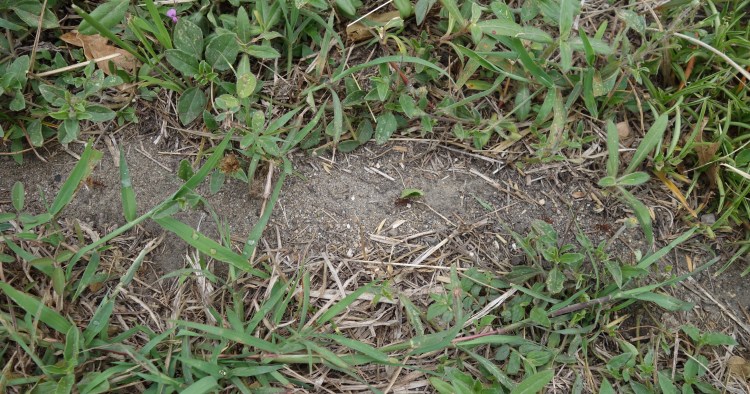
Whenever I do pull up on the side of the road, there are also the most mesmerising bug highways running parallel with the human versions. Amongst the grass you can see dirt tracks with ant and beetle traffic heading in both directions, some with heavy loads, others simply commuting.
The bird life is ever changing. Honeyeater-types dance amongst the lower limbs of trees, adorned with feathers reflective of the yellow and red of the Colombian flag. Occasionally a larger wattle-bird shaped beauty will flash its tail of midnight blue feathers which appear like velvet in the sunlight. The sky above is constantly speckled with vultures, circling optimistically. They will often be seen tearing apart bags of rubbish that have been incorrectly disposed of on the side of the road. With heads like tortoises, torsos like eagles, and legs like native hens, they are a bizarre looking bird. They make the idea of a roadside nap a little unappealing.
Besides the local fauna, there are also the people who make days on the road so rich. I am constantly warned, by Colombians, of the danger of what I am doing. They tell me that being alone on a bicycle is unsafe and that people here are not good. Despite exercising caution, I am yet to feel any threat from anyone I have come into contact with and my days on the road do not involve an ounce of fear. Cars and trucks give me a wide berth, with every second driver beeping their horn and hanging a ‘thumbs up’ out of the window. When I pull in at roadside food stops, I am met with open arms and often leave with a complimentary mandarin for the road.
I wish I could give the same glowing review of the Colombian food. Whilst it fills a void, it leaves a lot to be desired. Namely, fresh vegetables. In a fertile landscape which could produce an endless array of fresh food, the cuisine is often flavourless, lacking any form of preparation other than being heated up (grilled, fried or boiled). After almost two weeks in the country, it has begun to appear as though Colombians have a deeply instilled fear of herbs and spices. The locals argue that they like their food ‘natural’. That is, a plate of clearly delineated foods – rice, potatoes, chicken, corn and occasionally a slice of avocado. My favourite explanation for this lack of culinary creativity it that of a legendary tale, giving reason to Colombians’ suspicion of spice.
It is thought that during colonial times, the witches of various Caribbean towns would pray to a god called Fot to gift them with ability to fly. At night, the witches could be seen flying overhead on their broomsticks, enroute to Jamaica to bring back the green chillies they required for their potions. One day, some local men decided to chop down the trees which the witches would use to rest mid-flight. Whilst sitting on the stumps of the trees enjoying some rum, the men felt something land on their heads. As they discovered it to be human excrement, they could see the witches flying away in laughter.
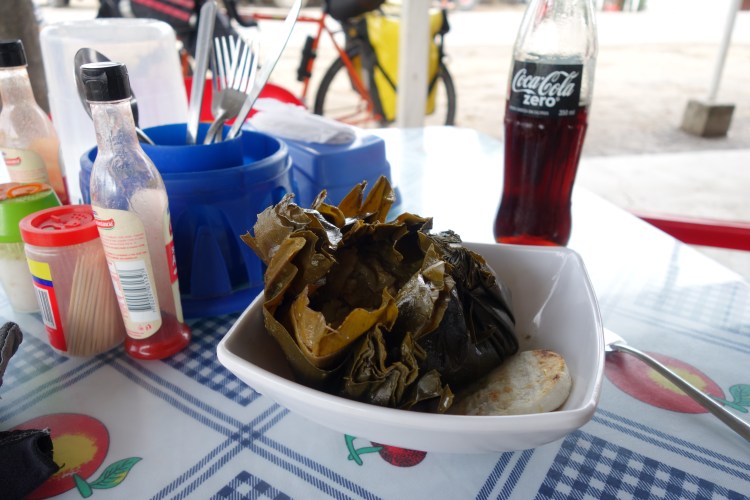
In saying all of this, I thoroughly enjoy my daily jugo naturale (fresh juice) and the occasional tamale (banana leaf-wrapped mixture of maize, vegetables, and chicken). The beautiful thing about being so active during the day is that conscious eating tends to slip down the list of priorities. I don’t hesitate to engulf a fried empanada for lunch, washed down with a Coca Cola in a lanky glass bottle. However, my desire for fresh vegetable is increasing daily.
The Tale of Malefica
On paper, the road from Desierto de la Tatacoa to Neiva, the capital of the Huila department (state/region), is an easy day on the bike. A distance of only 45 km, with an undulating, but more or less flat road. Again, theory was punched in the face by reality. Rising out of Villa Veija, a tree-lined oasis town on the edge of the desert, the landscape in front of me was void of any vegetation and the sun’s energy was pounding the road and everything on it. For the third day in a row it had reached over 35 degrees Celsius. Yes, there were undulations. However, they were offensive. Short, steep descents where my fully loaded bike would hit 60km/h with ease. Then, without fail, equally sharp upwards pinches. All day I was going from 60km/h to 6km/h in mere seconds as the weight of the bike barred me from carrying any of my momentum into a climb. Without the cover of trees, this was an exhausting section.
I reached the outskirts of Neiva around 2pm. Again, I was unprepared. Since Bogota, the size of the towns I had passed through had been charming, each one welcoming me with smiling faces and a refreshing drink. Neiva, however, yelled at me to get into line with the rest of the traffic and poked me with a branding iron for good measure. The town was huge. The traffic was hectic. Carried by the sea of vehicles, I eventually made it to the centre of town, where I pulled off the road at the first opportunity and slumped over my handlebars. Gathering my thoughts, I asked the waiter of the restaurant next to where I had stopped (I’m sure I put people off their lunches) for directions to a hotel economico (cheap). His response wasn’t convincing. Or perhaps it was the fact I didn’t really understand him. In the midst of my obligatory nodding, I heard someone speaking English. The voice belonged to a young boy in a school uniform, standing proudly in front of his younger sister and his mother. Clearly an opportunity to practice his English, he asked the waiter, in Spanish, if he knew of any hotels. He then proceeded to translate and point me in the right direction.
I shook his hand in thanks and began crossing the road in search of a cold shower which had become my favourite thing about cheap hotels in the Colombian lowlands. Before I reached the other side, I heard the shouts of “Andy”. I turned to see the young boy, Santiago, running towards me with his younger sister, Luna, in tow. Excitedly, he expressed that his dad, who had been waiting in the car, had told him that I could stay with the family.
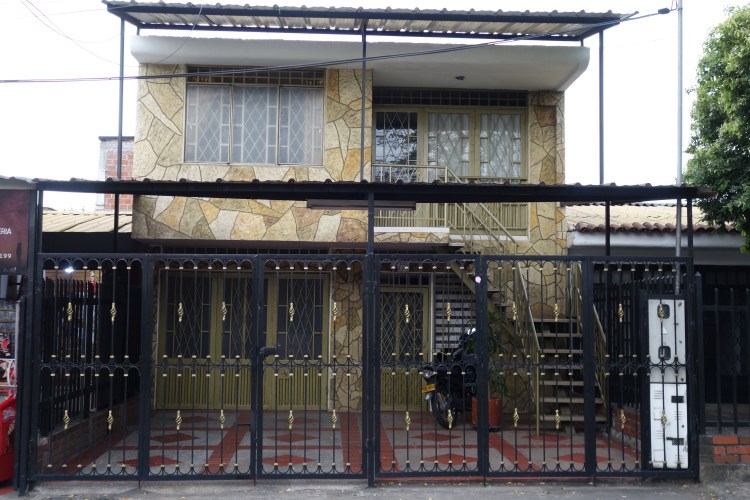
I agreed, put my panniers in their car, and tailed behind them as they drove home with their hazard lights flashing. We arrived at their house, the entrance blocked by black-barred gates with intricate golden detailing. It was a long, yet narrow, two-storey terrace house. Of most interest to me was the open courtyard in the centre of the house, to which there were no walls or windows separating it from the kitchen. When I asked what happens when it rains, Santiago just pointed at the kitchen floor making a wiping motion with his hand and shrugging. I guess it’s a worthy compromise for having fresh air constantly blowing through the hallways.
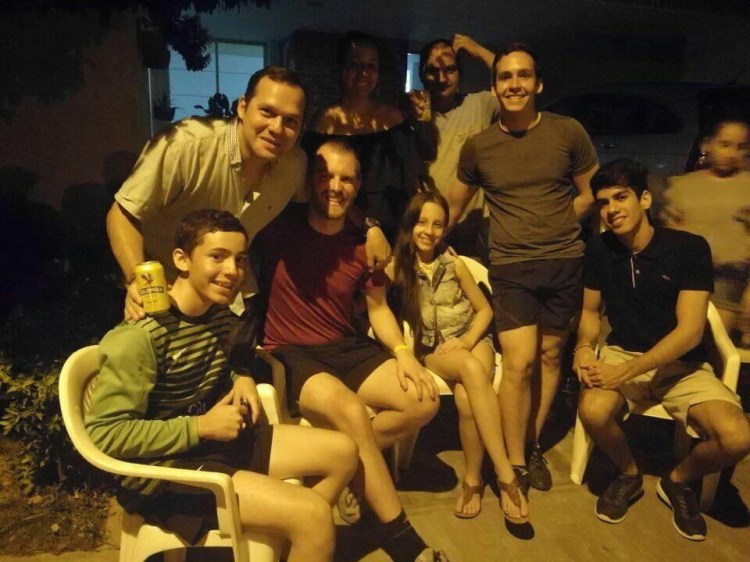
As I was standing in the kitchen, attempting conversation with Santiago (13), Luna (10), Jorge (father) and Lina (Mother), the front door opened and in walked the eldest son, Fernando (23). Despite a stranger in the house, Fernando ensured that he kissed each family member on the cheek before asking the obvious question. As it turned out, the entire family was home for lunch, as is the norm in Colombia. At this stage, I was becoming very aware of the sweat still seeping out of my pores, as the family clearly were too, pointing me towards the shower.
When I exited the bathroom, sufficiently cooled, it appeared that everyone was preparing to leave for their afternoon activities. Santiago had to return to school for his afternoon classes and little Luna, with the 10-year old ambition of being a Victoria’s Secret model, had her catwalk class. It was assumed that I would spend the afternoon with Fernando. With absolutely no understanding of the rest of the conversation, we all parted ways and Fernando and I began to attempt conversation.
As it turned out (it took me much longer in reality to understand this), Fernando had recently graduated from a five-year engineering degree, following in the same career footsteps as Jorge. We were catching a bus to the local army barracks where he needed to drop of documentation which certified the completion of his studies. If he had not gone to university, he would have been required to serve in the army for four years. With his graduation approaching at the end of the month, this offical stage of the process was clearly a big deal.
Still without much awareness of what was going to eventuate that evening, we caught a taxi to his girlfriend, Angela’s, place where her mother kept asking if I or any of my friends wanted to buy their farm which is for sale. The rest of the night was a bit of a blur; we attended a coffin viewing of Angela’s recently deceased grandfather; I met at least 20 members of her family which involved three car trips in separate vehicles to various houses in which the cars were then parked in the lounge rooms; we went out for a pizza dinner; I was shown around their university and the various faculties; we visited the commercial plaza and had a tour of a new super gym which I think Angela was considering joining; and, I was in bed by 11pm. This would be socially fatiguing for me at the best of times. Throw in the fact I had ridden in 40 degree temperatures and the entire evening had been in Spanish, I was completely spent. With all intentions to continue heading south the next day, I fell asleep on the fresh Batman bedding which had been prepared for me.
The next morning, Fernando knocked on the door to tell me that breakfast was ready. Puffy eyed, I walked in to the kitchen to find that Lina had prepared a traditional breakfast of the Huila region. With a stomach full of sweet black coffee, scrambled eggs, cornbread, and hot chocolate, I settled in at the table and engaged in a long Google Translate conversation with Fernando and Lina. They told me that the thumb-sized, ovate biscuits that we had left to soak in our hot chocolates, were called Bizcocho de Achira – another food only found in this department of Colombia. I was surprised that they could be so patriotic about such a flavourless object. However, as with the various traditional foods that Lina continued to prepare over my time with the family, I learned to love them. Since then, they have become my staple snack whilst on the road, dipped in a sauce which I think is just condensed milk. I’m not complaining…
As Luna and Fernando had to start school at 7am, I had promised them that I wouldn’t leave until they came home for lunch. Over the course of the morning, in addition to digesting my breakfast, I cleaned my bike and began contemplating the route for the afternoon. Fernando asked me if I wanted to come with him to pick the younger ones up from school. On arrival, I was greeted with so much excitement and was given a tour of their inner city collegio. It was a multi story building, with open classrooms on mezzanine floors, all centred around in indoor basketball/futsal court. The three siblings, who by the way never fought or showed any frustration towards each other, gave me a whirlwind tour of the city. We visited the enormous statue of Mohan – a mythical, upper natural being who is associated with natural forces like Colombia’s great rivers. Fittingly, this was followed by a lookout over the Magdalena which flows through Neiva with an intimidating ferocity.
By the time I had got back to the house and eaten an exquisite traditional lunch called Sancocho which Lina had spent all morning preparing, it was already 3pm. We exchanged a few looks, glanced at the clock, and without speaking agreed that I would stay another night.
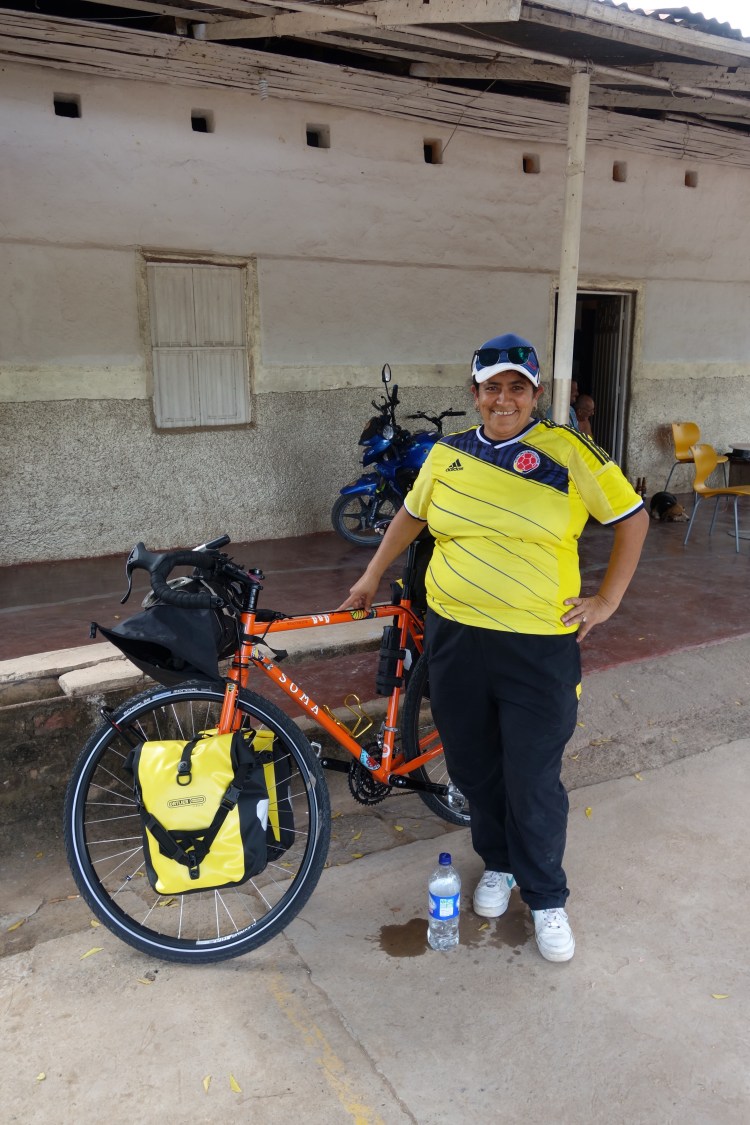
I went back out into the courtyard to continue cleaning my bike which seemed to have picked up half the desert in the chain. I was followed out by Luna, who sat in silence on the ground of the courtyard, with her legs pulled into her chest and her chin resting on her knees. She watched me closely, evaluating the scene. Finally she stood up and began running her hands over the handlebars (Salsa Cowchipper bars with a shallow drop and accentuated flare, for those of you interested). She began to say something which I couldn’t quite make out, requiring Santiago to come and translate. He said it reminded her of a movie called ‘Malefica’ – the Spanish title of the Disney film, Maleficent.

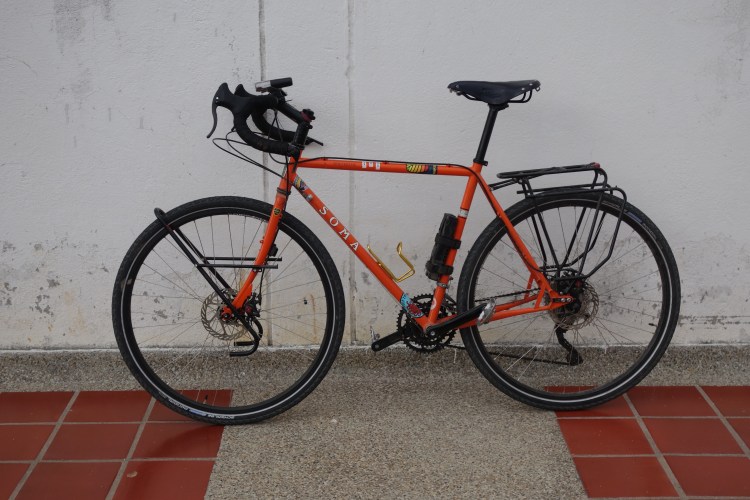
I don’t think Luna could comprehend my reaction. It was the perfect name for the bike that I will be spending so much time with over the next five months. Once she had established that I wanted to name the bike in honour of her idea, she was glowing. Less than a minute later, she grabbed the frame and pointed to the brandname – SOMA – which is printed on the diagonal tube. She had identified that the last two letter of SOMA are also the first two letters of the bike’s new name. I promised that when I get my hands on a permanent marker, I will complete the signage…SOMAlefica. It was a pretty special interaction.
That evening, I piled into a taxi with four of the five Sandovals and we went to visit more of their family. I was under the impression that it was going to be a quiet evening, a little soccer and perhaps a swim. What eventuated was a street party, several trips to the bottle shop, the entire back catalogue of Colombia’s answer to Bon Jovi, and endless laughter. By 2am, several beers deep, and zero idea what was being said around me, I hit the wall. I think I may have promised the uncles that I will organise a boys trip for them when they come to Australia. It was 3am by the time I lay down beside Batman.
Following a sleep of inadequate proportions, a morning coffee delivery from Santiago, another hearty breakfast and so many farewell hugs, I rode out of Neiva behind Fernando and his neighbour Camilo, who provided me with a motorbike escort to the edge of town.
The whirlwind days spent with the Sandovals were overwhelming. Not because of the language barrier, more socialising than I wold do in a month, or the heat of Neiva. Instead, I was somewhat shaken by the outpouring of generosity that I had received. It was an oxymoronic experience. Every family member I met reiterated the danger of this journey through Colombia. However, there I was with a group of people who two days prior had been complete strangers on a street corner. As I said my final farewells, I was told that I was now considered family.
I rode on with a with fresh legs, an enriched soul and a slight hangover.
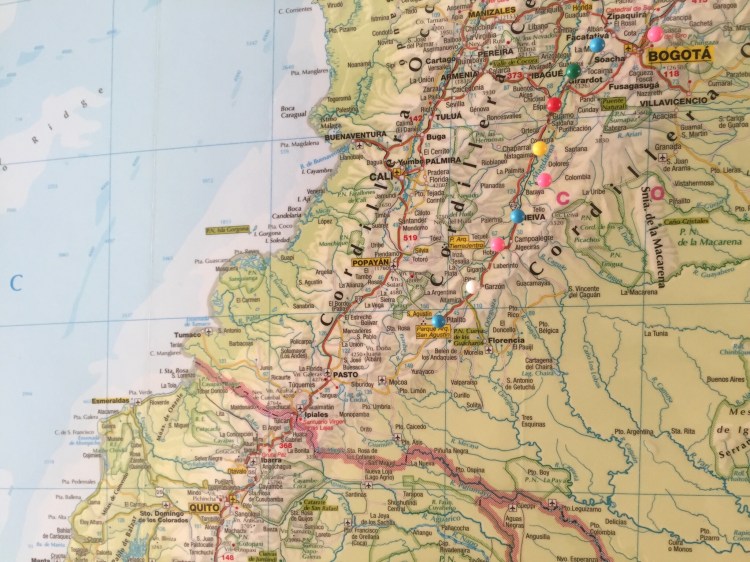
As I send this, I’m sitting in a small town called San Agustin, 600km from my starting point in Bogotá. I’ve descended from 2600m to 440m and have no climbed back up to 1700m. Whilst it is still well over a week away, I have begun to see the first signs pointing to Ecuador. After so many years contemplating, this transcontinental journey is beginning to feel real.
Thanks for reading.

As this is my first attempt at sharing any writing, I would of course appreciate feedback on the structure of these posts. I’m hesitant to simply communicate the day by day happenings. I keep a daily journal and am enjoying categorising my experiences into themes for this blog. Writing is certainly becoming a daily ritual which is keeping my thoughts positive and my mind active and observant. However, any suggestions for improvement would be sensational .
Gracias!

