My descent from the high Bolivian plateau coincided with a dramatic fall in positivity and optimism. On arrival in San Pedro de Atacama, I managed to find a hostel called La Casa del Sol Naciente (House of the Rising Sun) with a dusty courtyard for camping tucked behind the kitchen building. Fortunately, my tent is a freestanding design as there was no way I was going to get a peg into the hardened earth. The air was still and warm, and with a cloudless sky overhead I felt at ease pitching just the inner of the tent. After a brief, yet heavenly shower, I zipped the remainder of my belongings inside the tent and headed out in anticipation of exploring my new surrounds.
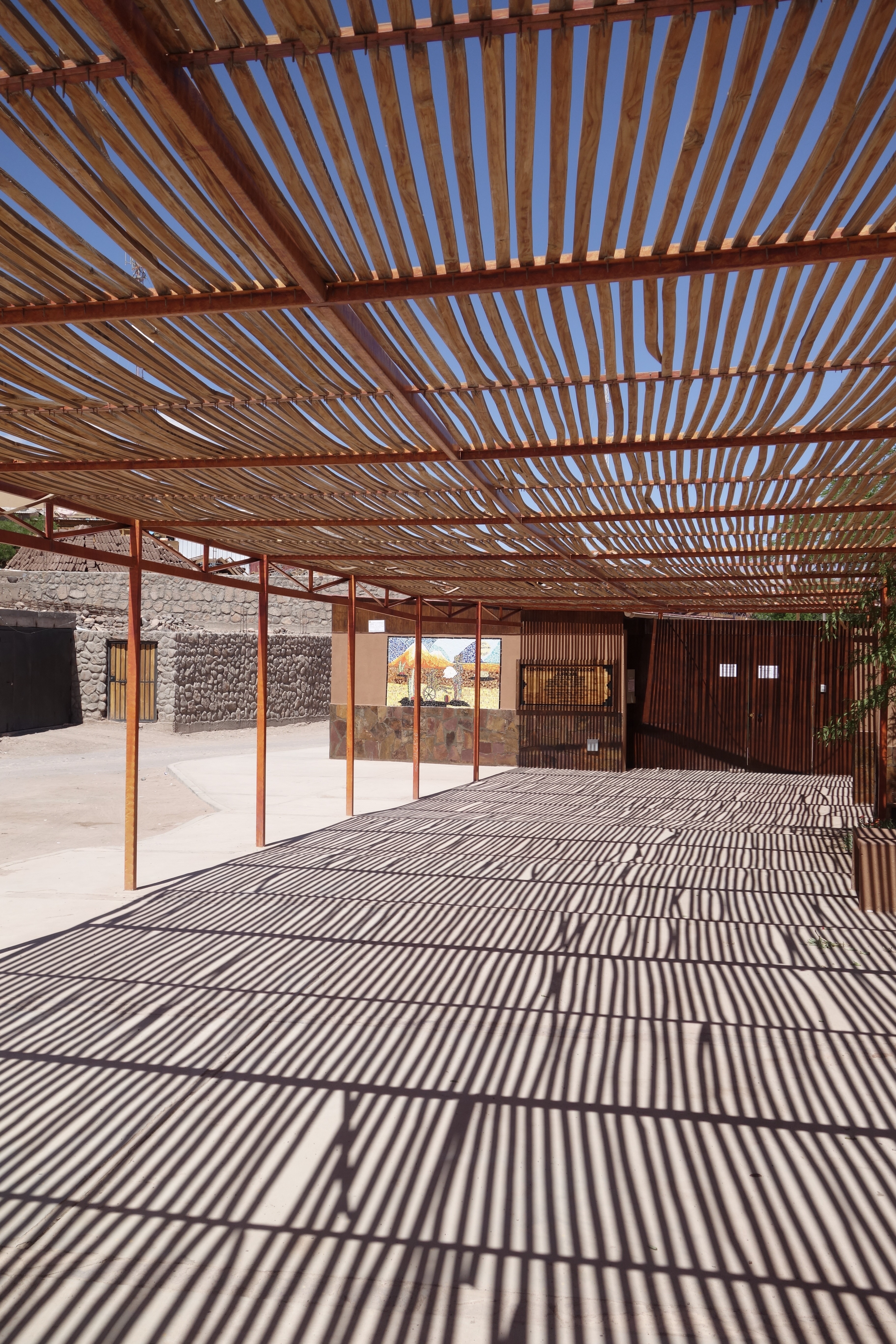
The unsealed roads and adobe structures were bathed in a pastel orange glow from the setting sun. Swathes of well-dressed tourists filled the main square, sipping pisco sours beneath the shade of luscious palm trees. It felt world’s away from the previous night’s camp in the ruins beside Laguna Verde. I wandered the network of sandy roads with little purpose beyond people watching and considering how my first meal in Chile might look and taste. Disappointingly, San Pedro de Atacama had its own plan in store for me. The series of events that unfolded over the next hour emphasised that my physical and mental fatigue from the previous days had severely compromised my ability to stay positive and resilient. Small setbacks hit me hard and it wasn’t long before I was craving to be back on the bike, alone.
With a wallet containing little but a few Bolivian banknotes, I made my way to an ATM where I waited in line for several minutes before discovering that the machines were out of cash. This was something that the people in front of me had also found out but had failed to tell those of us clearly waiting in line. Being a popular tourist centre, it didn’t take long to locate another magic money machine. When I realised that this one too was void of cash, I began to become a little concerned. Managing to catch the guy locking the front door of the tourist information centre, I asked where I might be able to withdraw some money. Looking as though he had explained the situation a thousand times that day, he informed me that due to a nearby music festival over the last few days and the subsequent influx of tourists and locals, all the town’s ATMs were out of cash. Adding to my dilemma, it was a Saturday and I was told that they will probably be filled on Monday morning. With my dreams of a decadent dinner crushed, I found a small shop that hesitantly exchanged my remaining Bolivianos for a measly handful of Chilean Pesos. It was enough to buy a few pieces of fruit, some bread rolls and three eggs, which I boiled for dinner back to the hostel.
Following a less than impressive feed, I headed out to my tent. A few more tents had been pitched close by, so I picked mine up by the exposed poles to move it slightly; a practice that I do regularly. Much to my despair, the action was followed by a ripping sound. A quick inspection revealed that someone (no doubt with honourable intentions) had placed a rock inside my tent while I had been out. I can only imagine that a gust of wind had ripped through the campground, flipping my tent due to the fact it was not pegged down. A well-placed rock would have been an obvious solution, considering that the owner of the wayward tent was nowhere to be found…
Despite a rational analysis of the situation, I was shattered. I got into bed, trying to avoid looking at the extent of the damage, and lay in silence feeling completely deflated. I didn’t have any money, I was hungry, my tent (a gift from my parents before I left Australia) was ripped, and my photographs were still overshadowed by a black spot due to sensor damage. On their own, these adversities were insignificant, each bearing obvious, relatively simple solutions. But in my state of fatigue, it all felt too much.
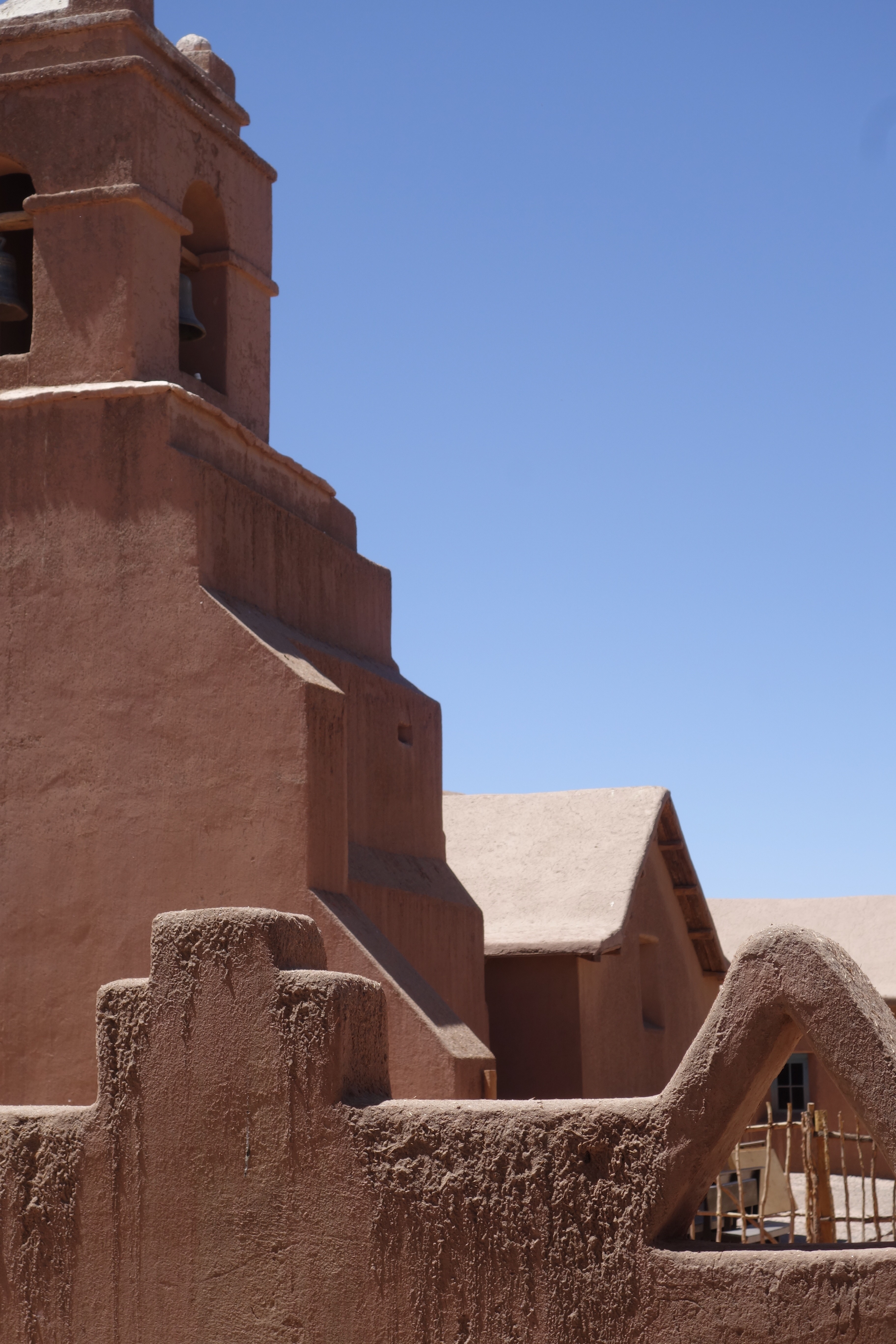
Back at the hostel, I settled in on a couch beside some dozing festivalgoers, watching Piratas del Caribe (Pirates of the Caribbean). Despite the comfort of the soft cushions I could only handle Johnny Depp’s monotonic Spanish voice-over for so long. I relinquished my spot on the couch and relocated to a table at the back of the room where I could charge a few batteries and check my email. My attention gravitated to a couple sitting across from me who were absorbed by some topographic maps spread out on the table. My interest must have been obvious, as they were quick to introduce themselves and explain that they were also travelling by bike. Having left their home and jobs in Switzerland, Philip and Karina were cycling in South America for six months before they return to the Alps for winter as Philip has a job lined up as a paramedic at a ski resort.
We chatted for an hour or so, sharing stories and collating ideas for our respective onward journeys. Philip and Karina were planning to leave the next day, heading back up the hill I had come down the day before, before pressing onwards to the Argentinian border. I explained that I was also hoping to continue the following morning but had been hamstrung by the cashless banks through the town. Without hesitation, Philip handed over a small wad of Chilean pesos; the equivalent of US$50. Overcome with gratitude, I could almost taste the fresh vegetables that I would have for dinner that night. Philip wrote down his account details for me on a piece of paper and I proceeded to, for the first and probably last time in my life, transfer money into a Swiss bank account. Raising my spirits even further, Karina invited me out for dinner with some other cyclists they had met a few weeks before who were going to be in town that evening.
We met up with beneath the palm trees in the verdant town square at seven o’clock that evening. I was introduced to James and Kirsty, an endearing and energetic couple from Brighton in the UK, and Frank, an older gentleman from Belgium. It turned out that for James and Kirsty, this trip was their honeymoon. They had begun in Scotland to see if they enjoyed cycle touring, before committing to another continent. Having quit their jobs and cut all official ties with life back home, they planned to be on the road for at least a year. Frank, dressed like a solo traveller in sandals and cargo pants, was forthcoming in explaining that he has only ever held casual jobs so that he can quit at any time and go travelling.
Trying to decide on where to eat was a challenging prospect with six stomachs that all craved different things. The one thing we agreed on was that we wanted lots of food. Our frustratingly courteous indecision led us to a table in the middle of a food court where we could each choose from different menus. The conversation was easy, and the company was much needed. As we scraped the last food from our plates, the town’s power supply flickered desperately before deciding to call it a day. We were left to split the bill and count out our pesos beneath candlelight. It provided a natural ending to the evening, leaving us to say goodbye and meander back to our tents. Philip and Karina insisted on a detour to a small French bakery they had been frequenting over the last few days. My arm was easily twisted.
Following a hearty serve of banana-split cake back at the hostel, I thanked Philip and Karina again for rescuing me financially and letting me join them for dinner. I was in a much better place as I crawled into my tent that night, unlike my neighbour who was vomiting violently for what seemed like hours. I was ready to keep riding.
I climbed out of my tent the following morning just as Philip and Karina were strapping on their helmets. Their efficiency made me feel a bit sheepish, but I walked over to say goodbye and wish them well for their remainder of their journey. While slurping down a bowl of stodgy porridge topped with fresh strawberries from a local vendor, I used the hostel WIFI to talk to Mum and Dad. The reality of Dad arriving in Chile in a week’s time was the motivation I desperately needed to push onwards through the desert towards the coast. Following an obligatory stop at the French bakery for some fresh bread, it was around 10 am by the time I finally pedalled away from the relative sanctuary of San Pedro de Atacama.
There were still a few thousand kilometres between where I was and where I was meant to meet Dad. Well and truly resigned to the fact that I would be embarking on a long bus journey south, I needed to make my way to the closest major city. Looking over my maps in the hostel I had decided that Antofagasta, a coastal city 330km west of San Pedro, would be my best bet. The internet suggested that there were several long-haul bus routes departing Antofagasta daily, so I decided to allow myself three days to ride the remaining distance to the coast. This would give me four days to bus my way south to Puerto Montt where I would be meeting Dad. On paper this plan seemed solid. However, within the first few hours of leaving San Pedro the desert began serving up the hors d’oeuvres, giving me a taste of the main meal that it planned to dish up over the coming days.
The first half an hour of riding was sensational. Climbing out of town, the road facilitated an intimate tour of imposing sandstone cliffs and several rocky desert structures that projected an extra-terrestrial vibe. I had read that the roads in Chile rarely utilise switchbacks, instead taking the ‘straight up and over’ approach to road construction. After the first two hills of the day, I could certainly attest to this summary; long, fast descents, immediately followed by even longer climbs. It was as though the civil engineers in their office had drawn a straight line on the map between points A and B and sent the plans through to the construction crew without thinking to make a single site visit. The highway was basically an undulating runway; smooth asphalt extending straight ahead for as far as my squinting eyes could see.
It was exactly midday when the desert winds first made their presence known. A gentle breeze hastily developed into a relentless and sobering head wind. The warm air quickly dehydrated me from the inside out. Any attempt to swallow felt as though the skin between the roof of my mouth and the back of my throat was slowly being torn off in a long, single strip. Water seemed to evaporate before it even touched my tongue. I accepted that the tempest was there to stay. Hiding in the lee of one of the countless roadside tributes, I ate a lunch of bread and jam, trying to regain some motivation, all of which seemed to have been carried away on the wind. Honouring those lost in traffic accidents, the memorial structures lining the road were some of the most elaborate, and haunting, that I’ve ever seen. Some were the size of small houses, with windows offering a glimpse of the curated displays that represented the life of the deceased. Some were constructed around the remains of the car that had been involved in the crash. These ones left me feeling a little uneasy, especially as I was quickly coming to realise that the route I had chosen to ride was also a major highway, frequented by freight vehicles and fatigued drivers. Trucks heading in the opposite direction increased the head wind tenfold, whilst those going my way would shoot past, leaving me in their wake as I desperately tried to regain control of the bike.
It was an hour after lunch that I became convinced that I was seeing a mirage in the distance. Intrigued by the figure of a lonely road cyclist heading in my direction, I was equally perplexed by someone riding this road for ‘pleasure’. On the ‘sadism scale’, this person appeared to be an 11 out of 10. As they got closer and I accepted that this was reality rather than hallucination, I noticed that there were a few bags attached to the bike. However, given the minimal setup, it still seemed highly unlikely that they were planning on riding a notable distance.
I pulled off the road as the other cyclist veered into my lane with his arm extended and an enormous smile bursting from his bearded face.
‘Hi, I’m Jonas!’, he exclaimed, shaking my hand before coming to a complete stop.
His broad European accent, aerodynamic carbon road bike, matching Lycra, and minimal baggage left me hankering for a ‘what, where, when and why’? After emphasising the obvious and telling me that I must be experiencing a very strong headwind riding west, he began answering the questions that my facial expressions were clearly asking.
Hailing from Germany, he was currently attempting to break the world-record for fastest time cycling the Pan-America Highway from Alaska to Argentina, solo and unsupported.
‘The current record is 120 days, but I think I can do it in less than 98; it’s an average of 250 kilometres a day but so far I’m going strong’, he uttered nonchalantly, looking towards the distant hills with an air of confidence and excitement.
After a momentary bout of speechlessness, induced by the physical feats of the man before me, the conversation returned to a semblance of normality. Jonas explained to me that he had quit his job the previous year to cycle across the entire landmass of Eurasia, from Portugal to the easternmost tip of Russia; a measly distance of 14,000 kilometres. He completed this journey is 64 days, becoming the first and, consequently, the fastest person to complete this journey using entirely human power. This incredible achievement lured sponsorship from several brands and organisations, providing Jonas with enough financial support to focus on more record-breaking undertakings, such as his current journey down the length of the Americas. He told me that the minimal wage procured from sponsors allows him to buy food from restaurants most nights, therefore cutting down on weight. However, he still spends most nights in his tent on the outskirts of a town. Before parting ways, I encouraged him to share any ideas he had for future journeys.
‘A quick lap of Australia is certainly high on the list. But, once I reach Ushuaia, I plan on turning around and riding back through some of the mountainous regions of Chile and Argentina that I have missed during this record attempt. Then I might find a beach in Brazil to lie on for a few weeks.’
On the side of the highway, we attempted a parting selfie. I later discovered this had been taken with the camera zoomed in on Jonas’ face, cropping me from the image. In many ways, I had no right to be in the photo; this man was a living legend as far as I was concerned. Before riding away, Jonas promised me that Calama (the next major town and my objective for the day) was only another 20km down the road. It had probably taken him less than half an hour with the gale force wind on his back and a total of 5kg of gear weighing him down. I pretended to adjust my helmet while watching him ride into the distance. I genuinely don’t think I’ve ever heard of a more impressive physical and mental endeavour*.
The remainder of the day’s riding is best described with a direct quote from my trip journal; ‘shit’.
For the next two hours, I fought desperately against my bike and the relentless wind. I passed an expansive photovoltaic farm and some ferocious looking wind turbines. It was strangely satiating to see the callous elements being put to good use, beyond that of simply grinding a poor cyclist into the earth. The bird-dissecting speed of the turbines emphasised how intense the wind had become over the course of the afternoon. With only 5km to go and Calama well within my sights, I collapsed into the lee of a bus shelter. When overcome with desperation and fatigue, even the least hospitable places begin to reveal their charm. It took additional strength not to roll out my sleeping mat and just call it a day.
I eventually limped into a small campground in the centre of Calama. The property was owned by a silver-haired gentleman by the name of Gabriela. A quick scan of his property revealed his penchant for garden gnomes, rusty farmyard relics and empty swimming pools. There were also enough cats slouching around to assume the man lived alone. Regardless, his hospitality and facilities provided a much-appreciated reprieve from the gale that continued to tear through the treetops above where I set up my tent.
Parked around the back of Gabriela’s house was a familiar vehicle belonging to Andreas and Sandra; the German couple travelling with Joe who I had last seen at the Chile-Bolivia border crossing. We celebrated the serendipity of the now frequent rendezvous. They were staying in Calama for a few days as it was the closest point to the border where they could get their dog checked by a vet to satisfy immigration regulations. Creating an air of déjà vu, Andreas cut our conversation short to commence his daily calisthenics routine; the likes of which I had last observed beside the thermal springs of Laguna Chalviri.
That evening I wandered into the centre of the town where I was overwhelmed to discover a Walmart-esque superstore. The contrast between Bolivia and Chile, in the space of a mere 100 kilometres was incomprehensible. To think of how politics and geography have shaped such different lives for the residents of the respective countries occupied my mind for days to come. Chile is substantially more developed than its neighbour, flashing its wealth in the form of perfectly smooth sealed roads, shopping malls, hand sanitiser in public bathrooms, a strong military presence, and cars with indicators (something I hadn’t seen in weeks!).
Back at the tent I boiled up some pasta and chatted to two other cyclists camped beside me. Dante from Argentina was cycling alone for six months. He was completely deaf, but for what he lacked in one sense he made up for with eyes that spoke with more conviction and curiosity than most people. Our conversation, aided by mobile translation technology, was embellished by vigorous head nodding and affirming thumbs ups! The other cyclist, Dani, was from Spain. I recognised his bike from the hostel at San Pedro de Atacama. He had begun the journey to Calama at dawn to avoid the desert winds as much as possible. It seemed I could learn a thing or two from this man. He has been riding for the last four and a half years and has no intention to stop. Supplementing his funds with the occasional bit of freelance writing, he expects to keep riding for the rest of his life or until he becomes sick of this way of living. He expects to die before the later ever eventuates.
In the arms of a stranger
I had set my alarm for 6am with the intention of being on the road within the hour. When the digital shrill cut through my dreams, the sound of rustling leaves quickly filled my consciousness. The wind had woken before me. Instantly deflated by the prospect of another gruelling day of slow progress through the desert, I groggily emerged from my tent. My only inspiration to begin the day was simply the fact it would end the sooner I started riding.
As has been the case for most of this adventure, my emotions were thrown into a spin over the course of the day. After looking to the bending trees above the tent, triple checking my bearings, and checking them again, it became evident that the wind was blowing in the opposite direction. A tail wind; infinitely better than the dreams I’d been having only moments before. I hastily downed a bowl of porridge whilst packing up my tent and wishing Dani and Dante the best for their onward adventures.
Before leaving, Gabriela lead me inside his house, clearing a path from his front door to a benchtop water purifier and trying not to step on any cats. Back outside the house, I chatted briefly to an Australian girl who was travelling by motorbike from Alaska to Argentina with her partner. She told me of their hellish experience on the Lagunas Route, where she suffered heatstroke and they had to turn around and stick to the paved roads into Chile. Trying to sympathise with her misfortune, I silently congratulated myself on having made it through the high Bolivian plains on two wheels sans motor. Her struggles buoyed my self-confidence and I rolled out of Calama hoping for a strong day on the bike beneath the watchful eyes of Aeolus.
The first two hours of riding were delightful. A stiff tail wind pushed me along at an average speed of 35km/h. With each truck that sped past, the pocket of air it was pushing would momentarily propel me forward. On hearing one approach I would tighten my grip on the handlebars, ensuring I held my line while holding on for my life! It was exhilarating, terrifying and so much fun.
At exactly 12pm, the wind dropped out completely. The stillness was unnerving. At 12.05pm, it kicked in again, as strong as ever, but from the opposite direction. I was crushed.
Is this the real life? Is this just fantasy?
Caught in a headwind, no escape from reality
Open your eyes, look up to the skies and see
I’m just a poor boy, please give me sympathy
Because I’m easy come, easy go, many highs, many lows
Any way the wind blows really fucking matters to me, to me…
Reduced to talking and singing aloud, I spent what seemed like hours focussing on my pedalling technique; trying to push down on the front pedal with the same force that I was pulling up on the rear pedal. Whenever I got the timing right, the motion was satisfyingly smooth, taking my mind off the wind that was trying to its best to reduce my speed to that of a dead fox on the side of the road.
The further I progressed along the road, the more the windswept landscape appeared dominated by mining operations. Clusters of white sheds dotted the horizon, connected by a network of dusty roads and rail lines, beneath a suspended web of high voltage wires. Oversized haul trucks were visible on the edges of large depressions that appeared to disappear deep into the earth. I was aware that the world’s largest open pit copper mine, Chuquicamata, was relatively near to Calama, yet I wasn’t prepared for such an industrial presence throughout the region**. Every second car on the road was a red ute with a flashing orange light atop the cab. It was the world’s worst place to play ‘car cricket’.
I stopped for lunch in the only town I passed through that day; Sierra Gordo. Despite only having a population of around 1500, the small town also has Chile’s eighth highest average household income due to the surrounding mining operations. Unsurprisingly, I found a restaurant filled with miners and their families. Whilst most people in the room were wearing helmets, it was the Lycra that made me stand out. As I took a seat at a long table in the corner of the restaurant, the family sitting at the other end stood up to leave. As they walked past me, one of the children leant over and put a large bottle of soft drink in front of me. It was still cold to the touch and I hope the gratitude on my face transcended the language barrier.
The hardest part of any day on the road is getting back on the bike after lunch. On this day, it was made especially unpleasant by the turbulence in my stomach. I could only ride for a few kilometres before being overcome by a surging upheaval in my guts. Without any bushes for privacy, my standards were lowered to the point of squatting on the roadside hoping there would be a break in passing traffic, for their sake as well as my own.
At the 100km mark I came up beside the ruins of an old settlement which had served as mining town from 1902 until the mid-1950s. All that remained now were the cracking concrete slabs, crumbling adobe walls marking the layout of the town, and some gnarled, rusty iron sheeting. I tucked myself in behind a wall, relishing the protection from both wind and sun, contemplating how much further I should ride. At this stage of the day and in my current state of health, the walls around me felt like those of a five-star hotel. As tempting as it was to stop for the day, I knew that it would only mean more kilometres on the road tomorrow. And, with the predictability of these daily headwinds, I wanted to make as much progress as possible.
After pumping more air into my tires in a desperate bid for less resistance, I pushed into the wind for another 20 kilometres. It was around 6pm when I arrived on the outskirts of Carmen Alto; more of a highway junction and truck stop than anything else. A small, gaunt man approached me from the middle of the roundabout marking edge of town. His stature was far from threatening and when he threw his arms around my waste and buried his head in my chest, I got the impression that he mustn’t receive much affection. I hugged him for a few seconds before pulling my arms away and attempting to continue down the road. However, each time I made a move to leave he would grab my arm and wrap it around his shoulder in the same way a dog noses as your hand when seeking a pat. He pulled himself into me and stroked my beard. For a few minutes I didn’t give any thought to the passing traffic. The silent interaction with this hugging hermit was a welcome end to a long and painful day in the desert wind.
A large gas station marked the centre of this one-street town. A line of trucks and large coaches waited for available bowsers; their drivers trying not to make direct eye contact with the strange white boy on a bicycle. For what initially appeared to be an undesirable place to spend the night, Carmen Alto turned it on for me! Adjacent to the gas station was a small office. I assumed this building served the purpose of a central hub for regional transport officials, given the formal dress code of the workers inside. When I asked the man at the front desk if there was anywhere nearby that I could camp, he pointed to a patch of grass outside his window. The only condition was that I couldn’t set up my tent until after 9pm and it must be packed up by 9am the following morning. Given how sheltered the site was, I could definitely work within these parameters! As I was about to walk out the door, the same man called me back to the desk. He handed me a key attached to a keyring fashioned from a piece of car tyre and pointed to a door in the side of the gas station. What he said next was arguably the best word I could’ve heard at that point in time; ‘shower’.
After rinsing my body of sweat and highway grime, I tucked myself out of the wind and cooked up some pasta for dinner. As vehicles pulled in and out of the gas station, I observed further contrasts between Chile and Bolivia. Most likely a reflection the high employment rate in the region, there appeared to be more disposable income in the region than I had seen for a good few weeks. Those not dressed in high-vis and hard hats and driving company utes, were sporting designer clothing and stepping out of luxury SUVs or supercharged sedans festooned with spoilers and shades of tinting which would be illegal in Australia. Tattoos were prevalent and most drivers that stepped into the station to pay would often reappear with an armful of snacks for the road. Over the course of the evening, I was also surprised by the number of highway patrol cars that passed. It was a good reminder not to speed tomorrow when pedalling into another likely headwind.
Incredibly, I discovered a free WIFI signal and was able to send a few messages home as the light faded over the desert. Following a trip to the gas station to get a few treats of my own for dessert, I was joined by a pack of stray dogs who came with their own sticks and a penchant for ‘fetch’. Their acceptance of me and their willingness to play was the perfect distraction as I waited for 9pm so I could finally go to bed!
As I was eating porridge, a military truck pulled in and a group of officers got out and headed into the gas station, emerging with coffees and greasy breakfasts. After I returned from using the toilet, they were still there and one of the female officers approached me with a forbidding look on her face. Using her phone to translate, she was quick to inform me that I should never leave my possessions unattended in Chile. I wanted to tell her that I was friends with the stray dogs here and that they look out for me, but had to refrain due to the language barrier. I thanked her for her concern and advice.
It was 8.30 when I took my first pedal strokes; my most successful ‘early start’ in days. However, within a few hundred metres, I discovered my back tyre was flat. I pumped it up in the hope that it was a slow leak before continuing with optimism, buoyed by the apparent lack of wind. An hour later, I already had 30km in the bag, mainly due to the negative gradient of the road. My tyre was showing signs of fatigue, having lost most of the air I’d given it earlier. Monumentally, I decided to change the inner tube for the first time this trip – 4500km without a flat! I pulled a long piece of wire from the old tube and studied the tyre closely. It was showing clear signs of wear in the form of countless cracks and splits; a little bit like my lips. I am going to have to swap the tyres at some stage soon to take the pressure off the back one, which are considerably more worn due to the weight it is supporting.
The riding was monotonous and the landscape bleak. Again, it was almost noon to the minute when the desert seemed to take a big inhale, creating stillness and the sense of an imminent change. This was followed by a strong exhale directly into my face which lasted the remainder of the day. Interestingly, it was around also around midday that I passed a monument marking the Tropic of Capricorn. Symbolising the most southernmost point (23.5 degrees south) that the sun is directly overhead at noon, my shadow was predictably non-existent as I pedalled past the invisible milestone. As I continued west, the strength of the headwind, and the length of my shadow trailing behind, both continued to grow.
My gourmet roadside lunch consisted of Italian sardines tossed through a salad of packet mashed potato, with a drizzle of sardine oil. Tucked out of the wind behind a concrete wall, I marvelled at the comfort offered by another simple roadside feature that would otherwise go unnoticed if I was in a car. My appreciation for the insignificant and mundane is something that has grown tenfold over the course of this journey.
With the city of Antofagasta well within reach, I made a final push towards the Chilean coastline. The wind felt more brutal than ever. An entire hour went by where I didn’t see speeds above 9km/h on my bike computer. Gradual inclines did their best to bring me to a complete standstill, whilst overzealous truck drivers stretched my tolerance. Eventually, I crested the dividing range between ocean and desert. Looking north and south, I watched as a thick afternoon sea mist rolled in from the Pacific engulfing the streets of Antofagasta below. The clouds of vapour raced up the hillside running parallel to the coastline, before cresting the rise I was standing on and dissipating completely. The desert behind me continued its day soaked in bright sunshine with no idea how close it was to a drink. I have never experienced such an evident rain shadow effect in person. From where I stood, the verdant, turquoise tones of the oceanside were in stark contrast to the desert hues that lay over the hill. The speeds I reached on the descent down into Antofagasta made up for the previous three days of headwinds and soul crushing cycling. Not really, but it was an exhilarating and rewarding way to complete this leg of the ride.
It was mid-afternoon when I arrived in Antofagasta. I had my mind set on getting on a bus as soon as possible to begin the long-haul journey to where I was meeting Dad in a what was now a matter of days. Perhaps it was the fact that I knew my hours in Antofagasta were limited, inciting particularly deep observation, but I felt a strong sense that it was a place that I would love to spend more time. Vibrant street art cloaked the dilapidated buildings, bringing colour and joy to what was a city built on mining. A string of cargo ships moored offshore in the polychromatic blues of the ocean, served as a reminder of the industrial foundation and undertones of the region. The colour palate was an overwhelming contrast to what I had been immersed in for the last several days.
As I rolled downhill towards the bus terminal, I trailed behind a rusty ute which was missing its rear window. The citrusy, pine aroma of marijuana emanated from the vehicle, to the extent where a passer-by would question whether it was running on petrol or cannabis. The constantly smiling passenger in the back watched my intently, holding a smouldering joint out towards me like a carrot to a donkey.
The bus terminal was like an airport. Immense distances between regional towns and cities on the Chilean coast means that busses are the preferred method of budget travel. Inside the terminal, people lined up at the counters of various bus companies, while the idling sound of coach engines rumbled outside in the loading bays. After a few false leads, I found a company that was both happy to transport a bike and had a service departing that day to Valparaiso; the home of poet and diplomat, Pablo Neruda. Ever since exploring the idea of visiting South America, Valparaiso had been a point of interest. Situated roughly halfway between Antofagasta and where I was meeting Dad, it proved an opportune stop-over point during the next leg of the journey.
To pass the few hours remaining until the bus departed, I headed down to the foreshore. Surfers sat in waiting off the rocky sea wall, as a gentle yet voluminous swell rolled beneath them. Young skaters took turns at honing their skills in a halfpipe by the beach, emboldened by the apparent peer pressure emanating from the packs of youths looking on. Caught up in the rich smell of the ocean and the warmth of the breeze, I cut it fine making it back to the terminal in time for departure. In a rush to get up to the second level from where my bus was scheduled to leave, I tried pushing my fully loaded bike onto an escalator. As soon as the gradient began to increase, I began struggling with the weight of the bike. In a last-ditch effort to retreat from the moving staircase, I lost hold of the bike and fell backwards over the tangled frame and panniers. Thankfully, a less than impressed security guard stopped the escalator and let me gather myself, before apathetically leading me to an elevator.
Having paid an additional fee for excess baggage, I was taken aback when the coach driver, who was also responsible for loading the luggage, unapologetically refused to put my bike on the bus. After some spirited and desperate charades, he eventually gave me the green light, as long as the bike was disassembled. Despite pleading with him to handle with care, I watched as the frame and wheels were spitefully rammed into the luggage well beneath the bus. Resigned to defeat and exhausted, I found my seat and settled in for the night. As the bus shuddered to life, the prospect of seeing Dad in a few days began to cement itself in the forefront of my mind. This incited both excitement for what was to come and reflection on what had already been. The desert had been hard, but the loneliness over the past few months has been more difficult that I could have ever imagined.
Thanks for reading.
*For the next few weeks I kept a close eye on Jonas’ progress via his daily blog. Inspiringly, he went on to complete his record-breaking solo and unsupported ride from the Arctic Ocean to the southern tip of South America, in 97 days. The entire route was 23,000 kilometres. It is impossible to fathom the resolve and tenacity required to simply commence a journey like this, let alone make it to the end. This entry from one of Jonas’ final days on the bike provides insight into his supreme mental fortitude and subsequent superhuman levels of perseverance.
Day 94
I set off at 3:30 am when the wind is less. I cycle nonstop and make good progress until the wind picks up in the afternoon and comes with 60 kmh from the side. I want to make it to the next town for food and push through. After 18 hours of riding I finally stop, having progressed for 350 km in tough conditions.
In 2019, Jonas continued his record-breaking form and cycled 18,000 kilometres from Cape North in Norway to Cape Town at the Southern end of Africa. He completed the journey in 72 days; a mere 30 days quicker than the previous record. His plans for 2020 were equally as bold but have been put on hold by the current global health pandemic. I suggest perusing his website at your leisure.
**Since passing through this area, I have become increasingly aware of how global mineral demands are impacting Chile’s Atacama region. It appears that I was witnessing the rapid expansion of operations which are having a dramatic impact on the landscape. This article provides an effective visualisation of the growing mining industry.
 Faults and Folds